Devotion, pleasure and polish: what Cántico stood for
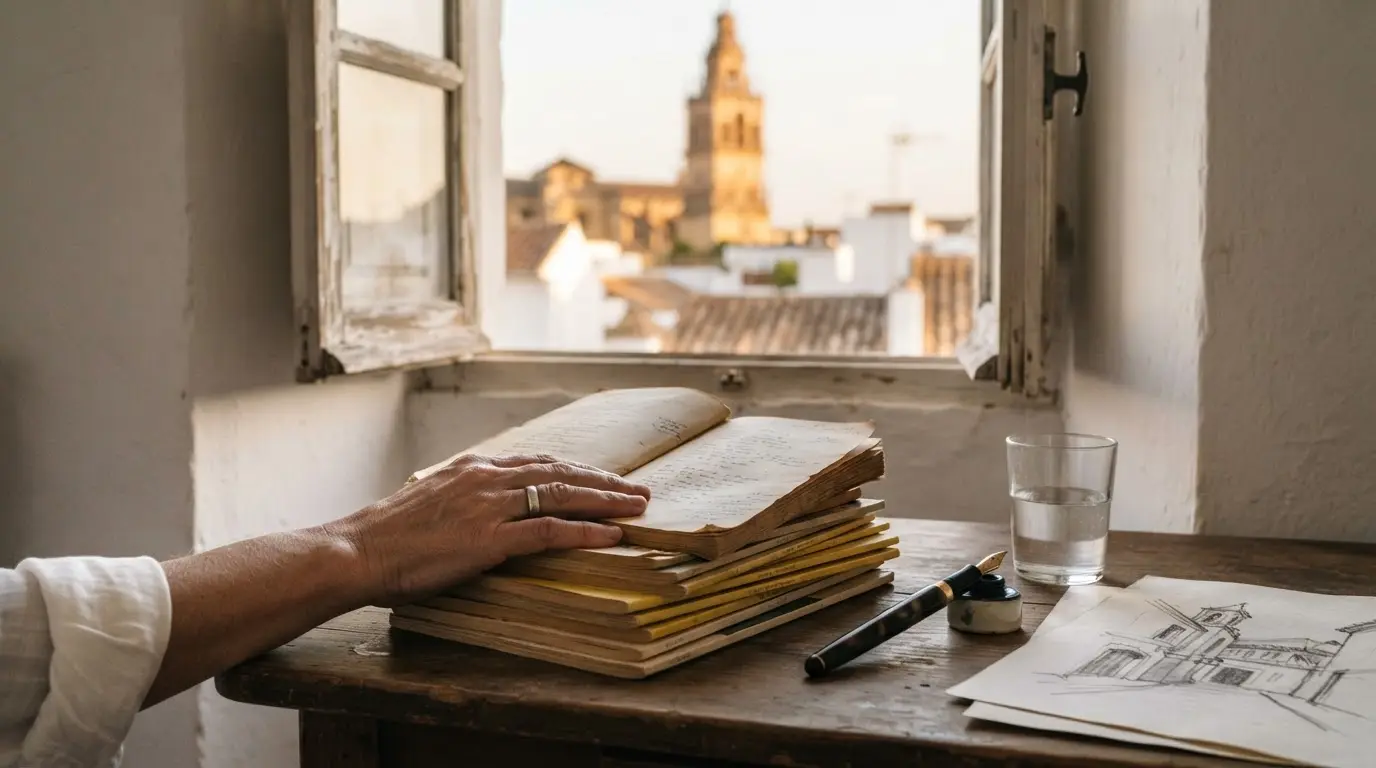
The magazine was the initiative of a group formed around 1943, so the friendships came first and the review four years later.[5] García Baena directed it with Ricardo Molina and Juan Bernier, and the poets Julio Aumente and Mario López wrote alongside them.[6] Two painters, Miguel del Moral and Ginés Liébana, belonged to the same circle.[7]
What held them together was a double refusal. Post-war Spanish verse had two loud camps, the Garcilasist formalists and the existentialist poets whose road led to social poetry, and Cántico joined neither.[8] Its own recipe was careful language, a cult of beauty and a subtle mixture of religious devotion and pagan delight in pleasure, which is hard to file under either label.
The title promised something modest. Hojas de poesía means leaves or sheets of poetry, not a manifesto, yet the group behaved like a movement with a clear idea of what Spanish verse had lost. Córdoba, far from Madrid's literary salons, gave it room to be odd.
Reading the group's aims today, the mismatch with its moment is the point. One camp polished and the other shouted, while Cántico argued that language and beauty were themselves a position, and that a poet could be devout and sensual in the same line.
The five poets and what each left behind
Five names are the ones a University of Jaén study lists for the group: Ricardo Molina, Juan Bernier, Pablo García Baena, Julio Aumente and Mario López.[9] Each went a different way, and the paper trail of those paths is the best map of the movement.
- García Baena published Mientras cantan los pájaros in 1948, an extraordinary issue of the Cántico collection printed in Córdoba.[10]
- Molina turned to the city and its music, writing Mundo y formas del cante flamenco (Madrid, 1963), a book that sits naturally beside the history of flamenco in Córdoba.[11]
- Bernier co-directed the magazine, and one of its extra issues came back as a facsimile from the Córdoba Diputación in 1983.[12]
- Aumente joined in 1947 and took the title of his first book, El aire que no vuelve (Adonais, 1955), from a line by Cernuda.[13]
- López, a co-founder of the magazine,[14] published Garganta y corazón del Sur (Córdoba, 1951)[15] and later gathered his verse in Poesía (1947-1993) (Diputación de Córdoba, 2004).[16]
The collection mattered as much as the magazine. Mientras cantan los pájaros was the second extraordinary number in the series, so the review doubled as a small publisher for its own members. Read in order, the entries show a group that scattered into flamenco scholarship, facsimile reissues and silence rather than into one shared career.
Cernuda, Góngora and the Generation of 1927
Cántico was against something, but it was also for something. Its founders wanted to restore the poetic tradition begun by the Generation of 1927, and Luis Cernuda was the model they chose, with the Golden Age behind him.[1] The group acted on that ambition in three ways.[20]
- inviting members of the Generation of 1927, exiled or not, to write for the magazine;
- publishing homage issues devoted to individual poets, Cernuda among them;
- bringing those poets into Córdoba's cultural life through lectures and meetings.
The Cernuda homage of 1955
The best-remembered result is the 1955 homage to Luis Cernuda, then living in exile in Mexico, a number that later readers call legendary.[21] For a provincial magazine to give its pages to an exile in the 1950s was a statement about which Spanish tradition it considered alive. Aumente's first book, titled from a Cernuda line, appeared the same year.[13]
A Baroque habit
The second debt was to the Baroque. García Baena's own verse is usually summed up as culturalist intimism: refined and lexically rich language, Baroque ornament and a vitalist treatment of love that ignores repressive morality.[22] Molina paid his debt in a title, Córdoba gongorina (Córdoba, Ayuntamiento, 1962), named for Luis de Góngora, the city's great Baroque poet.[23] The two debts fit together. Cernuda gave the group a living poet to honour and Góngora a dead one to imitate, and between them they marked out a Spanish line that ran around the official poetry of the 1940s rather than through it.
From silence in Málaga to the Novísimos' rediscovery in 1968
By the mid-1950s the climate had turned against them. Most of the group fell into a shared silence under pressure from a realist aesthetic that contradicted Cántico's aestheticizing, rhetorical premises, and the magazine closed in 1957.[24][2]
García Baena kept writing but left the city. In 1965 he moved to Málaga and opened an antiques shop, El Baúl, in Torremolinos, a long way from the review's Córdoba.[25] The poet who had run a magazine now sold furniture and objects.
The rescue came from a younger generation. After a long silence, the Novísimos of 1968, led by Luis Antonio de Villena and Guillermo Carnero, championed his work in studies and anthologies.[26] The irony is hard to miss: the aestheticism that cost the group its readers in the 1950s was exactly what made them legible to poets born a generation later.
Deep dive · Article
An Andalusian Treasure Has Sat in the British Museum Since 1932
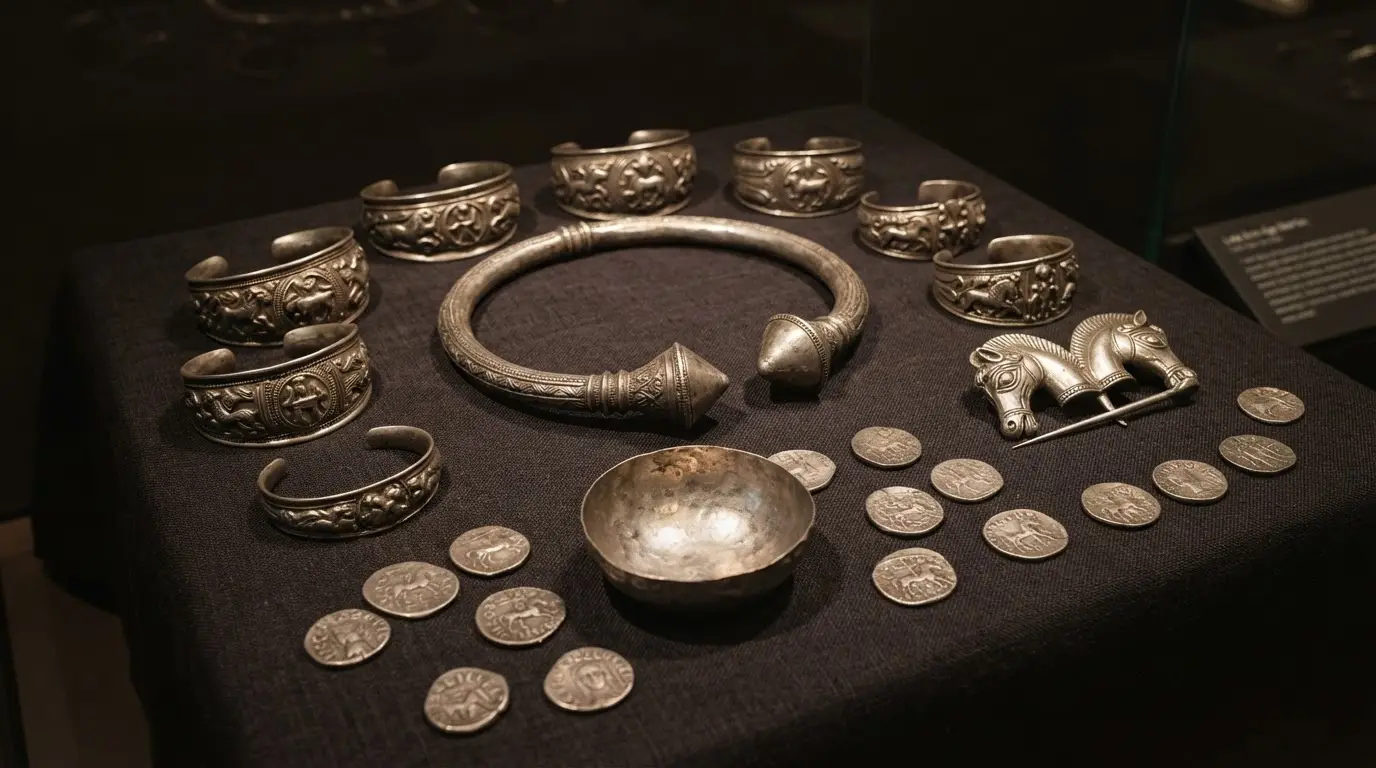
A silver hoard dug up in Córdoba in 1915 left Spain against the law and has been in the British Museum since 1932. Here is how, and what a 2026 study found.
Carnero's own book, El grupo Cántico de Córdoba (Editora Nacional, 1976), was an early book-length study of the group, published while the rediscovery was still under way.[27] Anyone who wants more than this article could start there.
Recommended tours
Tours are selected for quality, not commission. We earn a small fee if you book — at no extra cost to you.
Official recognition arrived late. In 2008 García Baena received the Reina Sofía Prize of Ibero-American Poetry, awarded through the University of Salamanca, sixty-one years after the first number of Cántico.[28]
What you can still find in Córdoba
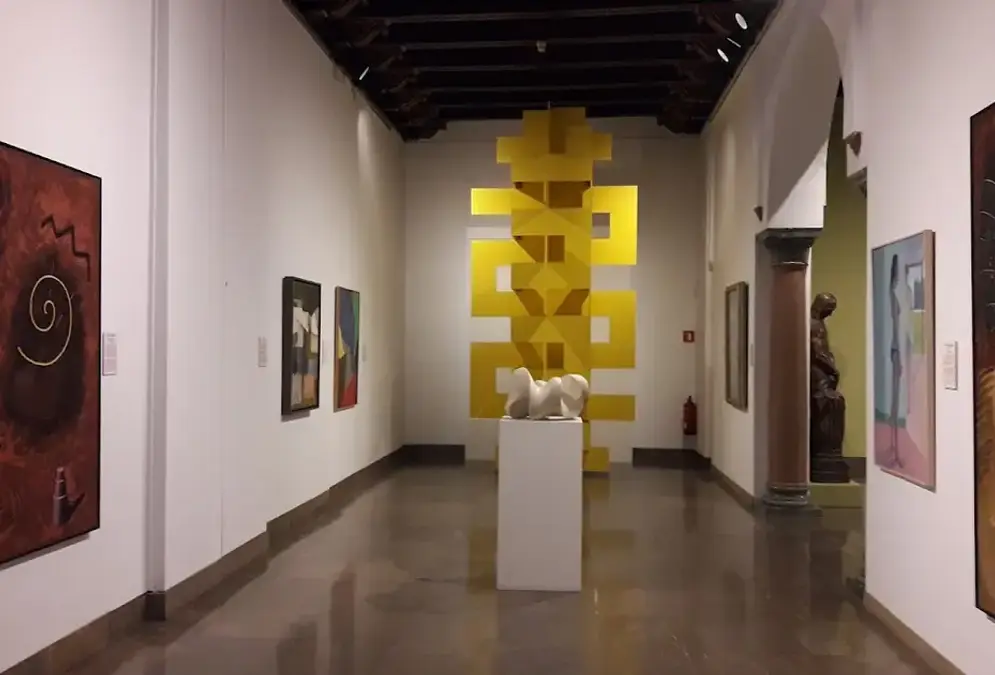
The concrete traces are modest. In 2021 the Junta de Andalucía accepted a donation of García Baena's drawings for the Museo de Bellas Artes de Córdoba, adding the poet's visual side to its drawings collection.[4] Ask at the desk whether any are on the walls, because a donation is not the same as a display.
Explore nearby · Museum
Museo de Bellas Artes de Córdoba
Córdoba's Fine Arts Museum holds centuries of Spanish painting, from medieval works to Baroque masters like Zurbarán. Free admission for all EU citizens.
Molina leaves a better trail for a day out. His Elegía de Medina Azahara appeared in Madrid in 1957, the year the magazine's second run ended,[29] and it makes a natural companion to a visit to Medina Azahara, the Umayyad palace city outside Córdoba.
García Baena died in Córdoba in January 2018, in the city of his birth.[30] Whatever the city does or does not mark, the group's real memorial is the magazine: two runs of issues, still the best place to hear what five friends argued for. Reading is a print affair, and the best way in is a collected volume:
- Visor's Poesía completa (1940-2008), in its third expanded edition of 2008, with an introduction by Luis Antonio de Villena.[31]
- The Cátedra anthology of García Baena, in its series of Spanish classics since 2015.[32]
- The 2022 University of Córdoba (UCO Press) volume on the whole Cántico group, painters included.[33]
- The Diputación's 1983 facsimile of one of Cántico's extra issues, the group's own pages in print.[12]
Among his single titles, Junio is described as a book of solar happiness.[34] For a literary day in Córdoba, settle the museum question first, then spend the afternoon at Medina Azahara with Molina's elegy.