The oath, the priest and an older plague story
Andrés de las Roelas was a modest figure, a priest who lived from 1525 to 1587 and served as chaplain of the Convento de las Dueñas.[4] In the tradition the archangel appeared to him more than once, and in the last apparition, on 7 May 1578, he is said to have declared: I swear to you by Jesus Christ crucified that I am Raphael, whom God has set as guard of this city.[5] That line is the "Juramento", and you will meet it again on stone.
Treat the scene as devotion, not as documented fact. The oath is a tradition, and it is worth keeping apart from the dates and objects that can be checked.
The oath also sits on an older story. Tradition places a first apparition in 1274, during a plague, to Fray Simón de Sousa of the Convento de la Merced, who was to ask that Raphael's image crown the cathedral tower and that a feast be kept every year.[6] The plague belongs to that older layer. The 1578 oath carries none.
Read together, the two apparitions give Córdoba two different Raphaels. The first asks to be seen from far off, on top of a cathedral tower, and to be honoured with a yearly feast. The second is a private promise made to a chaplain in his own house, and the city has spent four centuries making it public.
Why the city filled up with triunfos
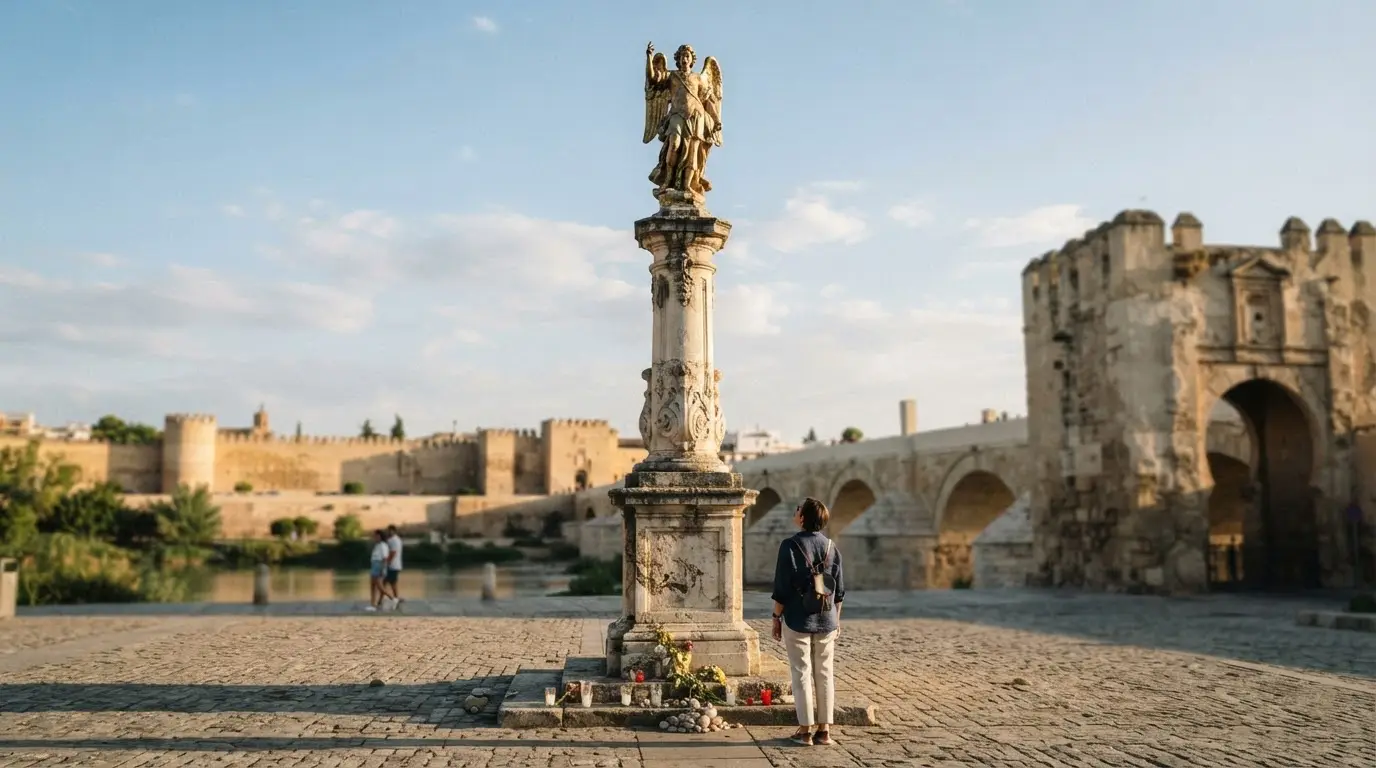
A triunfo is a column or pedestal topped by the archangel, raised in a square or street rather than inside a church. The oldest, by Bernabé Gómez del Río, dates from 1651 and was set into a parapet of the Roman Bridge.[2] That date marks the oldest triunfo, not the Juramento, which is Raphael's own oath of 1578.
The Triunfos de San Rafael do not match one another. They run from the 17th century into the 21st, in baroque, neoclassical, academic and contemporary styles, and no two are the same.[7] A guardian who never changes shape would need one monument. This one has been re-sculpted by every century that wanted to thank him.
Walk the set and you see the same figure restyled for its decade. What stays constant is the archangel and the promise he is credited with, not the design, which is why the triunfos read as a single devotion rather than a single art project.
The triunfo beside the Puerta del Puente is a different monument from that 1651 statue on the bridge parapet. It was begun in 1738, resumed in 1765 and finished in 1781, the work of Miguel Verdiguier.[8] It also carries the tradition in writing: an eagle on the monument bears an inscription, in the spelling of its day, that Raphael swore by Christ crucified to be the guard of this city.[9] The stone quotes the apparition, so the column is also the city's most public footnote to a vision nobody can document.
From a priest's house to a civic cult
San Rafael is not the city's official patron. That role belongs to San Acisclo and Santa Victoria, yet Raphael is the saint Córdoba treats as its own.[10] The cult grew from the bottom up, which is why it never needed an official title.
The devotion began at one man's front door. A brotherhood bought the rights to the house where Roelas had lived and turned it into a small oratory,[11] and its entrance on Calle Roelas is still called the postigo de San Rafael.
Explore nearby · Monument
Basílica del Juramento de San Rafael
Basílica del Juramento de San Rafael in Córdoba: a neoclassical minor basilica with a round central nave, built 1796-1806 for the city's guardian archangel.
Public worship followed. Rome was asked to make 7 May a day of prayer, the request was accepted, and the celebrations were held in the Plaza de la Corredera.[12] A private vision had become a civic calendar entry.
The Basilica del Juramento de San Rafael is where that growth ended up in stone. Its enlargement ran from 1796 to 1806, and the finished work was blessed by Bishop Pedro Antonio de Trevilla.[13]
The heritage record eventually caught up with the street devotion: a 2010 order of the Junta de Andalucía cataloguing the triunfos traces their tradition to 1651, a year after a plague epidemic.[14] The most elaborate of them, beside the bridge gate,[15] stands where a 13th-century hospital founded by Bishop Pascual once stood.[16]
Two dates, one holiday and no patron saint
The calendar shows how the two layers of the story survive side by side. One date belongs to the oath, the other to the city.
The feast has a set rhythm. The acts begin on the eve with a serenade of congratulation, and the main day brings the solemn Mass of the Juramento, celebrated by the bishop of the diocese.[17] The ritual is formal; the street version is older and plainer. A petition to the archangel over scarce rain was already recorded in 1635, so the habit of asking Raphael for help is older than the basilica's enlargement.[18]
The table is set outdoors. In Córdoba city the perol cordobés is tied especially to the end of October, as a celebration of the city's custodian on 24 October.[19]
Seeing the guardian today
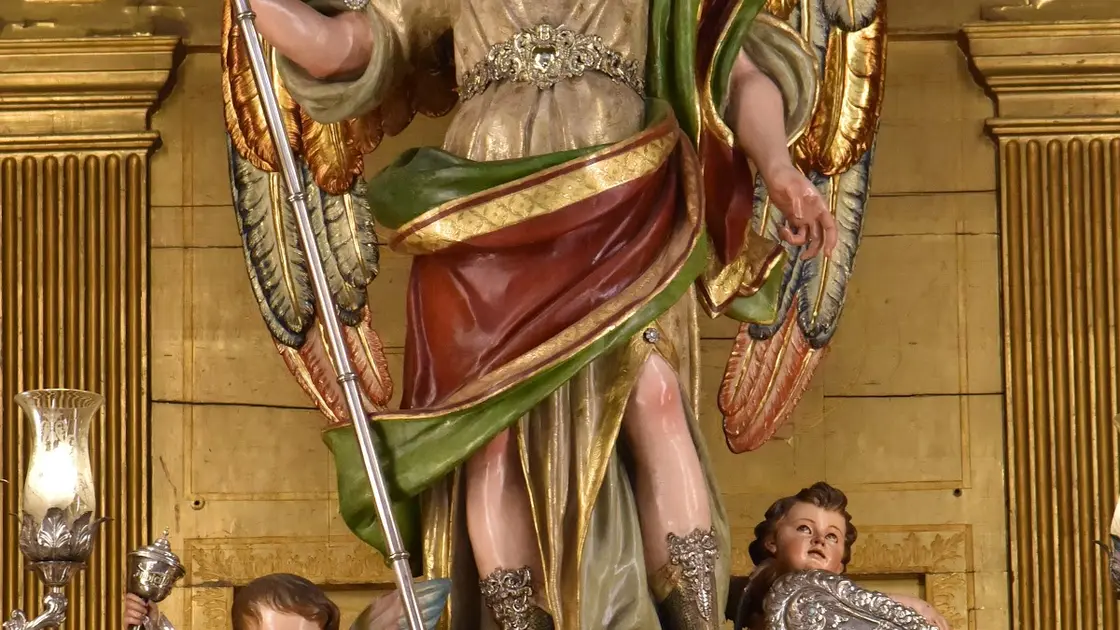
On the feast day, thousands of locals visit the baroque image of the archangel, light candles and leave carnations at his feet.[20] The altarpiece image of the archangel was made in 1735 by Alonso Gómez de Sandoval.[21] Church times shift from year to year, so check the diocese or the brotherhood's notices before you plan around a service.
Beyond the church, the triunfos make a loose walk. Two with documented dates are the one in the Plaza de la Compañía, from 1736 and built with alms donated by the parishioners,[22] and the one in the Plaza de los Aguayos, from 1763 and funded by the Aguayo noble family.[23]
The council's restoration plan covers the 10 triunfos it owns, so some may be under cover.[24] The one beside the Puerta del Puente belongs to the Cabildo, which committed €96,618.50 to its restoration, with scaffolding due from 27 July 2026.[25] Look for hoardings before you frame a photograph.
Deep dive · Article
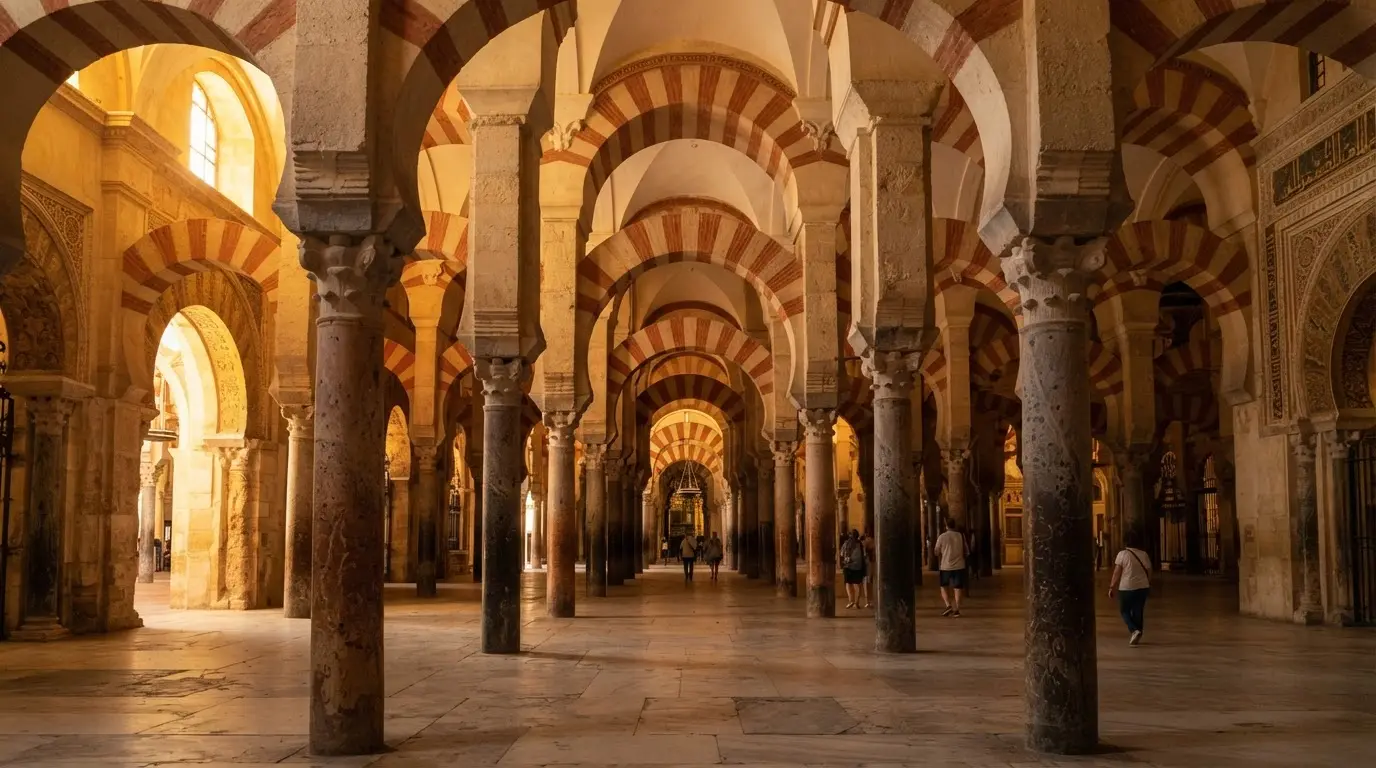
Abd al-Rahman III: The Morning Córdoba Became a Caliphate
Abd al-Rahman III was the first Caliph of Córdoba, declared on January 16, 929, ruling Córdoba for 49 years and starting work on Medina Azahara in 936 CE.
Recommended tours
Tours are selected for quality, not commission. We earn a small fee if you book — at no extra cost to you.
Walk from that column to the church and the story runs backwards: from the monument that quotes the oath to the building that carries it in its name.