A workshop household, a school and a Madrid pension
Inurria was born on 25 March 1867[3] in calle Alfaro[5], into a household of workshop sculptors on both sides. His father, Mateo Inurria Uriarte, ran a decorative sculpture workshop in Córdoba and exhibited two capitals at the 1877 Exhibición Científica, Artística e Industrial[6]. His maternal grandfather, the Valencian sculptor José Lainosa Genovés, had travelled Europe before opening a workshop in Seville[7].
His own training began at Córdoba's fine-arts school, which also formed Lorenzo Coullaut Valera, Rafael García Guijo and the painters Rafael and Julio Romero de Torres in the last quarter of the nineteenth century[8]. Inurria and Julio Romero de Torres were fellow students there[9], and by 1903 Julio was an associate professor at the Escuela Superior de Artes Industriales, which Inurria directed[10]. A later colleague, then, rather than a pupil.
Madrid came next. He studied at the Escuela Especial de Pintura, Escultura y Grabado from 1883 to 1885[4], and the Diputación Provincial granted him a pension three years after he arrived to extend his training in the capital until the late 1880s[11]. For a man who later described himself as self-taught, the apprenticeship was thoroughly institutional.
“"I have had no teacher; I made myself."[12]”
From Un náufrago to the Mezquita and Medina Azahara
Un náufrago, a nude youth clinging to a timber, was Inurria's entry at the 1890 Exposición Nacional de Bellas Artes in Madrid[13]. It was modelled so naturalistically that some jurors suspected it had been cast from a live model[14]. For a young provincial sculptor, being accused of cheating by being too accurate was an odd kind of compliment.
Back in Córdoba he took the chair of Figure Modelling and Antique Drawing at the Escuela Municipal de Artes y Oficios in the 1890s[15]. In 1901 he was named director of the Escuela Superior de Artes Industriales de Córdoba, with powers to plan workshop-schools in silversmithing, leatherwork, ironwork, carpentry, stonework and ceramics[16]. Teaching was never a sideline.
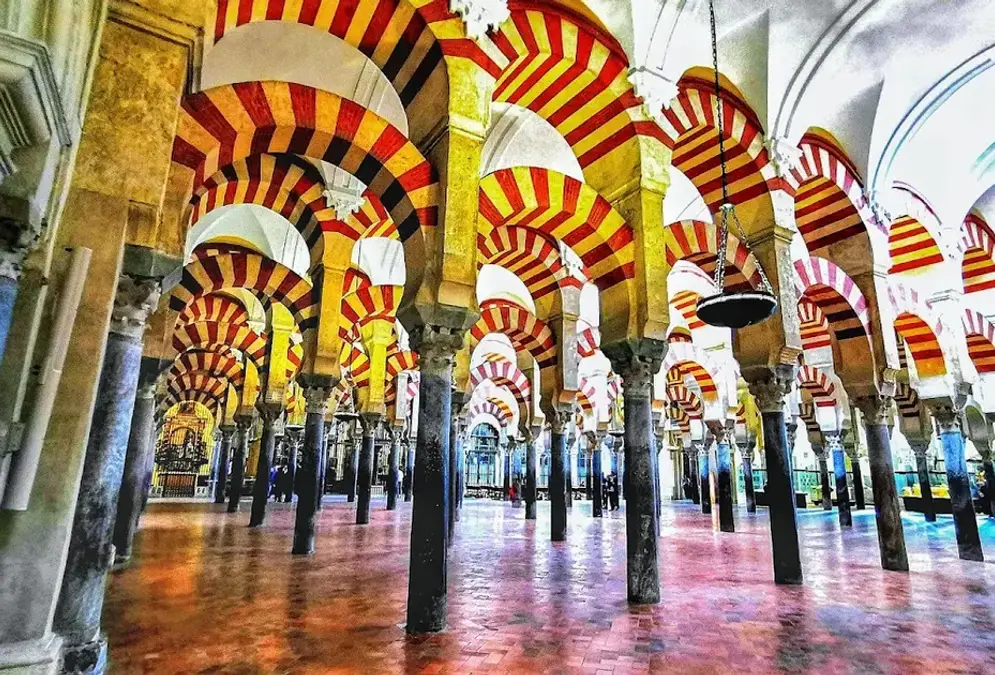
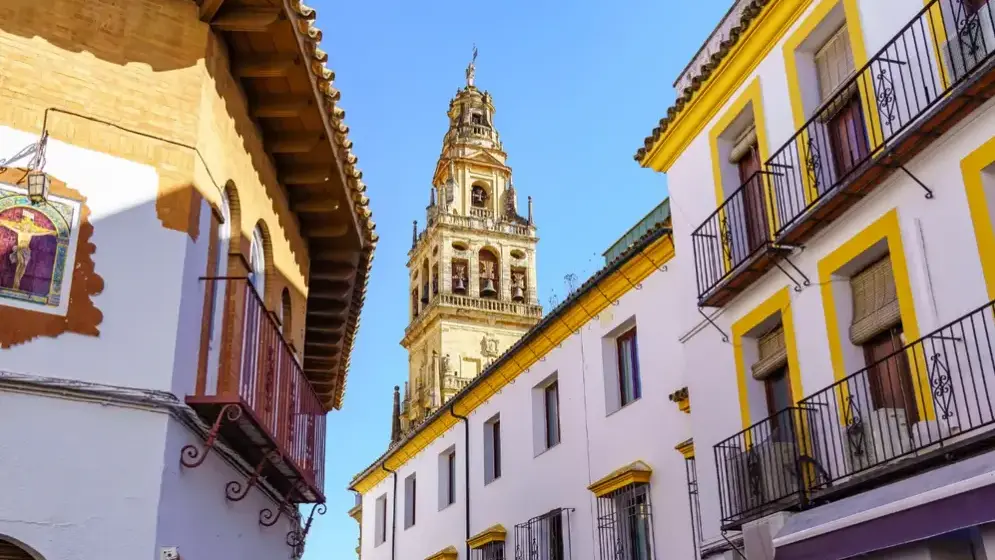
In the 1890s he also restored the Santuario de la Fuensanta and the church of San Pablo[17]. He is likewise documented as a restorer at the Mezquita-Catedral and a participant in the Medina Azahara excavations[18], and his drawings for restoring the façades of both, made with the architect Ricardo Velázquez Bosco, are dated 1900 to 1910[19].
In June 1905 Auguste Rodin toured Madrid, Toledo, Seville and Córdoba with Ignacio Zuloaga[20]. Zuloaga's mediation put Rodin and Inurria in touch, and a brief correspondence followed[21]; in Córdoba, Inurria was the visiting master's guide[22]. The Círculo de la Amistad's cultural head still calls him one of the most famous sculptors of his time[23].
The Gran Capitán and the Lagartijo legend
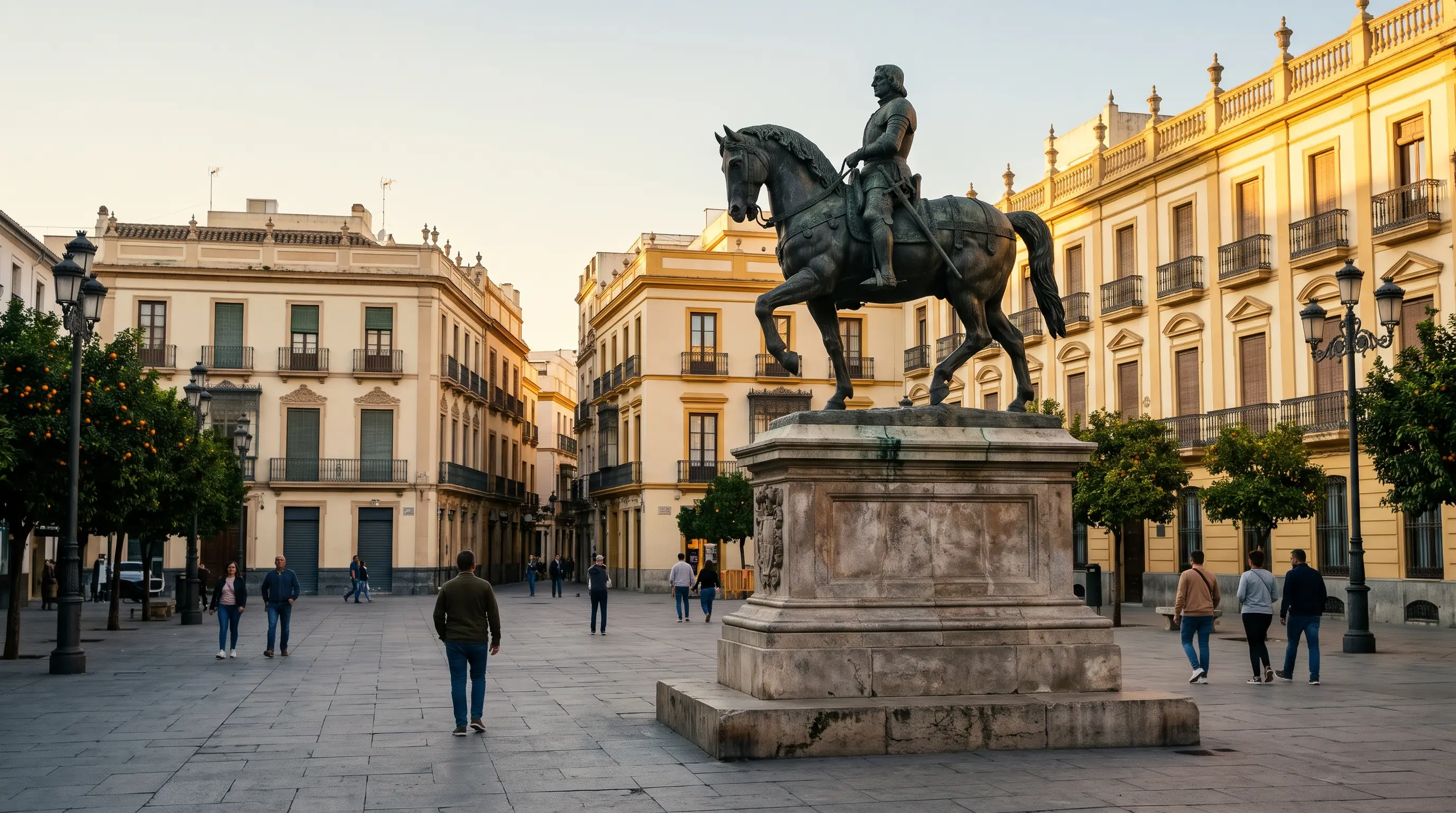
The statue in Las Tendillas was Inurria's third project for the monument, drawn up in 1915 and inaugurated in 1923[24]. The city council had commissioned a first project in the 1890s[25], and another followed in the early 1900s[26].
The national public subscription meant to pay for it collected very slowly[27], so Inurria cut the budget from 200,000 to 100,000 pesetas by dropping two allegorical statues, Fortitude and Temperance[28], and when the fund reached about 65,000 the council covered the missing 35,000[29]. The result is an equestrian figure that the Banco de España's catalogue reads against Renaissance equestrian statues[1], a fitting frame for Gonzalo Fernández de Córdoba, a captain of the Granada and Italian wars.
A persistent story says the Gran Capitán's head was copied from Inurria's statue of the bullfighter Lagartijo. The Córdoba journalist and author Francisco Solano Márquez calls that untrue[30]. It is a charming story. It is also one to hold at arm's length.
The late nudes, a move to Madrid and an early death
By 1920 Inurria was making the female nudes that now define his reputation: La parra, Ídolo eterno and Forma are all dated that year[33]. He had already won a first-class medal at the 1899 Exposición Nacional for the high relief La mina de carbón, and Forma earned him the Honorary Medal at the 1920 edition[34]. Juan Antonio Gaya Nuño, whose reading the Banco de España biography reports, saw work halfway between naturalism and idealisation[35]; the miners of 1899 and the idealised women of 1920 mark opposite ends of that range[34].
Seeing the two best-known nudes takes a trip to Madrid, not a walk across Córdoba. La parra hangs in the Museo Reina Sofía on long-term loan from the Prado[36], and Forma is on the same kind of loan there[37], so neither is a stop on the Córdoba trail.
Recommended tours
Tours are selected for quality, not commission. We earn a small fee if you book — at no extra cost to you.
Ensueño (The Dream, 1922) is a patinated bronze from his final years, and this bronze belongs to the Banco de España's collection[38]. The Monument to Eduardo Rosales in Madrid's Parque del Oeste, also of 1922, was his last public commission[39].
Deep dive · Article
An Andalusian Treasure Has Sat in the British Museum Since 1932
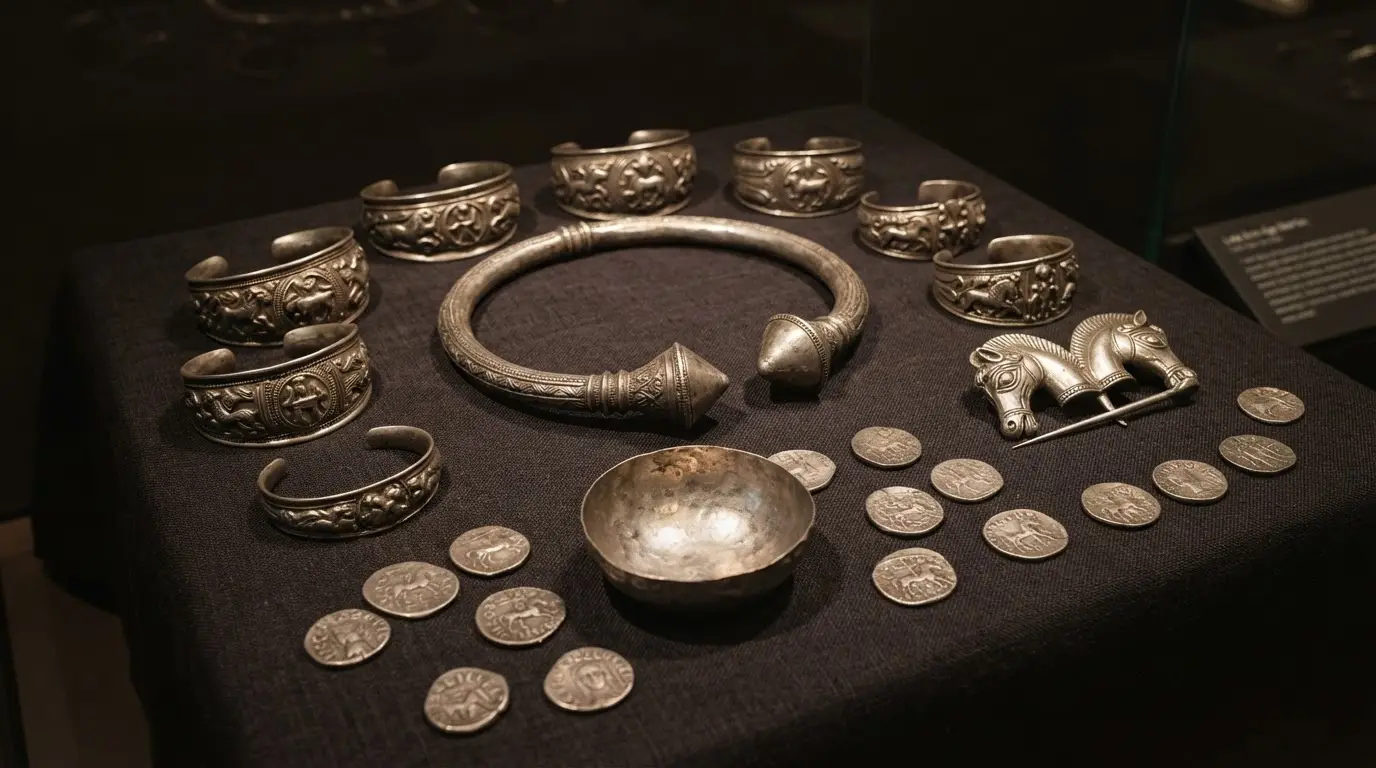
A silver hoard dug up in Córdoba in 1915 left Spain against the law and has been in the British Museum since 1932. Here is how, and what a 2026 study found.
Following Inurria through Córdoba today
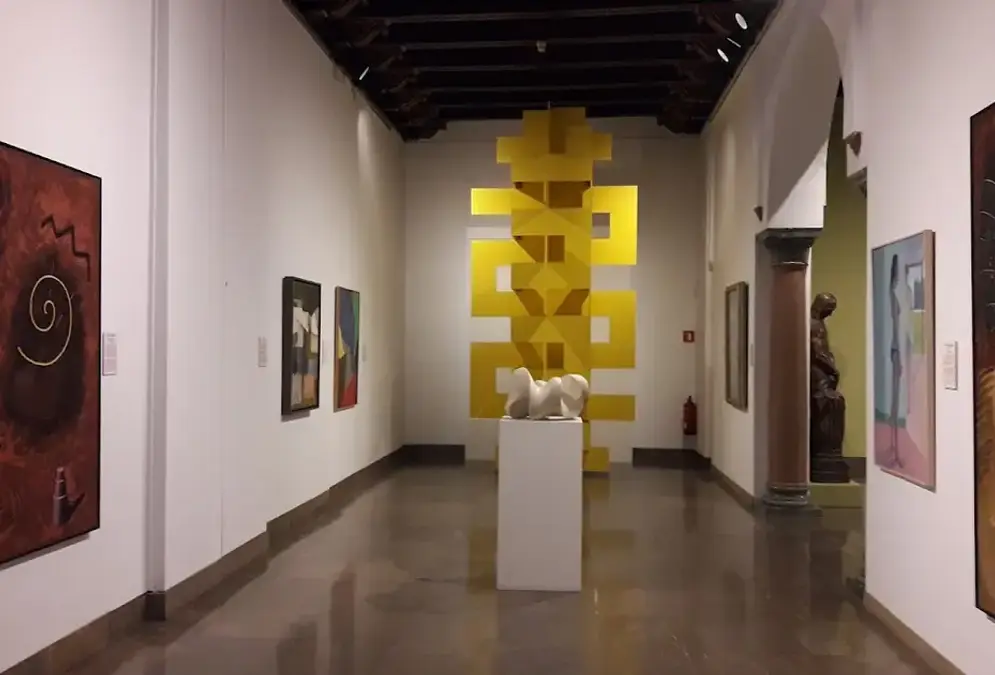
Start at the Museo de Bellas Artes, which holds the largest existing collection of Inurria's sculptures, drawings and belongings[42]. Many of the sculptures were deposited there by the Ayuntamiento after it bought them from his widow[43], and a plaster bust of Rosales arrived in 1943 as her donation[44]. The Ages of Woman group (Crisálida, Coquetería and Flor de granado, 1921 to 1923) is held there too[45].
Explore nearby · Museum
Museo de Bellas Artes de Córdoba
Córdoba's Fine Arts Museum holds centuries of Spanish painting, from medieval works to Baroque masters like Zurbarán. Free admission for all EU citizens.
Outside the museum, the surviving stops are scattered across the city rather than gathered in one place:
- Plaza Vaca de Alfaro: his sculpture of the bullfighter Lagartijo[46]
- Plaza de la Flor del Olivo, in the Chimeneón: the statue he dedicated to the businessman Carlos Carbonell y Morand[47]
- Cementerio de la Salud: several mausoleums by Inurria[48]
- Jardines de la Agricultura: the monument that remembers the sculptor himself[49]
Lagartijo recurs in his work: a Busto de Lagartijo dates from 1903[50], and the bullfighter's white marble mausoleum is by Inurria too[51]. His monument to the politician Antonio Barroso, by contrast, no longer stands[52].
Art lovers building a day around these stops will find neighbouring collections in Córdoba's art-lovers guide. Opening hours and admission for the Museo de Bellas Artes are on its own page, and the Gran Capitán in Las Tendillas needs no ticket.