budgetsolofamilies
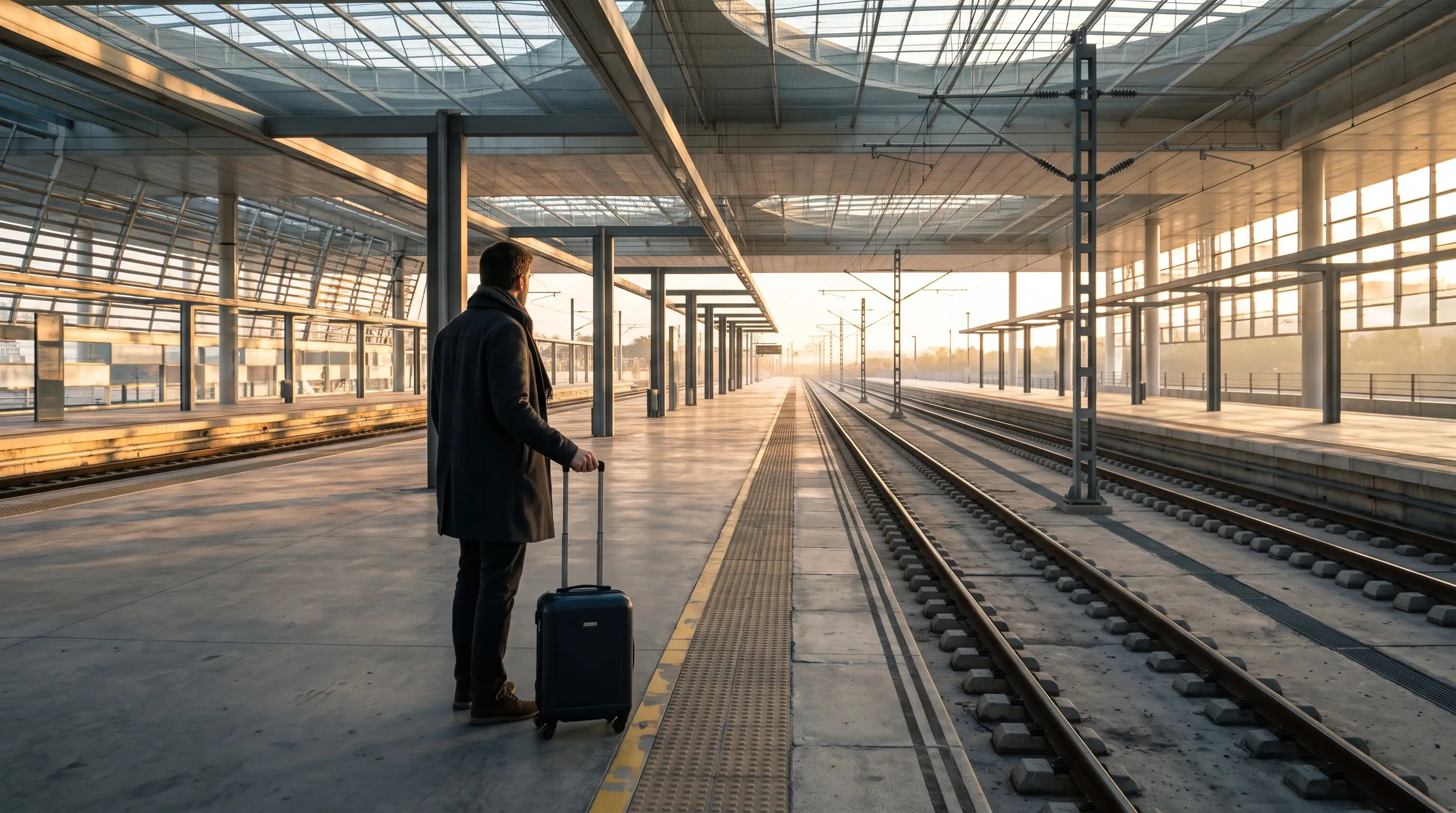
When will Madrid Andalusia high speed train reopen: high-speed AVE train stationary at Córdoba Central station platform at dusk under warm platform lights

When Will the Madrid to Córdoba High-Speed Line Reopen?

Renfe's 13 December ticket block is a booking ceiling, not Adif's reopening date. See the Urda clearance steps and the 29-day Adamuz repair precedent.

Portrait of María Fernanda González
Written by

Ten years covering Córdoba's UNESCO heritage sites, sourcing from Junta de Andalucía documentation.

Updated Published
No fixed reopening day exists yet for the Madrid to Andalusia high-speed rail line after the 28 October 2026 collision at Urda in Toledo province, and as of Adif's 12 November update the infrastructure manager still lists high-speed traffic between Madrid and Andalusia as interrupted[49][50]. Renfe's 13 December 2026 ticket block is not an engineering deadline, and Renfe says the date does not mean the line stays closed until then[3]. When a derailment at Adamuz in Córdoba province severed the same trunk line on 18 January 2026, judicial access, track rebuilding, and safety verification kept high-speed trains off the corridor for 29 days before staged services returned on 17 and 18 February[4]. Status as of Adif's 12 November update.
January 2026 Adamuz closure
29 days
Renfe, Iryo, and Ouigo resumed high-speed trains after almost a month closed[4]
Daily Madrid–Seville traffic
47 trains
Normal weekday flow moving roughly 10,000 passengers across the corridor[5]
Corridor upgrade budget
€780 million
2022–2026 Madrid–Seville remodelling with ERTMS activation still pending[6]

Why Renfe's 13 December ticket block is not the reopening date

Renfe's freeze on Madrid to Andalusia ticket sales through 13 December 2026 is not a construction schedule set by infrastructure manager Adif, and Renfe has said the date does not mean the line stays closed until then[2][3]. Reopening remains conditional on judicial authorisation to work at the accident site, as Estrella Digital reported on 3 November[48], and resumption after an accident like this usually takes several weeks[7]. If Adif restores circulation before 13 December, Renfe sources told EFE the operator will resume service when the line reopens[8].
Each operator on the southern trunk chose a different cutoff:

Wait for the official cancellation notice

Both Renfe and Iryo enabled free changes and cancellations for trains affected by the Urda suspension, while Ouigo guaranteed full refunds by email[9][11]. Confirm your train is covered by the operator's disruption notice before cancelling in the app.
  • Renfe paused new ticket purchases across the Madrid to Andalusia high-speed corridor until 13 December 2026 and enabled free ticket changes and cancellations for affected travellers[2][9].
  • Iryo blocked ticket sales on its website until 9 November 2026 and opened the same free modification and refund options[9][10].
  • Ouigo suspended its southern services through at least 2 November 2026 inclusive, notifying passengers by email to process full refunds[11].
Córdoba forms the critical southern junction. Here the Málaga and Granada high-speed branch splits from the Madrid to Seville main line, so a single blockage in Toledo province severs direct high-speed rail to every Andalusian capital at once[12]. That shared corridor normally carries 47 daily trains and around 10,000 passengers on the Madrid to Seville axis alone[5]. Even travellers on the 568-kilometre Madrid to Granada route, whose 2019 launch timetable promised between 3 hours 5 minutes and 3 hours 19 minutes via Ciudad Real, Córdoba, Puente Genil, Antequera, and Loja, must pass through the blocked Toledo trunk[13][14]. How each rail company handles refunds and re-routing is detailed in our guide to Iryo, Ouigo, and Renfe cancelled train rights.

What has to happen at Urda before trains run again

Reopening near Urda, close to km 118 (press-reported, not yet officially confirmed)[45], depends on several steps, and judicial authorisation to work on the site comes first[48]. The crash occurred around 08:53 on Wednesday 28 October 2026[46][16]. Madrid to Seville AVE train 2080 struck the rear of stationary Iryo train 6076 on the same line, knocking the last two Iryo carriages off the rails[16].
Adif cannot send track-laying machinery onto the corridor yet. The courts must release the site first. At Urda, the investigating magistrate declared the judicial proceedings confidential, prohibited removing any element from the crash zone, and barred taking or sharing images of the site[17]. By 29 October, debris removal and heavy lifting operations were still underway to raise the wrecked carriages and search for victims while both the judicial and technical investigations moved forward[18]. Technical analysis is led by AITAT (Autoridad Administrativa Independiente para la Investigación Técnica de Accidentes e Incidentes Ferroviarios, Marítimos y de Aviación Civil), which replaced the former CIAF on 15 July 2026[19].
Reopening the tracks does not wait for the final investigation report. Removal of the wrecked carriages of AVE 2080 and Iryo 6076 continued under that investigation[16][18]. The sequence runs from wreckage removal to judicial authorisation, then to Adif's own technical works, and only after those do trains run again[38].
By 3 November wreckage removal was complete, but judicial authorisation was still pending. The Ministry of Transport said wreckage removal had ended that morning, and Adif had already filed its request to resume service, to be actioned the moment judicial authorisation arrives[37]. The ministry's announcement, as reported by El Debate, puts the technical works at no more than ten days from that authorisation[38]. That is the same ten-day figure the Ministry of Transport floated at Adamuz, where the real job took twice as long. As of Adif's 12 November update, nothing reported says the court has granted that authorisation: the notice still describes high-speed circulation between Madrid and Andalusia as interrupted[49][50], and nobody has confirmed a date for full service[40]. A Royal Decree-law approved on 10 November strengthens the inspection powers of the rail safety agency AESF but sets no reopening date[51], so treat any specific reopening day in the press as speculation until Adif announces one.

What the 29-day Adamuz closure in Córdoba province taught us

January's crash in Córdoba province sets the clearest precedent. That 29-day closure following the 18 January 2026 accident at Adamuz kept the Madrid to Andalusia corridor shut from 19 January until 17 February 2026[4][20]. At 19:45 on 18 January, a Málaga to Madrid train derailed at kilometre point 318.693 in Adamuz and invaded the adjacent track, where a passing Madrid to Huelva service also derailed[15][21]. Early official estimates floated 2 February as a possible return. However, rescue work lasted until Thursday 22 January and Adif did not receive judicial authorisation to access and rebuild the track until 28 January, ten full days after the crash[20][22].
Initial repair forecasts proved too optimistic. When judicial clearance arrived on 28 January, the Ministry of Transport estimated that rebuilding the line would take roughly ten calendar days, yet the actual engineering works and safety testing required 20 days before passenger trains returned on 17 February[23]. Adif deployed around 40 technicians and 20 specialised vehicles to cut out damaged rail sections, lay fresh ballast and sleepers, and reinstall overhead catenary anchors, electrical conductors, and cantilevers on Track 1[24][25]. Travellers whose schedules were disrupted once trains resumed filed claims under the rules explained in our Renfe train delay guide for Córdoba.
Timeline
  1. 18 Jan 2026

    Adamuz derailment at km 318.693

    A Málaga to Madrid train derailed at 19:45 in Adamuz (Córdoba), fouling the adjacent track where a Madrid to Huelva train also derailed[15][21].

  2. 22 Jan 2026

    On-site rescue work concludes

    Emergency rescue operations at the Adamuz crash site lasted until Thursday 22 January, pushing back early 2 February reopening hopes[22].

  3. 28 Jan 2026

    Judicial clearance grants track access

    Ten days after the crash, judicial authorisation allowed Adif's 40 technicians and 20 specialised vehicles to begin rebuilding the infrastructure[20][24].

  4. 17–18 Feb 2026

    Staged corridor reopening

    High-speed trains of all three operators returned on Madrid–Córdoba–Seville/Granada from 17 February, Ouigo progressively, followed by Madrid–Málaga with an Antequera bus link on 18 February[4][26][27].

  5. 28 Oct 2026

    Urda rear-end collision

    AVE 2080 struck stationary Iryo 6076 in Toledo province after an LZB failure, prompting Adif's new suspension and Renfe's 13 December booking freeze[1][2][16].

Why two crashes in nine months put LZB signalling under scrutiny
Two major accidents on the same high-speed corridor in January and October 2026, nine months apart and about 201 kilometres along the line from each other (Adamuz at km 318.693[15], Urda near km 118, press-reported and not yet officially confirmed[45]), have focused attention on the line's legacy signalling. The two crashes unfolded in opposite ways. At Adamuz the derailment preceded the collision with traffic on the adjacent track, whereas at Urda the collision itself caused the derailment[28]. Regulators must therefore verify both the rails and the signalling.
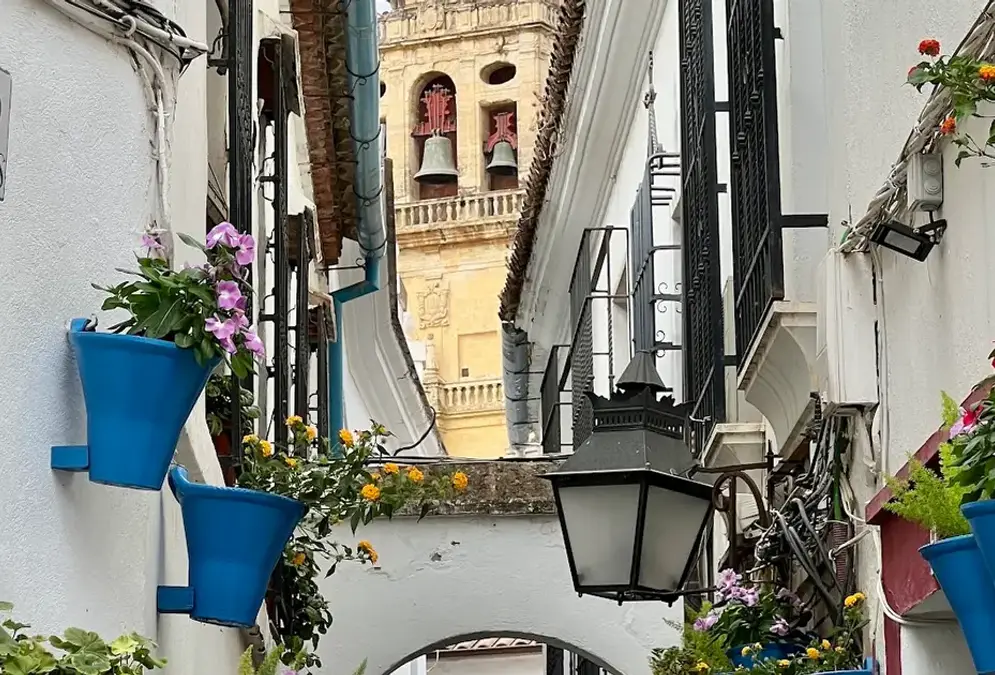
Calleja de las Flores in Córdoba with whitewashed walls, geraniums, and the Mezquita-Catedral bell tower

Explore nearby · Monument

Calleja de las Flores

Whitewashed walls and red geraniums framing the Mezquita bell tower. Córdoba's most photographed alley in the Judería. Free, open 24 hours, best before 10am.

Since opening, the corridor that launched 35 years of AVE high-speed rail in Córdoba has relied on the LZB automatic train protection system, even as the line grew to carry three competing operators and budget high-speed rail reshaped Córdoba tourism[6][29]. At 08:30 on Wednesday 28 October 2026, a computer failure knocked out the LZB system across a 63-kilometre stretch around Urda, forcing six trains, including the Renfe AVE and Iryo services involved in the crash, to stop[30]. Following that outage, affected trains transitioned to operating under the degraded Lateral Signalling Block (BSL) regime[31].

Recommended tours

Tours are selected for quality, not commission. We earn a small fee if you book — at no extra cost to you.


The long-planned signalling upgrade was still unfinished when the crash happened. Replacing LZB with the European ERTMS safety standard is part of a €780 million integral remodelling of the Madrid to Seville corridor carried out between 2022 and 2026, where ERTMS activation remained pending[6]. The Ministry of Transport's 23 January 2026 release put the ERTMS contract for the Guadalmez–Córdoba section, the Adamuz stretch, at €104.72 million, with the LZB system still in force[29][47].

How a staged reopening works for Córdoba travellers

High-speed corridors rarely return to a full timetable overnight. Operators restore trunk services in phases first. Secondary branches and regional trainsets then catch up over several days. When the Adamuz repair finished in February 2026, Renfe resumed its regular high-speed schedule on Tuesday 17 February across the Madrid to Seville, Cádiz, and Granada routes, along with the Alvia Madrid–Granada–Almería service[26][32]. Renfe said Madrid to Málaga would recover from Wednesday 18 February, with the Antequera-Santa Ana connection by road bus[27].
Where the line is cut dictates the temporary workaround. During the January closure in Córdoba province, Renfe ran seven daily trains in each direction between Madrid-Puerta de Atocha and Villanueva de Córdoba, matching that frequency in reverse[33]. By contrast, during the opening days of the October 2026 Urda closure in Toledo province, Renfe's initial plan combined special conventional-line and Cercanías trains with bus links between Madrid, Ciudad Real, and Puertollano, adding about 90 minutes of travel time[34][52]. The January cut at Adamuz and Álora also hit regional Avant S104 trains linking Córdoba with Seville, Málaga, and Granada, which suffered cancellations and bus substitutions because trainsets could not reach their maintenance bases at Cerro Negro in Madrid and Los Prados in Málaga[35].
Airlines and coaches quickly step in when rail stops. Wizz Air announced two new domestic routes between Madrid and Andalusia starting 6 November 2026, linking the Spanish capital directly with Málaga and Seville while rail disruptions continue[36]. Travellers weighing whether to hold their rail booking or switch modes can compare every coach, flight, and car option in our guide to Madrid to Córdoba alternatives while the high-speed line is suspended, or restructure a multi-city itinerary around Córdoba as an Andalusia road-trip stop.
Photorealistic scene of a traveller checking a phone with a timed-entry ticket outside the Mezquita-Catedral's Puerta del Perdón at golden hour, illustrating cordoba travel mistakes like arriving without a booked slot

Deep dive · Article

10 Mistakes to Avoid on Your First Trip to Córdoba

Ten costly mistakes first-time visitors make in Córdoba, from walk-up Mezquita queues to misjudging Patios Festival dates, and how to avoid them before you fly.

Do not expect a full timetable the day the line reopens. The Transport Ministry says frequencies will stay reduced until ERTMS deployment and the extraordinary safety audit are both finished, expected in early 2027[39], and no definitive date for restoring every usual service has been confirmed[40]. It proposes double-composition trains to limit the loss of seats despite fewer departures[43]. Meanwhile the Royal Decree-law approved on 3 November caps prices of alternative transport and linked accommodation while the line stays cut[41], and Iberia and Iberia Express scheduled 20,718 extra seats between Madrid and Andalusia until 8 November[42]. Until then, getting around Córdoba and Andalusia during the rail closure covers what still runs.

Madrid to Córdoba by train right now

As of Adif's 12 November update, no high-speed train runs between Madrid and Córdoba: the notice says circulation between Madrid and Andalusia remains interrupted[44][50]. As of that update, nobody has announced the day the court authorises the works, or which replacement services will serve Córdoba itself, so check your operator's notice for your exact train before leaving home.
If you must travel before the line reopens, compare the coach, flight and car options between Madrid and Córdoba and check your rights if Iryo, Ouigo or Renfe cancel your train before you cancel anything. Once trains run, the Madrid to Córdoba by train itinerary covers the journey itself, and our guide to claiming for a delayed Renfe train applies to the late departures a reduced timetable tends to bring.

Frequently asked questions

When will Madrid Andalusia high speed train reopen after the Urda crash?

Adif has suspended traffic until further notice and no exact reopening day has been announced[1]. In the comparable January 2026 Adamuz crash on the same corridor, judicial clearance and track repairs took 29 days before trains resumed on 17 February[4].

Has the Madrid to Andalusia high-speed line reopened since the Urda crash?

Not yet. As of Adif's 12 November 2026 update, the notice still lists high-speed circulation between Madrid and Andalusia as interrupted[49][50], and no date for restoring the full timetable has been confirmed[40]. The ministry's estimate is up to ten days of technical work once a court authorises it[38].

Who decides when trains can run again on the Madrid to Andalusia line?

Adif has already filed its request to resume service, to be actioned once judicial authorisation arrives[37]. The Royal Decree-law approved on 10 November strengthens the inspection powers of the rail safety agency AESF but sets no reopening date[51].

Why did Renfe block Madrid to Córdoba and Andalusia tickets until 13 December 2026?

Renfe froze ticket sales until 13 December 2026 but said the date does not mean the line stays closed until then[2][3]. Renfe sources told EFE the operator will resume service when the line reopens, if Adif restores circulation before 13 December[8].

How long did track repairs take after the January 2026 Adamuz crash in Córdoba?

After the 18 January 2026 crash at Adamuz, rescue work lasted until 22 January and judicial authorisation to access the track was granted on 28 January[20][22]. Although initial estimates suggested 10 days of engineering work, rebuilding and testing took 20 days, reopening on 17 and 18 February[23][26].

Are Madrid to Granada and Málaga AVE trains also stopped by the Urda closure?

Yes. All high-speed trains from Madrid to Seville, Málaga, and Granada share the northern trunk through Toledo province and Ciudad Real before branching at Córdoba Central, so a blockage at Urda halts direct high-speed services to the Andalusian cities on the high-speed network[12][14].

Did the January 2026 Adamuz cut also disrupt regional Avant trains?

Yes. After the January cut at Adamuz and Álora, Renfe cancelled or replaced with buses some Avant services between Córdoba, Seville, Málaga, and Granada because S104 trainsets could not reach their maintenance bases at Cerro Negro in Madrid and Los Prados in Málaga[35]. Check your operator's notice for Avant services during the Urda closure.

Can I change or refund my Renfe, Iryo, or Ouigo ticket for free during the suspension?

Yes, when the suspension began. Renfe and Iryo enabled free ticket changes and cancellations for passengers booked on suspended services, while Ouigo's suspension initially ran through at least 2 November and it contacted passengers by email to issue full refunds[9][11]. Check your operator's notice for current terms.

Sources

52 references Show
  1. Antena 3 Noticias (28 Oct 2026) (opens in a new tab)

    “El administrador de infraestructuras ferroviarias, Adif, ha interrumpido el tráfico entre Madrid y el corredor sur "hasta nuevo aviso".”

  2. Ceuta TV / EFE (28 Oct 2026) (opens in a new tab)

    “Renfe ha paralizado la venta de billetes en el corredor de alta velocidad entre Madrid y Andalucía hasta el próximo 13 de diciembre tras la colisión de dos trenes en Urda (Toledo).”

  3. Ceuta TV / EFE (28 Oct 2026) (opens in a new tab)

    “No obstante, la compañía ha aclarado que esta decisión no significa que la circulación ferroviaria vaya a permanecer interrumpida hasta esa fecha.”

  4. Diario Córdoba (16 Feb 2026) (opens in a new tab)

    “Los trenes de alta velocidad de las tres compañías que operan en el corredor -Renfe, Iryo y Ouigo- vuelven a transitar después de casi un mes sin servicio.”

  5. Antena 3 Noticias (31 Oct 2026) (opens in a new tab)

    “La conexión entre Madrid y Sevilla registra normalmente 47 trenes diarios y mueve a unos 10.000 viajeros cada día.”

  6. El País (30 Oct 2026) (opens in a new tab)

    “Así ha sido en la remodelación integral de 780 millones de euros llevada a cabo en el corredor Madrid-Sevilla entre 2022 y 2026, con trabajos pendientes aún como el de la puesta en marcha del sistema ERTMS de seguridad.”

  7. ABC Economía (28 Oct 2026) (opens in a new tab)

    “La reanudación del servicio en casos como este suele tardar varias semanas. Ahora se abre además un proceso de investigación y de retirada de los convoyes afectados de la vía.”

  8. Ceuta TV / EFE (28 Oct 2026) (opens in a new tab)

    “Fuentes de Renfe han indicado a la Agencia EFE que, si Adif, el gestor de la infraestructura ferroviaria, decide restablecer la circulación antes del 13 de diciembre, la operadora también retomará el servicio.”

  9. ABC Economía (28 Oct 2026) (opens in a new tab)

    “Renfe e Iryo han habilitado los cambios y anulaciones gratuitos.”

  10. ABC Economía (28 Oct 2026) (opens in a new tab)

    “La web de Iryo no permite adquirir ningún viaje de esta línea hasta el próximo 9 de noviembre.”

  11. ABC Economía (28 Oct 2026) (opens in a new tab)

    “Ouigo ha suspendido todas sus circulaciones «hasta al menos» el próximo dos de noviembre incluido y, como ha señalado en un comunicado, todos los viajeros afectados han sido informados”

  12. Wikipedia — Madrid–Seville high-speed rail line (opens in a new tab)

    “At Córdoba the Madrid–Málaga high-speed rail line leaves the line from Madrid.”

  13. La Moncloa / Ministerio de Fomento AVE Dossier (opens in a new tab)

    “Estos trenes Ave emplearán entre 3 horas 5 minutos y 3 horas 19 minutos en recorrer los 568 km de alta velocidad que conectan Granada con Madrid.”

  14. La Moncloa / Ministerio de Fomento AVE Dossier (opens in a new tab)

    “La nueva conexión entre Granada y Madrid incluye además otras ciudades andaluzas como Loja, Antequera, Puente Genil y Córdoba, así como Ciudad Real”

  15. Artículo 14 (28 Oct 2026) (opens in a new tab)

    “El siniestro de Adamuz, por su parte, ocurrió en el punto kilométrico 318,693, según la documentación de la Comisión de Investigación de Accidentes Ferroviarios.”

  16. El Debate (28 Oct 2026) (opens in a new tab)

    “En concreto, en torno a las 08:53 horas el tren AVE 2080 con salida de Madrid y destino Sevilla chocó con el tren Iryo 6076 que iba por delante y causó el descarrilamiento de los últimos dos vagones del Iryo”

  17. RTVE Noticias (29 Oct 2026) (opens in a new tab)

    “La magistrada ha declarado secretas las actuaciones y ha prohibido retirar elementos de la zona del siniestro, así como tomar o difundir imágenes del lugar.”

  18. RTVE Noticias (29 Oct 2026) (opens in a new tab)

    “La retirada de escombros continúa para tratar de levantar los vagones siniestrados y encontrar posibles víctimas. Mientras tanto, ya están en marcha las investigaciones judicial y técnica”

  19. RTVE Noticias (29 Oct 2026) (opens in a new tab)

    “Este análisis corresponde a la nueva Autoridad Administrativa Independiente para la Investigación Técnica de Accidentes e Incidentes Ferroviarios, Marítimos y de Aviación Civil (AITAT), que sustituyó el 15 de julio de 2026 a la Comisión de Investigación de Accidentes Ferroviarios (CIAF).”

  20. Diario Córdoba (16 Feb 2026) (opens in a new tab)

    “Después, no se pudo trabajar en la reposición de las vías hasta que el 28 de enero Adif recibió la autorización judicial para proceder a reponer la infraestructura en el tramo del siniestro.”

  21. Adif Press Release (19 Jan 2026) (opens in a new tab)

    “A las 19.45 h., un tren que realizaba el recorrido Malaga-Madrid descarriló en Adamuz (Córdoba), invadiendo la vía contigua. Por la vía contigua circulaba otro tren Madrid-Huelva, que también descarriló.”

  22. Diario Córdoba (16 Feb 2026) (opens in a new tab)

    “Aunque en un principio se barajó el 2 de febrero como fecha para la reapertura de la alta velocidad, primero hubo que esperar a las labores de rescate, que se prolongaron hasta el jueves 22 de enero”

  23. Diario Córdoba (16 Feb 2026) (opens in a new tab)

    “El ministro de Transportes, Óscar Puente, anunció entonces que en un plazo aproximado de diez días naturales la alta velocidad entre Andalucía y Madrid podría estar de nuevo en funcionamiento.”

  24. Diario Córdoba (16 Feb 2026) (opens in a new tab)

    “Desde el 28 de enero, un equipo compuesto por unos 40 técnicos de Adif y una veintena de vehículos especializados ha estado trabajando en el tramo afectado para retirar traviesas y carriles dañados”

  25. ABC Córdoba (29 Jan 2026) (opens in a new tab)

    “En el ámbito de la electrificación, se han desarrollado trabajos previos para el futuro tendido de la catenaria de la vía 1, mediante la instalación de anclajes, conductores eléctricos y otros elementos asociados, como las ménsulas.”

  26. Diario Córdoba (16 Feb 2026) (opens in a new tab)

    “La circulación de trenes alta velocidad entre Madrid, Córdoba y el resto de Andalucía (Sevilla, Málaga y Granada) reabre entre este martes, 17 de febrero, y este miércoles, 18 de febrero”

  27. Bolsamanía / Europa Press (18 Feb 2026) (opens in a new tab)

    “En el caso de Madrid-Málaga, la compañía ferroviaria Renfe ha informado de que el servicio se recuperará desde este miércoles, aunque la conexión con la estación de Santa Ana de la localidad malagueña de Antequera será en autobús.”

  28. Hosteltur (29 Oct 2026) (opens in a new tab)

    “en Adamuz el descarrilamiento precedió al choque y en Urda el choque provocó el descarrilamiento.”

  29. Ministerio de Transportes y Movilidad Sostenible (23 Jan 2026) (opens in a new tab)

    “Implantación del ERTMS por importe de 104,72 millones de euros, actualmente en ejecución, siguiendo en vigor el sistema LZB.”

  30. El País (30 Oct 2026) (opens in a new tab)

    “Su caída por un fallo informático a las 8.30 del miércoles motivó que seis trenes se detuvieran en un tramo de 63 kilómetros, entre ellos el Iryo y el AVE de Renfe siniestrados.”

  31. Estrella Digital (30 Oct 2026) (opens in a new tab)

    “A partir de esa incidencia, los trenes afectados pasaron a circular bajo el régimen denominado Bloqueo de Señalización Lateral (BSL).”

  32. Bolsamanía / Europa Press (18 Feb 2026) (opens in a new tab)

    “Renfe retomaba un día antes de cumplirse un mes de la tragedia sus circulaciones habituales en los servicios Madrid-Sevilla, Madrid-Cádiz, Madrid-Granada, Madrid-Huelva y el Alvia Madrid-Granada-Almería.”

  33. Diario Córdoba (16 Feb 2026) (opens in a new tab)

    “Siete trenes diarios han realizado el recorrido entre Madrid-Puerta de Atocha y Villanueva de Córdoba, la misma cifra que en el recorrido inverso-”

  34. Hosteltur (30 Oct 2026) (opens in a new tab)

    “De momento, Renfe ha habilitado servicios especiales por vía convencional entre Madrid, Ciudad Real y Puertollano, en ambos sentidos, con aproximadamente 90 minutos adicionales de viaje.”

  35. Diario Córdoba (16 Feb 2026) (opens in a new tab)

    “imposibilidad de efectuar el mantenimiento habitual de los trenes S104 en las bases de mantenimiento de Los Prados (Málaga) y de Cerro Negro (Madrid), como consecuencia del corte de la línea de alta velocidad”

  36. Diario Córdoba (31 Oct 2026) (opens in a new tab)

    “Wizz Air pondrá en marcha a partir del próximo 6 de noviembre dos nuevas rutas nacionales entre Madrid y Andalucía, que conectarán la capital de España con Málaga y Sevilla”

  37. El Debate (3 Nov 2026) (opens in a new tab)

    “El ministro de Transportes, Óscar Puente, ha asegurado que esta mañana han concluido los trabajos de retirada del material, y ha contado que Adif ha presentado ya la solicitud para retomar el servicio en cuanto se reciba la autorización judicial.”

  38. El Debate (3 Nov 2026) (opens in a new tab)

    “Una vez se otorgue no requerirán más allá de diez días.”

  39. Ministerio de Transportes (3 Nov 2026) (opens in a new tab)

    “Hasta que ambos trabajos se completen (previsiblemente, comienzos de 2027) las frecuencias en esta línea se reducirán.”

  40. Estrella Digital (3 Nov 2026) (opens in a new tab)

    “Por el momento, no existe una fecha definitiva confirmada para restablecer todos los servicios habituales.”

  41. Ministerio de Transportes (3 Nov 2026) (opens in a new tab)

    “el Real Decreto-ley también recoge la limitación de los precios de los transportes alternativos al tren mientras la línea de Alta Velocidad Madrid – Andalucía esté cortada”

  42. Hosteltur (3 Nov 2026) (opens in a new tab)

    “Iberia e Iberia Express programaron 20.718 plazas adicionales entre Madrid y Andalucía hasta el 8 de noviembre.”

  43. Hosteltur (3 Nov 2026) (opens in a new tab)

    “El Ministerio de Transportes y Movilidad Sostenible plantea utilizar trenes en doble composición para limitar la pérdida de plazas”

  44. Adif (opens in a new tab)

    “la circulación de alta velocidad entre Madrid y Andalucía continúa interrumpida.”

  45. Artículo 14 (28 Oct 2026) (opens in a new tab)

    “La distancia entre ambas referencias es de aproximadamente 200,7 kilómetros.”

  46. Estrella Digital (3 Nov 2026) (opens in a new tab)

    “a las 8:53 horas, el AVE de Renfe colisionó por alcance con el tren de Iryo que permanecía detenido en las inmediaciones de Urda”

  47. Artículo 14 (28 Oct 2026) (opens in a new tab)

    “la implantación del sistema europeo de gestión del tráfico ferroviario ERTMS por otros 104,72 millones”

  48. Estrella Digital (3 Nov 2026) (opens in a new tab)

    “La reapertura de la línea continúa condicionada a la autorización judicial para intervenir en la zona del accidente”

  49. Adif (notice updated 12 Nov 2026) (opens in a new tab)

    “la circulación de alta velocidad entre Madrid y Andalucía continúa interrumpida.”

  50. Adif (notice updated 12 Nov 2026) (opens in a new tab)

    “Información actualizada el 12 de noviembre de 2026”

  51. Ministerio de Transportes (10 Nov 2026) (opens in a new tab)

    “reforzar las facultades de supervisión e inspección de la Agencia Estatal de Seguridad Ferroviaria (AESF)”

  52. Ceuta TV / EFE (28 Oct 2026) (opens in a new tab)

    “Este dispositivo contempla el uso de trenes de Cercanías y enlaces en autobús.”