
Mistakes 1 & 2: Booking the Mezquita-Catedral
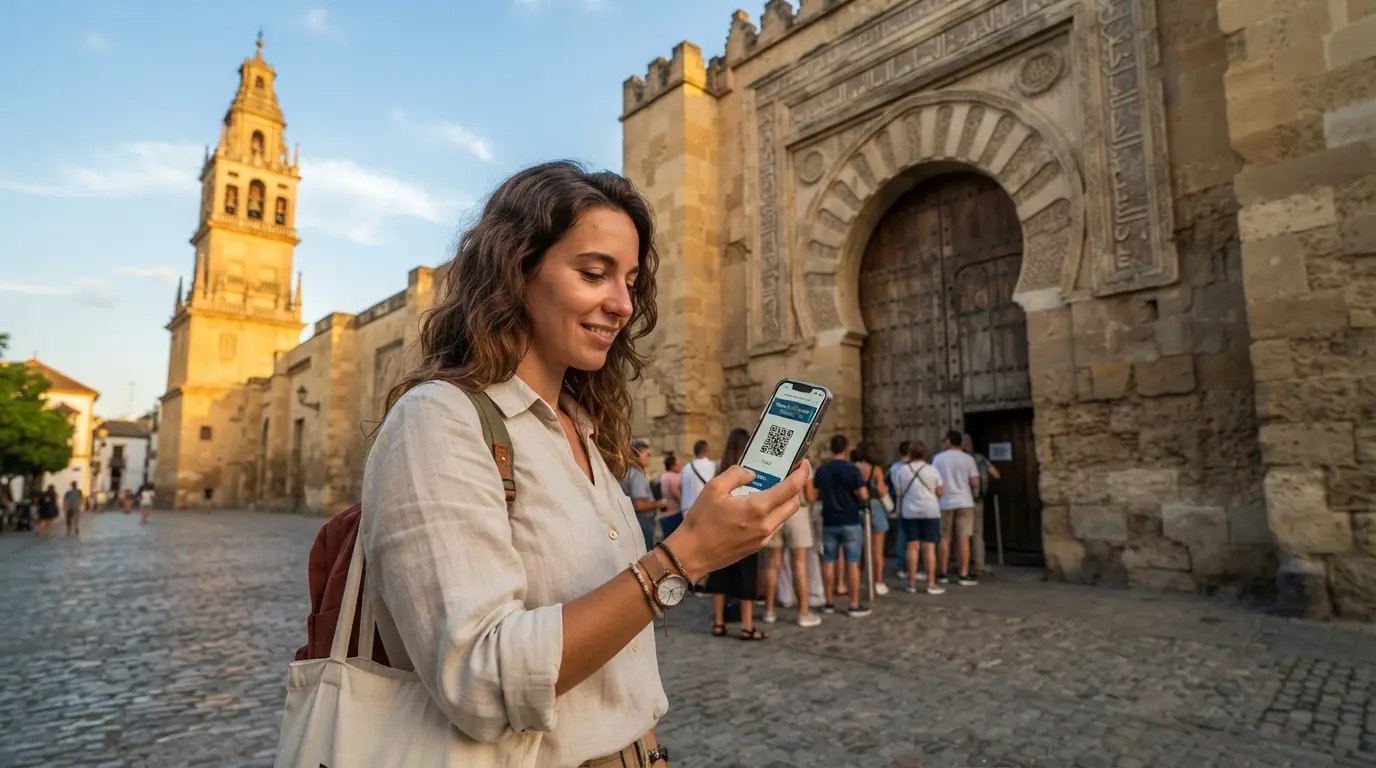
Buy the ticket once, walk in whenever the mood strikes: that's how most first-time visitors treat the Mezquita-Catedral, and it's the costliest assumption on this list. The Mosque-Cathedral doesn't run on a single continuous opening, and the tower beside it isn't covered by that ticket at all.
Explore nearby · Monument
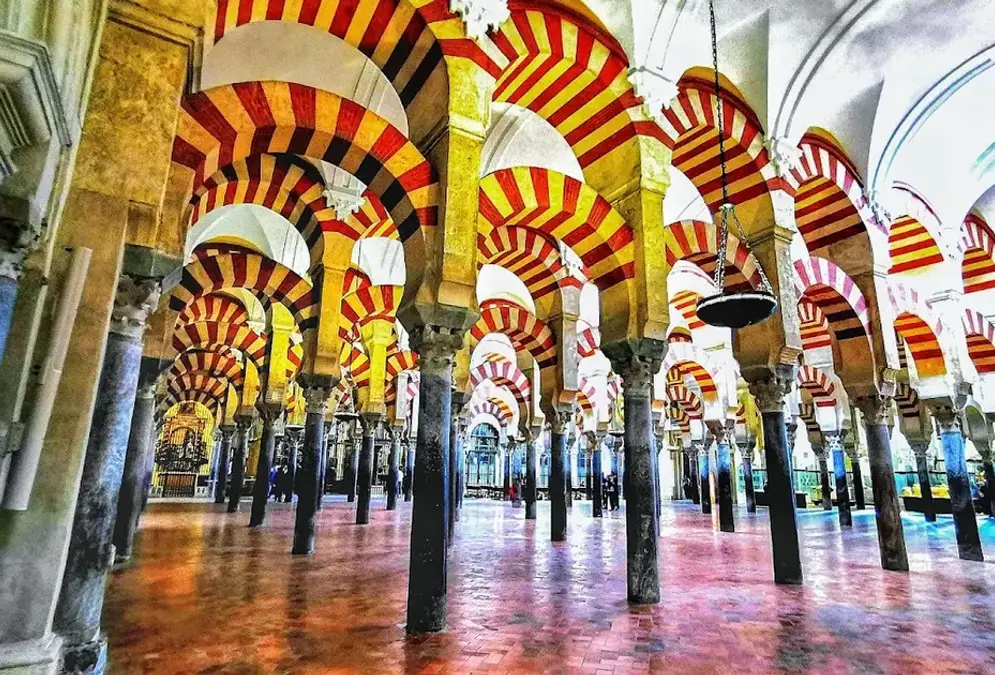
Mezquita-Catedral de Córdoba
856 columns, 1,300 years of Islamic and Christian history. UNESCO monument in Córdoba, Andalusia. Red-and-white arches, Byzantine mosaics, a Renaissance nave.
Both facts stay invisible until you're standing in the wrong queue holding the wrong assumption, usually right after booking everything else in the trip weeks in advance. It's the ticketing logic sitting under nearly every consequence in this list: one site, two separate systems, and a crowd size in the millions with no patience for a walk-up.
1. Arriving without a timed slot
The Mosque-Cathedral runs a split morning-and-afternoon schedule with a closed midday window[1], not a continuous all-day visit. Turn up mid-morning without a booked slot and you can queue straight into the closed midday window. The monument logged 2.19 million visitors in 2025, essentially flat on the previous year's 2.19 million, but that's still roughly 6,000 people a day pushing through the same two windows[3]. Book a specific entry time before you land, not after you arrive. See Mezquita tickets for how, and Mezquita-Catedral for what's inside.
2. Assuming the Bell Tower is part of the same ticket
The Torre Campanario runs its own timed slots through the day[2], sold and scheduled separately from Mosque-Cathedral admission. Travellers who book only the main ticket often find same-day tower slots gone by the time they realise they need a second one. Book both in the same session rather than treating the tower as an afterthought once you're already inside the courtyard. If you already have Mezquita tickets from a previous trip, don't assume they still cover the climb: the tower's schedule changes independently of the cathedral's. See Torre Campanario.
Mistakes 3 & 4: Medina Azahara is out of town
Guidebook maps put Medina Azahara close enough to the Judería that it reads like a stroll. It isn't. The caliphal city is a separate half-day with its own transport plan and its own weekly rhythm, closer to a day trip than a monument stop.
Skip the planning and it either eats an afternoon that should have gone to the Mezquita, or turns into a wasted transfer on the one day of the week it happens to be shut, a worse outcome on a short trip than almost anything else on this list. Get the transport and the calendar sorted first; the two mistakes below both grow out of treating the site as an extension of the old town rather than the standalone excursion it actually is.
Monday closes Medina Azahara
Medina Azahara shuts on Mondays year-round, with one exception: a Monday that falls on the eve of a public holiday. If your itinerary only has one day free for the caliphal city, check the calendar before you book the transfer, not after.
3. Not planning transport to a site outside the city
The caliphal city sits about four miles west of central Córdoba, in the Sierra Morena foothills[4], too far for a Judería walk and not on the ordinary city bus network. Visitors who assume it's a short stroll from the Mezquita end up improvising a taxi, or missing the visit window while they figure out how to get there. Plan the shuttle bus, a car, or an organised transfer before the day you go, and budget it as its own half-day rather than an add-on to the old quarter. Start with Medina Azahara tickets and the Medina Azahara guide.
4. Building a fixed itinerary without checking the weekly closure
Medina Azahara closes on Mondays year-round, with one exception: a Monday that falls on the eve of a public holiday[5]. Fold it into a rigid one-day loop without checking the calendar first, and the best case is an empty afternoon; the worst is a wasted transfer and a whole day rebuilt from scratch. That single missed Monday can force a rebooked plan if the trip is short enough. Check the week's pattern before you fix dates, alongside the rest of the city's opening hours, and confirm on Medina Azahara tickets.
Mistakes 5 & 6: Expecting the wrong thing when you arrive
Photographs oversell two of Córdoba's headline draws. Medina Azahara looks like a restored palace in every postcard; the Patios Festival looks like it runs all spring. Show up expecting either version and the visit shrinks around the gap between the picture and the reality.
The fix is the same for both: check what's actually on the ground, or on the calendar, for the specific week you travel, rather than trusting the photograph. A visitor who knows the dig is only partial, and the festival window only a fortnight, gets more out of the same days than one who arrives holding the postcard version.
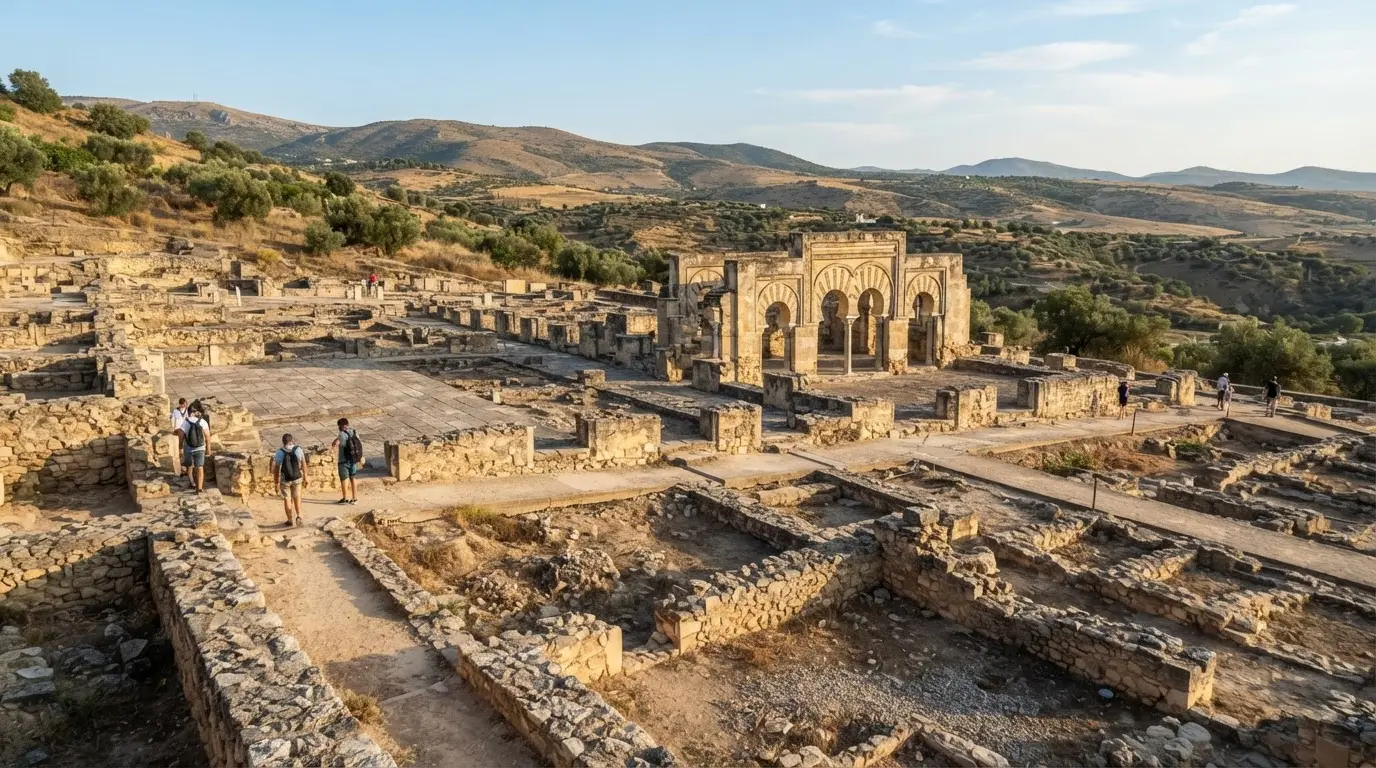
Only about 10% of Medina Azahara has been dug up since its rediscovery, expect an archaeological site, not a restored palace.
5. Picturing Medina Azahara as a restored palace
Only around 10% of the site's 112 hectares has been excavated, more than a century after its rediscovery[6]. Visitors expecting a fully reconstructed caliphal city instead find a partial archaeological dig: foundations, a museum building, and a landscape that asks you to imagine most of what's missing. That isn't a lesser visit, but it changes how much time to budget and what to expect on arrival. Start at the museum, then walk the site; the Medina Azahara guide and the monument page set expectations before you go.
6. Treating the Patios Festival as a season, not a fixed date
The Concurso de Patios has run every May since 1921[8], but the open-house competition window itself is short: 4 to 17 May in 2026, not a loose spring stretch[7]. Travel in April expecting open courtyard doors, or in June hoping they're still going, and you miss it outright. Confuse the two, and a carefully timed May trip can still land in the wrong week, doors shut, geraniums or not. If the Patios are the reason for the trip, book around the published dates first and build the rest of the itinerary second. See why that stretch is so short for how that window got fixed, and the Patios Festival guide has the full route map.
Mistakes 7 & 8: Córdoba's clock and climate
These two mistakes have nothing to do with a monument. One is about how much heat a July afternoon actually holds; the other is about how little a rushed stopover between two other cities actually buys.
The common thread is treating Córdoba as interchangeable with cooler, closer Seville and Granada, when its summer and its geography run on sharper margins than either neighbour. Heat and train speed both compress how much of the city fits comfortably into a short visit, and the margin for error here is thinner than in most cities this size.
Recommended tours
Tours are selected for quality, not commission. We earn a small fee if you book — at no extra cost to you.
7. Treating summer heat as discomfort, not a planning constraint
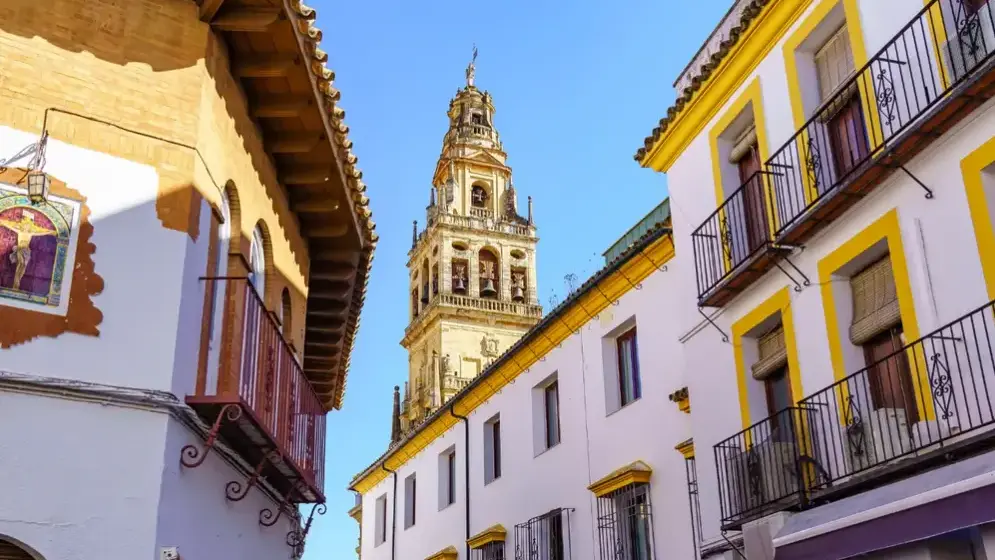
Córdoba province holds Spain's official all-time heat record, 47.6°C, recorded at La Rambla on 14 August 2021[9]. Treating July and August like any other travel month, a full day of monument-hopping with no midday break, is a heat-exposure risk, not just a comfort trade-off. The rhythm that actually works here is an early start, a shutdown through mid-afternoon, and an evening that runs late. See Córdoba in summer and best time to visit for how to build a day around it.
8. Squeezing Córdoba into a stopover between Seville and Granada
The AVE makes this mistake tempting: Córdoba–Granada runs about 90 minutes, with every Madrid or Barcelona service to Granada calling here on the way[10]. That speed is exactly why a few hours feels like enough, and it covers the Mezquita's exterior, not the timed entry inside plus a neighbourhood beyond the Judería. Decide day-trip or overnight on purpose rather than by default. Day trip or overnight and how many days work through the trade-off, and the 4-hour triage plan is built for exactly this squeeze.
Mistakes 9 & 10: Where the tour groups go
The last two mistakes aren't about a missed ticket window at all. They're about spending the whole trip inside a half-mile radius around the monuments, and never finding out what's outside it.
The Judería is dense enough to fill days on its own, which is exactly why visitors don't leave it, and exactly why they miss the neighbourhoods, and the festival geography, sitting just outside it.
Deep dive · Article
Why Córdoba Deserves More Than a Day on an Andalusia Road Trip
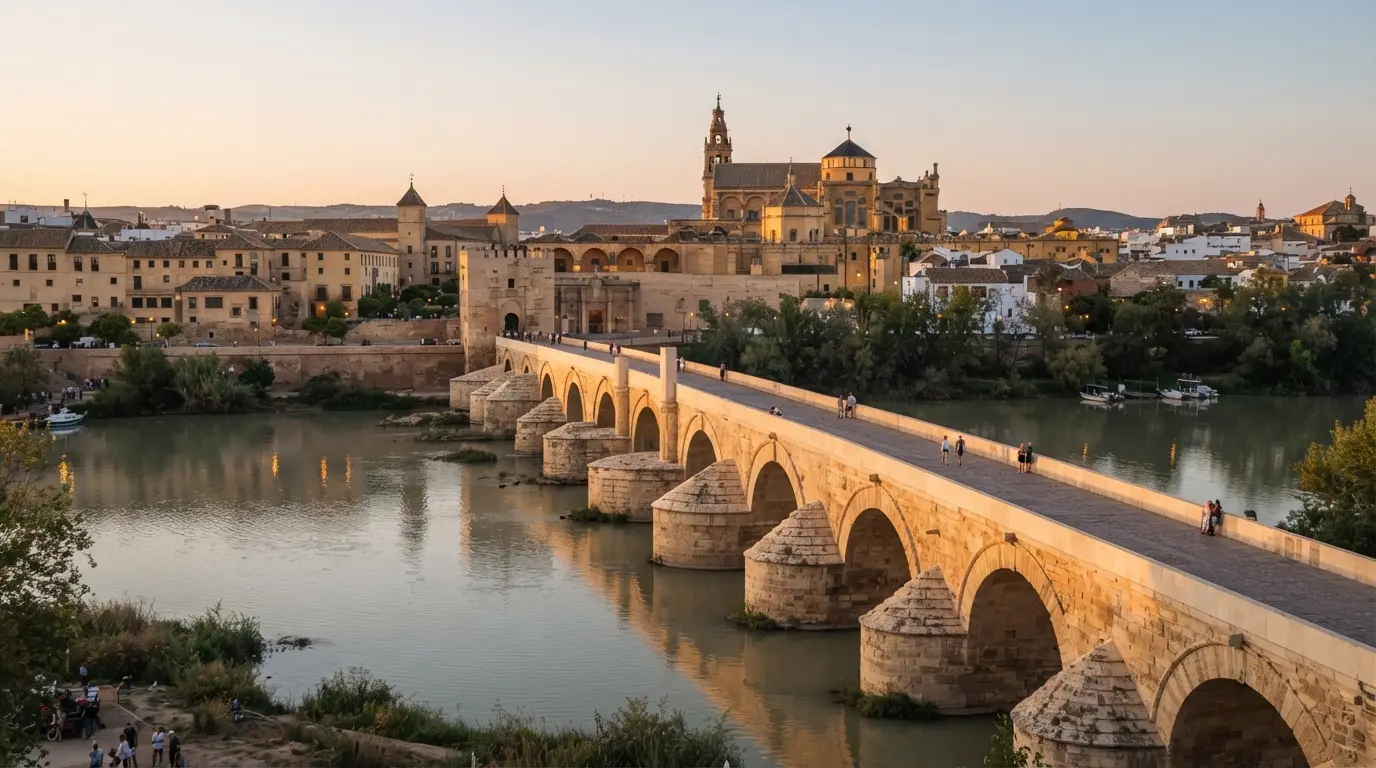
Córdoba sits where the Seville, Granada and Madrid routes cross by road and rail, making it Andalusia's hinge city and worth more than a one-day drive-by stop.
Both habits are comfortable defaults rather than conscious choices, and both quietly shrink the trip to a smaller, more crowded version of the city than the one that's actually here.
9. Defaulting to the monument-adjacent plazas for every meal
The squares ringing the Mezquita and the Alcázar run menú turístico prices for food built for turnover, not flavour, a pattern already covered in tourist trap or authentic. Some of the plazas are perfectly pleasant for a coffee; the mistake is defaulting to them for every single meal of the trip. Walk two streets past the monument before you sit down for lunch or dinner. Check best traditional restaurants for where locals actually order salmorejo and flamenquín.
10. Never leaving the Judería
The Judería is the most compact, monument-dense district, but staying inside it for the whole trip means missing where the city actually lives day to day. Even the Patios contest is centred on Alcázar Viejo, Santa Marina and San Lorenzo, not the old Jewish quarter[11], so a Judería-only itinerary misses the festival's own geography, festival dates or not. Cross the Ronda de los Tejares at least once. San Lorenzo, Santa Marina and the best neighbourhoods guide are the place to start.