Honest travel advice
Is Córdoba a tourist trap?
An honest, local answer: yes, there's a crowded day-trip window between the Mezquita and the Roman Bridge, but it lasts six hours a day and covers a fraction of the city. Here's exactly where the crowding is real, where it isn't, and how to see past it.
At a glance
- Peak crowd window
- 9:45am–4pm, Mezquita–Judería–bridge triangle
- Free, near-empty Mezquita hour
- Mon–Sat, 8:30–9:30am
- Busiest week of the year
- Early May, Patios Festival
- Mezquita visitors (2025)
- 2,191,731 (Spain's 3rd most-visited monument)
- Where the crowd never reaches
- San Basilio, San Lorenzo, La Axerquía
- When the city empties out
- After 4–5pm daily
In this guide
Jump to a section

Written by
María Fernanda González Ten years covering Córdoba's UNESCO heritage sites, sourcing from Junta de Andalucía documentation.
Published
Not a trap. A narrow window.
The fear behind this question is specific: a rushed morning queue at the Mezquita, a walk down a Judería street lined with fridge magnets, a €14 menu turístico eaten standing up, and a train back before anything real happens. That version of Córdoba exists. Most first-timers who arrive on a day trip from Seville or Madrid experience exactly that, and nothing else.
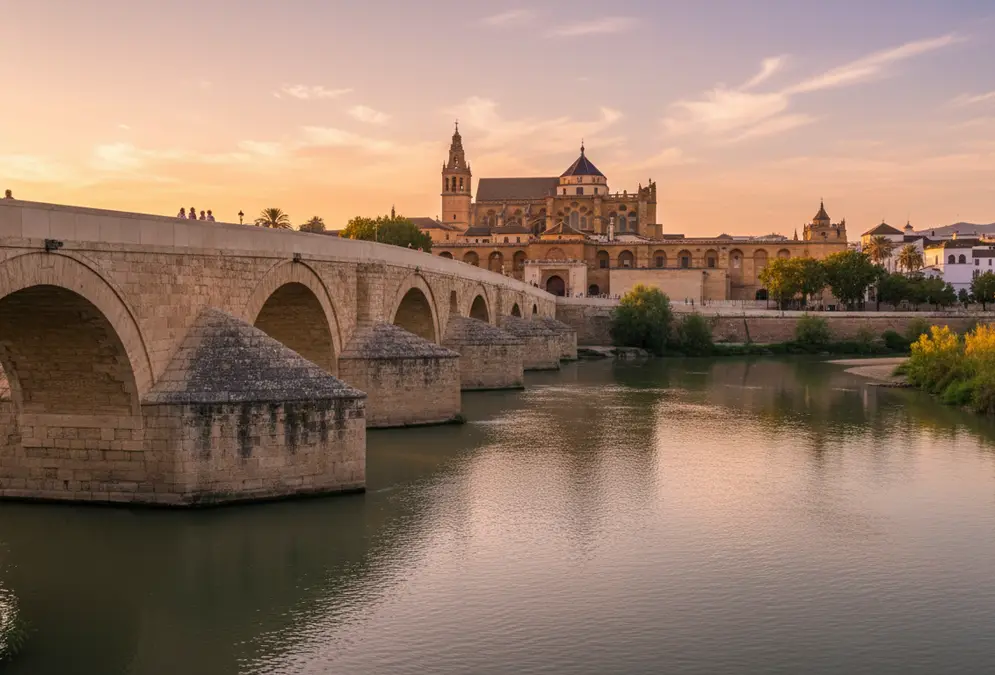
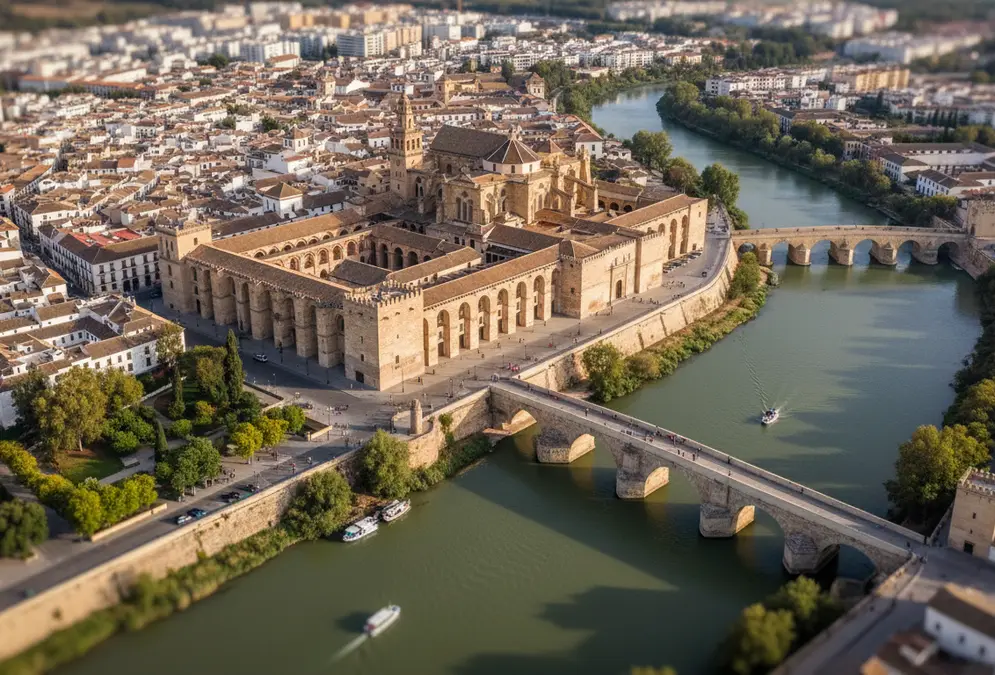
But it is not the city. It is a six-hour window inside a three-street triangle: the Mezquita, the Judería, and the Roman Bridge, roughly 9:45am to 4pm, which is when day-trip coaches are on the ground. Walk two streets outside that triangle, or show up an hour before it starts, and the crowding drops off a cliff.
So the honest verdict: Córdoba is genuinely crowded, genuinely often, in a genuinely small and genuinely predictable slice of itself. Knowing the shape of that slice is most of what you need to avoid it.
How crowded does it actually get
The numbers behind the tourist-trap reputation are real, not exaggerated. Here is what the data actually shows, without softening it.
Mezquita-Catedral: 2.19 million a year
In 2025 the Mezquita-Catedral drew 2,191,731 visitors, making it Spain's third most-visited monument. Almost all of that footfall funnels through a single entrance and a single midday window, which is exactly why the queue outside can look intimidating by 10am.
Overnight stays: under a million a year
Córdoba logged around 449,300 international and 522,300 domestic overnight stays in 2023, a fraction of the Mezquita's annual footfall. The exact day-trip-versus-overnight split isn't published, but the gap between those two figures points toward a lot of the midday crowd arriving, seeing a handful of sights, and leaving the same day.
The Patios Festival: 150,000 in two weeks
In 2018, roughly 150,000 people visited during the May Patios Festival. That is the single most concentrated crowd event on Córdoba's calendar, packed into a handful of streets in Santa Marina and San Lorenzo over about two weeks.
The heat that keeps day trips short
Córdoba has the highest average summer highs in Spain and Europe, around 37°C in July and August. That heat is part of why day-trip visits compress into a narrow late-morning-to-mid-afternoon block: nobody is standing in an open plaza at 1pm in August by choice.
None of this makes Córdoba part of Spain's wider overtourism backlash. The crowding described above is a local, six-hour day-trip pattern, not the housing-and-protest crisis playing out in Barcelona or the Balearics — see our full breakdown of why Córdoba isn't part of that 2026 story.
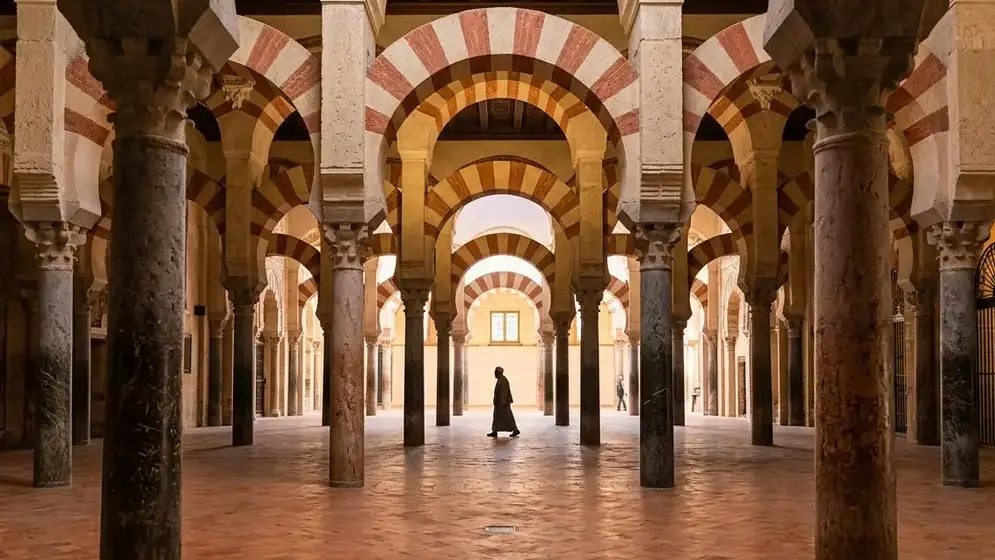
Monday to Saturday, 8:30–9:30am, the Mezquita is free to enter and the columns are nearly empty: the one hour most day-trippers never see
The tourist-trap symptoms, and where they actually live
Every symptom that makes travelers ask this question is real. What is worth knowing is exactly how small the area is where they occur.
The 9:45am–4pm coach window
Most day-trip visitors follow the same script: arrive around 9:45am, queue for the Mezquita, walk the Judería, eat a rushed lunch, photograph the Roman Bridge, and catch a mid-afternoon train out. That six-hour window is when the triangle is at its most saturated, and it is also the window almost every visitor sees, which shapes the whole reputation.
Souvenir density in the Judería's main streets
Fans, flamenco dolls, and fridge magnets are genuinely concentrated along the short stretch between the Mezquita and the Calleja de las Flores. It is fair to find that stretch overcommercialized. It is also just one route through a much larger old town.
Menu turístico lunches near the monuments
Restaurants immediately facing the Mezquita and the main Judería streets price and cook for volume, not for return custom. Walk a few blocks into San Lorenzo or La Axerquía and the same €10–13 you would have paid for a rushed set menu buys a proper, unhurried lunch where locals actually eat.
Defaulting to whatever's closest to the monuments is one of several avoidable slip-ups covered in our first-trip mistakes guide.
“Late afternoon is when the theatre ends. The coach parking clears, the ticket touts pack up, and by the time the streetlights come on, the Judería has gone back to being somebody's actual neighborhood.”
What changes after the buses leave
This is the part that never makes it into the tourist-trap complaint, because most people who complain about the crowds have already left by the time it happens. From around 4–5pm, the coach parties clear out, the day-trip trains fill up, and the medieval core of Córdoba stops performing for an audience.
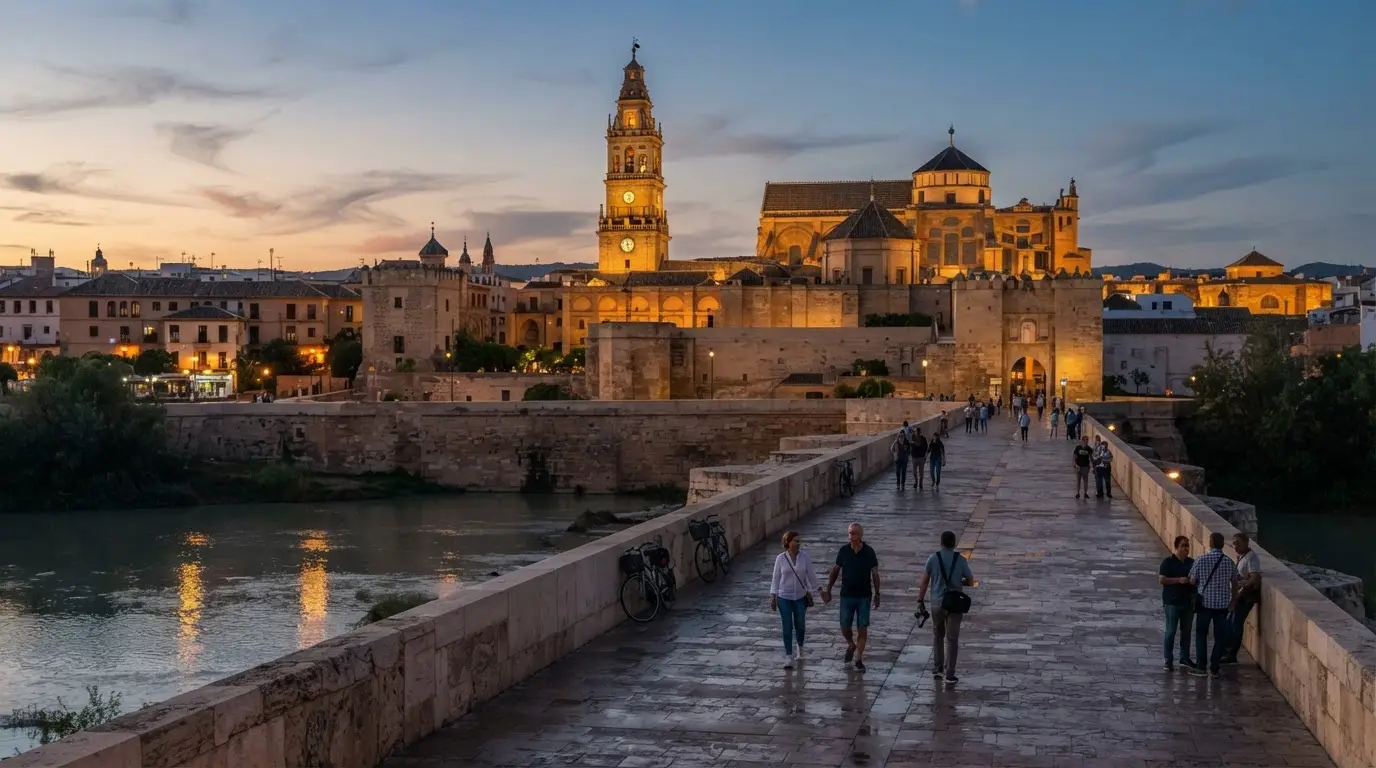
Families reappear for their evening walk. Bars in the Judería that were serving overpriced sangria to tour groups an hour earlier start filling with regulars. The same streets that felt like a theme park at noon feel like a small Andalusian city by 7pm, and they stay that way until well past midnight in summer.
Anyone judging Córdoba purely on a midday visit is judging half a day out of a city that runs on two very different rhythms. For the fuller version of how to exploit that split, including siesta-hour lunch spots and the evening velada window, see our slow travel Córdoba guide.
Where locals actually live
Day-trip visitors rarely leave the Mezquita–Judería–bridge triangle, which means three entire neighborhoods just outside it see almost none of the tourist-trap crowding.
San Basilio
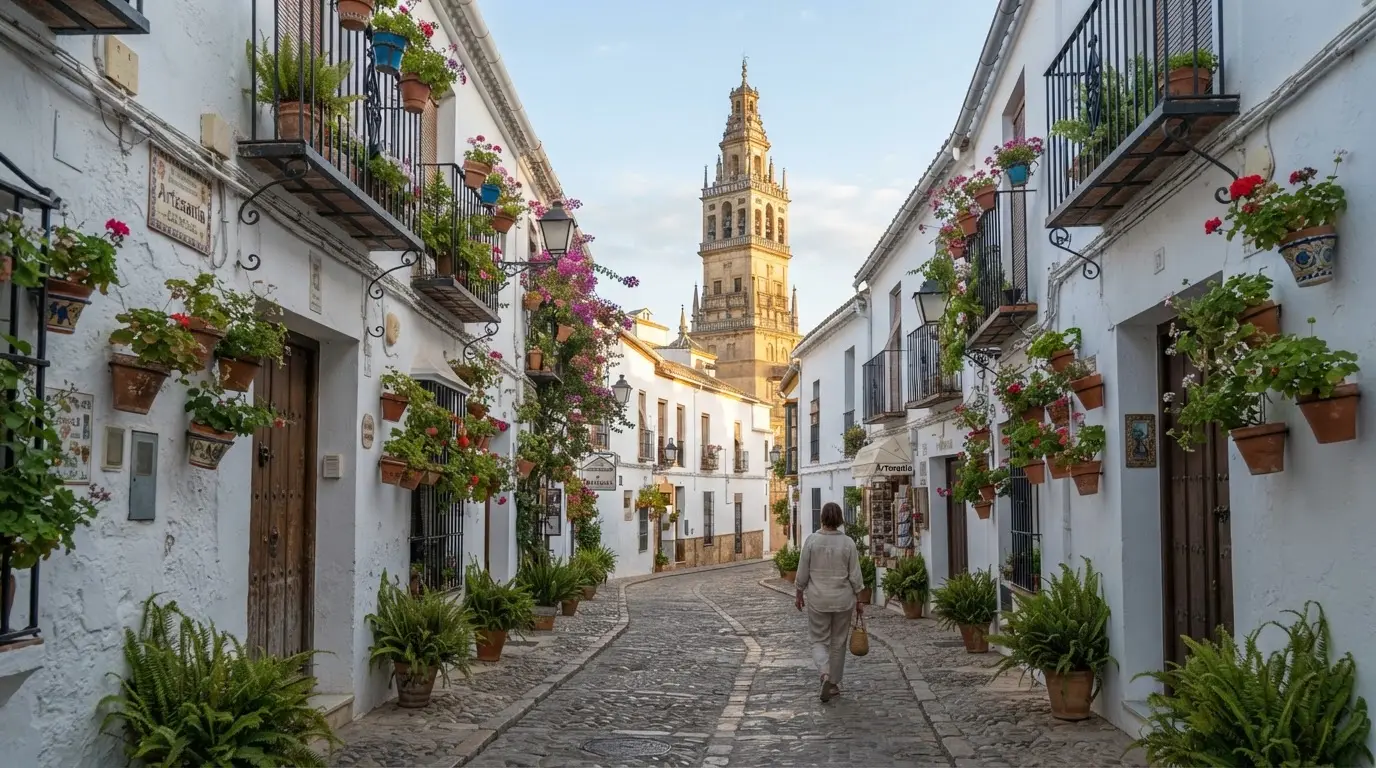
Just south of the Alcázar, and home to some of the best private patios in the city, most of them open to visitors only during the May festival. The rest of the year it is quiet residential streets, not a stop on any coach itinerary.
San Lorenzo
Northeast of the old town, anchored by Córdoba's most striking Fernandine church. During the Patios Festival, this and neighboring Santa Marina are where some of the most genuinely lived-in courtyards open their doors, not the polished, tour-ready version found closer to the Mezquita.
La Axerquía
Where people actually live day to day: cheap lunch menus, corner bars, and essentially zero tourist infrastructure. It takes a bit of time and no special access to find, which is exactly why a day trip never gets there.
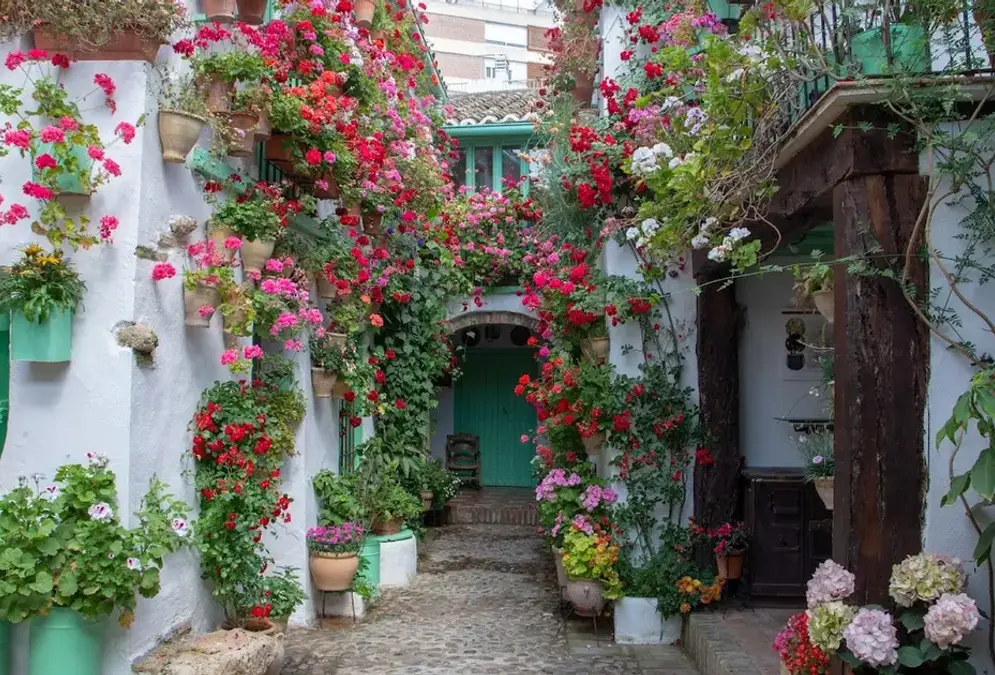
San Basilio's private patios: the authentic Córdoba that the day-trip triangle never reaches
Córdoba vs Seville: who's more touristy
Travelers who have done both cities consistently describe Córdoba as the calmer, less commercialized stop, and there is a structural reason for that beyond opinion: Córdoba's crowding is concentrated into one route and one daily window, while Seville's tourist traffic spreads across a much larger old town and runs for longer through the day. Hard, apples-to-apples visitor-density figures for both cities in a single year are difficult to source, so treat the comparison as directional rather than exact.
What is measurable is Córdoba's overnight-stay volume against its single-monument footfall: roughly 971,000 combined international and domestic overnight stays in 2023, against 2.19 million Mezquita visitors in 2025. Much of that gap is day-trip traffic, and it's the same traffic behind most of the tourist-trap complaint in the first place.
For the full side-by-side on cost, culture, and crowds, see our Córdoba vs Seville comparison.
When to visit to skip the crowds
Daily timing
Before 9:30am
Free Mezquita entry, Monday to Saturday, and a near-empty forest of columns. The Judería and Roman Bridge are also at their quietest before the coaches arrive.
9:45am–4pm (peak)
The tourist-trap window. Expect queues at the Mezquita, dense foot traffic in the Judería, and inflated set menus near the main monuments. This is also, unavoidably, when most sights are open, so plan around it rather than skip it entirely.
After 4–5pm
Coaches leave, the historic centre empties, and evening life takes over. Best window for a relaxed walk through the Judería or a proper dinner in San Lorenzo or Santa Marina.
Seasonal guide
Early May
The busiest window of the year: the Patios Festival drew around 150,000 visitors in 2018 alone. Visit weekday mornings if you want the open courtyards without the weekend crush.
Jun–Aug
Highs around 37°C keep casual strolling short, which thins the crowds outside the early morning and evening hours, though the Mezquita itself stays busy midday regardless of heat.
Sep–Nov
Comfortable temperatures, no major festival crowd, and noticeably shorter Mezquita queues than spring. One of the best windows to test the "tourist trap" question for yourself.
Dec–Feb
The quietest months in the old town. Some smaller sites trim their hours, so check ahead, but the day-trip triangle is as close to empty as it gets.
The one-sentence takeaway
If your only visit to Córdoba is a midday walk through the Mezquita and the Judería, the tourist-trap complaint will feel accurate. Add one early morning or one evening, and it stops.
Ready to see past the triangle?
Start with a neighborhood the day-trippers skip, or time your Mezquita visit for the free morning window.
Frequently asked questions
Is Córdoba a tourist trap?
No, but it has a real crowd problem for about six hours a day. Between roughly 9:45am and 4pm, day-trippers fill the Mezquita, the Judería, and the Roman Bridge in a tight triangle. Outside that window, and outside that triangle, Córdoba is a working Andalusian city with almost no tourist infrastructure at all. The trap only exists if you never leave the triangle.
Is Córdoba too touristy to visit?
No. The Mezquita-Catedral drew 2,191,731 visitors in 2025, making it Spain's third most-visited monument, but that traffic concentrates almost entirely in the old town's tourist triangle during the day. Neighborhoods like San Basilio, San Lorenzo, and La Axerquía sit minutes away and see almost none of it.
Is Córdoba worth visiting despite the crowds?
Yes. The crowding is real but predictable and avoidable: it clusters around one route and one time window. Arrive for the free Mezquita entry before 9:30am, or stay past 5pm when the tour buses leave, and you get the monuments with a fraction of the daytime crush.
Is Córdoba more or less touristy than Seville?
Guidebooks and travelers consistently describe Córdoba as calmer and less crowded than Seville, though hard, directly comparable visitor-density figures for both cities in the same year are hard to pin down. What is measurable is that Córdoba's day-trip crowding is concentrated into a narrow window, while Seville's tourist traffic runs longer through the day. See our full Córdoba vs Seville comparison for the details.
When is Córdoba least crowded?
Before 9:30am and after 5pm, daily. Seasonally, avoid the first two weeks of May, when the Patios Festival draws roughly 150,000 visitors into a handful of neighborhoods. Late autumn and winter are the quietest months to walk the old town without competing for pavement space.
Do the souvenir shops in the Judería mean Córdoba has sold out?
The souvenir density in the Judería's main streets is real, and it is a fair complaint if that is all a visitor sees. But it is confined almost entirely to the short stretch between the Mezquita and the Calleja de las Flores. Walk two streets over into San Basilio or La Axerquía and the shopfronts are grocers, bars, and workshops, not fridge magnets.
Is the Patios Festival too crowded to enjoy?
In its peak days, yes, it gets dense. The festival drew around 150,000 visitors in 2018 alone, concentrated into a two-week window and a handful of streets in Santa Marina and San Lorenzo. Visit on a weekday morning rather than a weekend afternoon, and the crowding drops sharply while the patios stay open.
Is a day trip to Córdoba enough, or does the tourist-trap feeling only lift if you stay overnight?
A day trip shows you the monuments but keeps you inside the crowded window the whole time; most day-trippers arrive around 9:45am and leave by mid-afternoon. Staying even one night lets you catch the free morning Mezquita entry and the evening hours after 5pm, which is when the city stops feeling like a tourist stop and starts feeling like Córdoba. See our day trip vs overnight guide.
Further reading
Sources and further reading
4 references Show Hide
- Andalucia.com: Tourism Statistics
Visitor and overnight-stay statistics for Córdoba and the Mezquita-Catedral
- Wikipedia: Córdoba, Spain (opens in a new tab)
Background on Córdoba's climate, including its summer temperature extremes
- Wikipedia: Mosque–Cathedral of Córdoba (opens in a new tab)
History and visitor context for the Mezquita-Catedral
- Wikipedia: Courtyards Festival of Córdoba (opens in a new tab)
Background and visitor numbers for the May Patios Festival
Skip the Queue, Not the City
Tours are selected for quality, not commission. We earn a small fee if you book — at no extra cost to you.
Best Seller
Best Seller
Best Seller
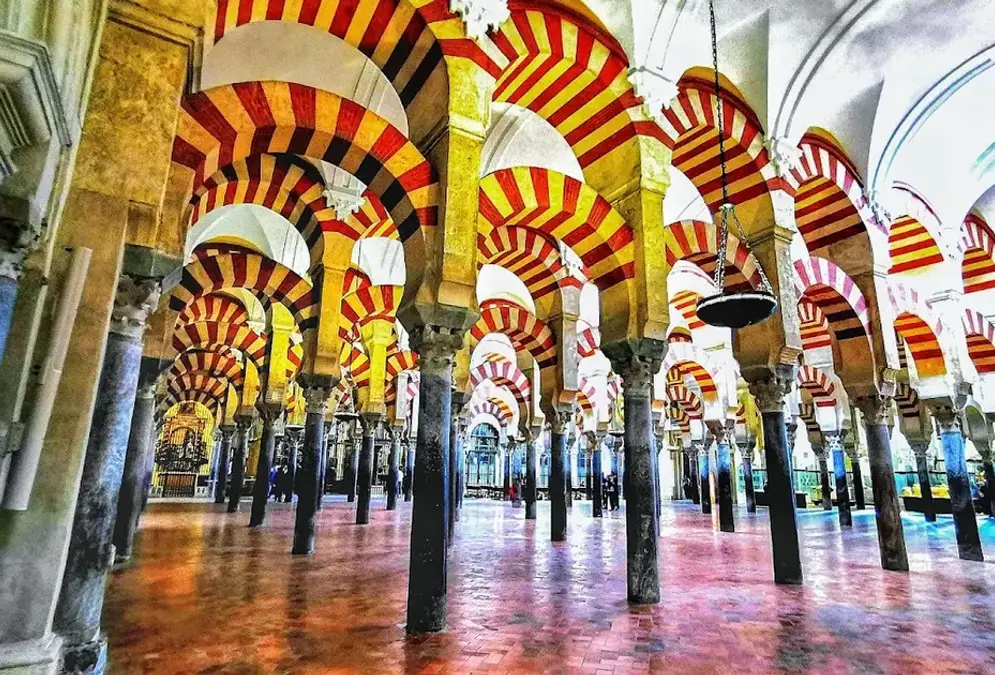
Mosque-Cathedral Skip-the-Line Guided Tour
Skip the queue and explore the Mezquita-Cathedral with a knowledgeable local guide. Discover 13 centuries of layered history in one of Spain's most iconic monuments.
Skip the line 1.5 hours
From €29
4.7 (7,293 reviews)
Reserve Your Spot
✓ Verified GetYourGuide reviews
Books up weeks ahead in peak season
Mosque-Cathedral E-Ticket with Audio Guide
Explore the Mosque-Cathedral at your own pace with a detailed audio guide that brings every arch, mihrab, and chapel to life. Skip the ticket queue with your e-ticket.
Self-guided
From €18.50
Less than a restaurant lunch
4.2 (3,722 reviews)
Reserve Your Spot
✓ Verified GetYourGuide reviews
Books up weeks ahead in peak season
Alcazar Guided Tour and Skip-the-Line
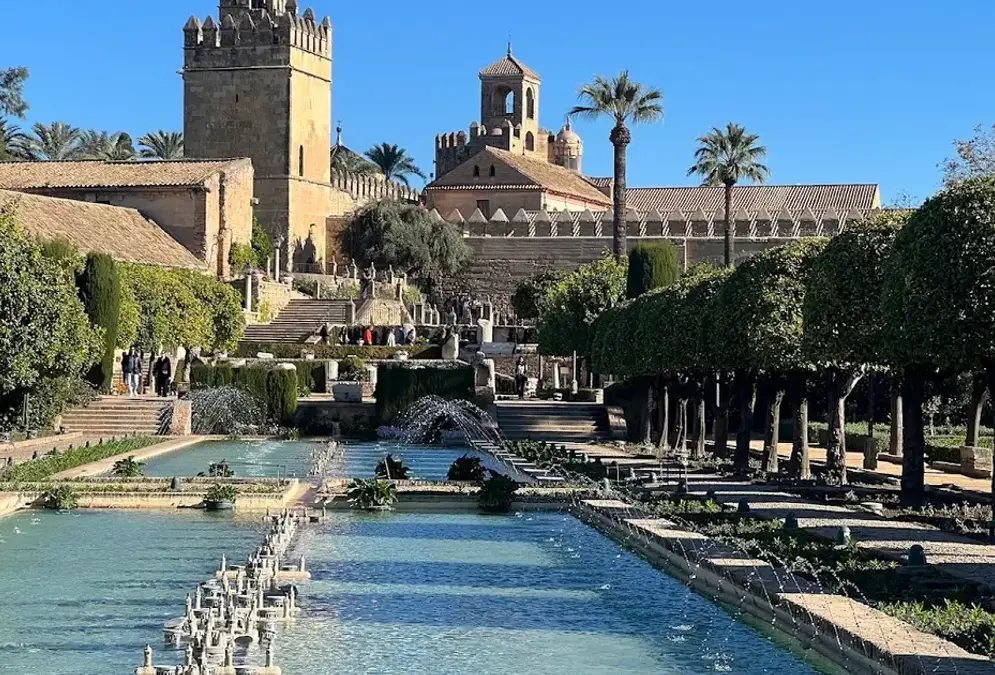
Bypass the queue and explore the Alcázar de los Reyes Cristianos with a guide. Admire the royal halls, ancient mosaics, and the beautiful terraced gardens.
Skip the line 1.5 hours
From €19
Less than a restaurant lunch
4.2 (1,863 reviews)
Reserve Your Spot
✓ Verified GetYourGuide reviews
Books up weeks ahead in peak season
Mosque-Cathedral and Alcazar Tour
A combined guided tour of Córdoba's two most iconic monuments: the Mosque-Cathedral and the Alcázar de los Reyes Cristianos, with skip-the-line access included.
Skip the line 2.5 hours
From €44
4.6 (683 reviews)
Reserve Your Spot
✓ Verified GetYourGuide reviews