Travel planning
Is Córdoba affected by overtourism?
Spain's 2026 anti-tourism protests and new visitor taxes are concentrated in Barcelona, the Balearics and the Canaries. Here's where Córdoba actually stands, with the visitor numbers to back it up.
At a glance
- Cities in the 2026 crisis
- Barcelona, Balearics, Canaries, San Sebastián, Málaga
- Córdoba named in coverage
- No
- Mezquita-Catedral visitors, 2025
- 2,191,731 (3rd most-visited monument in Spain)
- Visitor levy planned for Córdoba
- None announced
- Protests began
- April 2024
- Córdoba's approach
- Free early Mezquita entry, capped Patio Festival, no new legislation
In this guide
Jump to a section

Written by
María Fernanda González Ten years covering Córdoba's UNESCO heritage sites, sourcing from Junta de Andalucía documentation.
Updated Published
No. Córdoba isn't part of Spain's 2026 overtourism story.
Spain has had a real, sustained anti-tourism movement since April 2024, and in 2026 it is producing actual policy: stacked tourist-tax hikes in Barcelona, a scaling ecotasa across the Balearic Islands, and new municipal charges rolling out in the Canary Islands. Córdoba is not named in that coverage. It doesn't appear in the detailed regional breakdowns of new caps and fees, and it isn't listed among the cities where the protest movement has taken hold.
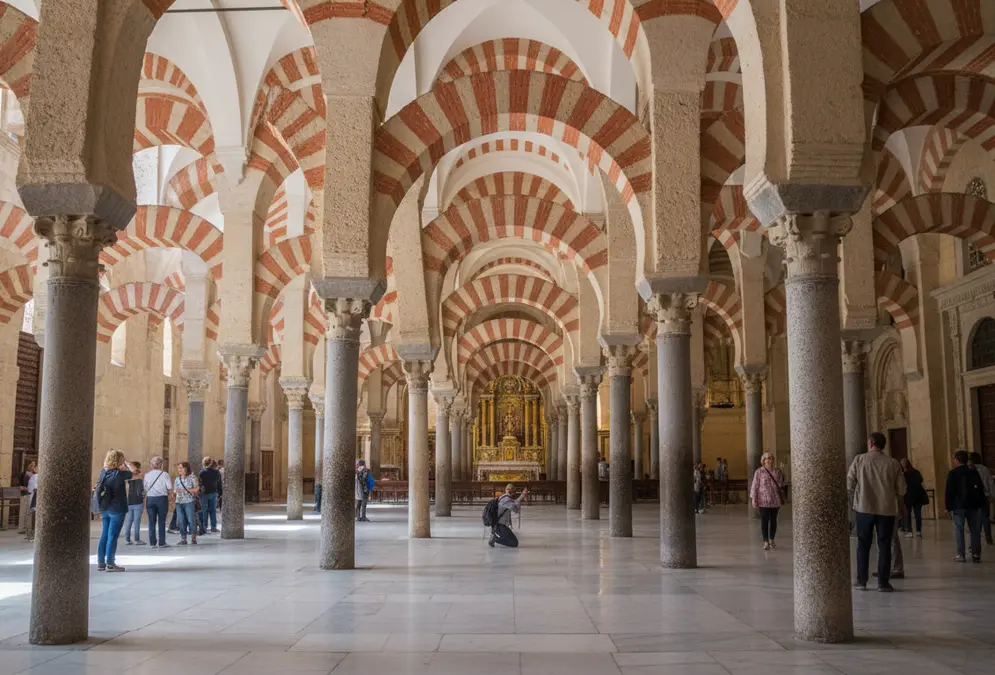
That's not because Córdoba is quiet or empty. The Mezquita-Catedral pulled in over 2.1 million visitors in 2025, ranking third among Spain's most-visited monuments. Córdoba is doing well by tourism-industry standards. It just isn't producing the housing pressure, short-term-rental crunch, or resident backlash that turned Barcelona and the islands into the story everyone's talking about.
If you're planning a trip and wondering whether you'll run into the same protests you've read about elsewhere in Spain, the short version is: unlikely. What follows is the actual breakdown of who's affected, who isn't, and what the numbers say about Córdoba specifically.
Where Spain's 2026 overtourism crisis is actually happening
The protest movement that began in April 2024 has stayed concentrated in a handful of places, and the 2026 tax and cap policies map almost exactly onto them.
| Destination | What's happening |
|---|---|
| Barcelona | Stacked regional + municipal levy reaching about €7.50 per person, per night in five-star hotels; all short-term rentals being phased out by 2028. |
| Balearic Islands (Mallorca, Ibiza, Menorca) | The ecotasa scales by accommodation type and season, and the islands were early, coordinated centres of the 2024 protest movement. |
| Canary Islands | Charges applied municipality by municipality rather than region-wide, moving more slowly than Barcelona or the Balearics but still expanding. |
| San Sebastián & Málaga | Named among the mainland cities where demonstrations have taken place since 2024, alongside Barcelona. |
| Granada | Joined a round of coordinated demonstrations in June 2025 alongside Palma de Mallorca, Ibiza and San Sebastián, an isolated event rather than a sustained campaign. |
| Córdoba | Not named in the 2024–2025 protest record or in any 2026 regional tax or cap policy. |
Spain's policy response has stayed regional and municipal rather than national: there's no single country-wide visitor cap. That's part of why the picture varies so much between destinations, and why a city can sit entirely outside the story even while the national headlines make it sound like a Spain-wide crisis.
Why Córdoba isn't part of it
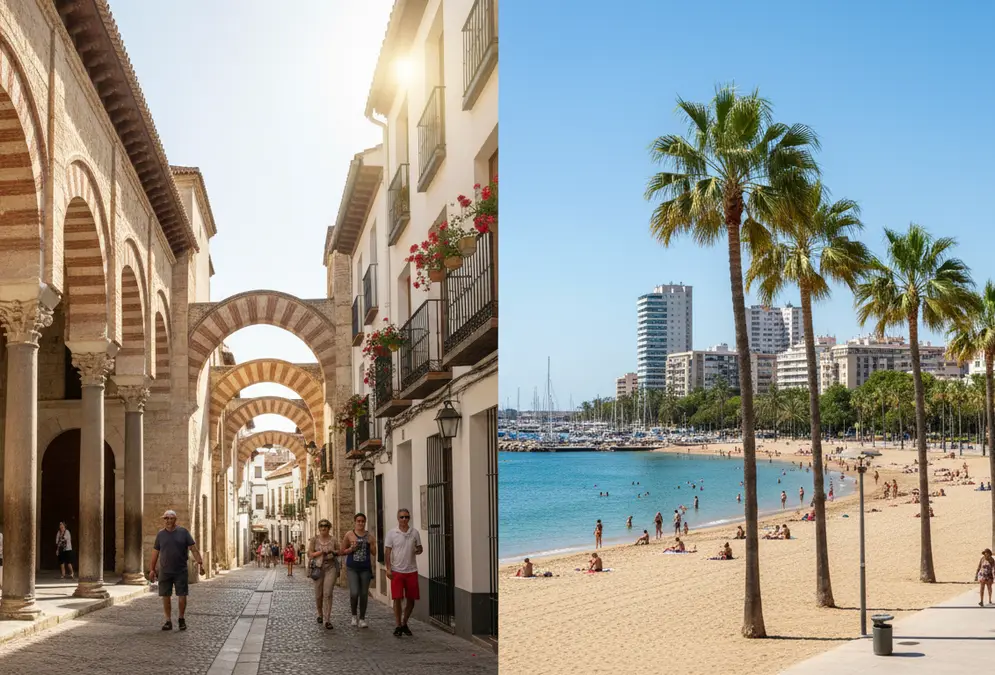
The cities driving Spain's overtourism debate share a specific combination: a huge volume of short-stay visitors, a housing stock that landlords can convert to tourist rentals faster than local families can compete for it, and a geography (islands, a compact old town) that makes crowding visible and immediate. Barcelona's Gothic Quarter, Palma's old town and Ibiza's coastline all fit that pattern. Córdoba's historic centre, while dense with monuments, doesn't carry the same residential displacement pressure, and its visitor base skews more toward day-trippers and short overnight stays than long-term rental disruption.
That shows up in the policy response too. Barcelona and the Balearics are legislating, because their governments are responding to a documented housing and crowding crisis with a political constituency demanding action. Nothing comparable has been announced for Córdoba, Seville, or most of inland Andalusia. The absence of a tourist tax here isn't an oversight; it reflects the absence of the underlying pressure that produced one elsewhere.
A note on scale
Córdoba's tourism numbers are genuinely strong, not marginal. The Mezquita-Catedral's 2.1 million visitors in 2025 put it ahead of most cathedrals and museums in the country. The distinction that matters isn't "Córdoba gets fewer visitors": it's that the volume hasn't translated into the housing and crowding pressure that triggered protests and levies elsewhere.
That said, "no national overtourism crisis" isn't the same as "no crowds at all." Córdoba does have a real, predictable crowding window around the Mezquita and the Judería each day — see our honest tourist-trap verdict for exactly when and where that happens.
“A city can fill up without breaking. That's the quiet distinction Córdoba keeps making, one weekday morning at a time.”
Córdoba's actual visitor numbers
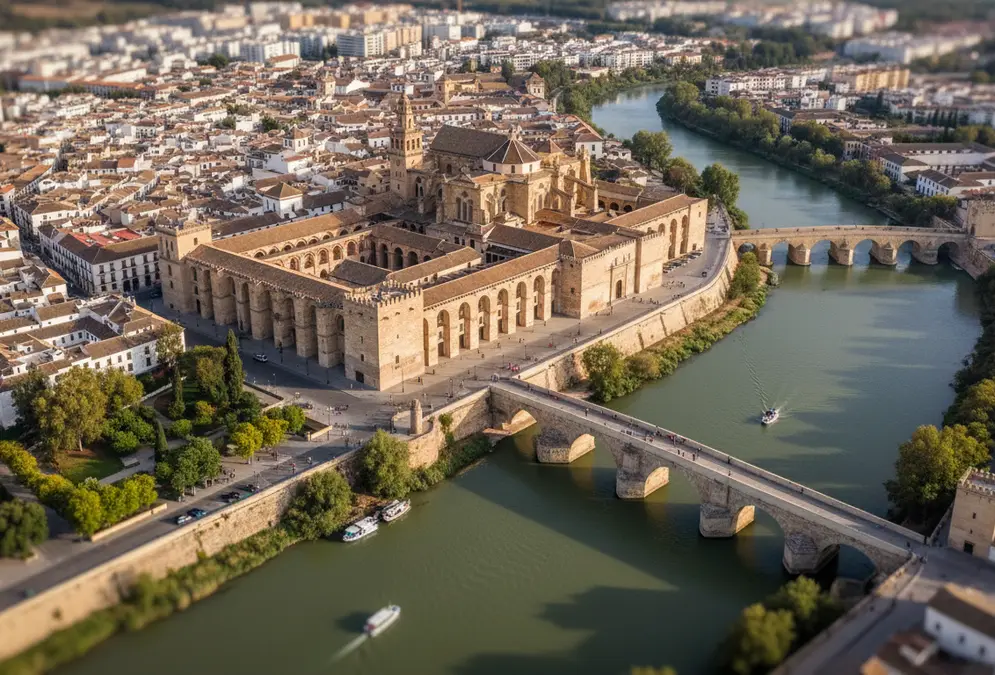
In 2025, the Mezquita-Catedral recorded 2,191,731 visitors, placing it third among Spain's most-visited monuments. For the mechanics behind that number — the queues, the capacity controls, and why a hard cap keeps getting rejected — see our analysis of how the Mezquita handles two million visitors a year. That is a heritage site performing at a serious national scale, in a city whose historic centre covers barely 1.5 square kilometres.
What Córdoba manages differently is the spread. The free Mezquita entry window, Monday to Saturday from 8:30 to 9:30am, pulls a meaningful share of visitors away from the mid-morning peak. The Patio Festival in May is self-limiting by design: it only opens as many private courtyards as residents choose to open that year, so demand can't outgrow supply the way it can with hotel beds. And Medina Azahara, 8km outside the city, draws day visitors without adding pressure to the old town's housing stock at all.
None of that is a formal "sustainable tourism strategy" announced by the city; it's closer to how the geography and the calendar already work. But the effect is the same one Barcelona and the Balearics are now trying to legislate their way toward: visitor numbers that a UNESCO city can absorb without the resident backlash that made international news elsewhere in Spain this year. Travellers who want to lean into that same rhythm on their own visit can follow the timing windows in our slow travel Córdoba guide. The clearest way to skip the crowd altogether is timing rather than tactics: our guide to Córdoba's off-season covers why November through March runs at a fraction of the May and Patio Festival footfall, at the same admission price.
That combination — record demand absorbed without the housing pressure or protest backlash seen elsewhere — is the case Córdoba makes in Spain's inland travel shift, the broader move in visitor growth the country's own tourism ministry says is now favouring secondary, rail-connected cities.
Planning around the crowds you'll actually find
Córdoba's real crowd patterns follow the free Mezquita entry window and the mid-morning tour-group rush, not a citywide overtourism problem.
Frequently asked questions
Why isn't Córdoba in the overtourism headlines like Barcelona or the Balearics?
Because the sustained anti-tourism campaigns that began in April 2024 have stayed concentrated in a specific set of destinations: Barcelona, the Balearic Islands, the Canary Islands, San Sebastián and Málaga. Córdoba does not appear in the detailed 2026 coverage of that wave, and it isn't named in any of the regional tourist-tax or visitor-cap announcements driving it. The city gets heavy footfall at the Mezquita-Catedral, but not the housing displacement or short-term-rental squeeze that put the protest cities on the news.
How many visitors does the Mezquita-Catedral attract compared to Barcelona's main attractions?
The Mezquita-Catedral drew 2,191,731 visitors in 2025, making it the third most-visited monument in Spain. That is a serious number for a city of Córdoba's size, and it shows the site is thriving rather than struggling for attention. What it doesn't come with is Barcelona's crowding problem: Córdoba's old town is roughly six times the size, per visitor, of Barcelona's Gothic Quarter footprint, and there's no equivalent of the Sagrada Família queues spilling into residential streets.
What is Córdoba's approach to sustainable tourism compared to other Spanish cities?
Córdoba hasn't needed to legislate its way out of an overtourism problem, so there is no equivalent of Barcelona's Law 2/2026 or the Balearic ecotasa on the books. Management here is quieter: the free Mezquita entry window (8:30–9:30am on weekdays) spreads out demand, the Patio Festival is capped by the number of private courtyards that choose to open, and Medina Azahara's excavation schedule naturally limits how many people can be on site at once.
Are there plans for visitor levies or restrictions in Córdoba?
None that have been announced. Spain's 2026 tourist-tax activity is running at a regional and municipal level: Catalonia and Barcelona's stacked levies, the Balearic Islands' seasonal ecotasa, and city-level charges rolling out across the Canary Islands. Córdoba, and Andalusia more broadly, isn't part of that policy wave. If that changes, it would show up first in Junta de Andalucía or Ayuntamiento de Córdoba announcements, not in the same headlines covering Barcelona and the islands.
Did Córdoba have any anti-tourism protests in 2025 or 2026?
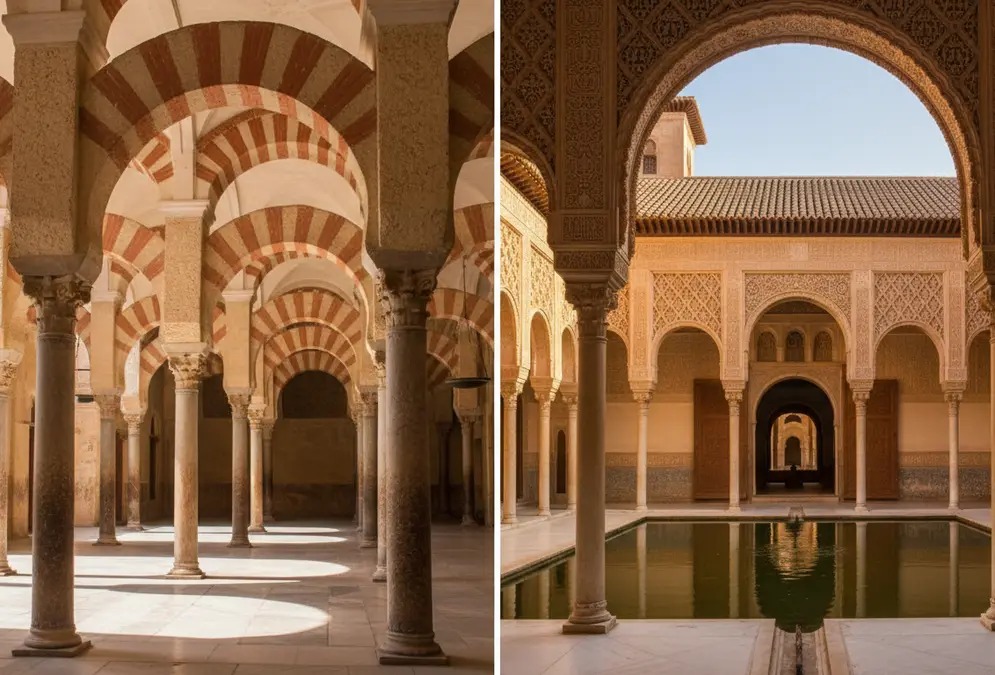
No confirmed protest activity in Córdoba appears in the record of Spain's 2024–2025 anti-tourism movement. Neighbouring Granada did join a round of coordinated demonstrations in June 2025, alongside Palma de Mallorca, Ibiza and San Sebastián, but that was an isolated event rather than the sustained campaign seen in Barcelona and the islands. Córdoba wasn't among the cities named.
Further reading
Sources and further reading
4 references Show Hide
- TravelersToday — Southern Europe Overtourism 2026 (opens in a new tab)
2026 breakdown of new visitor caps, fees and protest activity across Barcelona, the Balearic Islands and the Canary Islands
- Wikipedia — 2024–2025 Anti-tourism Protests in Spain (opens in a new tab)
Timeline and geography of Spain's anti-tourism protest movement, including which cities have been affected
- Travel And Tour World — Spain's Most-Visited Monuments 2025 (opens in a new tab)
2025 visitor figures for Spain's top monuments, including the Mezquita-Catedral de Córdoba
- Wikipedia — Córdoba, Spain (opens in a new tab)
General background on Córdoba's history, geography and tourism profile
Recommended Tours & Activities
Tours are selected for quality, not commission. We earn a small fee if you book — at no extra cost to you.
Best Seller
Best Seller
Best Seller
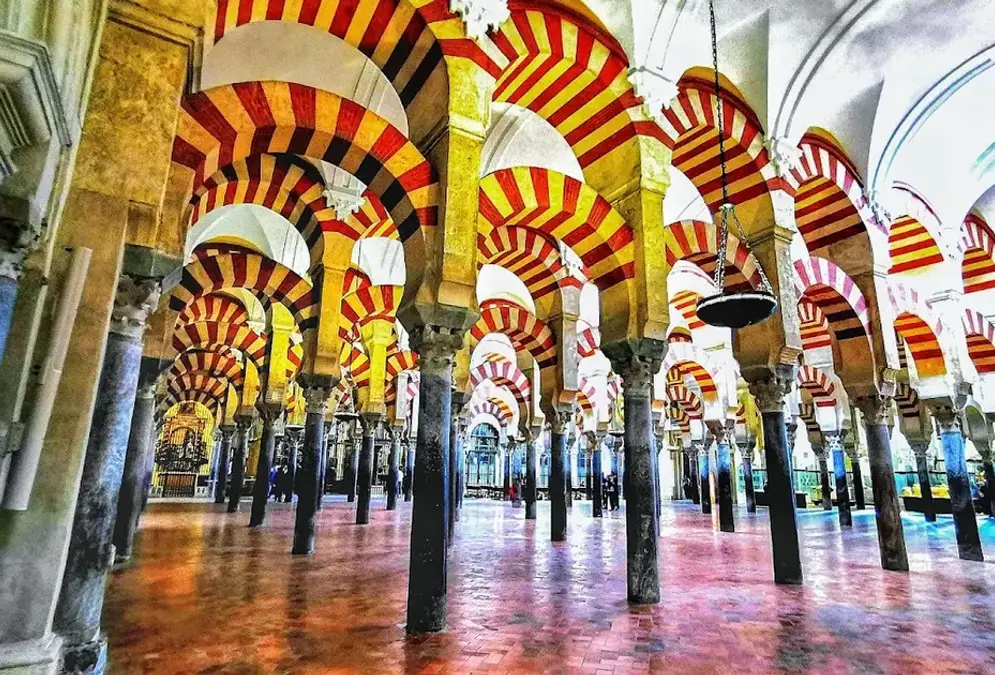
Mosque-Cathedral Skip-the-Line Guided Tour
Skip the queue and explore the Mezquita-Cathedral with a knowledgeable local guide. Discover 13 centuries of layered history in one of Spain's most iconic monuments.
Skip the line 1.5 hours
From €29
4.7 (7,293 reviews)
Reserve Your Spot
✓ Verified GetYourGuide reviews
Books up weeks ahead in peak season
Jewish Quarter, Mosque & Alcázar Tour
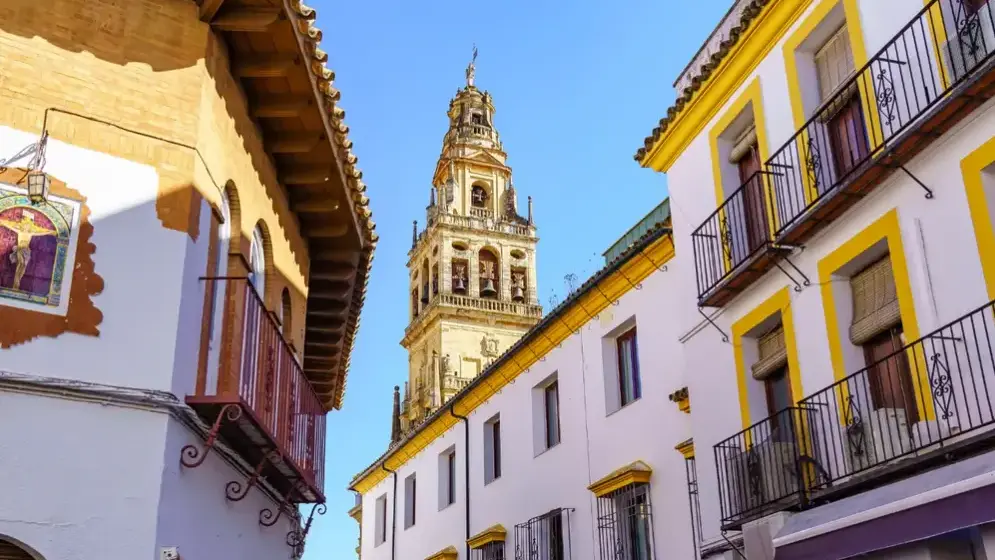
A comprehensive guided tour covering Córdoba's three UNESCO-listed highlights: the Mezquita, the medieval Jewish Quarter, and the Alcázar de los Reyes Cristianos.
3 hours
From €49
4.6 (5,547 reviews)
Reserve Your Spot
✓ Verified GetYourGuide reviews
Books up weeks ahead in peak season
Flamenco Show Ticket with Drinks
Experience the passion and drama of authentic Andalusian flamenco at one of Córdoba's premier tablaos. Ticket includes a drink at the bar.
1 hour
From €25
4.8 (1,158 reviews)
Reserve Your Spot
✓ Verified GetYourGuide reviews
Books up weeks ahead in peak season