
The ministry's own case for inland Spain
In March 2026, Spain's Minister for Industry and Tourism, Jordi Hereu, told a Council of Ministers press conference that "there is greater growth in inland Spain, in 'green Spain,' than in the six traditionally tourist-oriented autonomous communities"[4], a claim he tied to deliberate government strategy, not incidental growth. The claim had already been backed by a campaign. Nine months earlier, in June 2025, Turespaña launched Think You Know Spain? Think Again, its first international campaign built specifically around España interior, pitched by the ministry as "a commitment to attract international tourists to our less visited destinations"[5]. Earlier pushes had leaned on sun, beach or a handful of marquee cities; this one was framed instead as "the first campaign to focus on a lesser-known side of Spain"[6].
The government's year-end numbers back the rhetoric. Between 2019 and 2025, Spain's interior and 'green' regions posted close to 60% more visitors than they had six years earlier[1], while the country's traditional leaders, the coastal hotspots and big cities, added around 45% over the same stretch[7]. Spain closed 2025 with 97 million international visitors overall, a new all-time high[17], the backdrop against which that gap is playing out. That fifteen-point gap is measured against six regions that already dominate Spanish tourism by volume: catching up from a smaller base is one thing, out-growing an established leader is another. For the national breakdown region by region, Spain's 2026 tourism numbers lay out where that growth is actually landing.
Why Andalusia doesn't get to claim this shift
Here is the catch a careful reader should already be asking about. Andalusia, Córdoba's own region, is not one of the beneficiaries. A July 2026 government briefing names the country's six largest markets as the slower-growing group the inland shift is moving growth away from[8]:
- Andalusia
- Madrid
- Catalonia
- Valencia
- the Balearics
- the Canaries
Ministry forecasters, in that same briefing, put non-major regions' spending growth at 8 to 10 percent for mid-2026, well ahead of the six main markets' 5 to 6 percent[9], a four-month forecast, not a completed year of visitor counts. Spending growth and visitor-count growth are not interchangeable either: a region can see fewer arrivals but higher average spend, which is one reason ministries increasingly forecast in euros rather than headcount.
Any argument for Córdoba built on regional statistics collapses on contact with that fact. Andalusia's tourism numbers are shaped by the same coastal-and-capital pull as Madrid's or Catalonia's; the Costa del Sol, not the Guadalquivir valley, does the region's heavy lifting. That is not a knock on Andalusia's coastline, it is simply a different market selling a different product to a different traveller, and conflating the two only muddies what the decentralisation argument is actually claiming. What holds up instead is a city-level case: Córdoba specifically carries the attributes the decentralisation trend is supposed to reward, heritage density, fast rail access, room to absorb visitors without becoming a headline case, even while sitting inside a region the government's own data says isn't the story. Whether that case actually holds is worth asking on its own terms: is Córdoba worth visiting independent of any regional tailwind.
The city-level case: UNESCO density and a rail hub
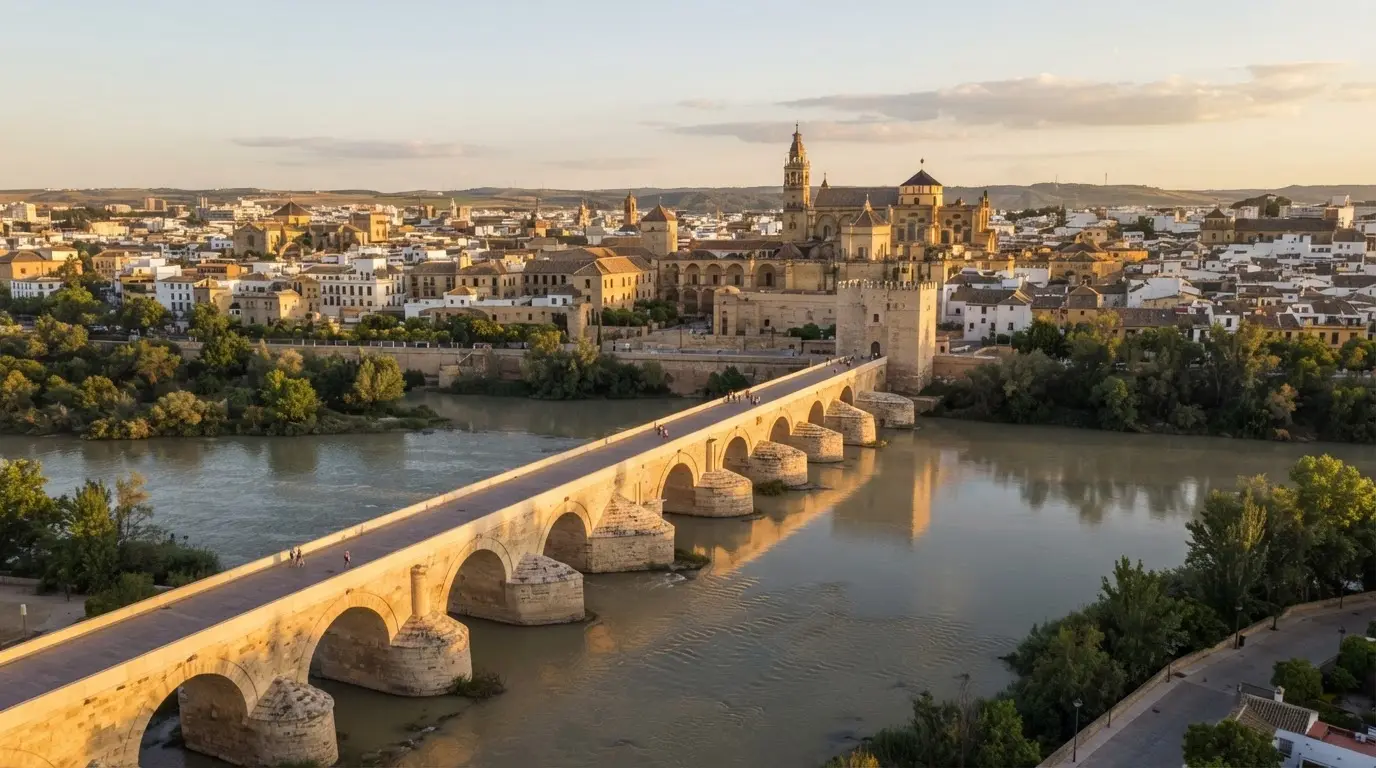
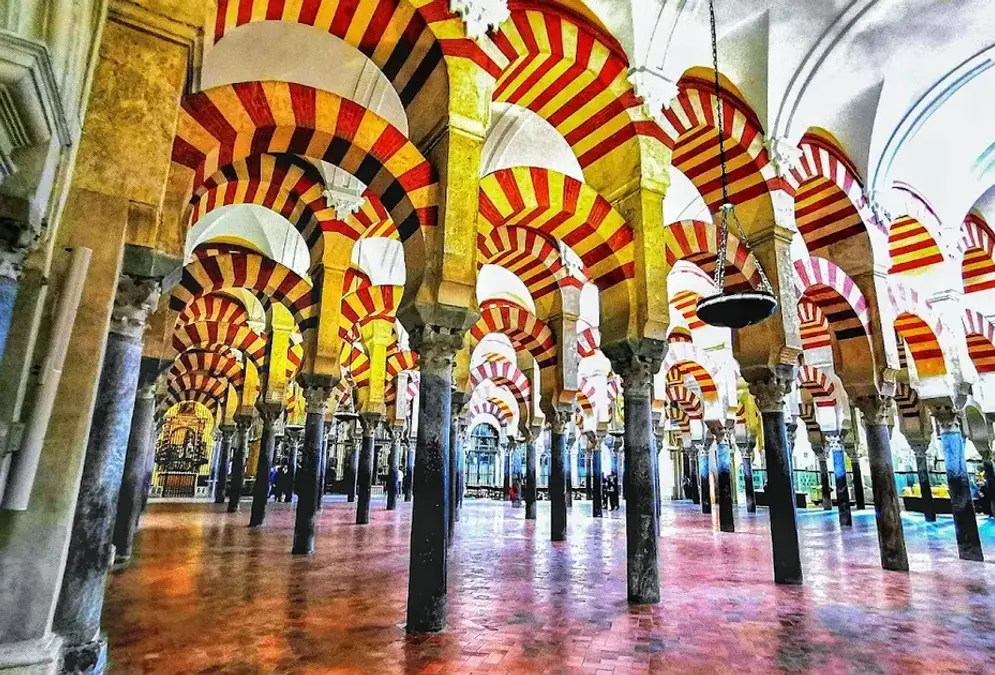
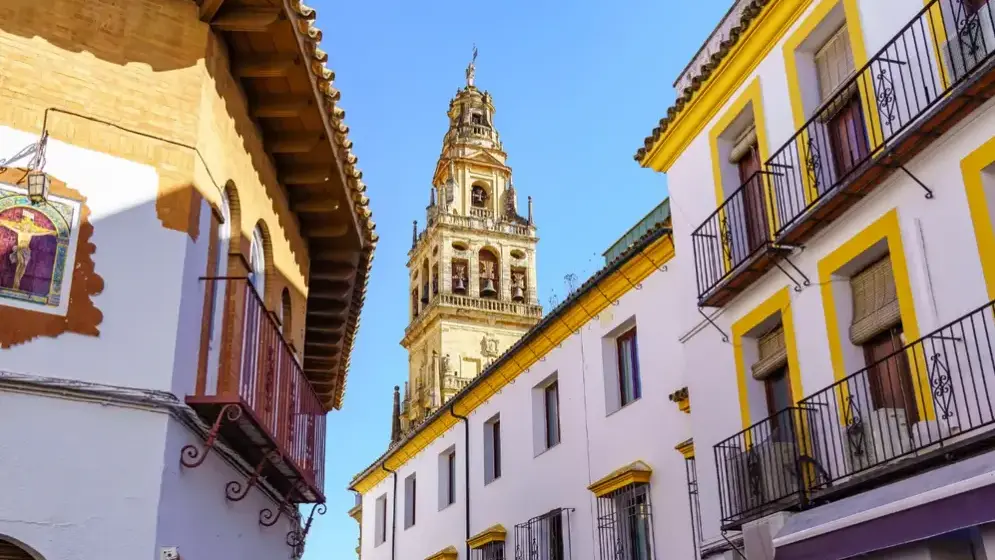
Strip away the regional statistics and Córdoba's own attributes do the arguing. The city carries four UNESCO inscriptions inside a historic centre small enough to cross on foot in under an hour: the Mezquita, whose 1984 listing widened a decade later to include the surrounding old town[10]; the Caliphate City of Medina Azahara, added to the World Heritage List in 2018[11]; and the Patios de Córdoba festival, recognised in 2012 as intangible heritage by UNESCO's own cultural body[12]. That is four UNESCO inscriptions layered onto one old town.

Explore nearby · Monument
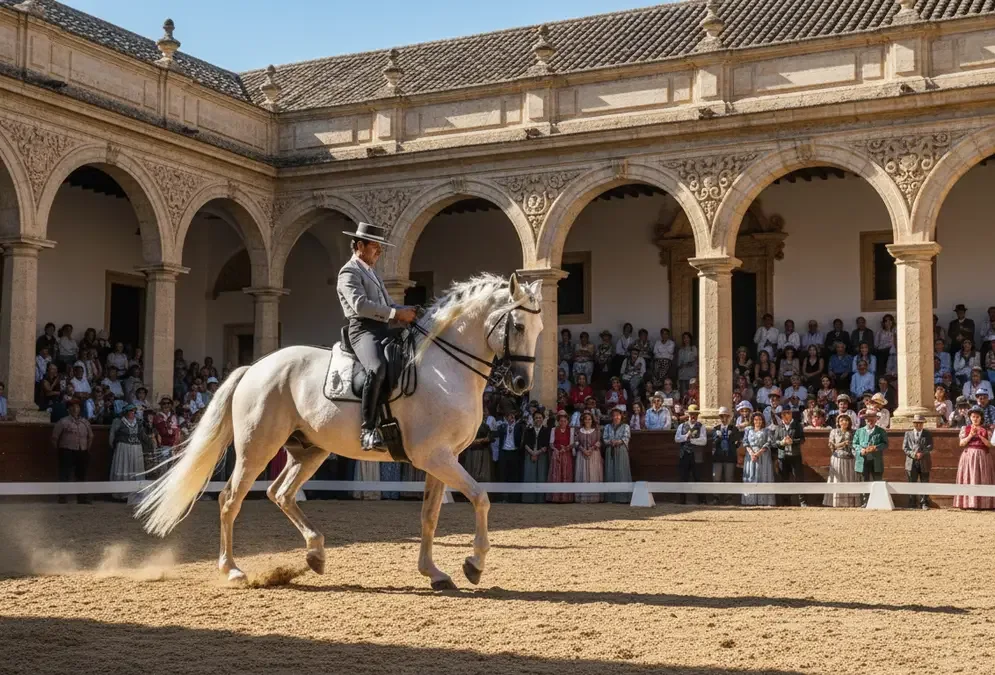
Caballerizas Reales de Córdoba
Philip II's 1568 Royal Stables, birthplace of the Andalusian horse. Evening show combining classical dressage, vaquera riding and flamenco. UNESCO heritage.
It also sits inside Spain's fastest rail network at almost no detour cost. The AVE high-speed rail puts Córdoba within reach of three major cities on the same line:
Compare that to driving the same triangle: reaching Córdoba from Madrid by road alone takes far longer, before Seville or Málaga even enter the plan. That makes Córdoba less a single stop than a physical hub for a rail-connected city break, a trip built around a train timetable rather than a rental car; a visitor arriving from Madrid does not have to choose between Córdoba and the coast, the timetable gives them both in one week, which is exactly the kind of low-friction inland option slow travel through Córdoba already makes the case for.
None of that heritage density is passive scenery either. A visitor can stand at the Mezquita's bronze doors before breakfast and be inside the Alcázar's gardens by mid-morning, all on foot, and it is exactly that heritage density that turned into a record number of visitors in 2025, a number worth its own explanation.
Record visitors, not an overtourism crisis
Numbers like that usually make headlines for the wrong reason. The Mezquita-Cathedral closed 2025 with 2,191,731 visitors, a new all-time high that beat the previous record set in 2024[3]. On paper, that sits inside the same overtourism conversation dominating Barcelona, the Balearics and the Canary Islands this year. In practice it doesn't read the same way on the ground, and Córdoba and overtourism already draws that distinction: a city absorbing record demand without the protest banners, the daily visitor caps, or the housing-market strain defining Spain's 2026 overtourism headlines.
Recommended tours
Tours are selected for quality, not commission. We earn a small fee if you book — at no extra cost to you.
That distinction is not an accident of scale. Córdoba's old town was built for footfall long before anyone used the word tourism, and the crowd management shows it.
The blueprint depends on more than pulling visitors inland. Córdoba's narrow streets were built for shade and crowds long before cars, and its historic centre already has the dense, walkable layout the decentralisation argument wants more of; that is why it can take the extra volume without cracking. A rail line and a marketing campaign are the easy half of any blueprint. The historic centre that can absorb what they deliver took centuries to build, not a single ministry briefing, which is exactly what separates a working overtourism pressure valve from one that just moves the crowd somewhere with worse infrastructure to handle it.
2027 gives inland Spain a reason to move now
2027 is not a forecast for inland Spain; it is a calendar with two fixed points and one moving target. On 2 August 2027, a total solar eclipse crosses the Strait of Gibraltar, and Córdoba sits close enough to see a deep partial eclipse at magnitude 0.964[14], even though full totality stays on the Cádiz and Málaga coast. Eclipse chasers already treat that date as circled in red on hotel booking calendars across southern Spain. Our eclipse basecamp guide covers why sleeping in Córdoba and day-tripping south for totality is already the practical plan.
The moving target is entry rules. Nobody can apply for ETIAS yet, and the EU has not fixed a start date; the Financial Times reports the system, most recently slated for late 2026, is now expected sometime in 2027[15]. What ETIAS's 2027 shift means for a Córdoba trip is worth reading before booking flights, not after.
Semana Santa lands early in 2027 too: Palm Sunday on 21 March, Easter Sunday on 28 March[16], a full month ahead of where it falls in some years, which changes which week of spring actually gets the crowds. The Feria de Córdoba, by contrast, has no confirmed 2027 dates yet; it traditionally runs in late May, honouring Nuestra Señora de la Salud, and anyone planning around it should treat that window as a pattern, not a booking guarantee.
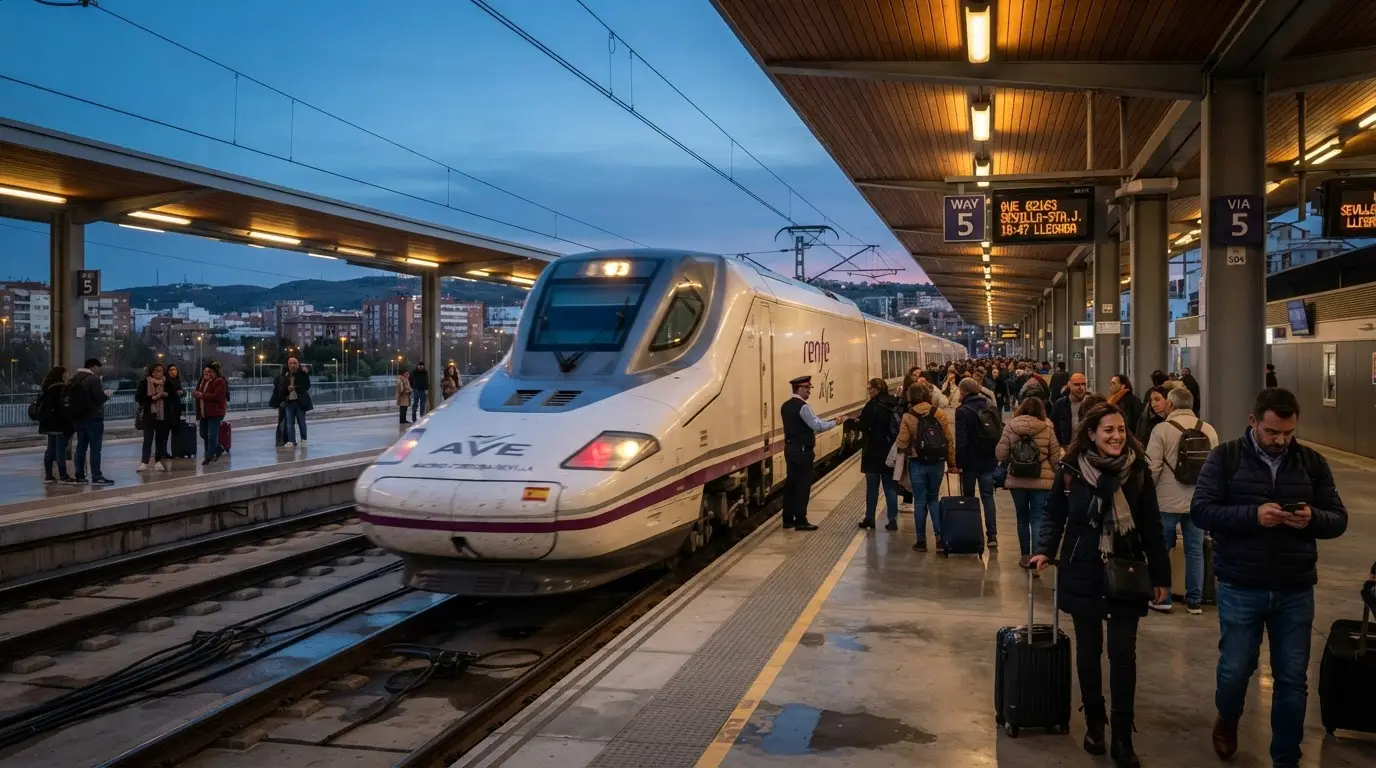
Deep dive · Article
AVE High Speed Rail Córdoba: Nearly 35 Years On
Spain's first AVE reached Córdoba in April 1992 for Expo 92. How the 1994 station, buried tracks and trains reshaped the city, and what they did for tourism.
None of these dates makes Córdoba the story on its own. What they do is give an inland city that already has the UNESCO density and the rail access in place a specific reason for 2027 to be the year travellers act on the shift the ministry has been describing since 2025. Other secondary cities the same policy is meant to lift don't have an eclipse or an entry-rule deadline to hang a trip on. That combination will not repeat itself every year, which is exactly why it is worth building a 2027 trip around Córdoba now, rather than waiting for the marketing to catch up.