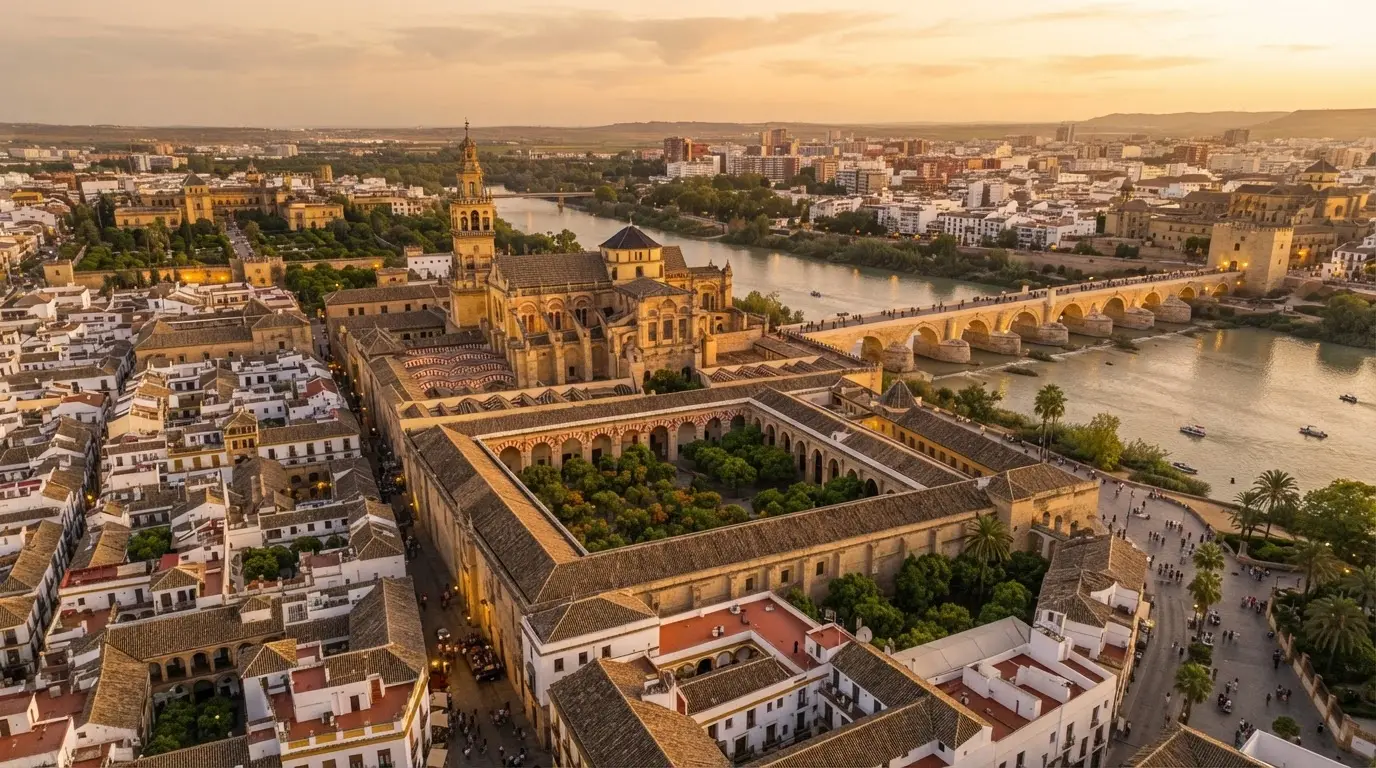

How Many People Visit Spain?
Spain broke its own record in 2025. 96.8 million international tourists arrived during the year, according to INE's FRONTUR survey, a 3.2% increase on 2024 and a new all-time high for Spain.[31] The year before, Spain had already set what was then a record: 93.8 million arrivals in 2024, up 10.1% on 2023.[35]
Monthly figures confirm the momentum. December 2025 alone brought 5.3 million international tourists, a 0.4% gain over December 2024.[31] The first quarter of 2026 extended the run: over 17.5 million tourists arrived between January and March, a 2.5% increase on the same period of 2025.[29]
96.8M
Spain's growth sits inside a larger global expansion. The UN Tourism World Tourism Barometer estimated 1.4 billion international tourist arrivals worldwide in 2024, up 11% on 2023.[7] By September 2025 the cumulative global count had already passed 1.1 billion, roughly 50 million more than at the same point in 2024.[12] UN Tourism's January 2025 forecast of 3% to 5% global growth in arrivals for 2025 held on course through those nine months.[12]
Spain's Most-Visited Regions
Regional breakdowns from INE's 2024 FRONTUR release show Catalonia leading by a wide margin, followed by the island communities:[30]
| Autonomous Community | International tourists (2024) |
|---|---|
| Catalonia | 19.9 million |
| Balearic Islands | 15.3 million |
| Canary Islands | 15.2 million |
| Andalusia | 13.6 million |
| Valencia | 11.9 million |
| Community of Madrid | 8.8 million |

Explore nearby · Monument
Hammam Al Ándalus
Arab baths in Córdoba's Judería, steps from the Mezquita. Hot, warm and cold pools with optional massages in brick-vaulted, candlelit rooms. From €24.
These six communities received nearly all of Spain's international traffic in 2024.
Andalusia, Córdoba and Granada
Andalusia received 13.6 million international tourists in 2024, 11.5% more than 2023.[30] Total visitors (domestic and international combined) reached 37.9 million in 2025, the best year in the region's tourism history.[34]
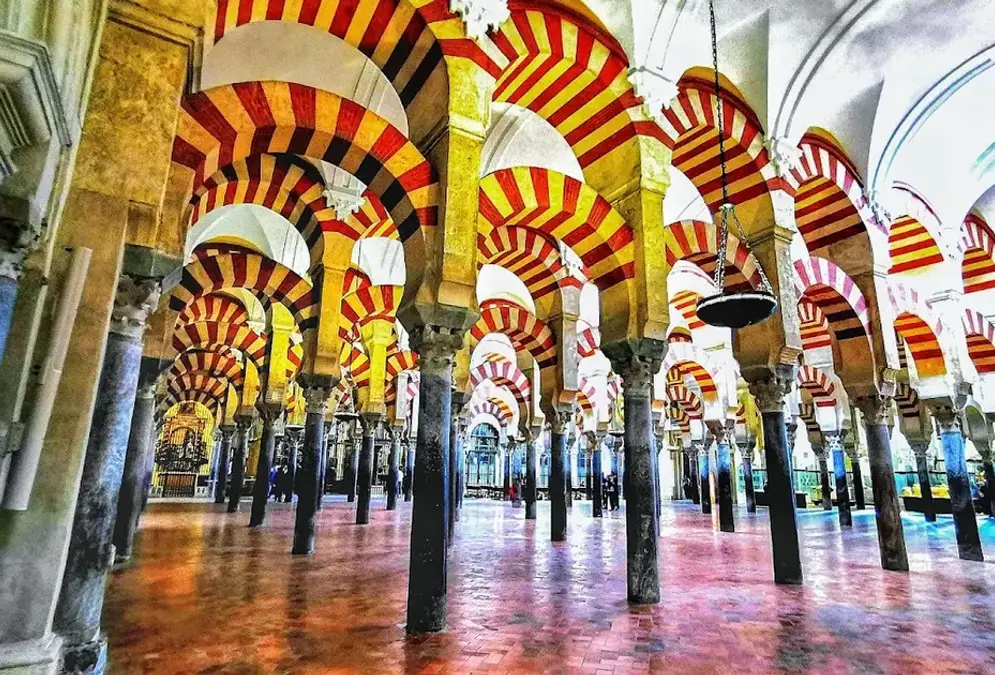
Within Andalusia, the Mezquita-Catedral de Córdoba is the standout attraction by visitor count. The cathedral chapter recorded 2,186,774 visitors in 2024, already a post-pandemic record.[20] In 2025 the figure climbed further to 2,191,731, confirming the Mezquita-Catedral as the third most-visited monument in Spain, behind only the Alhambra and the Sagrada Família.[19][21] For the full story of how that crowd is managed — the free-entry window, the capacity controls and what the €15 ticket pays for — see our analysis of how the Mezquita handles two million visitors a year.
Where Spain's Visitors Come From
The UK, France and Germany have led Spain's source-market rankings for years, and 2024 confirmed the pattern:[35][1]
| Country of residence | Tourists to Spain (2024) |
|---|---|
| United Kingdom | 18.4 million |
| France | 12.9 million |
| Germany | 11.9 million |
| United States | 4.2 million |
In 2025 the UK maintained its top position with a 3.7% rise in arrivals; French visitor numbers dipped 1.0%; German arrivals edged up 0.6%.[31] December 2025 reflected those full-year trends closely: the UK sent 900,208 tourists to Spain that month (up 0.1%), France sent 707,513 (down 8.4%), and Germany sent 596,042 (down 4.4%).[31]
Recommended tours
Tours are selected for quality, not commission. We earn a small fee if you book — at no extra cost to you.

The United States has become a structurally important market. Spain received 4.2 million American tourists in 2024, an 11.2% jump over 2023, placing the US sixth by volume.[1] That cohort accounts for 4.6% of all international arrivals.[1]
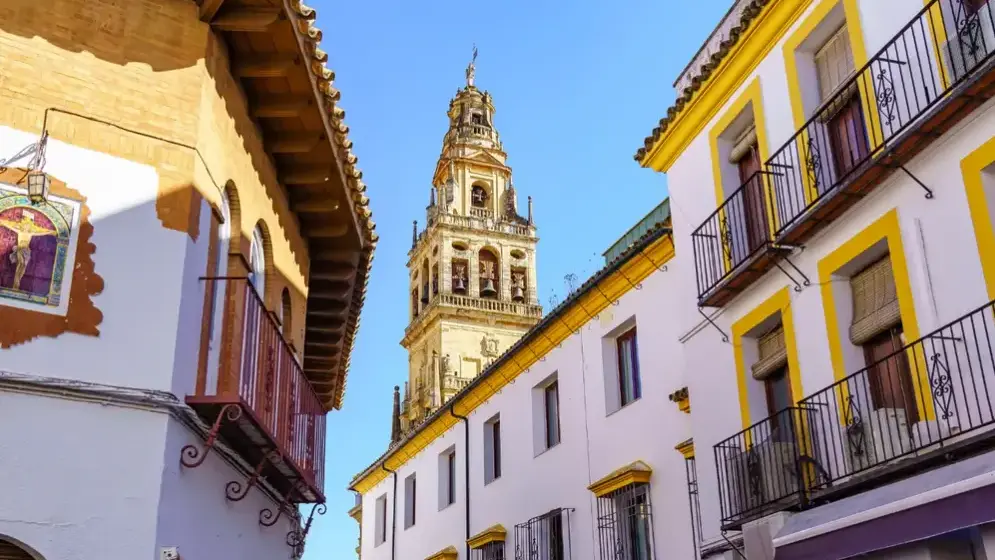
Córdoba sits at the centre of Andalusia's high-speed rail network. The Andalusia itinerary covers the full routing from Madrid or Seville.
What Tourism Is Worth to Spain
Spending methodologies matter here. INE's EGATUR survey tracks declared expenditure by non-resident tourists at the border. WTTC and Exceltur use broader economic models that incorporate domestic tourism, supply-chain effects and indirect activity, producing larger, non-comparable totals. All three figures are cited below because each has a legitimate use depending on the research question.
On the EGATUR measure, non-resident tourists spent 134,712 million euros in Spain during 2025, a 6.8% increase on 2024.[28] The December average per tourist was 1,514 euros for the trip and 167 euros per day.[28] Catalonia was the top-spending destination with 24,807 million euros, up 4.5% on 2024.[37]
€134,712M
Exceltur estimates Spain's tourism GDP at 218,459 million euros in 2025, equivalent to 13.0% of the national economy.[24] For 2026 Exceltur forecasts that figure to reach 229,372 million euros, a real increase of 2.4%, with tourism's GDP share rising to 13.1%.[24]
WTTC puts the sector's total contribution higher still. Its Spain Economic Impact 2025 report places the Travel and Tourism sector's contribution to GDP at €260.5 billion, almost 16% of the national economy, with 3.2 million jobs (14.4% of total employment).[17] On an international visitor-spending basis, WTTC estimates Spain generated €115.1 billion in 2025, with visitors spending an average of US$1,344 per trip.[16] Global international tourism receipts reached USD 1.6 trillion in 2024, about 3% more than in 2023.[7]
Where Visitors Stay
Spanish hotels registered 366.7 million overnight stays in 2025, a 1.0% increase on 2024.[8] Hotel performance statistics for the year:[8]
| Metric | 2025 figure |
|---|---|
| Occupancy (bed-places) | 61.6% |
| Weekend occupancy | 67.2% |
| ADR (average daily rate per room) | €127.7 |
| RevPAR (revenue per available room) | €89.7 |
| Hotel Price Index (IPH) annual rise | +5.1% |
Short-term rentals add a parallel layer of supply. As of May 2025, INE counted 381,837 tourist dwellings registered in Spain, offering 1.97 million bed-places, up 1.4% on November 2024.[27] The accommodation guide covers the Córdoba market in detail.
How Travelers Behave: Solo Travel, Safety and AI
Spain ranked #1 safest destination and #2 most-booked destination in Hostelworld's 2025 State of Solo Travel report.[26] That safety ranking reflects a broader measurement: the Global Peace Index places Spain 25th out of 163 countries in 2025.[5]
Solo travel has moved from niche to mainstream. Hilton's 2025 Trends Report, based on a survey of 13,001 adults, found that 47% of global respondents often travel by themselves, rising to 55% among Gen Z and 51% among Millennials.[13] Women make up 53% of all solo bookings worldwide, and 63% of first-time solo travellers plan to do it again.[26] Safety confidence among women remains high: less than 2% say they lack the confidence to travel alone.[26]
When choosing accommodation, 41% of solo travellers ('MeMooners') prioritise safety-focused amenities.[13] AI is reshaping the planning process: 65% of male solo travellers and 57% of female solo travellers now use AI tools to plan or research their trips.[26] Separately, 41% of all travellers say they are interested in using AI to curate itineraries, according to Booking.com's 2025 Travel Predictions survey.[10]
For visitors choosing Spain, the safety guide for Córdoba covers neighbourhood-level context and emergency contacts.
The Trends Shaping 2026
Three macro shifts favour Spain heading into 2026: wellness tourism, slow travel and sustainability.
Wellness travel is one of the fastest-growing segments in the global economy. The Global Wellness Institute reported that the total wellness economy reached USD 6.8 trillion in 2024, up 7.9% year over year, with a forecast of USD 9.8 trillion by 2029.[38] Within that, wellness tourism grew 13.8% to USD 894 billion in 2024.[38] A specialist sub-segment, sleep tourism, is expanding even faster: the global sleep tourism market was valued at USD 72.6 billion in 2024 and is projected to reach USD 237.9 billion by 2034.[9]
Hotel data backs the trend. Hilton's 2025 Trends Report found that 70% of luxury travellers choose hotels with sleep-centric amenities, two in five travellers pick hotels specifically expecting better sleep there, and over half of respondents worldwide (two-thirds of Americans) report sleeping better in hotels than at home.[14] By the 2026 Trends Report, 56% of global respondents named rest and recharge as their primary leisure-travel motivation.[15]
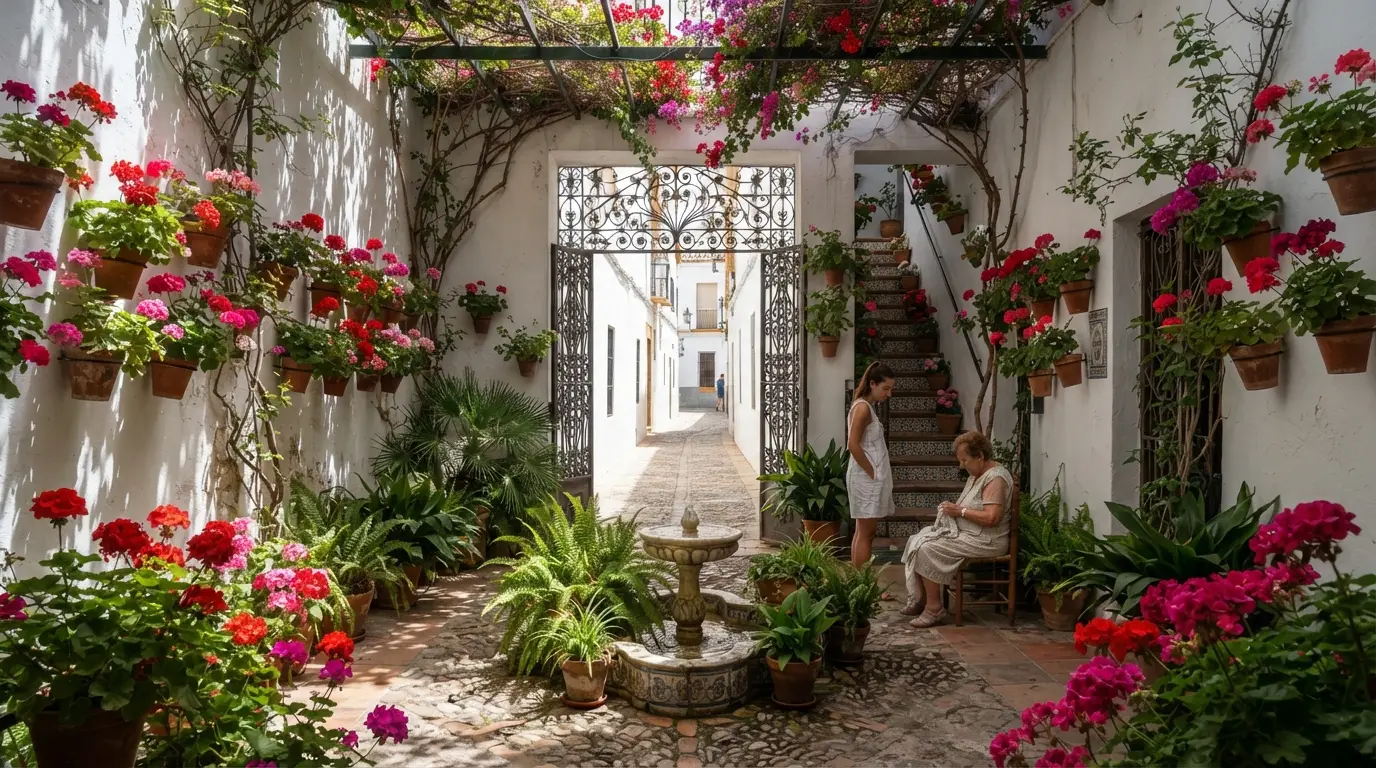
Deep dive · Article
Córdoba Extreme Heat: How Europe's Hottest City Survives
Siesta hours, courtyard microclimates and Sierra swimming holes: how Córdoba turns extreme heat into a way of life, and how to visit comfortably in summer 2026.
Slow travel is gaining traction alongside wellness. According to Vrbo data reported by Fortune, 91% of travellers say they are interested in slower, simpler trips built around rest, reading, nature and meaningful experiences.[3] On sustainability, Booking.com's 2024 survey of 31,550 travellers in 34 countries found 75% want to travel more sustainably in the next 12 months, and 83% confirm that sustainable travel matters to them.[11]
Overtourism and New Rules
Spain's growth numbers coexist with visible public pressure to slow down. The government's summer 2025 forecast projected approximately 42 million international tourists between June and September, spending close to €58,000 million, a 3.8% gain on the previous summer.[36]
The Canary Islands saw the earliest organised response. An estimated ~57,000 people marched on 20 April 2024 under the banner «Canarias tiene un límite».[18] Barcelona followed on 6 July 2024 when protesters (numbering 2,800 by police count, up to 20,000 by organiser estimates) used water pistols to target tourists on Las Ramblas.[40] On 15 June 2025 protests spread simultaneously to Palma de Mallorca, Barcelona, San Sebastián and Granada under the slogan «Más residentes, menos clientes».[32]
Policy responses are arriving alongside the demonstrations. Barcelona announced it will not renew any of the 10,101 tourist apartment licences when they expire in November 2028, effectively phasing out the city's short-term rental sector.[22] Málaga prohibited new tourist-rental registrations in 43 neighbourhoods where short-term lets exceed 8% of the housing stock.[39] Barcelona's tourist tax (IEET) was expected to raise €100 million in 2024 after the city raised its municipal surcharge to €4 per night from October 2024.[25]
The 2026 Outlook
Exceltur's Perspectivas Turísticas Nº 95 forecast Spain's tourism GDP at 229,372 million euros in 2026, a real increase of 2.4% on 2025 levels, with tourism's share of the national economy reaching 13.1%.[24] The longer-term WTTC projection is more ambitious: by 2035, Spain's tourism sector is expected to contribute €315.7 billion to GDP, representing more than 17% of the Spanish economy, with 4 million jobs (700,000 more than at the WTTC's 2025 baseline).[17]
For travellers planning within this environment, the practical implication is clear: book early, particularly for Córdoba's Patio Festival in May and Semana Santa in spring, when accommodation fills months in advance. The Mezquita tickets guide covers timed-entry slots and the best windows to avoid peak queues. For travellers with flexible dates, visiting Córdoba off-season sidesteps the May and Patio Festival crowds entirely, at the same admission price.