
Safety tips for Córdoba
One of Spain's safest cities for tourists, with a few things worth knowing before you arrive.

Written by
María Fernanda González Ten years covering Córdoba's UNESCO heritage sites, sourcing from Junta de Andalucía documentation.
Updated Published
How safe is Córdoba?
Córdoba ranks among the safest cities in Spain by almost every measure. The crime index sits at 21.88 out of 100, which is low by European standards. Safety perception scores 84 out of 100, with 94% of people saying they feel safe during the day and 75% at night. For context, Barcelona scores around 45 on the crime index; Madrid around 38.
21.88
Crime index (out of 100)
Very low
94%
Feel safe during daytime
Excellent
75%
Feel safe walking at night
Good
The bottom line
Córdoba is genuinely safe for tourists. Violent crime against visitors is rare. The risks that do exist (and they are modest) are mostly the same petty opportunistic theft you would find anywhere with heavy tourist footfall.
Common tourist risks
The risks below are far less frequent in Córdoba than in Barcelona or Madrid, but they do happen. Knowing what to watch for takes care of most of them.
Pickpocketing in tourist zones
The Mezquita-Catedral entrance, the Roman Bridge, and the Judería's narrow streets are the spots where pickpockets operate. Crowded queues and busy terrace bars are the moments of highest risk.
Prevention
- Use a money belt or inside-pocket wallet for cash and cards
- Keep bags in front of you in crowded areas
- Don't carry more cash than you need for the day
- Leave your passport in the hotel safe; carry a photo of it instead
Street vendor scams
Two scams are worth knowing about. First, people who thrust a flower or bracelet into your hand and then demand payment; the item was never a gift. Second, clipboard petitions where someone approaches you with a paper to sign; while you are distracted, an accomplice takes from your bag.
Simple rule: If someone approaches you unsolicited with an object or a clipboard, keep walking. A firm "No, gracias" is enough.
Train station area at night
The area around Córdoba Central station is fine during the day, but is best treated with normal urban caution after dark, as you would any transport hub. Take a taxi or bus rather than walking to your accommodation late at night if you are unfamiliar with the route.
Safe neighbourhoods and night safety
All the areas tourists typically visit are safe. Here is a quick reference for where you are likely to spend your time:
Judería and historic centre
Well-patrolled, pedestrianised streets, constant tourist presence. Safe at all hours.
Centro (around Plaza de las Tendillas)
Commercial heart of the city, busy all day and evening. Very safe for walking and dining out.
Santa Marina
Residential neighbourhood north of the centre. Quiet and safe; popular with locals for tapas.
Outskirts and peripheral areas
Not tourist areas. Nothing alarming, but apply standard urban sense: stick to lit streets, avoid isolated spots late at night.
Night safety quick tips
- Stick to busy, well-lit streets in the centre and Judería after midnight
- Taxis are inexpensive and reliable — use them for longer night journeys
- AUCORSA runs night bus services on Friday and Saturday
- Trust your instincts — if an area feels uncomfortable, leave
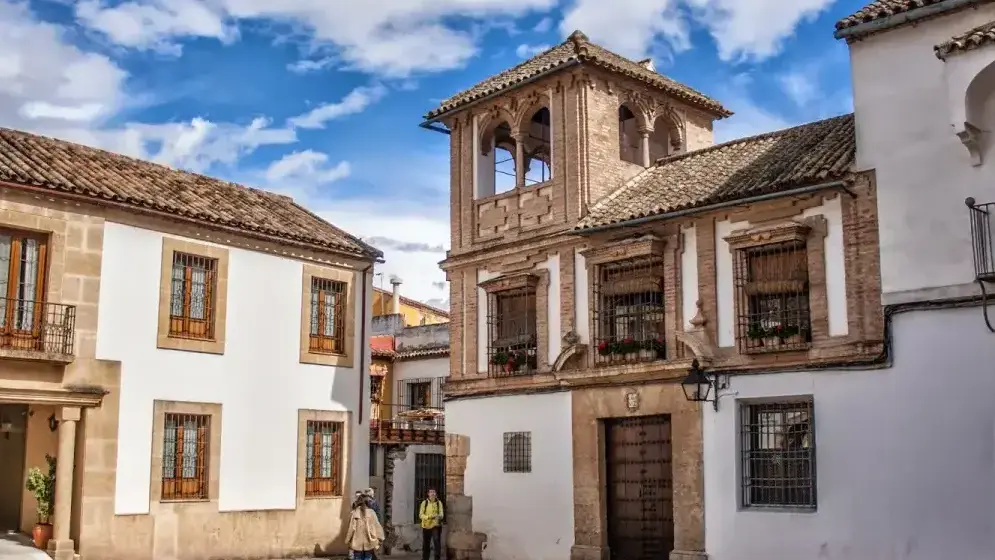
Centro is the busy commercial heart of Córdoba — safe day and night
Emergency contacts
Save these before you travel. The 112 line is multilingual and covers all emergencies.
112
General emergency
All emergencies. Multilingual operators. Available 24/7.
061
Ambulance
Medical emergencies and ambulance dispatch across Andalusia.
092
Local police
Policía Local de Córdoba
091
National police
Policía Nacional — theft, serious crime
062
Civil Guard
Rural areas and highways
Tourist assistance
- Córdoba Tourist Office +34 957 469 707
- Andalucía Tourist Board +34 957 355 179
If you are robbed
File a report (denuncia) at the nearest Policía Nacional station. You will need this for any insurance claim. The tourist office can help with translation.
Health and medical care
Health insurance
Spain requires private health insurance for several visa categories as of 2025. For UK nationals, the GHIC card gives access to state healthcare at the same cost as Spanish residents — but it does not cover everything (repatriation, private clinics, delayed flights due to illness). Travel insurance with adequate medical cover is strongly recommended for all visitors.
- EU nationals: EHIC card covers state healthcare
- UK nationals: GHIC card covers state healthcare — supplement with travel insurance
- All visitors: Travel insurance with minimum €30,000 medical cover is strongly advised
Pharmacies (farmacias)
Spanish pharmacies are well-stocked and pharmacists are trained to advise on common ailments. Unlike in the UK or US, medicines you might buy over the counter elsewhere are only sold in farmacias — not supermarkets or convenience stores. Look for the green cross sign.
Duty pharmacies (farmacias de guardia) operate 24/7 on a rotating basis — the address of the nearest duty pharmacy is posted in the window of any closed one.
Tap water
Córdoba's tap water is safe to drink — it meets EU quality standards with a 99.5% compliance rate. Bring a refillable bottle and top it up freely. Bottled water is widely available but unnecessary for health reasons; it is a matter of personal taste.
If you need step-free planning or mobility support, see our Accessible Córdoba guide for practical accessibility information before you travel.
Beating the heat
Córdoba is the hottest city in Spain
Summer temperatures routinely reach 42–43°C. The all-time record is 47°C. June through September is the risk window — heat stroke is a genuine hazard, not a minor inconvenience. Plan accordingly.
Avoid these hours
1 pm – 5 pm
Peak heat. Stay indoors or in shade.
Most Córdobans observe this break. Museums, restaurants, and cafés are air-conditioned — use them. This is also siesta time, so many smaller shops are closed anyway.
Best hours outdoors
- Early morning: 7 am – 11 am
- Evening: after 6 pm
- Late morning: 11 am – 1 pm (warm but manageable)
The city comes alive again after 7 pm. Córdobans eat dinner at 9–10 pm — join them.
Heat safety essentials
Drink 2–3 litres of water per day minimum
Apply SPF 30+ sunscreen every two hours outdoors
Wear a hat and light, breathable clothing
Carry a small water spray or wet cloth for cooling
Do not swim in the Guadalquivir river — currents are dangerous
Know heat stroke signs: confusion, lack of sweating, high temperature — call 112
Visiting in summer? Read the best time to visit Córdoba guide for month-by-month temperature data and tips on visiting during Feria season.
Getting around safely
Walking
Walking is the safest and most practical way to see Córdoba. The historic centre is compact and largely pedestrianised. The distances between monuments are short — 5 minutes from the Mezquita to the Alcázar, 2 minutes to the Roman Bridge. The main risk while walking is the heat, not crime.
Taxis
Córdoba taxis are metered, licensed, and reliable. Two main operators are Etaxi and Radio Taxi Córdoba. Fares within the city are reasonable — typically €5–8 for most journeys. You can hail them on the street or find them at designated ranks near the Mezquita, train station, and Plaza de las Tendillas.
Radio Taxi Córdoba: +34 957 764 444
AUCORSA buses
The city's 15 bus lines are air-conditioned (a genuine relief in summer) and safe. Keep an eye on your belongings at busy stops and during crowded peak-hour services. The AUCORSA Móvil app shows real-time arrivals.
Single ticket €1.40 • 10-journey card €8.50 • All buses wheelchair accessible
See our Practical Information guide for transport options and arrival details.
Tips for every traveller
Solo female travellers
Córdoba rates 4.5 out of 5 for solo female safety, placing it 12th in Spain. The historic centre and tourist areas are safe to walk alone at night. Unwanted attention can occur — in which case moving into a busy bar or restaurant is the most practical response.
Many women travellers find Córdoba considerably easier to navigate alone than larger Spanish cities. The scale of the city helps — distances are short and there is usually a café or terrace nearby.
LGBTQ+ travellers
Spain has some of the strongest LGBTQ+ protections in Europe. Same-sex marriage has been legal since 2005. Public displays of affection are broadly accepted in the city centre and tourist areas. Córdoba is not as prominent as Madrid or Sitges for LGBTQ+ nightlife, but it is a welcoming city.
Families with children
Córdoba is very family-friendly. The main safety consideration for children is the summer heat — keep them hydrated, in the shade during peak hours, and with sunscreen applied regularly. The historic centre's pedestrianised streets mean less traffic to worry about.
See free things to do in Córdoba for child-friendly activities that avoid the midday heat.
Managing valuables
- Use the hotel safe for your passport, spare cards, and large amounts of cash
- Use bank ATMs (not machines on the street in isolated spots) for cash withdrawals
- Split your cash — keep a small amount in your wallet and the rest secured
- Carry a photo or digital copy of your passport on your phone
- Make sure your travel insurance covers theft before you travel
To keep cash needs low, pair these tips with our Córdoba on a budget guide and free things to do in Córdoba list.
Tourist traps to avoid
Córdoba has far fewer tourist traps than Seville or Barcelona, but they do exist. The pattern is predictable: the closer a restaurant or shop sits to the Mezquita-Catedral entrance, the higher the markup and the lower the quality.
Is the food in Córdoba actually good?
Yes, emphatically. What gives some visitors a poor impression is eating exclusively at the tourist-trap restaurants described below, right by the Mezquita. Córdoban cuisine itself is excellent and distinct: salmorejo (a thick, chilled tomato-and-bread soup, richer than gazpacho), flamenquín (breaded pork loin rolled around serrano ham), and rabo de toro (slow-braised oxtail, a legacy of the city's bullfighting tradition) are the dishes to look for.
See our guide to Córdoban dishes for what to order, and our restaurant guide for where locals actually eat.
Restaurant traps near the Mezquita
The streets immediately surrounding the Mezquita entrance are lined with restaurants that cater almost exclusively to tourists. The food is rarely bad, but it is consistently overpriced and generic. You will pay more for less, and you will miss out on what Córdoban cuisine actually tastes like.
Red flags to watch for
- Picture menus in four or five languages displayed outside
- Staff standing outside actively recruiting diners
- Paella on the menu above 15 euros (paella is not even a Córdoban dish)
- Large sangria pitchers prominently displayed on every table
- No Spanish speakers eating there at lunchtime
Where locals actually eat
Walk 5 to 10 minutes away from the Mezquita and the quality jumps while prices drop. Head north toward Plaza de las Tendillas, or into the Santa Marina and San Lorenzo neighbourhoods for authentic tabernas where Córdobans eat. A tapa and a beer in these areas typically costs 2 to 4 euros.
Browse our restaurant guide and bar guide for specific recommendations.
Overpriced flamenco shows
Not all flamenco shows in Córdoba are equal. Some venues in the Judería charge steep prices for brief, generic performances aimed at tour groups who stay for 20 minutes and leave. Others offer genuine artistry in intimate settings.
Signs of a quality tablao:
- Shows last 60 minutes or longer with a full cuadro (guitarist, singer, dancers)
- The venue names its performers and their credentials
- Intimate seating (under 80 people) where you are close to the artists
- Spanish audience members are present, not only tourists
Common scams in detail
These scams are not unique to Córdoba and happen far less here than in larger Spanish cities. But forewarned is forearmed. Each one follows a predictable script.
Flower and rosemary sellers
Someone approaches with a sprig of rosemary or a flower and presses it into your hand, sometimes while offering to read your palm or "bless" you. It feels like a gift. It is not. Once the item is in your hand, the tone shifts and payment is demanded, typically 5 to 10 euros. If you refuse, expect loud complaints designed to embarrass you into paying. This happens most often near the Mezquita, the Judería, and the Roman Bridge.
Defence: Keep your hands in your pockets or at your sides. Do not accept the item. Say "No, gracias" and keep walking without stopping. If something is placed in your hand, put it down on the nearest surface and walk away.
Bracelet tying scam
A variation on the flower scam. Someone approaches in a friendly way, compliments you, and before you realise what is happening they have tied a woven bracelet around your wrist. Removing it is deliberately difficult, and they demand 5 to 20 euros for the "handmade" item. This targets couples and solo travellers near tourist monuments.
Defence: Pull your hand back firmly and say no before anything is attached. If they do get a bracelet on your wrist, you are under no obligation to pay. Remove it yourself (scissors from a nearby shop) or simply walk away.
Fake charity clipboard petitions
Someone approaches with a clipboard asking you to sign a petition for a charity (often claiming to support deaf or disabled causes). While you are reading, writing, and distracted, an accomplice picks your pocket or bag. Alternatively, after signing they demand a "donation" and become aggressive if refused.
Defence: Legitimate charities do not collect signatures or donations in the street this way in Spain. Do not stop, do not engage, do not sign anything. A polite "No" is sufficient.
Overpriced flamenco shows
Some venues charge 40 to 60 euros for a 30-minute performance with a single guitarist and dancer, paired with a watered-down drink. This is not a scam in the legal sense, but it is poor value. The same money gets you a full 60-minute show at a reputable tablao with a complete cuadro of artists and a proper drink included. Check reviews before booking, and be wary of touts selling tickets on the street near the Mezquita.
Fake apartment and short-let listings
This is an online risk rather than a street one, but it catches travellers before they even arrive. A listing priced well below comparable apartments in the same neighbourhood, photos that look better than everything else at that price, or a "host" who quickly pushes the conversation off the booking platform and onto WhatsApp or a direct bank transfer are the classic warning signs. Legitimate short-let apartments in Andalusia are registered with the regional tourism authority and carry a registration number on the listing; a host who cannot produce one, or dodges the question, is not one to book with.
Defence: Book and pay only through the platform itself (Booking.com, Airbnb, or a hotel's own site) and never by bank transfer, Wise, or crypto requested outside it. Keep every message on the platform, since that history is what a dispute claim relies on. If you do get scammed, open a dispute with the platform immediately and file a police report (denuncia) — see "If you are robbed" above for how that process works.
Pickpocketing hotspots
Pickpocketing in Córdoba is uncommon compared to Barcelona or Madrid, but it does happen in a few predictable locations. Knowing the spots lets you raise your awareness for a few minutes rather than worrying all day.
Mezquita entrance queue
The ticket queue for the Mezquita-Catedral is the single highest-risk spot. Crowded, slow-moving, and full of distracted tourists reaching for cameras and wallets. Keep your bag zipped and in front of you.
Roman Bridge
Tourists stop frequently for photos on the bridge, setting bags down or losing awareness of their surroundings. The narrow pedestrian space makes it easy for someone to brush past you. Keep valuables secure, especially at sunset when the bridge is busiest.
Judería narrow streets
The Judería draws dense foot traffic through narrow lanes during peak hours (10 am to 1 pm, 5 pm to 8 pm). The tight spaces and frequent stops to take photos create opportunities for pickpockets working in pairs.
Train station after dark
The area around Córdoba Central station is fine during the day but warrants extra awareness at night. Arriving late, take a taxi directly to your accommodation rather than walking with luggage through unfamiliar streets.
Practical prevention
Use a crossbody bag with the zip facing your body
Keep your phone in a front pocket, never a back pocket
Never hang a bag on the back of a terrace chair
Carry only the cash you need; leave the rest in your hotel safe
Be alert when someone creates an unexpected distraction near you
Use contactless payment to reduce how often you take out your wallet
More planning guides
Transport and practical info
Getting to Córdoba, buses, taxis, opening hours
Best time to visit
Month-by-month weather, festivals, and crowd levels
Córdoba on a budget
Daily costs, free attractions, money-saving tips
Accessible Córdoba
Wheelchair access, mobility tips, accessible attractions
Where to stay
Best neighbourhoods and hotels for every budget
Free things to do
No-cost monuments, walks, and experiences
Further reading
Sources
4 references Show Hide
- Córdoba Municipal Tourist Office (opens in a new tab)
Official city tourism portal with visitor information
- Policía Nacional — Denuncias (opens in a new tab)
File a crime report online (denuncia) for insurance purposes
- 112 Andalucía — Emergency Services (opens in a new tab)
Official 112 service for Andalusia with multilingual support
- Spain Tourism — Health and Safety (opens in a new tab)
National tourist board health and safety guidance for visitors
Emergency numbers
Safety at a glance
Overall safety Very high
Daytime safety 94%
Night safety 75%
Solo female safety 4.5/5
Summer heat (Jun–Sep)
- Avoid outdoors 1 pm–5 pm
- Drink 2–3 litres of water daily
- SPF 30+ sunscreen, hat
- Seek air-conditioned spaces at midday
- Do not swim in the Guadalquivir