
The day-tripper machine and the gaps it creates
The AVE journey from Seville takes approximately 40 minutes[1]. The earliest trains leave Seville before 07:00, but organised coach tours typically deposit their passengers in Córdoba's historic centre between 10:30 and 11:00. That is when the pressure on the Mezquita-Catedral and the Judería hits its peak.
Peak crowd hours run from 11:00 to 15:00[2]. Tour groups from Seville, Málaga, Granada, and the Costa del Sol all converge in roughly the same window, because the logic of a day trip forces them to: arrive mid-morning, hit the monuments, eat, return. The maths are tight. By 16:00 to 16:30, those same coaches have loaded and left[2].
This pattern creates two distinct cities in one day. Before 10:30 and after 16:30, Córdoba behaves like a medium-sized Andalusian city with a quiet old quarter. Between those hours, it behaves like one of the most visited UNESCO sites in Spain.
2.1 million
The slow traveller's advantage here is temporal, not geographical. You do not need to find secret streets or obscure barrios. You need to be in the right place at the right time. In Córdoba, that means the opposite of when the coaches are there.
The Mezquita operating system
The Mezquita-Catedral received 2.1 million visitors in 2024[14]. Most of them arrived in a four-hour window. That concentration creates exploitable gaps at both ends of the day.
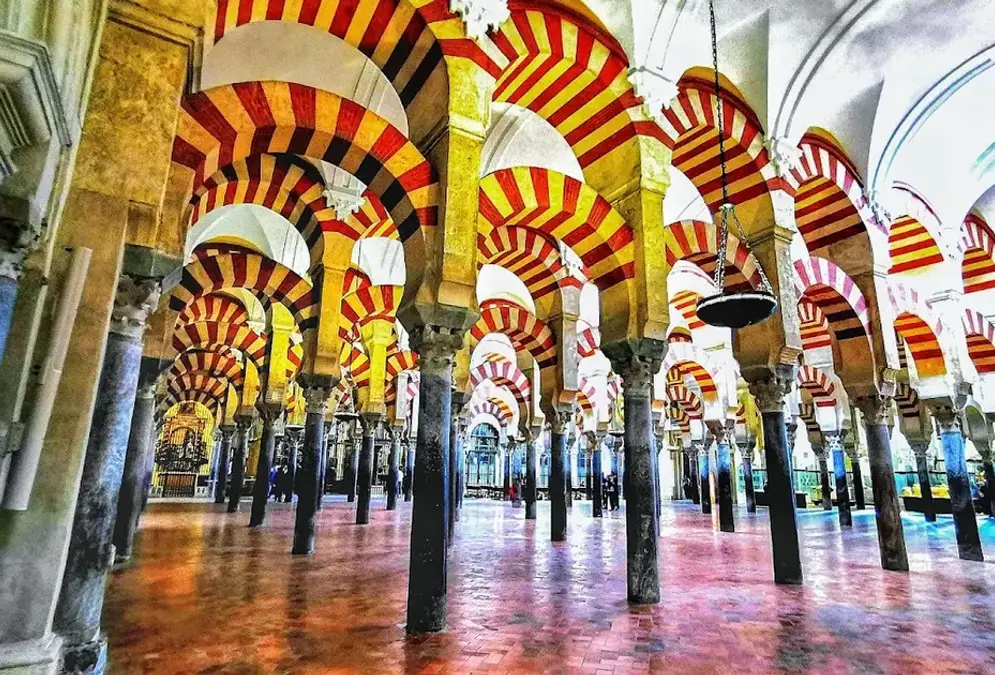
The first gap: Monday to Saturday, the Mezquita opens free from 08:30 to 09:20, the period before the 09:30 morning Mass[2]. You have roughly 50 minutes in near-silence. The forest of 856 columns in jasper, granite, and marble looks different when you can hear your own footsteps. The light enters low and amber through the south-facing doors, and nothing competes with it. This is the only window where the geometry of the building is the only thing in the room.

Explore nearby · Monument
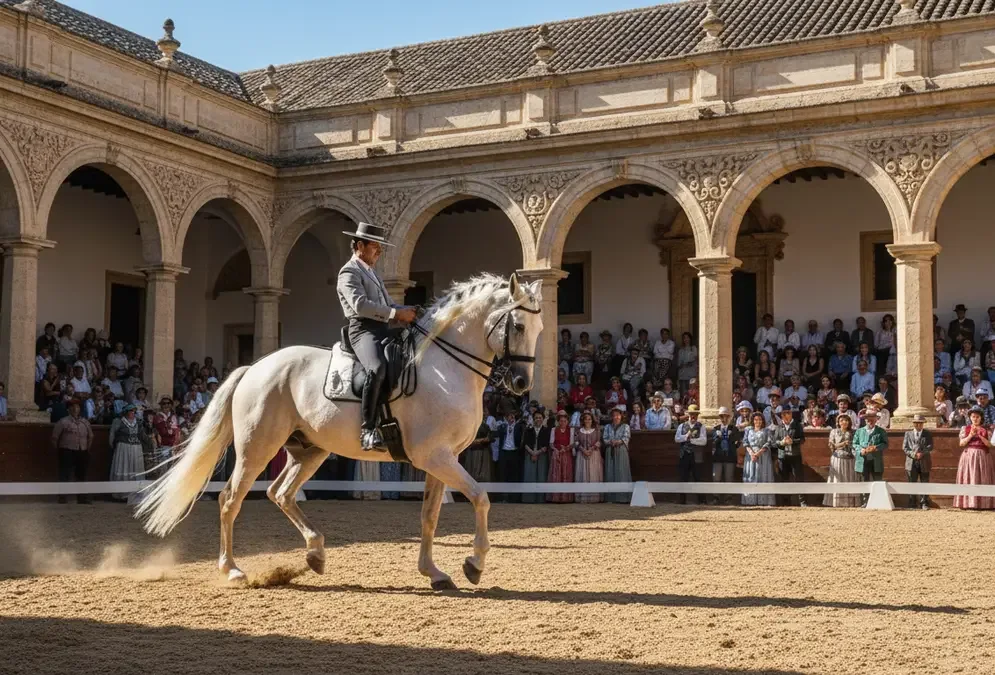
Caballerizas Reales de Córdoba
Philip II's 1568 Royal Stables, birthplace of the Andalusian horse. Evening show combining classical dressage, vaquera riding and flamenco. UNESCO heritage.
At 10:00, paid entry begins. By 11:00, the building is full. Between 11:00 and 15:00 the queue stretches past the Puerta del Perdón and the selfie density inside makes contemplation difficult. Save your ticket for later.
The second gap: from around 16:00, the tour groups have left[2]. The paid admission window runs until 18:00 in winter and 19:00 in summer, giving a two to three-hour window in something approaching quiet. A slow traveller who visits at 16:30 and stays 90 minutes will see approximately the same building the 08:30 visitor saw, without the alarm-clock discipline.
One practical note: as of mid-2026, one section of the Mezquita remains under scaffolding following a fire in August 2025. Restoration work is ongoing, and the Cabildo has not set a completion date. Factor this into expectations, but it does not significantly affect either the morning or afternoon timing windows.
A day-tripper typically allows 45 minutes in the Mezquita because the schedule demands it. Slow travellers typically need 1.5 to 2 hours to cover the mosque-cathedral properly: the Mihrab, the Royal Chapel, the Cathedral nave, and the orange tree courtyard, without feeling rushed.
The Alcázar's secret hours
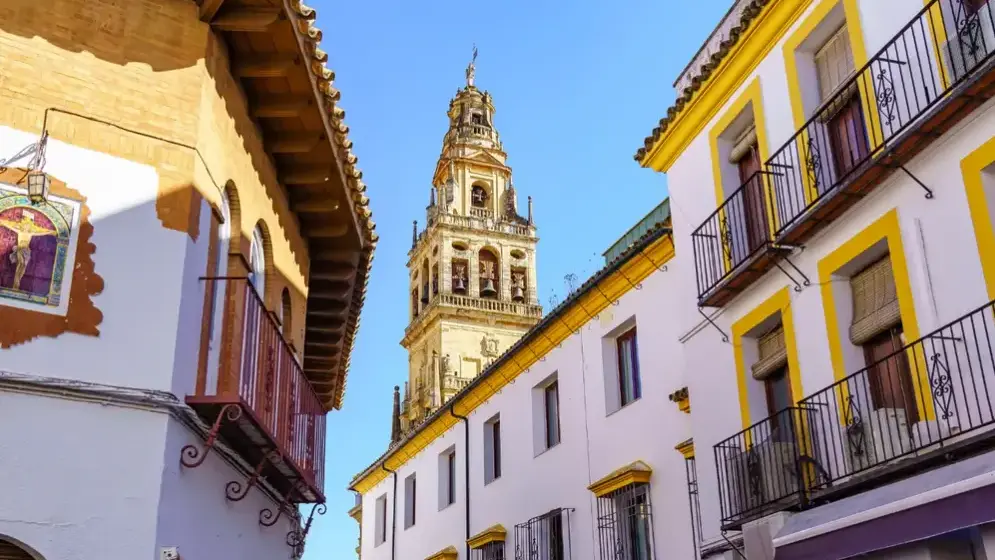
The Alcázar de los Reyes Cristianos is a short walk from the Mezquita and operates on different crowd logic. Most visitors arrive after finishing at the Mezquita, so its own busiest stretch tends to trail behind the Mezquita's sourced 11:00 to 15:00 rush rather than match it exactly. The Alcázar has a useful countermeasure built into its schedule.
From 16 September to 14 June, Tuesday to Friday, the Alcázar opens at 08:15[15], earlier than almost any other major monument in Córdoba. The gardens in particular (which are the real slow-travel asset here, not the towers) take on a different character at that hour. The Mudéjar fountains run without a crowd around them. The fragrant plantings (orange blossom in spring, roses, lavender) are at their most concentrated before the sun raises the temperature and disperses the scent upward.
Evening hours extend the window further: Tuesday to Friday, from 16 September to 14 June, the Alcázar stays open until 20:00[15]. That is three and a half hours after the bulk of day-trippers have left Córdoba entirely. The gardens in evening light, with the towers casting long shadows across the marble courtyards and the Guadalquivir visible beyond the walls, are a different place from the midday version.
Admission runs around €5 to €7[4], with a 30-minute time-slot entry system — check official pricing before you go, since rates are revised periodically. Book the earliest available slot or the latest slot of the day. The middle slots are the ones day-trip tour operators buy in bulk.
Recommended tours
Tours are selected for quality, not commission. We earn a small fee if you book — at no extra cost to you.
The Alcázar is also where Columbus presented his project to the Catholic Monarchs on 20 January 1486[16], and where the Inquisition operated its tribunals for three centuries. There is more history per square metre here than the typical 45-minute visit allows for. Two hours is the minimum for understanding it.
Neighbourhood rhythms: four barrios, four paces
Córdoba's historic centre is a set of distinct barrios with different crowd profiles, different peak hours, and different slow-travel potential. Understanding which neighbourhood behaves how determines where you put your time.
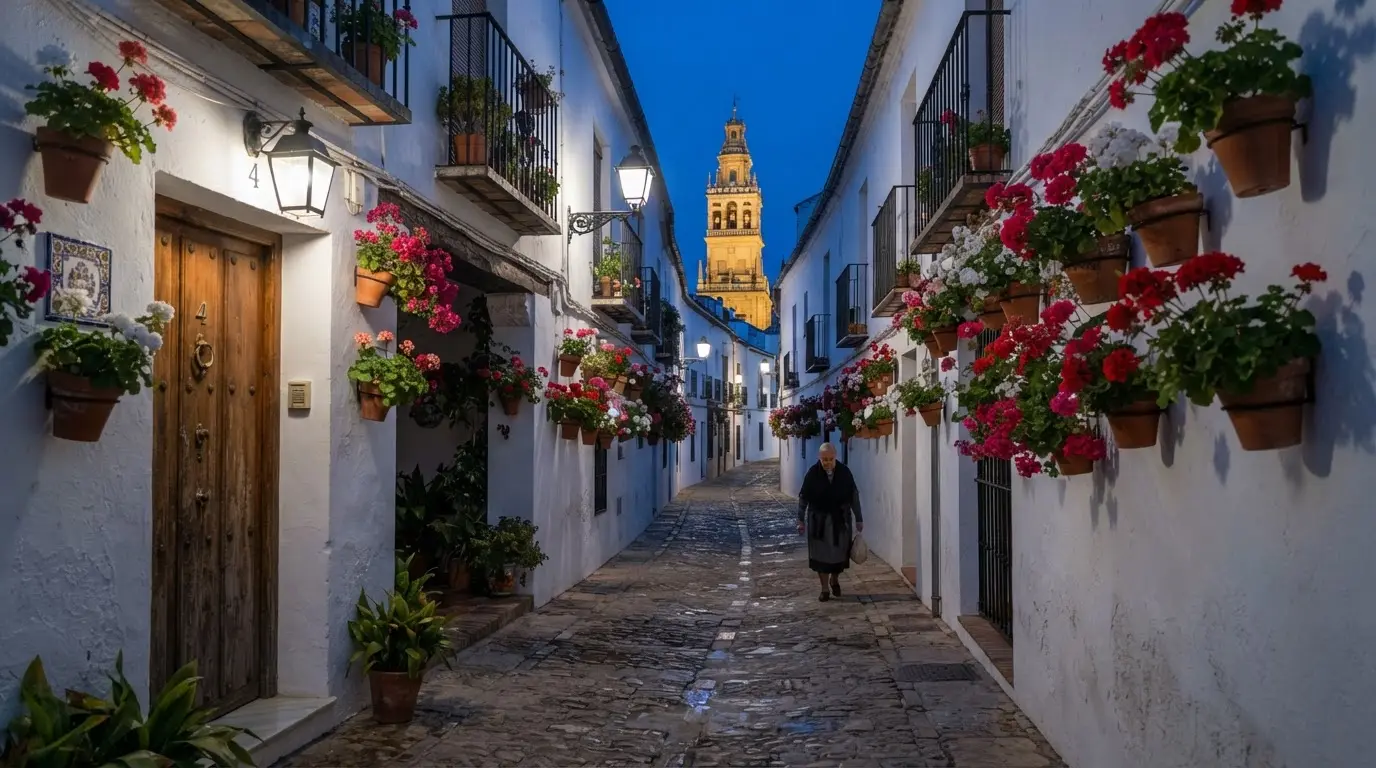
La Judería is tourist central from 10:00 to 16:30. The white lanes, the orange trees, the Synagogue on Calle Judíos, the Zoco Municipal de la Artesanía — all of them are genuinely worth visiting, but not in that window. Arrive at the Zoco early in the morning, before tour groups reach it — check current opening hours, since they can vary by season — or wait until around 21:00, when the last coaches have departed and the Judería smells of jasmine instead of sunscreen. Evening there is the neighbourhood operating as it actually lives: residents on balconies, cats on walls, the sound of a fountain in a patio that you will not find on a map.
San Basilio is the most residential and least touristed historic barrio: quiet cobblestone lanes with little commercial activity compared to the Judería. This is the neighbourhood best known for its award-winning patios in Córdoba — the kind of private courtyards that open during the Fiesta de los Patios in May and which are otherwise invisible from the street. On Sunday mornings before 11:00, San Basilio is as tranquilo as Córdoba gets.
Deep dive · Article
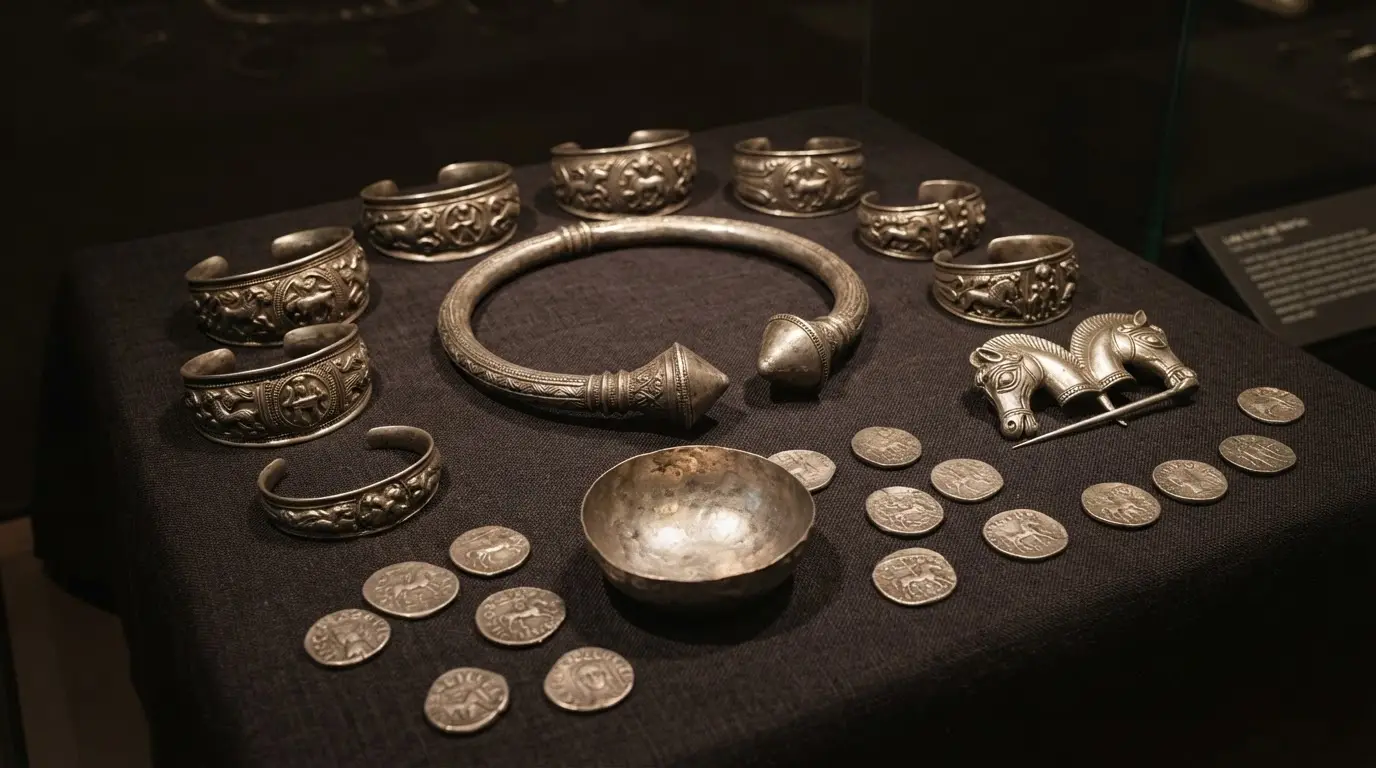
An Andalusian Treasure Has Sat in the British Museum Since 1932
A silver hoard dug up in Córdoba in 1915 left Spain against the law and has been in the British Museum since 1932. Here is how, and what a 2026 study found.
La Axerquía lies east of the Mezquita along the river, a peaceful stretch of backstreets less visited than the Judería[7]. The Plaza del Potro at its western edge was a medieval cattle market; the inn where Cervantes reputedly stayed stands at one end. There is no particular monument driving foot traffic here, which is precisely the point.
Campo de la Verdad, south of the Roman Bridge, is not on any tourist map. It is a working-class barrio with neighbourhood bars, a covered market, and the authentic paseo hour at 19:00 that the historic centre performs for visitors rather than residents. Cross the bridge and walk south for 10 minutes. The city changes completely.
Siesta economics and the horario andaluz
The horario andaluz is not a quaint cultural relic. It is an operating system that determines when the city is alive and when it is paused, and understanding it is the single most useful thing a slow traveller can do in Córdoba.
Lunch runs from 14:00 to 16:30. Real lunch: the main meal, in a restaurant, with time for conversation and possibly a dessert wine. Siesta follows. Dinner does not begin before 21:00, and many locals eat at 22:00 or later. The velada (evening social hour) plays out on the plazas from 19:00 to 21:00: neighbours out walking, children running between chairs, friends at bar tables with something cold.
Day-trippers cannot adapt to this schedule. They arrive at 10:30, eat at 13:00 (when the restaurants are still setting up), and take the 17:30 or 18:00 train home. The siesta economics break down cleanly. From 14:00 to 16:30, the city's bars and restaurants serve the people who actually live there. A slow traveller at a table at 14:30 is eating alongside Cordobans, ordering the menú del día (three courses and a drink for 12 to 14€ at most neighbourhood restaurants), while the tourists who ate at noon are somewhere else entirely.
The velada window from 19:00 to 21:00 is entirely missed by day-trippers. Plaza de la Corredera at 19:30 on any weekday is a local event. The la hora del vermut on Sunday mornings (roughly 12:00 to 14:00) at the same plaza is one of the most genuinely Cordoban social rituals available to a visitor, and it requires only showing up before lunch.
From 14:00 to 16:30, the city's bars and restaurants serve the people who actually live there.
The Hammam Al Andalus near the Mezquita fills up through the siesta hours precisely because slow travellers and locals converge on it. Book ahead. A 90-minute hammam session starting at 15:00 is one of the more sensible ways to inhabit the hours when the historic centre is half asleep and the monuments are at peak capacity.
Market days: the slow traveller's calendar
Markets follow a different crowd logic from monuments. The best time to visit is when locals are shopping, not when tour groups have been dropped off nearby. For a slow traveller, that distinction determines the whole experience.
Mercado Victoria is an indoor market on the Paseo de la Victoria, with kitchens open from 9:00 to midnight (Sunday to Wednesday) and until 02:00 (Thursday to Saturday)[17]. It has around 30 food stalls and is genuinely functional at two very different hours. The 12:00 to 14:00 window is when Cordobans come for a working lunch — salmorejo, grilled fish, montaditos paired with Montilla-Moriles — and the atmosphere is that of a city eating rather than a city performing. After 20:00 the market shifts to evening mode: drinks, smaller plates, the first wave of dinner. Both windows are preferable to the 16:00 to 19:00 stretch when tour groups drift in.
Zoco Municipal de la Artesanía in the Judería is the oldest craft market in Spain, inaugurated in 1956 — check current opening hours before you go, since they can vary. Leather, ceramics, silverwork. Arrive in the morning, before coach groups reach it from the Mezquita. The artisans are sometimes working at that hour. Watching a craftsperson rather than passing a stall is a different experience.
The Mercadillo El Arenal runs on Sundays on Calle del Infierno, with over 240 stalls selling leather goods, ceramics, jewellery, and second-hand items. This mercadillo runs on local time: early Sunday morning, before the historic centre fills. It does not appear on most tourist itineraries, which is part of why it retains the character of an actual flea market rather than a curated craft experience.
Taken together, these three markets cover every day of the week and every price point. A slow traveller in Córdoba for three nights can build a morning or evening around each one without any overlap or repetition.