City comparison
Córdoba vs Granada
Two Moorish capitals, two monuments that define Spain. Here is how they actually differ, and how to pick the one that fits your trip.

Written by
María Fernanda González Ten years covering Córdoba's UNESCO heritage sites, sourcing from Junta de Andalucía documentation.
Updated Published
At a glance
- Distance apart
- 2h by bus or direct train
- Visit Córdoba in
- 1–2 days (compact old town)
- Visit Granada in
- 2–3 days (Alhambra needs half a day)
- Córdoba cheaper?
- Yes: 15–25% lower hotel & food prices
- Córdoba wins
- Mozarabic architecture, less crowded
- Granada wins
- Alhambra, Sierra Nevada, larger city
In this guide
Jump to a section
The short answer
Córdoba and Granada both carry the weight of Al-Andalus (the medieval Islamic civilization that shaped southern Spain for seven centuries). But they feel nothing alike on the ground. Córdoba is compact, quiet, and walkable; its Mezquita-Cathedral costs €15 and requires no advance booking. Granada is hillier, livelier, and built around the Alhambra: the most visited monument in Spain, a palace you need to book 2–3 months ahead and pay €22 to enter.
Both cities repay 2–3 days. Córdoba costs less. Granada has more nightlife and the free-tapas bar tradition. Neither is a bad choice; the question is which trade-offs suit your trip.
Choose Córdoba if…
you want authenticity over spectacle, a tighter budget, and a city you can cover without a map or a booking confirmation.
Choose Granada if…
the Alhambra is non-negotiable, you want nightlife and student energy, or the Sierra Nevada is part of your itinerary.
Side-by-side comparison
| Category | Córdoba | Granada |
|---|---|---|
| Flagship monument | Mezquita-Cathedral | Alhambra |
| Ticket price | €15 (walk up) | €22 (book 2–3 months ahead) |
| Ideal duration | 2–3 days | 2–3 days |
| Budget/day | €70 | €85 |
| Hotel (double) | €60–90 | €70–110 |
| Set lunch menu | €10–13 | €10–14 |
| From Madrid (AVE) | 1h45 | 3h15 |
| Atmosphere | Intimate, quiet | Bohemian, student |
| Best season | Mar–May, Oct | Apr–Jun, Sep–Oct |
| Crowds | Moderate | Heavy (Alhambra) |
Córdoba: the authentic
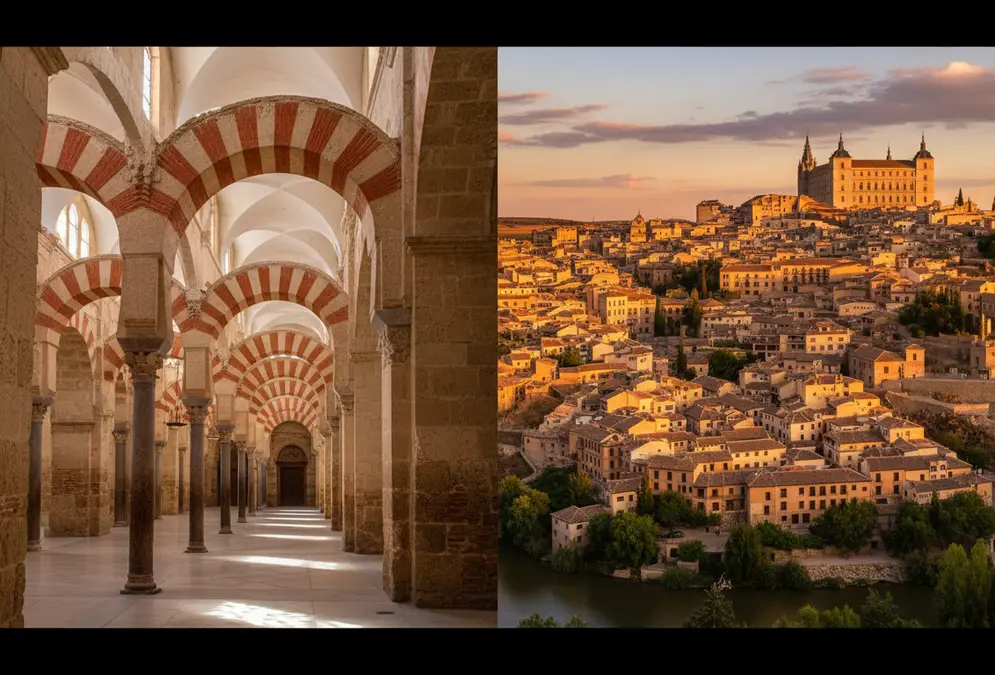
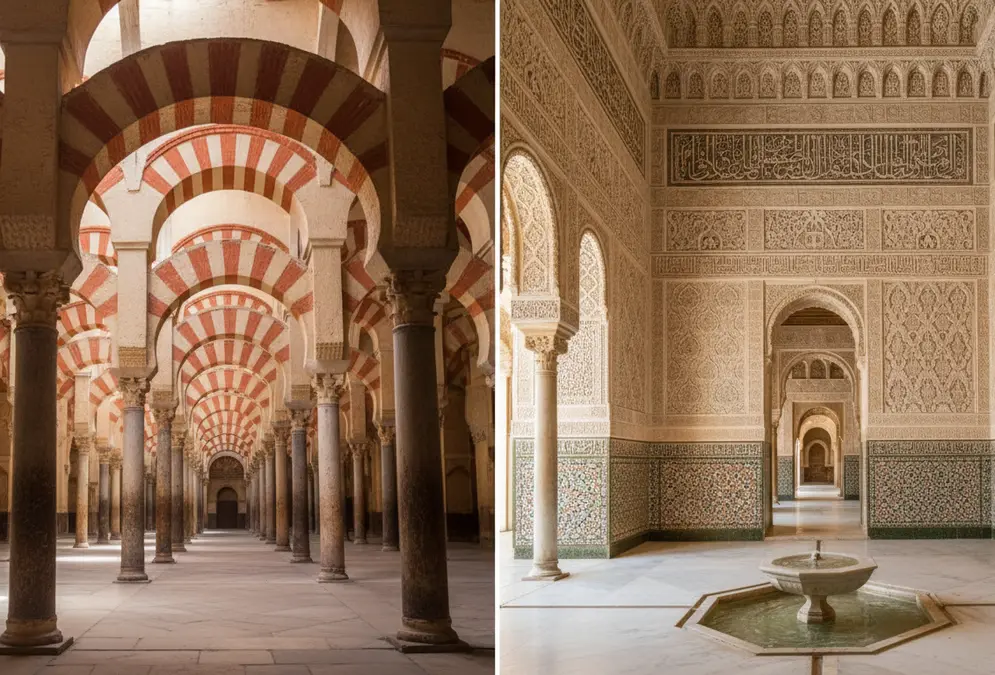
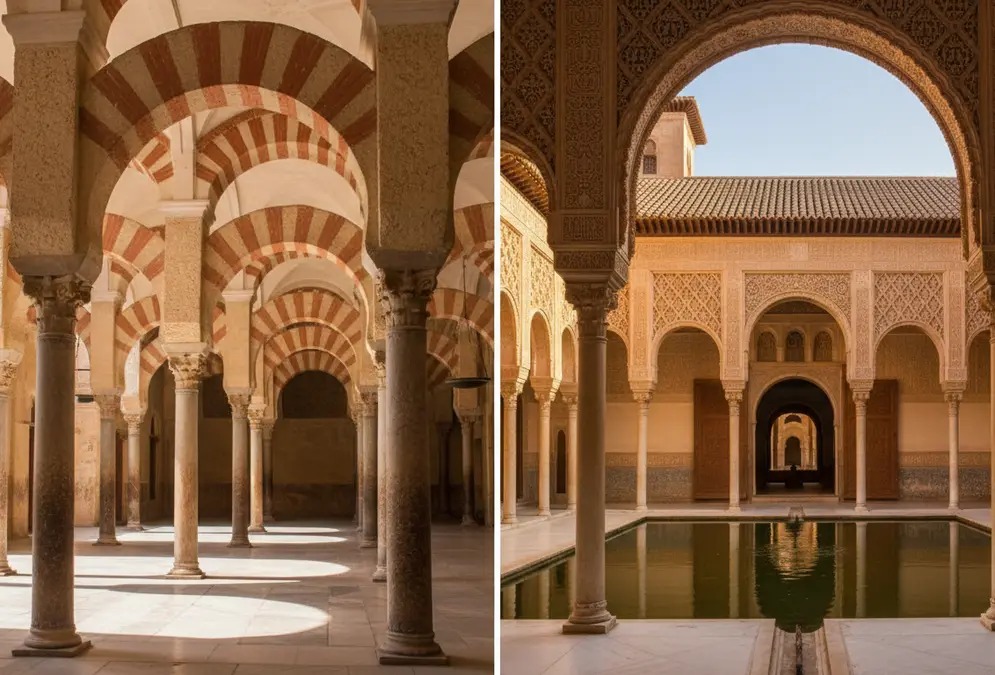
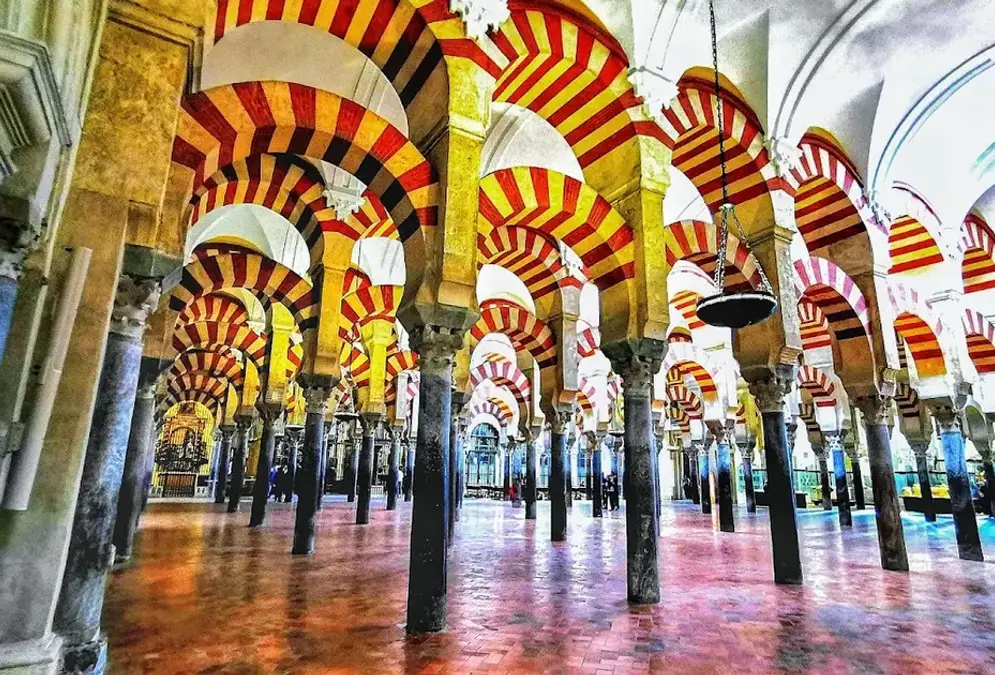
Córdoba was the largest city in medieval Europe when Abd al-Rahman I began the Mezquita in 785. Today, that same building (856 columns of jasper, granite, and marble arranged in hypnotic rows) sits in the middle of a compact historic center you can walk end to end in 20 minutes. No shuttle buses, no timed entry slots. Buy a ticket at the door for €15, go in at 10am when the light falls through the arches at a low angle, and stay as long as you like.
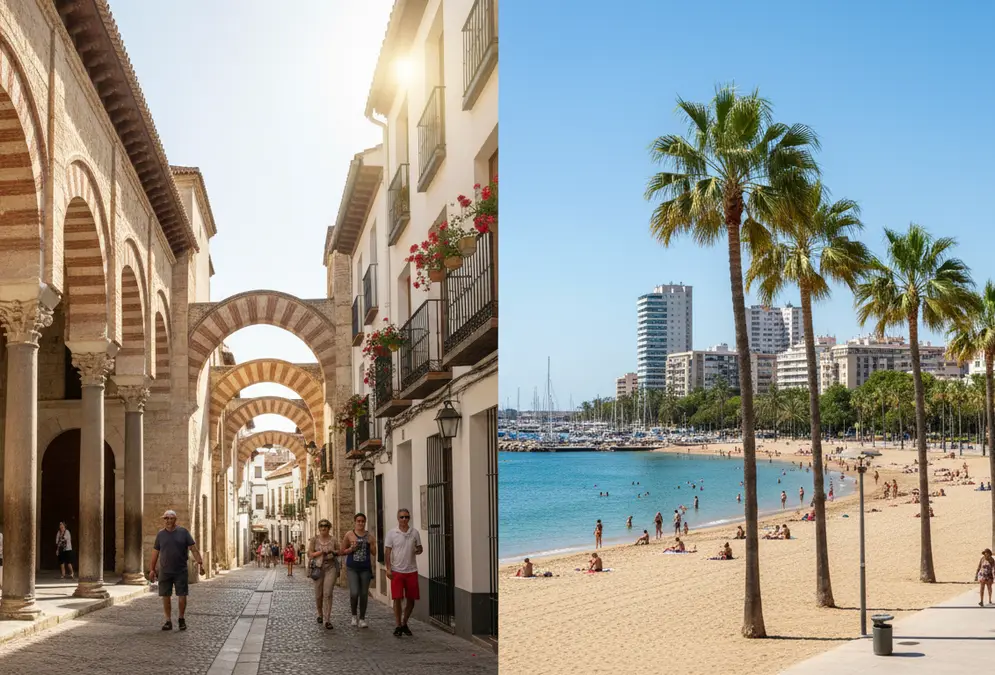
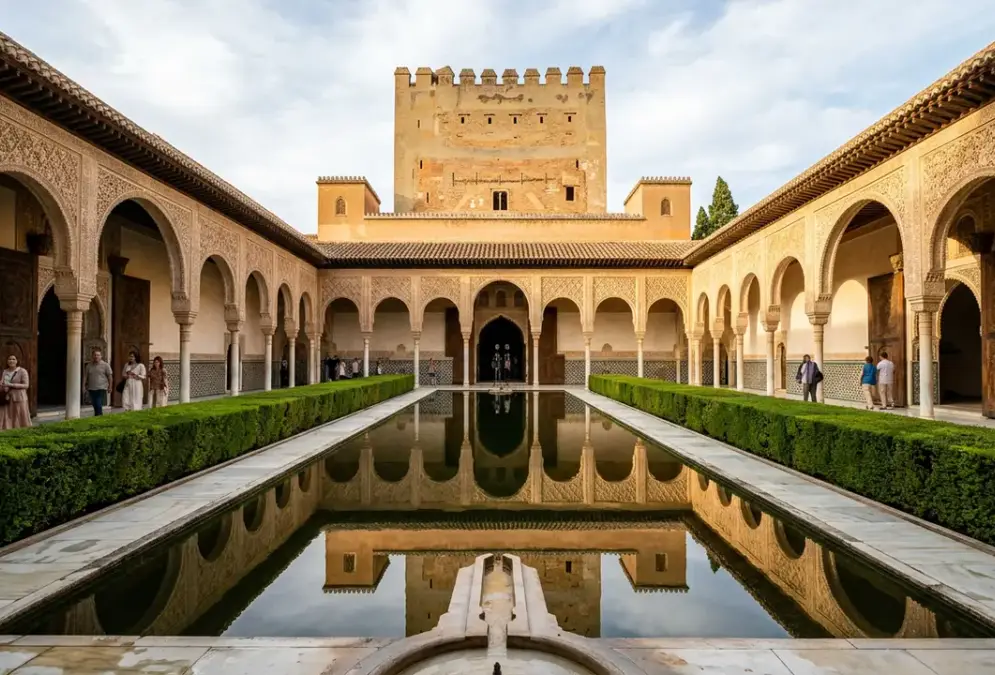
The rest of the old city rewards the same unhurried approach. The Judería (Córdoba's medieval Jewish quarter, UNESCO listed) is a maze of whitewashed lanes narrow enough that the sun rarely reaches the paving stones after mid-morning: the layout was built for shade, not for photographs, though it delivers both. The Alcázar gardens smell of orange blossom in March and April, when the terraced pools double as mirrors for the fortress towers above them. And Medina Azahara, the caliphal palace-city Abd al-Rahman III began building in 936, sits 8km west of the centre, costs €1.50 for EU residents, and most days has barely a queue: only a fraction of the original site has been excavated, so what you see is one wing of a settlement that once employed thousands of stonemasons.
Must-sees
- • Mezquita-Cathedral: 856 columns, built from 785 (€15)
- • Alcázar de los Reyes Cristianos: Roman mosaics and terraced gardens (€7)
- • Judería: medieval Jewish quarter, UNESCO listed
- • Medina Azahara: 10th-century caliphal city, 8km from centre (€1.50)
- • Palacio de Viana: 12 Renaissance patios (€8)
- • Patio Festival (May): UNESCO-listed tradition, courtyards open free to the public
Best for
Authenticity seekers, Islamic history enthusiasts, budget travelers, couples, and first-time Andalusia visitors.
Why it wins
- + Compact city, everything walkable from one hotel
- + Lowest daily budget of any Andalusian city
- + No advance booking needed for the Mezquita
- + Less tourist pressure than Seville or Granada
- + Local food you won't find elsewhere: salmorejo, rabo de toro, flamenquín
- + Fast AVE from Madrid: 1h45, from €20
Trade-offs
- - Quieter nightlife than Granada or Seville
- - Summer heat: regularly above 40°C in July and August
- - No international airport (fly into Málaga or Seville)
Granada: the romantic
Granada's draw is the Alhambra: a 14th-century Nasrid palace perched above the city, its stucco ceilings so intricate they look embroidered rather than carved. Spain's most-visited monument gets around 2.7 million visitors a year, which explains the ticketing rules: general admission costs €22 and slots sell out months in advance. Book the moment your travel dates are fixed. For a detailed Mezquita vs Alhambra comparison, see our dedicated guide.
Below the palace, Granada rewards slower exploration. The Albaicín (the old Arab quarter, UNESCO listed) climbs in narrow lanes to a square (the Mirador de San Nicolás) with the best view of the Alhambra at dusk; on the way up, Calle Calderería Nueva is lined with Moroccan teterías serving mint tea and pastries, a legacy of the neighborhood's North African community. Sacromonte, the cave district above the Albaicín, is where Granada's flamenco tradition runs deepest: the local style, zambra, was shaped by the gitano families who settled the caves and still perform in venues carved into the hillside. And the city's large student population keeps bars lively and inexpensive: many still follow the old custom of bringing a free tapa with every drink, a habit especially strong along Calle Navas and around Plaza Nueva.
Must-sees
- • Alhambra and Generalife: Nasrid palaces and gardens (€22.27, book months ahead)
- • Albaicín: Arab quarter with Alhambra views, UNESCO listed
- • Sacromonte: cave flamenco performed where the tradition began
- • Cathedral and Royal Chapel: tombs of Ferdinand and Isabella (€12 combined)
- • Sierra Nevada: skiing in winter, hiking from late spring
Best for
Romantic travelers, flamenco enthusiasts, hikers, students, and anyone for whom the Alhambra is the primary reason to visit Andalusia.
Why it wins
- + The Alhambra: Spain's most-visited monument for a reason
- + Free tapas tradition in most bars
- + Lively student atmosphere and nightlife
- + Sierra Nevada 30 minutes by car
- + Cave flamenco in Sacromonte's original venues
Trade-offs
- - Alhambra tickets require booking 2–3 months in advance
- - Hilly city: tiring with luggage, pushchairs, or limited mobility
- - No direct AVE from Madrid; travel time is 3h15 via bus or indirect train
Food & eating out
Córdoba
Córdoban cooking stays close to its roots, and its prices stay honest. The cold tomato soup called salmorejo (blended with bread and garlic until thick enough to hold a spoon upright, then topped with diced jamón and hard-boiled egg) is the city's signature dish. Order it anywhere in the Judería but compare versions: some kitchens add a touch of vinegar, others thin it with more olive oil, and a few finish it with fried croutons (picatostes) instead of egg. Rabo de toro (oxtail braised for hours in wine until it falls off the bone) traces back to the city's bullfighting tradition and its remaining meat cuts, and is best eaten in a proper taberna away from the Mezquita tourist circuit. Flamenquín (a pork loin rolled around jamón, breaded, and deep-fried, usually sliced and served with fries) is the third pillar of the local menu and shows up in nearly every bar as a tapa-sized portion.
Set lunch menus run €10–13 and typically include a glass of local wine from Montilla-Moriles (a region near Córdoba known for naturally high-alcohol wines made from sun-dried Pedro Ximénez grapes, often compared to Jerez sherry but not fortified in the same way). The restaurant scene along Calle de la Hoguera and around Plaza de la Corredera offers the best value, and some bars still bring a basket of picos (small hard breadsticks) with the meal.
Granada
Granada runs on one custom that Córdoba lacks: the free tapa with every drink. Order a beer or a glass of wine at most bars outside the tourist centre and a plate of food arrives with it, at no charge, no ordering required. Many bars follow an unwritten rule of escalation: the tapa that comes with your first drink is small (olives, a few crisps), but order a second or third round at the same bar and the kitchen often sends out something more substantial, like a plate of jamón or a slice of tortilla. Others specialise in one dish only, so a proper bar crawl means moving between two or three places rather than settling into one.
Set lunch menus are comparable to Córdoba at €10–14. The Albaicín has the most atmospheric restaurants, with terraces looking back at the Alhambra, though prices there run higher than around the university quarter near Calle Elvira, a nightlife street popular with a younger, mixed crowd.
What it costs
Córdoba costs less across the board. On a 3-day trip, the savings on hotels, food, and monument tickets add up fast. See our Córdoba budget guide for a full breakdown.
| Expense | Córdoba | Granada |
|---|---|---|
| Daily budget (mid-range) | ~€70 | ~€85 |
| Hotel double/night | €60–90 | €70–110 |
| Flagship monument | €15 | €22 |
| Set lunch menu | €10–13 | €10–14 |
Granada's free-tapas tradition offsets its higher hotel prices: drink in the right bars and your food bill drops fast. Córdoba skips the free tapas but makes up for it with lower prices across the board.
Getting there
From Madrid, Córdoba is far easier to reach. The AVE takes 1h45 from Puerta de Atocha, with around 20 trains daily and fares from €20 booked in advance. Granada has no direct AVE; the fastest train runs via Antequera-Santa Ana, takes about 3h15, and requires a change. Buses from Madrid's Estación Sur take 5-6 hours but cost as little as €15.
| Route | Train | Bus | Car |
|---|---|---|---|
| Madrid → Córdoba | 1h45, from €20 | 4h30, from €15 | 3h45 |
| Madrid → Granada | 3h15 (indirect), from €25 | 5–6h, from €15 | 4h30 |
| Córdoba → Granada | 1h30, from €17 | 2h30–3h, from €9 | 2h |
For full transport options and arrival logistics, see our guide to getting to Córdoba.
Which city fits your trip?
Choose Córdoba if…
- • This is your first time in Andalusia and you want a manageable introduction
- • You are traveling from Madrid and want the shortest journey (1h45 AVE)
- • Budget matters: you want the most heritage for the least money
- • You prefer wandering without schedules to timed-entry monuments
- • You are visiting in May and want the Patio Festival
- • You want salmorejo and oxtail at taberna prices, not tourist-menu prices
- • You are traveling as a couple and want a quieter, more intimate city
Choose Granada if…
- • The Alhambra is the reason you are visiting Andalusia (it genuinely cannot be substituted)
- • You want evening nightlife and a lively bar culture
- • The Sierra Nevada skiing or hiking is part of your trip
- • You want to see flamenco in the Sacromonte caves where it started
- • You are a student or traveling on a student budget (free tapas reduce costs)
- • You prefer a bohemian, university-city atmosphere
- • You are already in southern Spain and can reach Granada easily by bus
Also considering Seville? See our Córdoba vs Seville guide. Or compare all three in our Córdoba vs Granada vs Seville guide. Want the Atlantic coast too? See Córdoba vs Cádiz.
How to combine both cities
Five days lets you see both cities properly, not just the headline monuments. Start in Córdoba (closer to Madrid by AVE), then take the direct train east to Granada.
D1–D2
Córdoba (2 days)
Arrive by AVE from Madrid, or on a Córdoba day trip from Seville if you're starting there instead. Mezquita on the first morning before 11am, then the Judería on foot. Day two: Alcázar gardens, Medina Azahara in the afternoon, Palacio de Viana if time allows. See our 2-day Córdoba itinerary.
Direct train Córdoba → Granada: 1h30, from €17 (8 daily)
D3–D5
Granada (3 days)
Alhambra on day one (book your timed slot before the trip). Albaicín and Sacromonte on day two. Cathedral and Royal Chapel, then free tapas bar-hopping in the university quarter on day three. See our Córdoba to Granada day trip guide if you prefer to visit as a day trip from Córdoba, or the Granada to Córdoba guide for the reverse.
5-day budget: €400-600 per person (excluding flights) for hotels, meals, trains, and monument tickets. Book Alhambra tickets first; everything else can wait.
Starting in Córdoba?
Day-by-day itineraries, transport details, and budget tips, all from locals who live here.
Frequently asked questions
Which is better, Córdoba or Granada?
Both cities are exceptional, but they reward different kinds of travelers. Córdoba wins on budget (€70/day vs €85), walkability, and authenticity: no advance booking needed for the Mezquita, everything is within 20 minutes on foot. Granada wins on nightlife, the free-tapas bar culture, and the Alhambra, which has no architectural equal in Spain. For a first Andalusia visit, Córdoba is an easier, more affordable introduction.
Can you do Córdoba and Granada in one trip?
Yes, and the combination works well. Direct trains connect the two cities in around 1h30 (from €17, roughly 8 departures daily). Allow 2–3 days in each. Arriving from Madrid, start in Córdoba (it's closer on the AVE at 1h45), then continue to Granada. Book your Alhambra tickets before you even book your flights: they sell out 2–3 months ahead.
Is the Mezquita better than the Alhambra?
They are genuinely different experiences. The Mezquita is a contemplative forest of 856 striped arches you can walk into any day for €15, no planning required. The Alhambra is a palace complex on a hill requiring advance booking (€22.27) and timed entry slots, but architecturally it has no rival. Many travelers find the Mezquita more moving precisely because it is accessible, unhurried, and still in daily use as a cathedral.
Is Córdoba cheaper than Granada?
Yes, noticeably. A typical daily budget in Córdoba runs around €70 per person versus €85 in Granada. The Mezquita costs €15 versus €22 for the Alhambra. Hotels run €60–90 for a double in Córdoba versus €70–110 in Granada. Set lunch menus are broadly similar (€10–13 vs €10–14), though Granada's free-tapas tradition can cut your bar spending considerably.
How do you get from Córdoba to Granada?
Direct trains take around 1h30 and cost from €17; there are roughly 8 departures daily. Buses (ALSA) take 2h30–3h and cost from €9, with 6 or more daily services. Driving via the A-7 takes about 2 hours depending on traffic. There is no direct AVE between the two cities; the train runs via a conventional line, but it is comfortable and reliable.
Further reading
Official sources
3 references Show Hide
- Turismo de Córdoba (opens in a new tab)
Official tourism office for Córdoba's monuments, events, and visitor information
- Patronato de la Alhambra y Generalife (opens in a new tab)
Official Alhambra website — tickets, opening hours, and booking
- Renfe — AVE trains (opens in a new tab)
Timetables and fares for high-speed trains between Córdoba, Granada, and Madrid
Still deciding whether Córdoba deserves a place on your trip? Read our guide to whether Córdoba is worth visiting: an honest case for and against, with traveller profiles that match different trip styles.
Find Hotels in Córdoba
We earn a small commission if you book a hotel through this search — at no extra cost to you.
Córdoba's historic centre and Judería are walkable from all major monuments — book central accommodation to make the most of a short stay.
Recommended Tours & Activities
Tours are selected for quality, not commission. We earn a small fee if you book — at no extra cost to you.
Best Seller
Top Rated

Mosque-Cathedral Skip-the-Line Guided Tour
Skip the queue and explore the Mezquita-Cathedral with a knowledgeable local guide. Discover 13 centuries of layered history in one of Spain's most iconic monuments.
Skip the line 1.5 hours
From €29
4.7 (7,293 reviews)
Reserve Your Spot
✓ Verified GetYourGuide reviews
Books up weeks ahead in peak season
Guided City Tour by Tuk-Tuk
Zip through Córdoba's historic streets aboard a fun electric tuk-tuk. A comfortable, entertaining way to cover the main sights with a live guide narrating along the way.
1 hour
From €25
4.9 (347 reviews)
Reserve Your Spot
✓ Verified GetYourGuide reviews
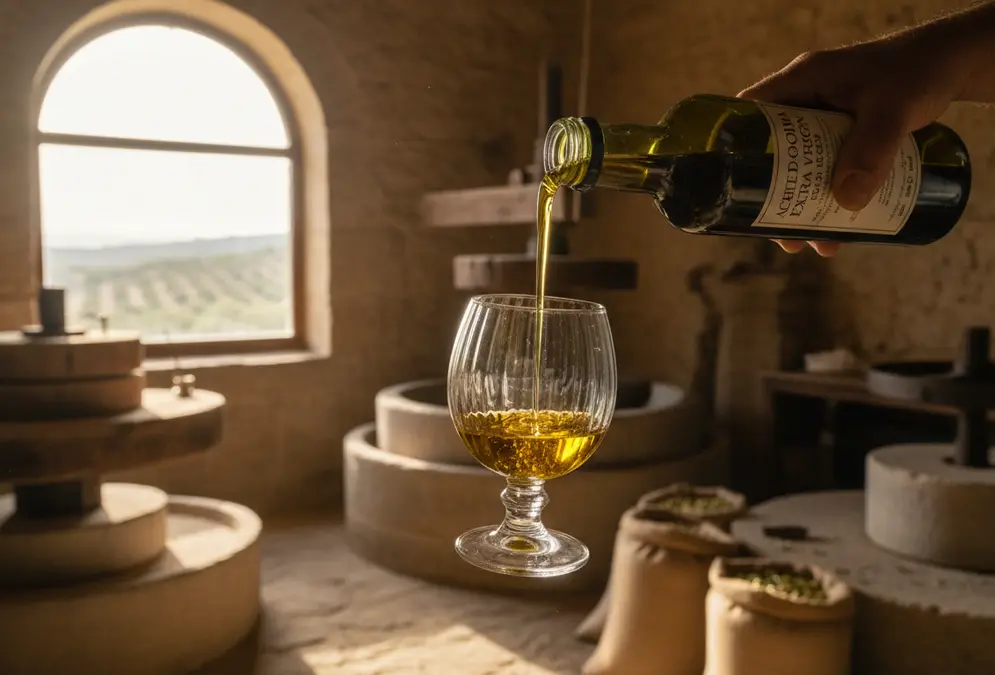
Extra Virgin Olive Oil Tasting
Sample premium extra virgin olive oils from Andalusia and learn to distinguish quality grades, aromas, and flavour profiles in a guided tasting led by an oil expert.
1 hour
From €25
4.9 (85 reviews)
Reserve Your Spot
✓ Verified GetYourGuide reviews