
Why one suspension reaches every Andalusian city
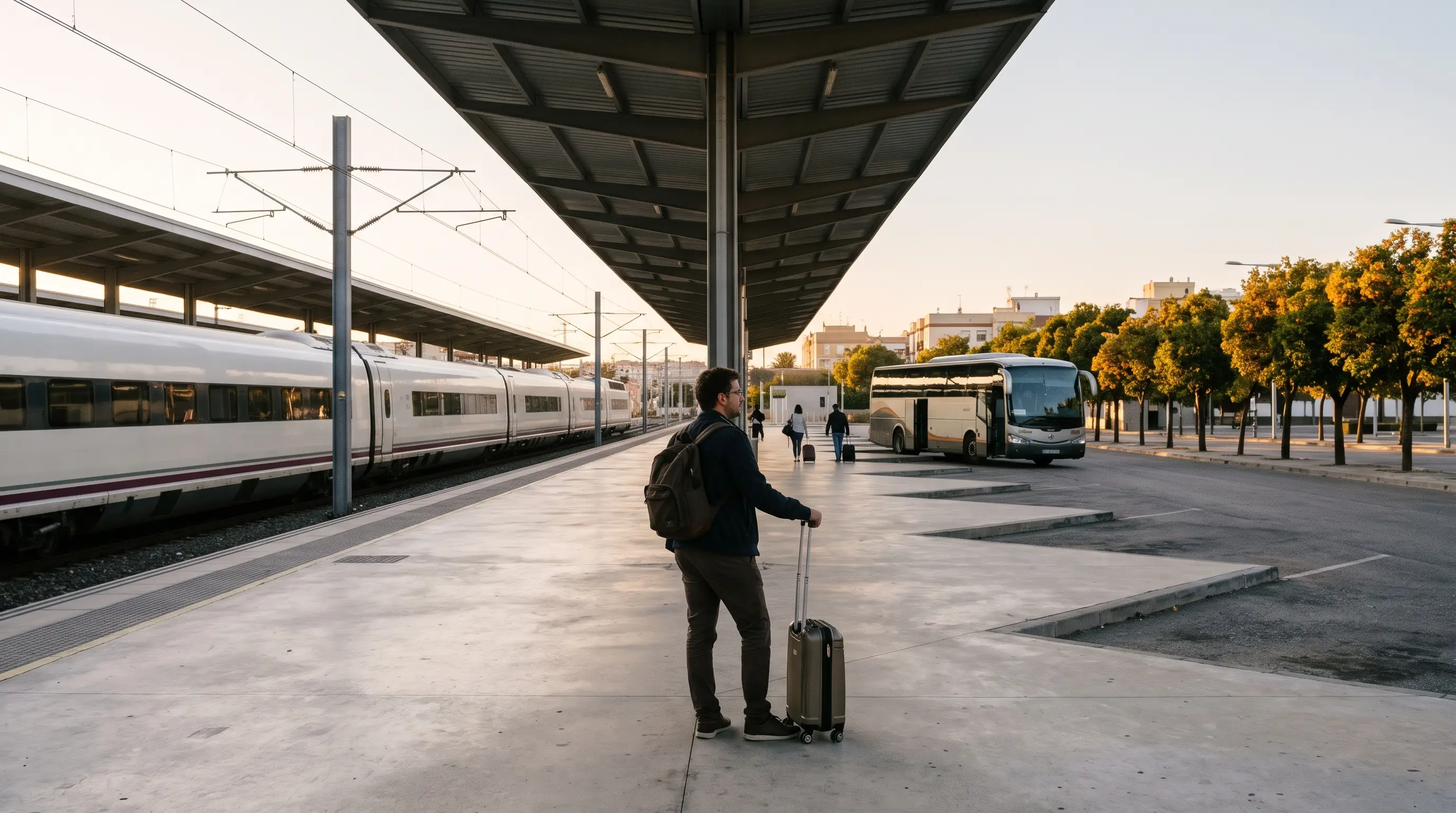
Every Andalusian city a visitor is likely to want sits behind the same stretch of track out of Madrid. The Madrid–Málaga high-speed line leaves the Madrid–Seville line at Córdoba[7], so a stoppage on the shared section takes Córdoba, Seville and Málaga off the timetable together, and Adif's notice of 19 January named Huelva, Cádiz, Algeciras and Granada as well[6]. That is one corridor doing the work of four routes.
The design leaves a few exits. Villanueva de Córdoba station, opened in 2014 between Córdoba and Puertollano[8], and most of the line's passing stations have basic platforms where passengers can step off and board buses in an emergency[9].
The convenience is real, and so is the exposure. Nearly 35 years of AVE service in Córdoba have taught visitors to treat the train as the only way in, and the first hours of any suspension show what that habit costs.
What the operators owe you before you spend anything
Settle the ticket before you buy a substitute, because what you are owed depends on who cancelled. On 19 January every operator on the corridor, Renfe, Iryo and Ouigo, suspended services and opened free, automatic cancellation or date change[10]. Renfe's own conditions define a cancelled journey as one that cannot be made as contracted[11], and refunds go back to the original payment method[12].
Wait for the operator's notice
Cancelling a ticket yourself counts as a voluntary cancellation, and on Renfe's Elige and Elige Confort fares that refunds 70% of the price[13]. Wait for the operator's own cancellation or free-change notice first.
A train already stopped on the line is a separate case: Renfe's conditions say it takes passengers to the origin station, an alternative origin or the final destination, where physically possible[14]. Compensation for a late arrival is its own claim, with its own deadlines, covered in Renfe train delay claims for Córdoba. How the three operators' schemes compare is set out in who owes you when a train is cancelled. For live status, adif.es, renfe.com, iryo.eu and ouigo.com/es are the only clocks that count.
The substitutes that worked in January
On the first day nothing was organised: the rail companies had not activated a general road-transfer plan, and travellers had to find their own way[15]. From 20 January Renfe ran high-speed trains from Madrid to Villanueva de Córdoba and covered the last leg into the city by bus[16]. Trains from Madrid stopped at Ciudad Real and Puertollano, Córdoba–Málaga services at Antequera, and fares started at 33.10 euros to Córdoba and 40 euros to Seville and Málaga[17]. Renfe reported that close to 72,000 travellers used the special road service during the month the line stayed suspended[2].
The other routes each had a catch of their own:
- Coach: the regular Socibus line between Córdoba and Madrid's Estación Sur at Méndez Álvaro is the most direct road option[18].
- More coaches: Socibus reinforced its Madrid lines to Cádiz, Seville, Huelva and Andújar[19], and Alsa and Interbus added runs to Granada and Málaga[20].
- Coach fares quoted in January: 27.10 to 35.10 euros to Seville[21], 22 to 45 euros to Granada and about 20 euros to Málaga[22].
- Slower trains: Renfe reinforced conventional Media Distancia services on the Madrid–Extremadura–Seville line until Friday 23 January[23].
- Flights: Iberia put on extra flights to Andalusia and capped economy fares at 150 euros at first, then at 99 euros per segment from 20 January, ceilings rather than typical prices[3].
- Car: the A-4 was open and operating on 19 January, so a hired car or a carsharing seat was the guaranteed route[24], and BlaBlaCar reported 25% more trips published in Andalusia[25].
50,000
Flights land in Seville or Málaga, not Córdoba, so they still need a second leg by train or road. The A-4 follows the line of the old N-4 through Toledo, Ciudad Real and Jaén provinces to Córdoba[27]. Check live traffic before you set off rather than trusting a printed estimate; nobody can promise a journey time on a day when many travellers change plan at once.
If you are already in Córdoba
The station is where to start. In January Adif kept Madrid Puerta de Atocha, Córdoba and Seville Santa Justa stations open overnight for travellers who could not take their train[28], and after the 28 October collision El Debate reported information centres at Atocha, Córdoba and Seville[29]. Your operator's desk or app is where a cancellation or free change gets confirmed.
Explore nearby · Monument
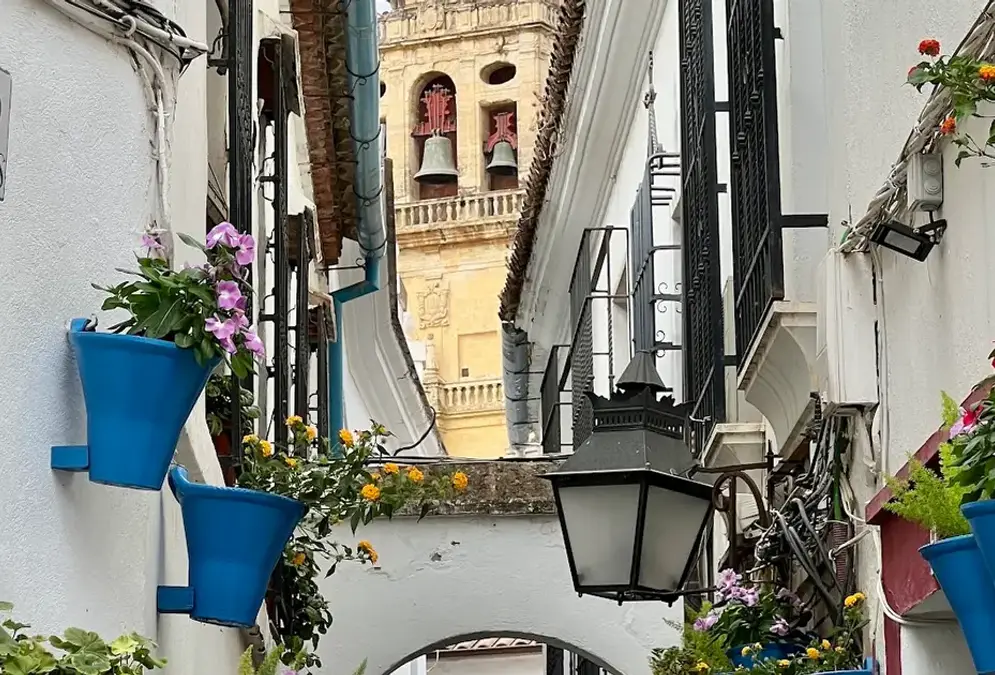
Calleja de las Flores
Whitewashed walls and red geraniums framing the Mezquita bell tower. Córdoba's most photographed alley in the Judería. Free, open 24 hours, best before 10am.
Before you rebook anything, get the operator's cancellation or change confirmed in the app or at a desk, and keep receipts for any substitute you buy. Refund and compensation claims run on paper, and a coach ticket bought in a panic is easier to recover when you can show why. A Córdoba stopover that hinges on a cancelled train can be rebuilt around a longer stop on an Andalusia road trip.
Recommended tours
Tours are selected for quality, not commission. We earn a small fee if you book — at no extra cost to you.


Choosing a substitute, and how a reopening unfolds
Match the substitute to the constraint you actually have:
- Fixed deadline, flexible budget: fly to Seville or Málaga and add a second leg to Córdoba; Iberia capped economy fares on its extra January flights at 150 euros and then at 99 euros per segment from 20 January[3]. Fares vary by day, time and airline, so compare airlines on a fare tool and book early before settling on a train substitute.
- Tight budget, flexible hours: take the coach to Estación Sur, the most direct road option[18], and book as soon as your operator's notice arrives.
- Want Córdoba itself and no flight: a Renfe rail-and-bus plan like January's, with fares from 33.10 euros[17], if the company activates one.
- Luggage, a group or an odd hour: the A-4 by hired car or carsharing[24].
- No urgency at all: keep the ticket and take the free change[10].
Deep dive · Article
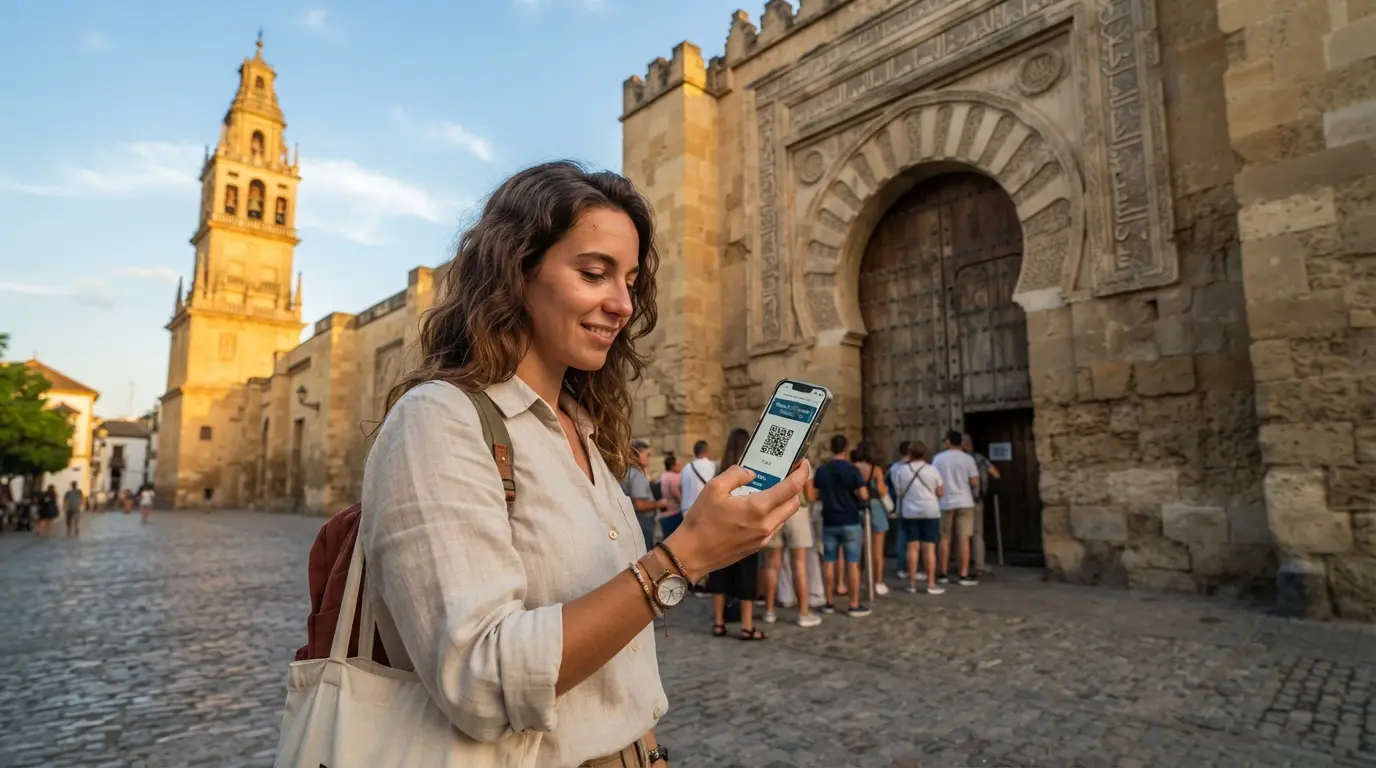
10 Mistakes to Avoid on Your First Trip to Córdoba
Ten costly mistakes first-time visitors make in Córdoba, from walk-up Mezquita queues to misjudging Patios Festival dates, and how to avoid them before you fly.
Reopening is staged rather than instant. On 17 February Renfe resumed Madrid–Seville, Cádiz, Granada and Huelva first and Madrid–Málaga a day later, with a bus link at Antequera Santa Ana[30]; Iryo returned to its regular Madrid–Seville programme and Ouigo restored its services progressively[31]. The January closure, which began when a Málaga–Madrid train derailed at Adamuz and fouled the adjacent track[32], lasted nearly a month[1], but another suspension may run shorter or longer, and the operators' pages are the only reliable clock. Whichever company you booked, including the budget entrants that changed who visits Córdoba, the free-change protocol in January applied to all three[10].