A Córdoba scholar who chose the sierra
Ibn Masarra was born in Córdoba in 883 (269 AH), when the city was capital of the Umayyad emirate, into a family of mawla origin, clients under patronage.[1] His father, a transmitter of hadith, died in Mecca in 899–900 (286 AH), when the boy was seventeen.[5] What lay between that bereavement and his retreat to the hills is thinly documented: Garrido Clemente writes that little is really known of his life.[6]
His own pilgrimage took him east. At Kairouan he stopped with Andalusi disciples and sat in the class of a Maliki jurist before going on to Mecca.[7] In Medina, according to his companion Ibn al-Madini, he noted the dimensions of the house of the Prophet's concubine Maryam and later reproduced its structure in his own house in Córdoba.[8] It is a small, odd detail, and a rare one for a life this thinly recorded.
By about 912 to 914 biographers find him living in the foothills of the Sierra de Córdoba with close disciples.[9] The nickname al-Jabali, 'the Highlander', traditionally comes from that retired life on his property, far from the city, though Pilar Garrido Clemente notes it could be a genuine family name.[10] He died on his estate in the foothills in 319 AH (931 CE),[11][33] having taught his doctrines to friends and disciples in a hermitage he founded in the Sierra de Córdoba.[12]
What he taught: reason, revelation and the science of letters
Ibn Masarra's cosmology, as Atiyeh summarises it, is Neoplatonic: all beings emanate from God through the First Intellect and are either invisible or apparent. They fall into four ranks, some nobler than others: God's essence, the Universal Intellect, the Great Soul and the Physical Soul. God's essence itself is simple and ineffable, with knowledge, will and power as a distinct aspect of it. The cosmos was originated in time by the command 'Be' (kun), expressing divine will according to knowledge.[34][35][37][36]
Out of that scheme comes one stated aim: to show that reason and revelation agree.[15] The science of letters was the route to hidden truths, and Atiyeh stresses that it had nothing to do with divination or magic: it is a path to the truths hidden behind symbols.[38] It is a bookish programme for a man who lived in the foothills, and the books, not the hermitage, are what outlasted him.
A Casa Árabe announcement for a lecture by José Bellver of the CSIC describes him as one of the earliest Andalusis to seek divine knowledge through reason and direct mystical experience.[14] The chronicler Ibn Hayyan, quoted by Garrido, praised his eloquence: his speech was soft and sharp, able to embellish discourse.[17]
Philosopher, gnostic or Sufi: the scholarly dispute
The modern argument began with Asín Palacios, who proposed that Ibn Masarra drew on the writings of the so-called Pseudo-Empedocles and brought Neoplatonism, and with it philosophy, to al-Andalus.[18] In Asín's reconstruction, the Pseudo-Empedocles ran a scheme of five eternal substances beneath a Plotinian One, which makes it a different shape from the four ranks of being Ibn Masarra describes.[40] Atiyeh points to a contrast: where the Pseudo-Empedocles made love and discord the driving force of creation, Ibn Masarra talked about capacity and power.[39] The discovery of two previously unknown works gave the debate a new footing,[19] and Samuel Stern rejected the Pseudo-Empedoclean reading as resting on Asín's mistaken inferences, an error he traced to Qadi Sa'id's claim that Muslim Batinis relied on Empedocles and that Ibn Masarra was one of them.[20][41] Three readings of the man now compete.
- Emilio Tornero treats him as a genuine philosopher whose central concern is the concord of the Qur'an and philosophy, with no specifically Sufi themes in the known works.[21]
- Ramón Guerrero, with Garrido's endorsement, argues that the philosophical references prove no strict philosophical doctrine and that the book sits closer to Islamic gnosticism.[22]
- Garrido herself calls him the first Sufi master of al-Andalus and founder of the first known mystical movement on the Iberian Peninsula.[23]
Much of the split is vocabulary. Garrido observes that the positions depend, in the end, on how each scholar defines Sufism, gnosis, philosophy and revelation.[24] The question under all three readings, how reason and revelation agree, was one Córdoba would still be asking centuries later in the work of Averroes. Three labels, one small set of texts, and no verdict that every scholar accepts.
Edicts, jurists and burnt books
Ibn Masarra himself, by every indication in the biographical sources, suffered no harassment or persecution after his return to al-Andalus.[2] He was safe. His students were not: from the last years of Abd al-Rahman III his followers were condemned on several occasions,[3] and the jurists pursued the disciples, who had organised themselves into an ascetic order, the Masarriya, in Córdoba and later in Almería.[25]
The date that stands out is 340 AH (951 to 952), when Abd al-Rahman III issued an edict banning the Masarri movement; no political pressure is recorded before it.[4] Muhammad 'Abd Allah 'Inan reads the decree as a way of intimidating those branded dissenters and of pleasing the jurists.[26] The burning of the books came later, in 350 AH (961), a decade after the edict. The Turkish encyclopedia entry says the Córdoba qadi Ibn Zarb, a Maliki jurist, had Ibn Masarra's books burnt before an assembly that included Masarris.[27] Who ordered it is not settled, so the qadi's role is that entry's attribution, not an established fact.
The decree's charges were specific. It accused the movement's philosophy of trying to alter the sunna, of hostility to the Qur'an and the hadith, and of defending the createdness of the Qur'an, a Mu'tazili position.[44] Garrido warns against taking that label at face value: calling Ibn Masarra's father Mu'tazili should not be read literally in the Maliki context of al-Andalus.[16]
The irony is that the writings do not read like heresy. Reviewing Garrido's 2022 edition, Montserrat Abumalham wrote that nobody reading his work first-hand could accuse Ibn Masarra of heterodoxy.[28] Contemporaries were split: al-Khushani recorded that some people saw in him an imam of knowledge and asceticism, others an innovator,[29] and most of the primary sources use the word mubtadi', innovator, for him.[30] The accusation, in other words, attached to the movement more than to the page. It also arrived long after he was dead and could answer nothing.
What survived: the manuscripts and the later school
The two works that survive were found far from Córdoba. Pilar Garrido Clemente records their discovery in 1972 in manuscript 3168 of the Chester Beatty Library in Dublin,[31] and Muhammad Kamal Ja'far's 1972–74 study of them was folded into his 1978 edition, published in Cairo; she names the works as Kitab khawass al-huruf and Risalat al-I'tibar.[32] Atiyeh's reference article gives a different date: it says Kitab al-i'tibar (On Reflection) and Kitab khawass al-huruf (Characteristics of Letters) were published in 1982, counts four works in all, and lists Tawhid al-muqinin among those still missing.[13] The two accounts give different dates for the same two works.
The movement's later fortunes are framed in different ways. Asín Palacios claimed that Andalusian Sufism, from al-Ru'ayni to Ibn al-'Arabi by way of Ibn al-'Arif, sprang from the Masarri school.[42] Atiyeh attests Ibn Masarra's influence on Ibn al-'Arabi through the many references to him in the latter's works and a similarity of ideas.[43] Ibn Hazm, a century later, reports an Ibn Masarra school formed at Almería, with Isma'il b. 'Abdallah al-Ru'ayni as one of its leading figures.[45] How much of that lineage is Ibn Masarra's own is the question the Sufi reading rests on.
Deep dive · Article
Abd al-Rahman III: The Morning Córdoba Became a Caliphate
Abd al-Rahman III was the first Caliph of Córdoba, declared on January 16, 929, ruling Córdoba for 49 years and starting work on Medina Azahara in 936 CE.
Meeting Ibn Masarra in Córdoba today
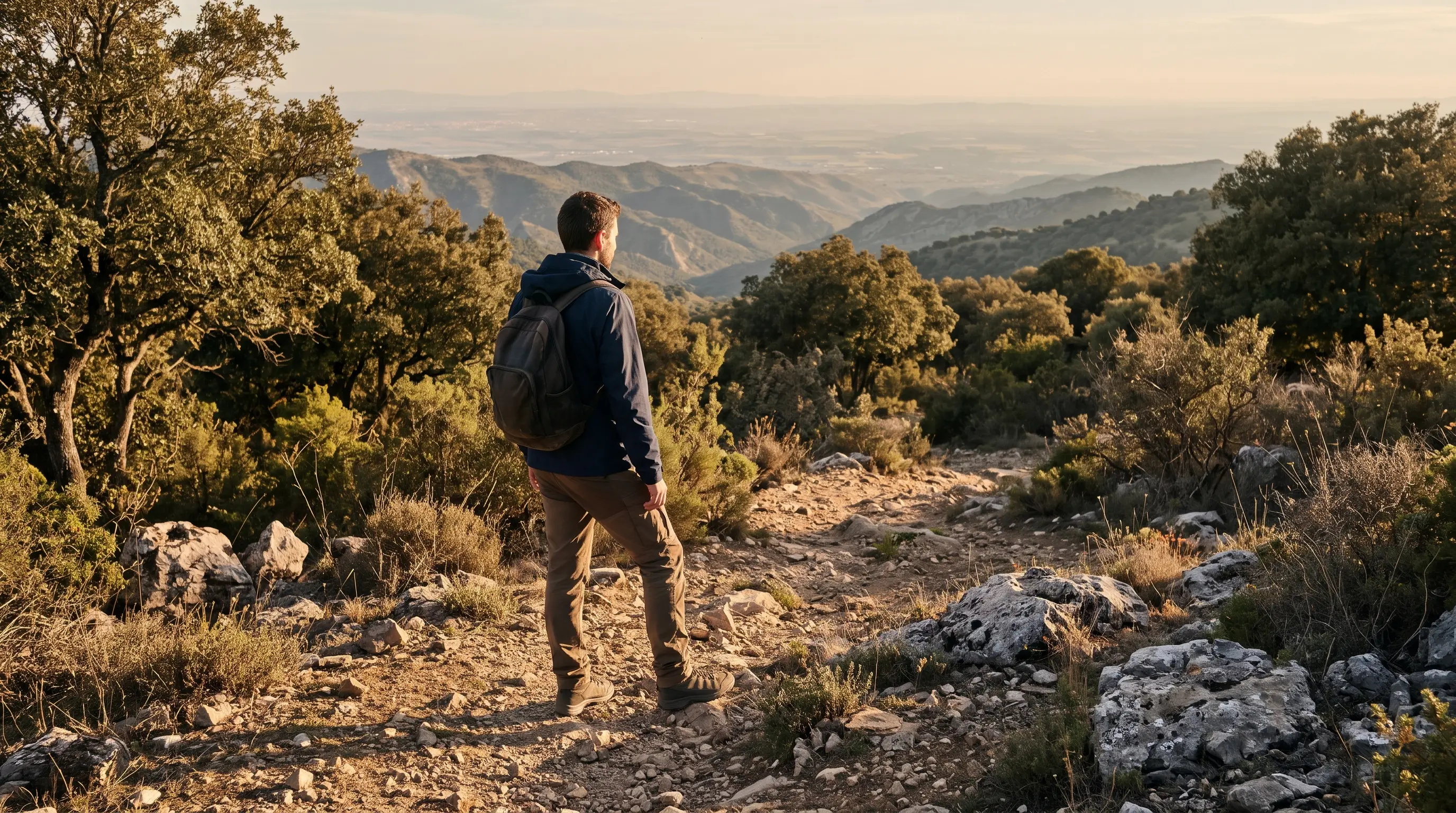
The landscape traditionally said to have given Ibn Masarra his nickname is the Sierra de Córdoba, the range behind the city where biographers place him with his disciples around 912 to 914.[9] A day in those foothills gives you the setting of the story, with the Guadalquivir valley spreading out to the south.
Explore nearby · Monument
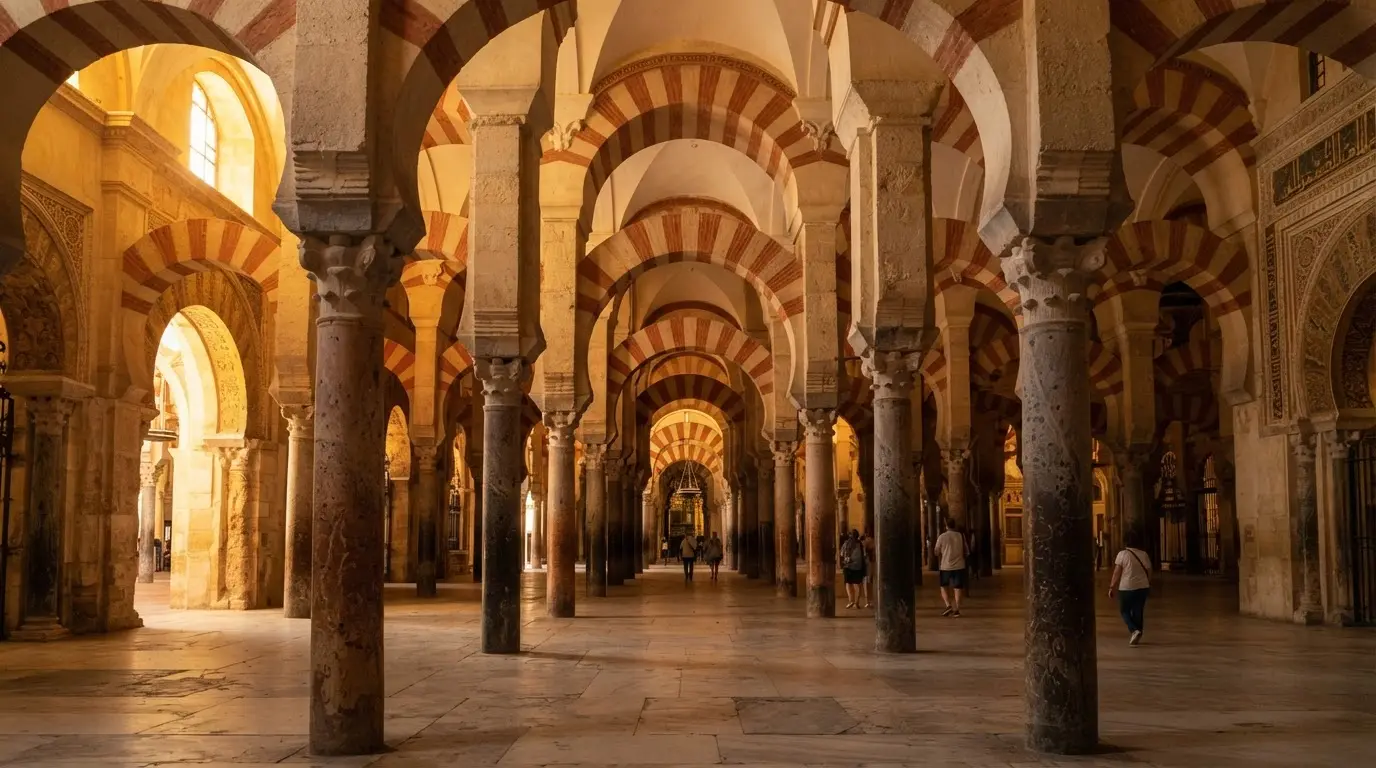
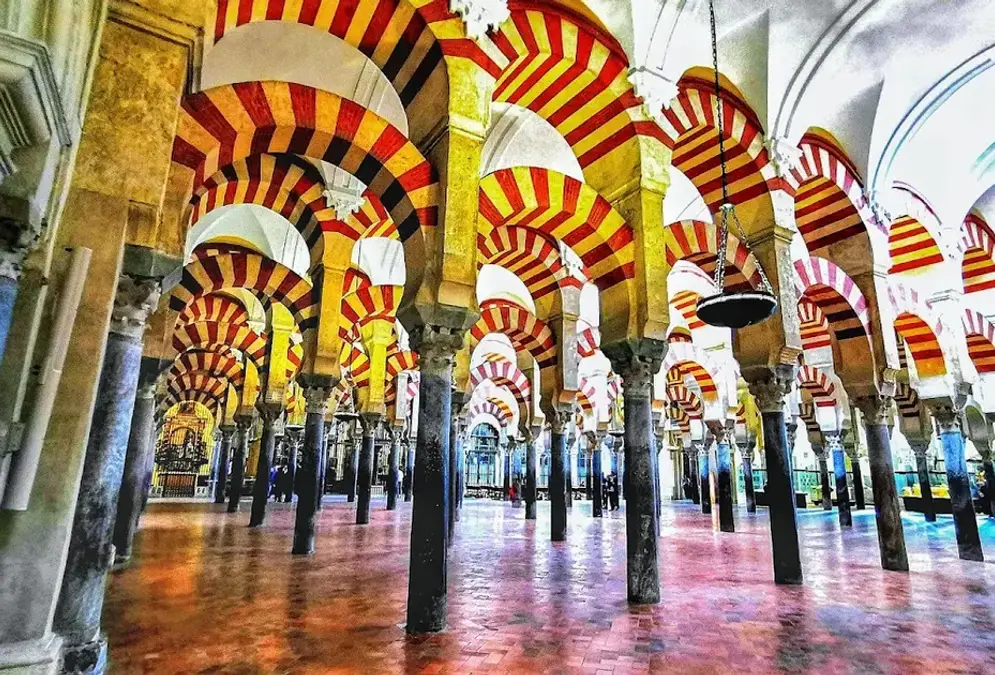
Mezquita-Catedral de Córdoba
856 columns, 1,300 years of Islamic and Christian history. UNESCO monument in Córdoba, Andalusia. Red-and-white arches, Byzantine mosaics, a Renaissance nave.
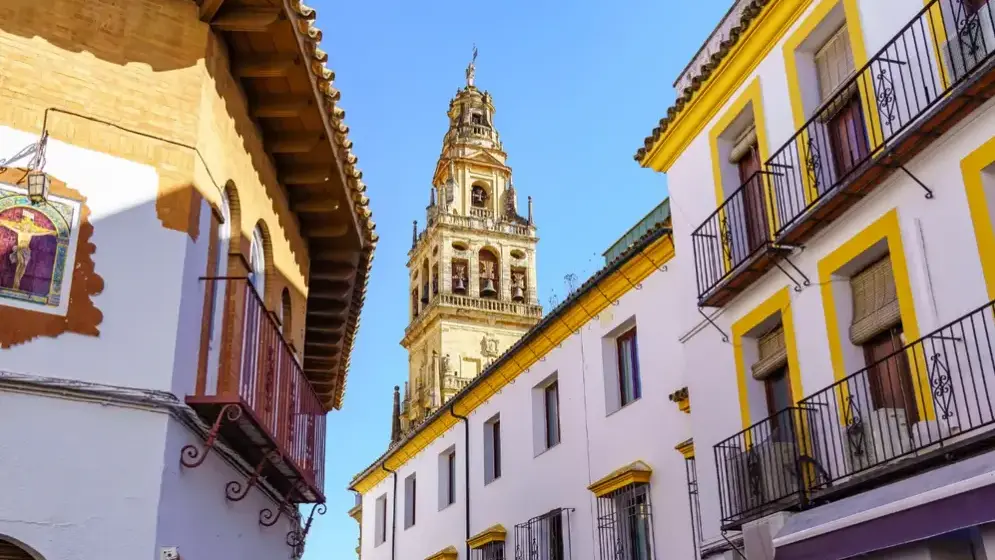
In the city, the Mezquita-Catedral is the great monument of the Umayyad world he stepped away from: the Córdoba of emirs, caliphs and Maliki jurists whose rulings decided which teaching passed as acceptable. It makes a fair reference point for the tension in his biography, a scholar formed in the city who chose to teach at a distance from it. The qadi Ibn Zarb, whom the Turkish encyclopedia entry names as having had his books burnt in 350 AH (961), was a judge of this same city.[27] Verdicts there were delivered in the city's name.
Recommended tours
Tours are selected for quality, not commission. We earn a small fee if you book — at no extra cost to you.
Reading him is the other route: Garrido's 2022 edition gives the surviving works a modern scholarly text.[28]