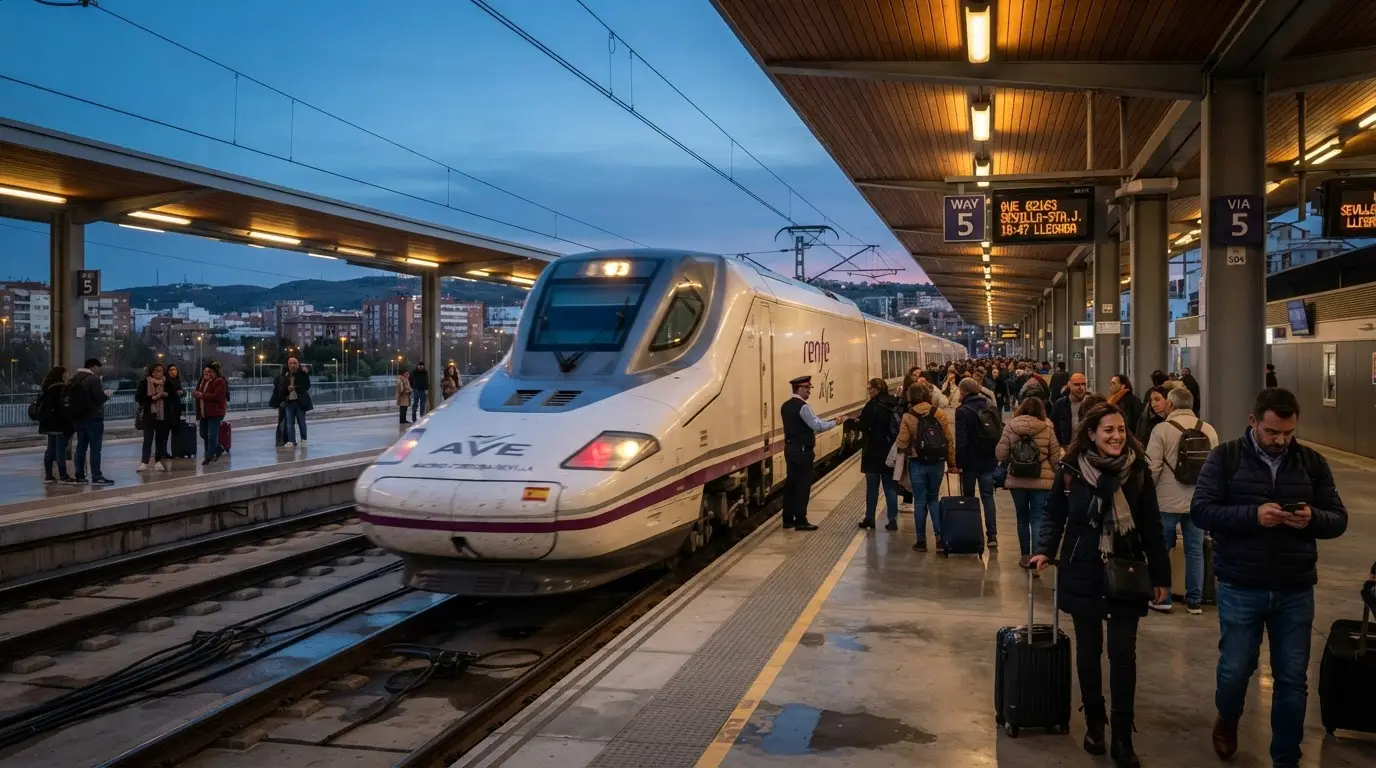

1992: a fast line built for a world's fair
The AVE was inaugurated on 14 April 1992 to coincide with Expo 92 in Seville[4]. That is why Andalusia's capital got the ribbon-cutting and Córdoba got a stop in the middle. The project, called NAFA, carried a bigger brief on paper: helping revitalise a stagnant southern economy[5]. The fair only decided the date.
Passenger service began a week later, on 21 April[1], with six daily trains calling at Madrid, Ciudad Real, Puertollano, Córdoba and Seville[6]. Córdoba was one of only four original stations, alongside Ciudad Real, Puertollano and Seville-Santa Justa[7].
Commercial top speed rose in 1994, when AVE services on the line began running at 300 km/h and covered the 471 km from Madrid to Seville in two and a half hours[8]. The stop was a by-product of the route, and the city spent the next three decades working out what to do with it.
1994: a new station and the buried tracks
The station you arrive at today opened on 9 September 1994, replacing the Central station that had served the city since 1859[9]. The old building survived. It was converted into the local headquarters of the Andalusian broadcaster RTVA[9].
The bigger change happened underground. Bringing high speed to Córdoba meant the city buried the tracks that had divided it in two, the soterramiento de las vías[10]. It removed a wall, not just a railway: the barrier had cut off marginal neighbourhoods, and taking it away allowed them to be integrated and recovered[11].
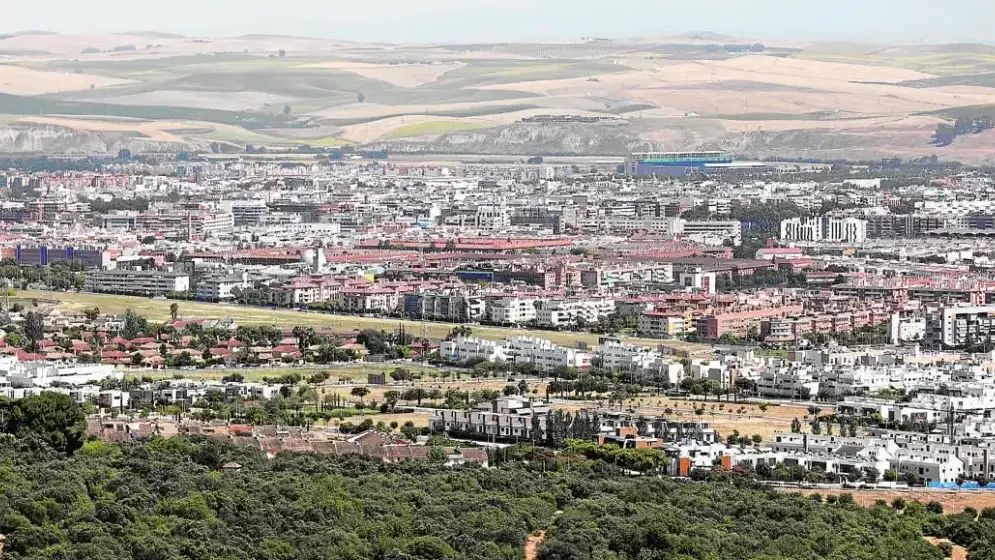
Explore · Neighbourhood
Arruzafa
Hidden above Córdoba, Arruzafa's hills once held Umayyad summer palaces. Today: the Parador hotel, panoramic valley views, and 4 km from the old town.
The reclaimed ground was large, more than 42 hectares in the city centre[2], now occupied by offices, flats and leisure venues. That is roughly sixty football pitches. A visitor never watches this change happen. They just see a modern centre that exists where the railway used to run.
1993 to 2007: a junction, not just a stop
Córdoba's second act was as a junction. The line to Seville was standard gauge, but Spain's older network was Iberian gauge, so the first branches borrowed both. The dates show how slowly the network grew around the city:
- January 1993: a Talgo 200 service to Málaga ran on the high-speed line as far as Córdoba, then continued on conventional track[12]
- November 2003: a new AVE shuttle service cut the Seville–Córdoba journey to 40 minutes[13]
- 23 December 2007: the Córdoba–Málaga high-speed section opened, completing the Madrid–Málaga line[14]
The trunk came first and the branches were bolted on over fifteen years. Every extension made Córdoba more useful as a place to change trains. None of them, by itself, gave a traveller a reason to stay the night.
Competition is a separate chapter. The budget-fare shake-up covers it, so this piece stays with the infrastructure. To ride the original Madrid spine today, Madrid to Córdoba by train walks through the trip.
What the train did for tourism, and what it didn't
The comfortable story says fast rail sent visitors flooding in. The evidence is thinner. A study of 124 Spanish municipalities combined difference-in-difference and panel-data methods and found the tourism effects of the AVE "extremely weak or just restricted to larger cities" once other factors were controlled for[15].
Two cautions apply. That study does not single out Córdoba, so it says what to expect from a mid-sized city, not what happened here. And a 2017 review of the economics literature describes "official discourse over-estimating the positive effects" of the infrastructure[16].
What Córdoba plausibly gained is access. The city is compact, and a day out from Madrid or Seville fits inside a train timetable, which is the logic of the Córdoba train stopover itinerary. That is my inference, not a measured result.
The hotel figures show the price of that convenience. INE put the average hotel stay at 1.58 nights in 2013[3]. In the fourth quarter of 2025 the local tourism board reported 1.68 days[17], alongside 262,302 hotel travellers, 7.63% more than a year earlier[18]. One is a year and the other a quarter, so they are not strictly comparable, but neither is close to three nights.
No source I found measures how many visitors come only for the day; hotel statistics count only people who book a bed. Local promoters know the gap. In 2012 a provincial campaign, "Córdoba a un paso de AVE", was announced to put the capital and its province in front of passengers on 990 high-speed trains over a fortnight[19].
Arriving today: the Córdoba-Julio Anguita station
Since 16 September 2025 the station has been officially named Córdoba-Julio Anguita[20], after the local politician. The station was formerly named Córdoba Central, and you may still see that name on some booking pages, so expect both.
It is busy. Almost 4.9 million passengers used it in 2023, making it Spain's fifth-busiest station behind Madrid-Atocha, Barcelona-Sants, Seville-Santa Justa and Madrid-Chamartín[21]. Only four stations in the country handled more travellers, and two of them are in Madrid.
Recommended tours
Tours are selected for quality, not commission. We earn a small fee if you book — at no extra cost to you.
For every route into the city, how to get to Córdoba is the planning page. Coming from the north-east, Barcelona to Córdoba by train covers the long leg.
Deep dive · Article
Córdoba Extreme Heat: How Europe's Hottest City Survives
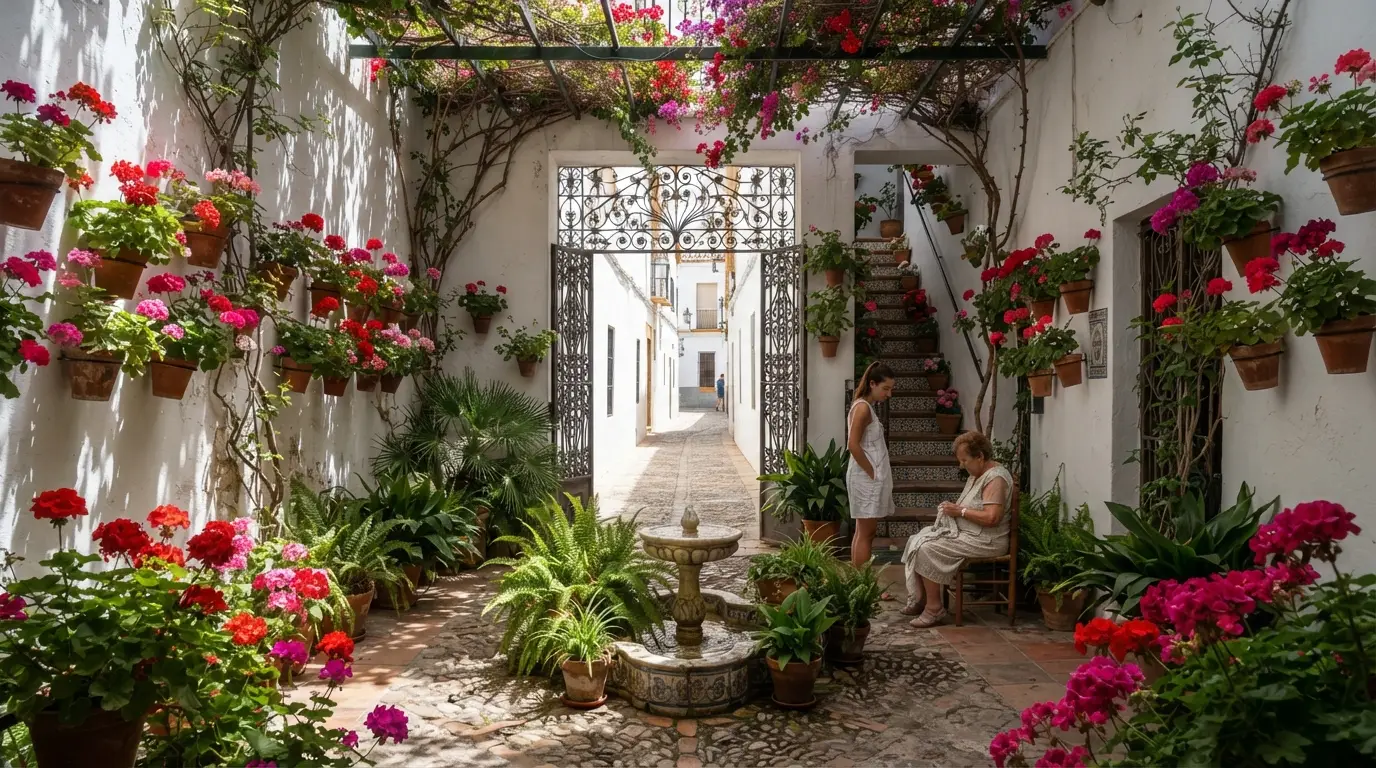
Siesta hours, courtyard microclimates and Sierra swimming holes: how Córdoba turns extreme heat into a way of life, and how to visit comfortably in summer 2026.
So does the AVE deserve the credit at nearly 35? It delivered a rebuilt centre, a junction and a fast way in. It did not deliver nights. That part is still up to the city, and to you: stay the second one.