
Copper capital and a triangular plot on the Palma del Río road
SECEM, the Sociedad Española de Construcciones Electromecánicas, was constituted in Madrid on 15 June 1917 with 25 million pesetas of capital[1]. Peñarroya, a mining and metallurgical company of French origin, joined the project with the British interests of Río Tinto, while Banco Bilbao and Banco Urquijo put up capital[30]. The firm went on to make nearly 40% of all the electrolytic copper produced in Spain[6]. A producer with that market share was a national enterprise, whatever the postcode of its works.
Córdoba's older working landscape sat on the river, among the Guadalquivir mills. SECEM belonged to a different order of magnitude: a triangular plot on the road to Palma del Río, chosen in 1918, which the researcher Miguel Barrón Lara puts at about 66 hectares[2], an estimate rather than a surveyed figure. Barrón Lara also judges the Electromecánicas the largest industrial investment ever made in the city[7].
Because the plant lay on the far side of the railway lines from the city, its workers were obliged to cross the tracks to reach it[8]. Copper came in by rail the other way: electrodes from the Río Tinto mine rolled onto the factory's own internal siding and waited there to be unloaded[4].
The factory began operating in March 1921[9], within four years of the company's founding. The housing took far longer to catch up, as the next sections show.
A workforce Córdoba did not have
The city supplied the land but not the skills. SECEM recruited from outside, and workers arrived from Linares, Río Tinto and Castillo de las Guardas[10]. Río Tinto appears twice in this story, first as the British partner and the source of the copper electrodes, then as a source of men.
The workforce was not all male. A Europa Press report carried by eldiario.es, on a documentary about the barrio, says 500 women were hired when SECEM was created[3].
In 1930 SECEM created a second company, Cenemesa (Constructora Nacional de Maquinaria Eléctrica), on its own land and with workshops transferred from the parent[12]. Its early workers lived too far away to walk, so the young factory director, Juan Seguela, had the engineer Antonio Latorre arrange a service of three or four buses with La Naval-Samua, a Bilbao company[13].
A strike in 1933 ended with a staff cut of around two thousand people[14], three years before the Spanish Civil War came to Córdoba. A cut of that size shows how large the payroll had grown.
Barracks first, then Francisco Gay's Barrio I
Before anyone could move into a proper house, there were the barracks. In 1918 the company put up temporary quarters for its construction staff, the Barrio de la Bomba, and by about 1921 six barracks stood, each subdivided into rooms[15].
In 1919 management asked Francisco Gay to draw up a plan for the first workers' barrio, Barrio I[16][33], and work on the first houses began in 1920.
Explore · Neighbourhood
Arruzafa
Hidden above Córdoba, Arruzafa's hills once held Umayyad summer palaces. Today: the Parador hotel, panoramic valley views, and 4 km from the old town.
The scheme was grand on paper, with 248 houses planned, and modest in brick: only 29 buildings were built[31], with subsidies from the Instituto de Reformas Sociales under the Ley de Casas Baratas helping to pay for even those[17]. By about 1927 the workers' barrio counted 70 houses, alongside a nascent barrio for employees[32].
SECEM gave houses only to employees with families, and single men went to the barracks[18]. A dismissed or resigning employee lost the house along with the job. This was industrial paternalism in its textbook form: one employer fixed a worker's wage, his tenancy and, for bachelors, his room.
Barrio II: the 1940s garden-city estate with its own church
The barrio, nicknamed La Letro, was described by Córdoba's culture delegate as an industrial island, "a territory bounded by copper"[19]. Barrio II, projected two decades after Gay's Barrio I, is where that island got its centre.
Projected in 1940 by the architect Fernando de la Cuadra e Irízar as a garden-city workers' estate, it was built with 86 houses, a church, a school of arts and trades and two school groups[11]. Housing, schooling and worship all answered to the same owner.
Recommended tours
Tours are selected for quality, not commission. We earn a small fee if you book — at no extra cost to you.

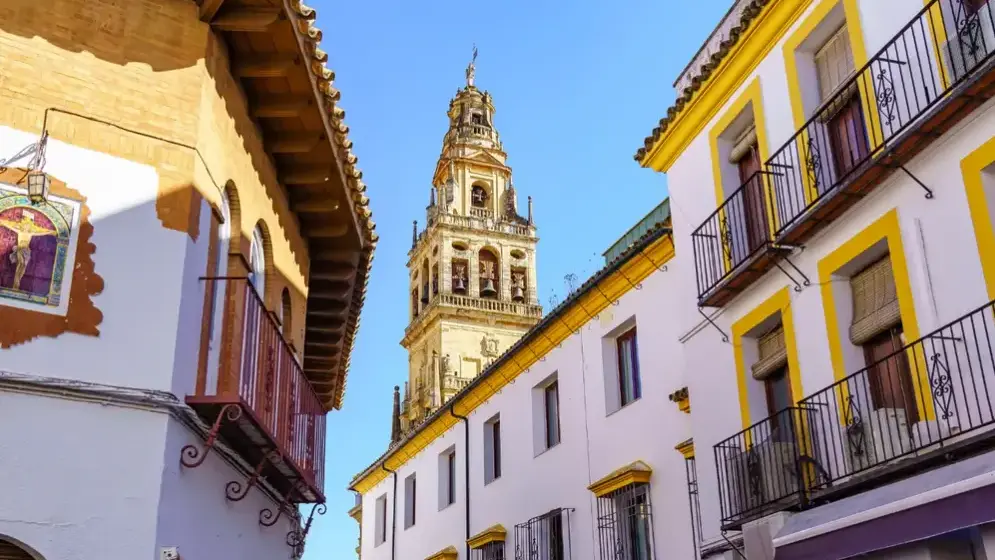
The church of Our Lady of the Rosary was the centrepiece. The company began building it in 1945 and it was inaugurated in 1948[20].
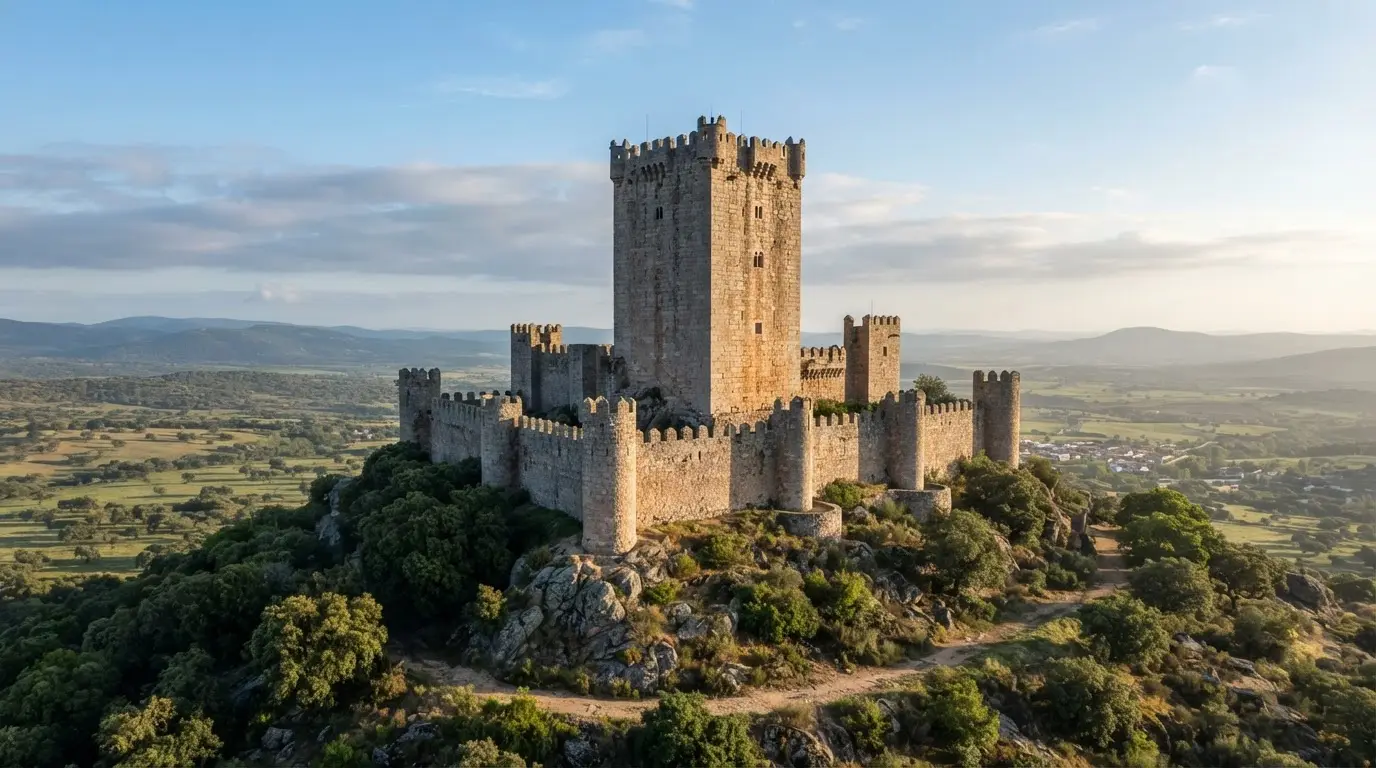
Deep dive · Article
47 Metres Tall and Almost Unknown: Spain's Tallest Keep
Belalcázar Castle's 47 m keep is listed by the Junta de Andalucía as Spain's tallest. How it grew, what to see inside and how to book the free guided visit.
It was company property in every sense: SECEM placed its logo on the bells beside 1945, the year work on the church began, not the company's 1917 founding[21]. Training was a longer-running problem, which found no definitive answer until 1947, when the firm created the Escuela de Aprendices to teach workers' children a trade[22]. That school stood between calle D. Julio de Arteche and calle Tarub[39].
Do not confuse the estate with Ciudad Jardín, the district that shares its garden-city name.
What happened to the factory, and what you can still walk
SECEM's factory works were dismantled to make way for the Parque Joyero, while the workers' housing estate survives[5]. Industry has not wholly left the story, and the district is more than an epitaph.
What survives is a residential district among Córdoba's neighbourhoods, the one whose story is about work rather than monuments. Its interest lies in the planning rather than in any single building: church, schools and houses set out together by one owner.
Treat it as a place where people live. The church square is the natural starting point, and the logic of the estate unfolds around it.
A neighbourhood, not a museum
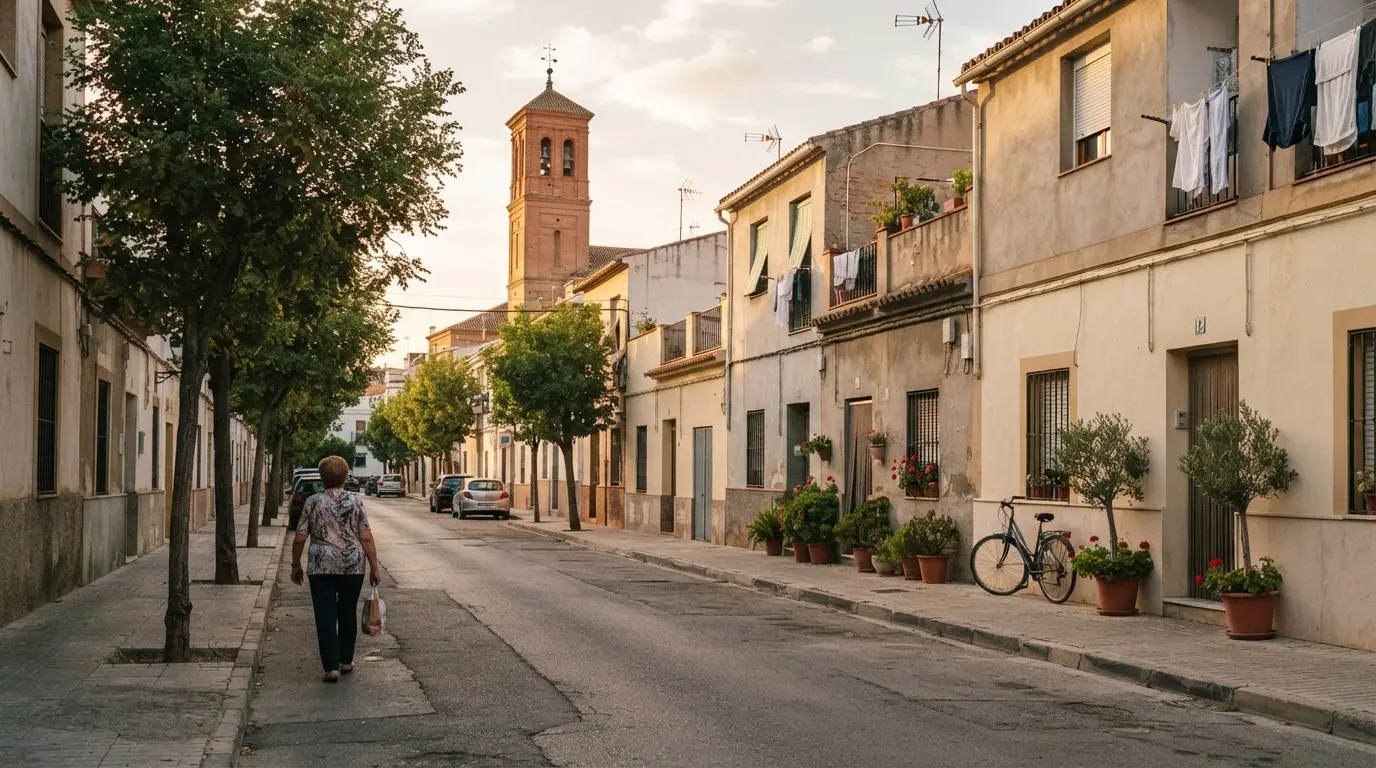
Electromecánicas is a lived-in residential estate with no visitor centre or marked trail. Stay on public streets and the church square, and do not expect to enter any building.
Splits, sales and one works that survives
The corporate story is a series of splits. By 1972 the workers of what was now called Westinghouse, formerly Cenemesa, were entering by gates of their own, and the two firms' labour histories diverged[23]. By the mid-1980s Cenemesa, already Westinghouse, had stopped buying its copper from SECEM[34]. In 1978 SECEM bought three firms and the whole group became the conglomerate Ibercobre, which controlled 60% of the copper market[35]. The Córdoba complex stayed in one piece until 1989-90, when Outokumpu, the Finnish buyer of Ibercobre, split it into three industries[24].
A transformer plant that a University of Córdoba thesis traces back to the complex still operates under ABB, and the thesis calls it the only ABB plant in the world that builds shell-type power transformers[25]. "The factory is gone" is true of SECEM's works, not of every plant that grew from the complex.
What survives on foot
The estate is protected on paper. A Plan Especial de Electromecánicas was drafted in 1994 to preserve the barrio's image, yet houses are still being altered or demolished[26]. Municipal funds paid for the restoration of the church and its adjoining square, finished on 18 March 2010[27].
On the ground, look for:
- The Barrio II church of the Virgen del Rosario and its restored square, with the company logo on the bells[21]
- The garden-city rows of 1940s houses around it
- The former economato, the only barracks left standing[28]
- The Servicio Nacional del Trigo silo on the old Palma del Río road, inaugurated on 6 June 1951[37] and declared a Bien de Interés Cultural by the Junta de Andalucía[29] under Decreto 66/2015 of 3 February 2015[36]; locals heading for La Letro called it the silo of Olivos Borrachos[38]
Come for the grain of a company town, and leave postcard expectations at home.