
A warehouse, a town council and a missing findspot
Official accounts say the hoard was found about a year before its February 2021 presentation, on the La Amarguilla estate in the municipality of Baena, and handed to the Archaeological Museum of Córdoba on a deposit record.[12] The estate gave it its name.[13] Baena is better known for its Holy Week drumming than for archaeology.
The person who held the treasure is never named; COPE describes him as a farmer from Baena who dug the jewels up on his estate, kept them hidden for a time and then tried to sell them on an online classifieds site.[14] By his own account it was a chance find, kept secret for months until the online sale prompted the police.[15] He meant to give it to Baena City Council, but it ended up with the Andalusian regional government,[16] and the police stress that their inquiry was only meant to prevent illegal trade; no criminal charge is reported.[17] Archaeologists were not convinced by his account of where it had lain, and no excavation has followed.[10]
The objects tell a little. Every piece was stained with soil, which shows it had been dug up only recently, and experts think it lay in a bag or a ceramic container.[18] The ground that could have said whose house or field it sat under has never been examined.
Gold, silver and 476 seed pearls
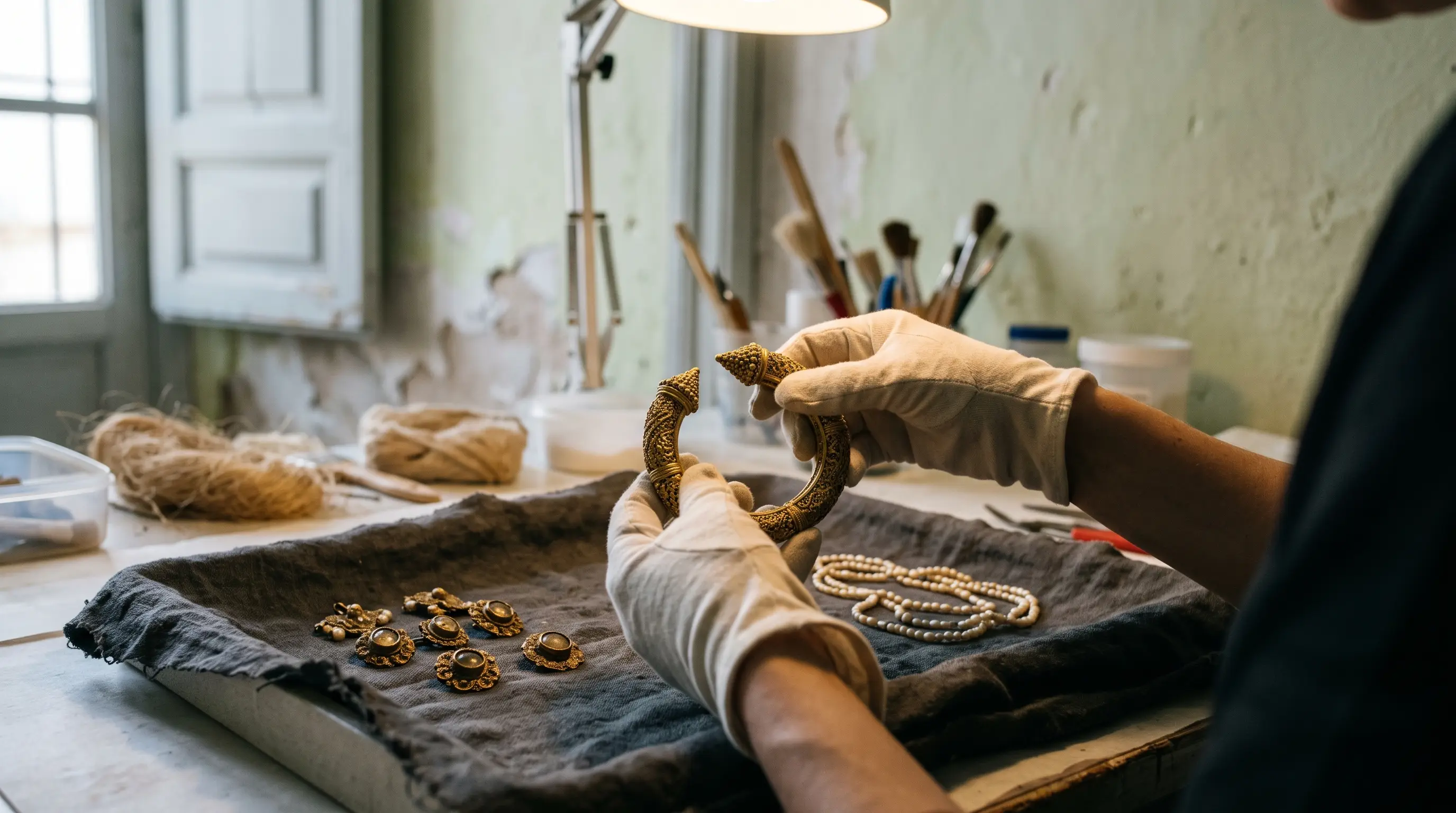
Of the 623 pieces, 98 are gold, silver or gilded silver.[19] The rest are beads: 14 of hard stone, four of pink coral, 31 of glass paste and 476 aljófares, the irregular seed pearls.[20] A provincial description counts 17 hard-stone and 36 glass beads,[21] so treat the bead tallies as approximate.
The metalwork is a set, not a miscellany:
- Two pairs of bangles (ajorcas), the smaller pair for wrists and the larger for ankles or upper arms[22]
- Fourteen gold bracteates, ornaments made to be sewn on, each keeping a central cabochon, eight clear white and six blue[23]
- Silver rings of a clearly caliphal type[24]
- One gold filigree piece holding a six-pointed star built from two triangles[25]
- Openwork pyramid tutes, a form that fell out of use from the mid-11th century[26]
- Seed pearls in a quantity no other known Andalusi hoard matches[27]
Even the bangles are read two ways. The pointed ends of the smaller pair are described as bird heads[22] and as stylised serpent heads in very fine granulation.[28]
The filigree piece is the one curators single out. Museum director María Dolores Baena called the star unique: "There is nothing like it."[29] Its delicacy points to a goldsmith or workshop of great technical virtuosity.[30] Accounts differ on whether it was a pendant, an earring or a ring setting, so "filigree gold piece" is the safest label.
Reading a trousseau without a single coin
The date comes from the political calendar and the objects together. A civil war broke out in the Umayyad caliphate of Córdoba in 1009,[7] and the Fitna ended only when the caliphate was abolished in 1031.[8]
Official dating puts the set at the start of the 11th century and treats it as a concealment made in a time of political and military convulsion.[6] The pieces help narrow that. The pyramid tutes belong to a type abandoned from mid-century,[26] and the rings are caliphal in type,[24] so the set looks like caliphal work, not a product of the taifa kingdoms that followed.
No coin fixes the year. Alberto Canto of the Universidad Autónoma de Madrid puts the problem plainly: "The lack of coins makes it difficult for us to establish exactly when it was buried. But I am leaning towards the beginning of the 11th century."[9]
Deep dive · Article
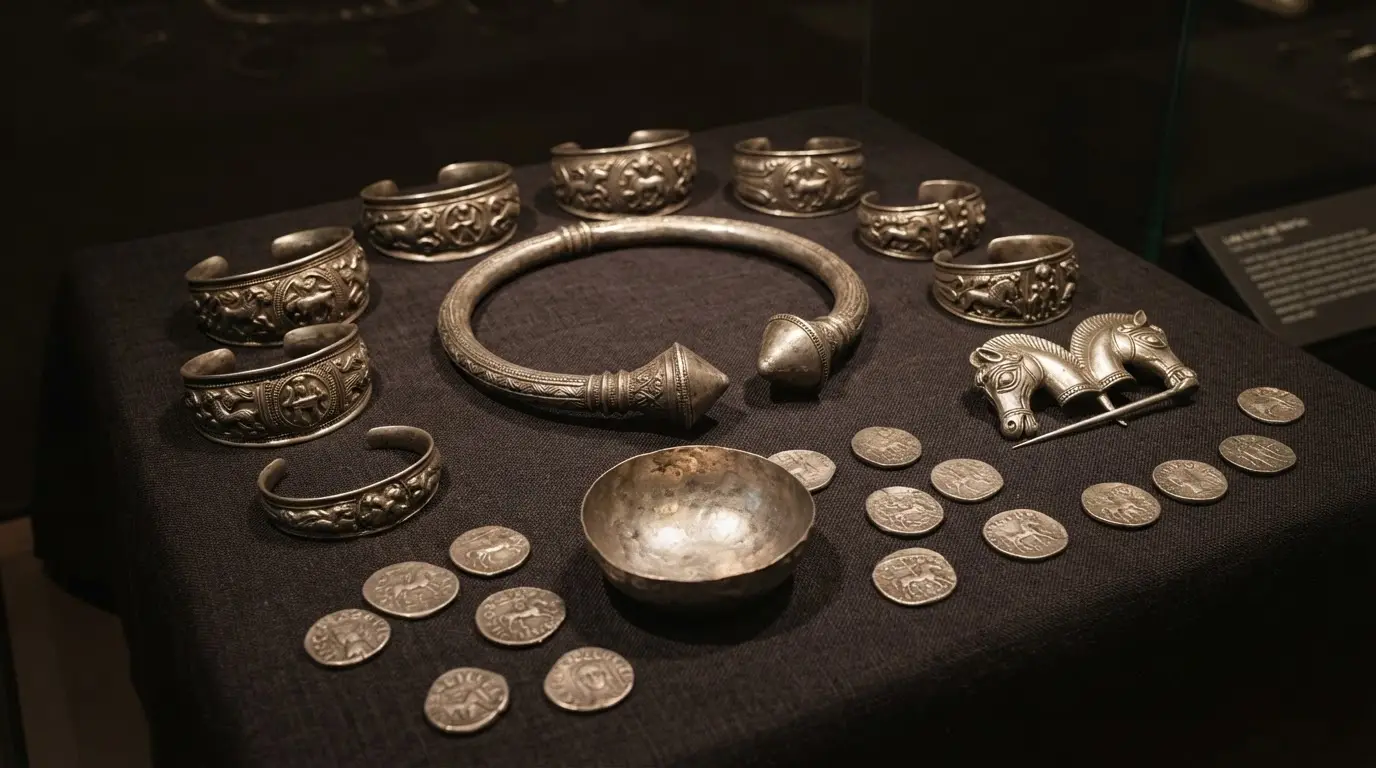
An Andalusian Treasure Has Sat in the British Museum Since 1932
A silver hoard dug up in Córdoba in 1915 left Spain against the law and has been in the British Museum since 1932. Here is how, and what a 2026 study found.
Canto also reads the owner. He suggests a Jewish individual, given the Star of David among the pieces, and a set that "looks like a bride's trousseau".[11] It is a persuasive picture and a thin one: one motif, on one piece of uncertain function, with no inscription or findspot to back it.
The best of 16 hoards, and no findspot
At the February 2021 presentation the regional culture minister said the hoard was not one of the best of the 16 known, but the best.[31] A claim like that is easy to make and hard to test. Completeness can be tested: provincial heritage documentation calls it the most complete of all those known,[32] and the seed pearls have no parallel.[27]
Completeness has a limit here. Without a findspot or a coin, the set cannot be tied to a house, a street or a year. The regional government spent €15,000 restoring it,[33] and that money bought the objects at their best, not the context around them.
Explore nearby · Museum
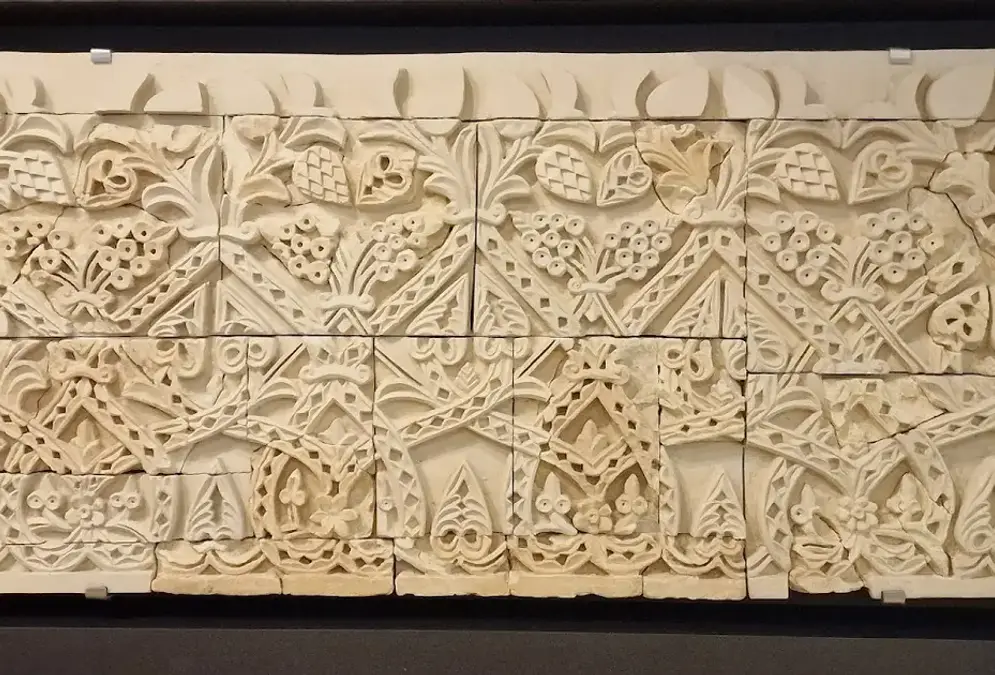
Museo Arqueológico de Córdoba
33,500 pieces in a Renaissance palace built over a Roman theatre: mosaics, Iberian sculpture, Caliphal ceramics. Free for EU citizens. Closed Mondays.
Córdoba has met silver without a story before. The Córdoba Treasure, an Iron Age hoard dug up in 1915, has been in the British Museum since 1932. The Amarguilla jewellery stayed in the province.[12]
Bangles, rings, sewn-on ornaments and strings of pearls look like what one household might bury when the city was no longer safe. That is an inference from the objects, not a documented event.
Seeing the hoard in Córdoba
The jewels went on show from 25 February 2021 at the Archaeological Museum of Córdoba, as part of events for the tenth anniversary of its current building.[34] That first display was a temporary exhibition running to 6 June 2021, after which they were to join the permanent exhibition.[35] Whether they hang there today is worth confirming with the museum before you build a visit around them.
Confirm it is on view first
The 2021 plan was for the jewels to join the permanent exhibition after the temporary show. Galleries rotate and plans change, so ask the museum whether the hoard is on display before you plan a visit around it.
The Museo Arqueológico de Córdoba publishes its hours through the Junta de Andalucía, and they change with the season:
Recommended tours
Tours are selected for quality, not commission. We earn a small fee if you book — at no extra cost to you.

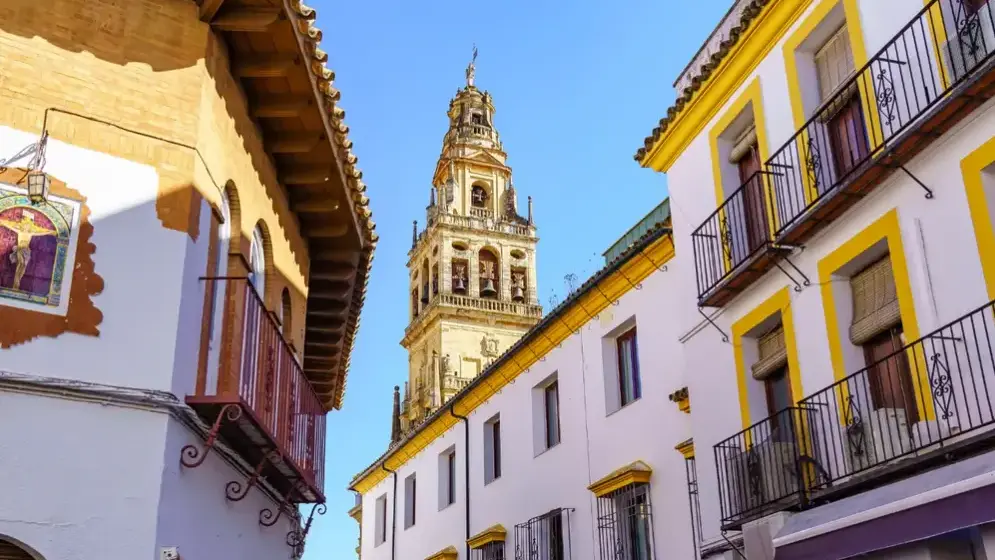
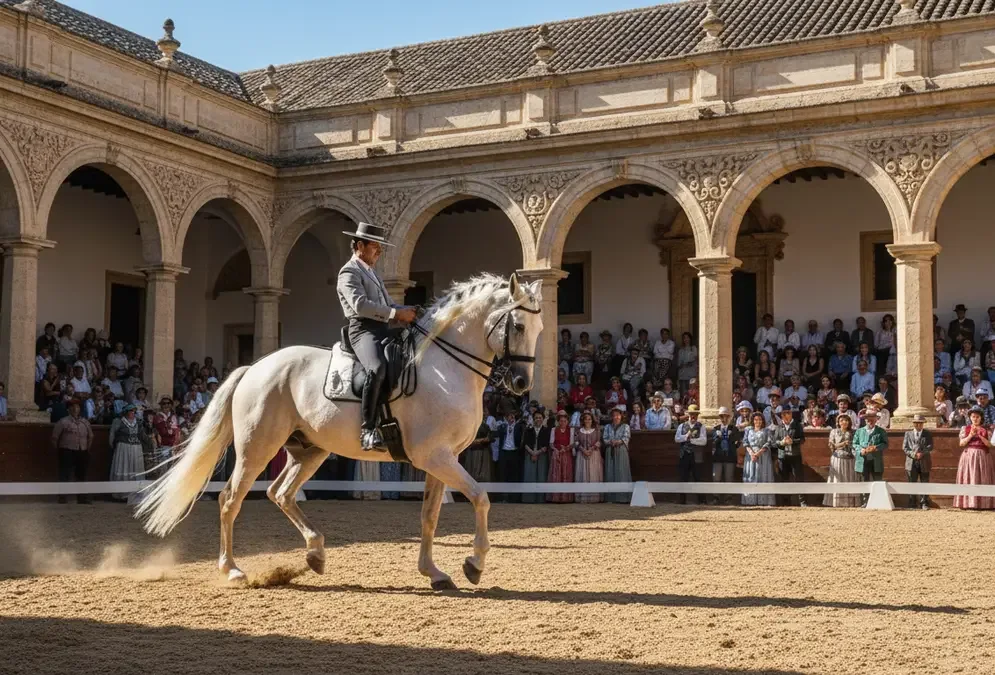
The museum sits in the Palacio de los Páez de Castillejo, and the Roman theatre found on the site is open to visitors in the basement.[39] Allow time for both.
The one thing no vitrine can show is where the jewellery came from. Until a findspot is established, whatever the ground around it knew stays with whoever dug it up.