
Why a village drum made UNESCO's list
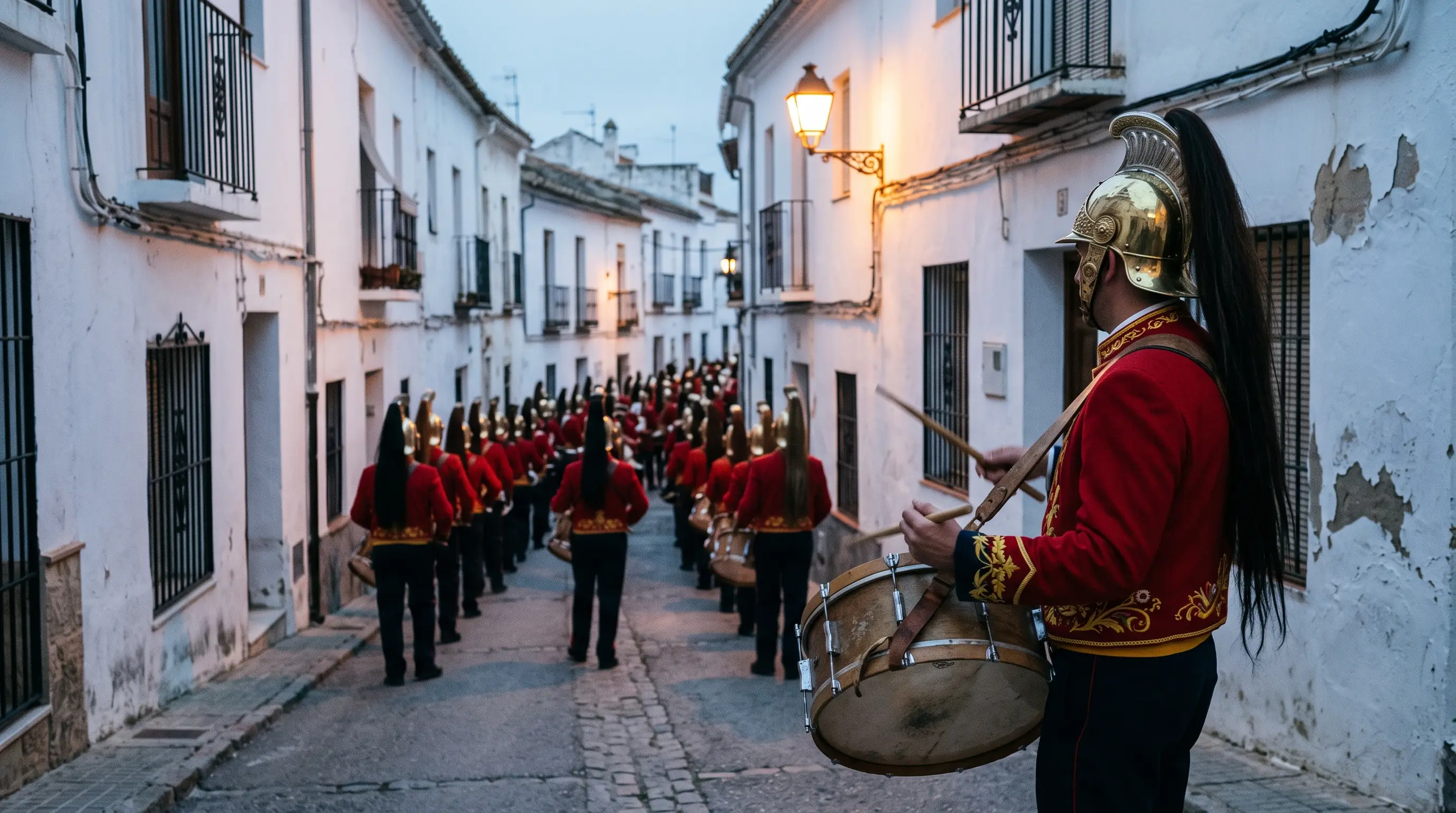
Baena's drum went into a single UNESCO nomination shared with seventeen other localities across five autonomous communities,[5] and it is the only Andalusian one among the Holy Week tamboradas.[6] What the eighteen have in common is volume: UNESCO counts the drums in thousands, played without a pause for days and nights.[4]
Spanish writes tamborada, the spelling in UNESCO's file, while tamborrada is the form most English-language visitors type. Both point to the same town and the same drum. Locally the heritage name is Toque de Tambor del Judío de Baena, the drumming of the Baena Judío.
Andalusia's own recognition came later. Decreto 71/2024, dated 4 March and published in the regional gazette on 7 March 2024, made that drumming a Bien de Interés Cultural, classed as an activity of ethnological interest.[7] On 19 September 2025 the town's Holy Week followed with the Fiesta de Interés Turístico Internacional label,[8] for a week organised through eight cofradías and more than seventy-two cuadrillas and hermandades.[9]
Semana Santa in Córdoba runs on the same dates, so Baena is a decision about where to spend a day, not an add-on.
Colinegros and coliblancos: two turbas, one costume
The Judío is the drummer, and his outfit is fixed:
- a drum
- an embroidered red jacket
- black trousers
- a metal helmet with a curly horsetail, black or white according to the side he belongs to[10]
The name is a legacy. In the eighteenth century the Judío was the figure stigmatised as Jesus's persecutor; he has since become one of the most attractive and identity-defining figures of Baena's ritual.[11]
Things to do · Activity
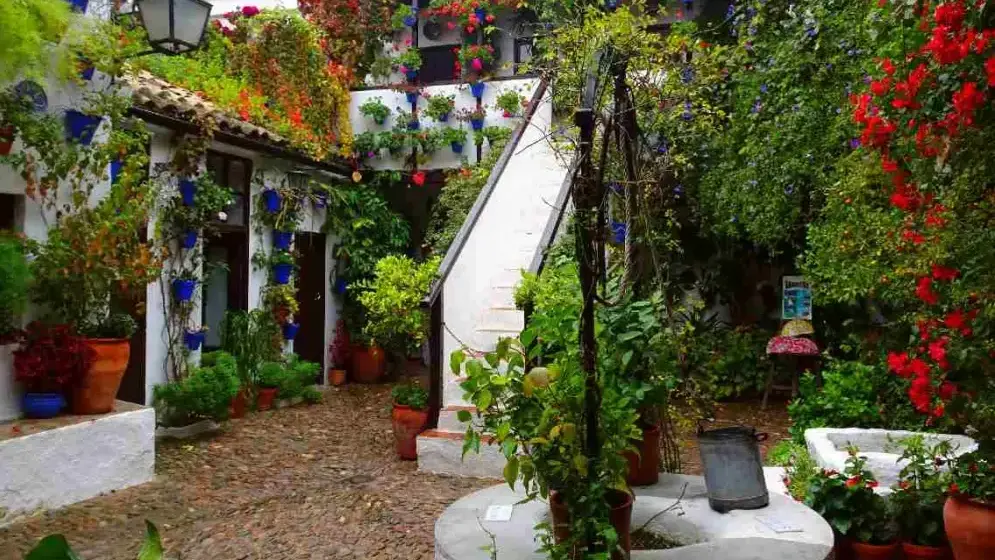
Córdoba Patios Tour
Discover Córdoba's flowering patios, a UNESCO tradition. 50+ free courtyards during the May festival (4–17 May 2026) or guided tours year-round. From €18.83.
The horsetails give the two sides their names, colinegros for black and coliblancos for white.[12] Each side is a turba, made up of cuadrillas, and today the count is fifteen: eight colinegras and seven coliblancas.[13] Starting a new cuadrilla takes at least twelve Judíos, with no upper limit.[14]
The division into two colas dates to the late nineteenth century and grew out of socio-political differences between sectors of local society.[15] By 2010 the quarrel had settled into street-corner duels between drums.[16]
Where the costume comes from is less settled. Popular accounts give the uniform a military pedigree, with the area's security forces as the model, and set the drumming itself in the Peninsular War campaigns, though nobody really knows the origin.[17][18] No authoritative account explains the uniform or the caja de guerra name, so treat both as popular explanation. The dated record in the next section points elsewhere.
Do the Judíos represent Jews?
The word is older than the red jacket. A robed, masked and wigged brother called the Judío is documented in Baena at the end of the eighteenth century,[45] and the drummer of today is first mentioned in 1845.[20] Andalusia's heritage file says the figure's original negative connotations have not only gone but turned into tolerance of an out-of-the-ordinary attitude that mixes the irreverent and profane with the sacred.[31] The same file describes the Evangelistas scene as the persecution of Christians by the Judíos,[32] so the role is still the persecutor's, worn now as an identity badge.
In 2010 the Agrupación de Cofradías described the turba to a visiting reporter as representing the Jewish people in the time of Christ.[47] The sources do not settle how locals or visitors read the figure today, and none offers a Roman-soldier reading, so none is asserted here.
How cuadrillas, cofradías and colours fit together
Judío cuadrillas are attached to cofradías by colour, and each cuadrilla joins the parades of the cofradías it belongs to.[34] The cofradías sort into the two colas too: the black-tail ones hold their Lenten misereres on the five Fridays of Lent, the white-tail ones on Jueves de Pasión, Holy Monday and Holy Tuesday.[35] Before each ritual, each colour's Judíos collect their cuadrillas at every cuartel, then the junta directiva of each cofradía that is processing.[36][37]
That sits with the 1845 record, when every cofradía already had its own turba,[20] and with the late-nineteenth-century split into two colas.[15] How the first became the second is not explained, and no source lists which cofradía sits on which side beyond the processions in the day-by-day list below.
What the documents show, from 1684 to 2025
The documentary record is a better guide than the folk accounts, and it runs like this:
- 1684: the Cofradía del Dulce Nombre de Jesús lists dos cajas con sus palillos, the earliest documentary reference to drums found so far[19]
- 1845: first reference to the current Judío, when each cofradía already has its own turba[20]
- late 1800s: the split into two colas[15]
- about the 1920s: the Noche de los Tambores arises on the eve of San José[21]
- 2018, 2024, 2025: UNESCO inscription, Andalusian heritage protection, international tourist-interest status[3][7][8]
That order sits badly with any story that starts the drumming at the Peninsular War. Drums were already in Baena's Holy Week by 1684, well before the war, and the current costume is first documented only in 1845. The drum itself is popularly called the caja de guerra, the war drum, a name that fits the lore better than the paperwork.[22] The drum used today turns up in documents only from the mid-nineteenth century, in the Judíos' turbas.[46]
The week in order: Holy Wednesday to Easter Sunday
Easter falls early in 2027, so Baena's drumming week lands on the early Semana Santa 2027 calendar: Palm Sunday on 21 March and Easter Sunday on 28 March.[23] Counted through the week, the sequence is:
- Thu 18 March: the usual timing of the Noche de los Tambores, on the eve of San José (19 March); the 2027 date is not confirmed[21][24]
- Wed 24 March: the week opens at 5:00 am with echar las cajas[1]
- Thu 25 March: billed as the day the town is fully immersed in the week;[25] after the Confesiones the colinegros drum to the monument to the Judío, where the Cajas y Banderas cuadrilleros offer a bouquet,[38] the Estaciones start in the afternoon once the Oficios end,[39] and the coliblancos play in the Veracruz procession that night[40]
- Fri 26 March: the colinegros play in the dawn Nazareno procession[41] and the coliblancos in the night procession of the Dulce Nombre, Cristo del Calvario and Soledad[26]
- Sat 27 March: no Judío programme is published beyond the rule that the drums do not stop[2]
- Sun 28 March: Easter Sunday, when the colinegros play in the Rosario y Resucitado procession and the drumming ends[41][2]
Both turbas join the processions from Wednesday, so a visit can pair the dawn opening with an evening procession.[25]
Deep dive · Article
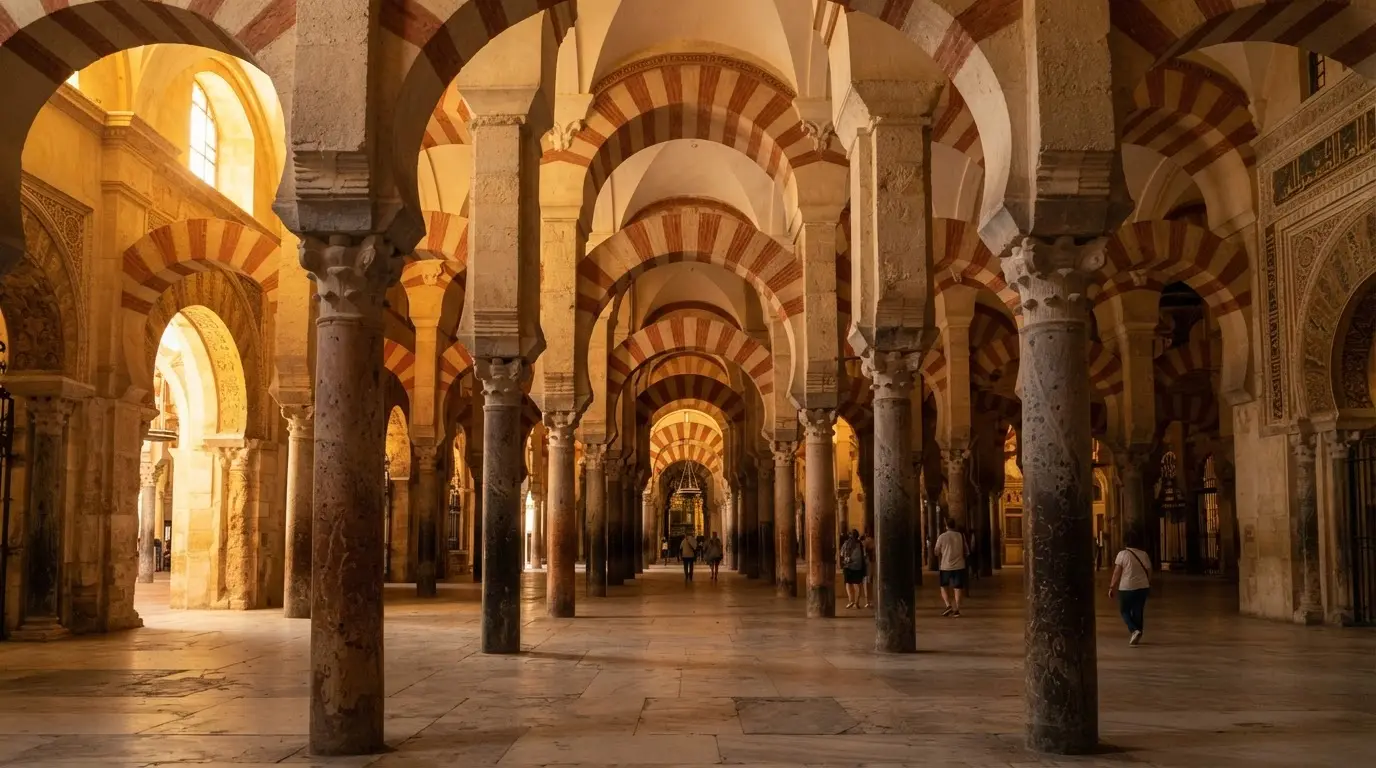
Abd al-Rahman III: The Morning Córdoba Became a Caliphate
Abd al-Rahman III was the first Caliph of Córdoba, declared on January 16, 929, ruling a city of up to 500,000 people and building Medina Azahara in 936.
The drum season also has an autumn warm-up. The V Jornada del Tambor on 10 October 2026 allowed street drumming until 02:00 on the Sunday morning.[28]
Echar las cajas and the Noche de los Tambores
At 5:00 am on Wednesday the Judíos of both colas leave their homes in full dress and play the toque de calle to the town centre, where they meet and announce Holy Week together, without protocol.[42] The act began as a way of regulating the hours in which Judíos could drum in the streets.[43] No source gives a start point for each turba or a route, and the 2027 hours are unpublished.
The paso o susto de los Evangelistas
Along every procession route both the colinegros and the coliblancos stage the paso o susto de los Evangelistas, literally the Evangelists' step or fright.[27] It is a scripted scene in which characters dressed as evangelists also take part.[33] The sources do not say where on the route it happens or how long it lasts.
Getting to Baena from Córdoba for 2027
Baena is about 63–67 km from Córdoba by road depending on the route,[29] roughly an hour by car. Check the current coach timetable at Córdoba bus station before you plan either a pre-dawn departure or a late return.
Good Friday, 26 March, is a public holiday across Spain, whereas Holy Thursday is a working day only in some regions.[30] That is worth knowing before you count on a coach on either day.
Recommended tours
Tours are selected for quality, not commission. We earn a small fee if you book — at no extra cost to you.

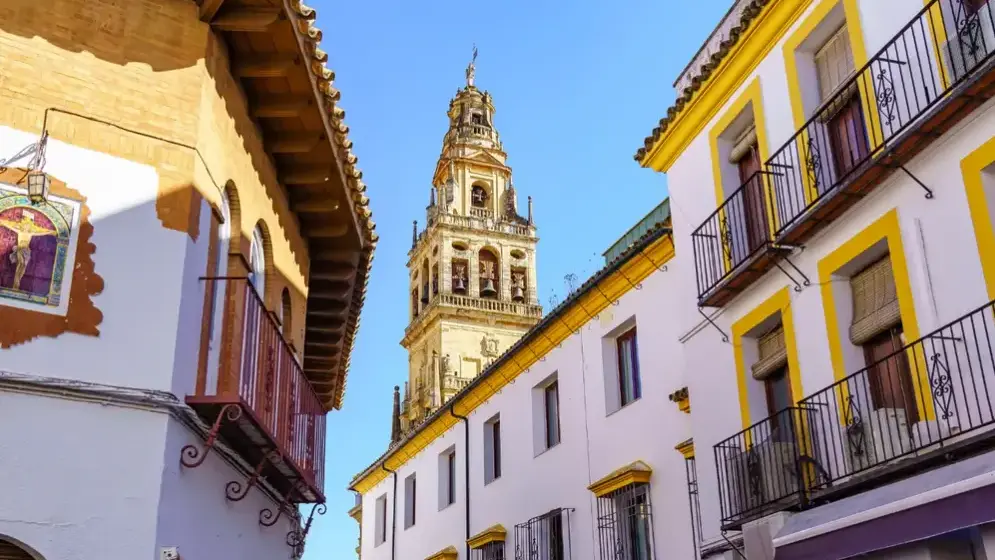
With one day, choose Thursday, when Baena is fully given over to the week.[25] With a car and a taste for early starts, Wednesday gives you the opening, when both turbas drum their way to the centre together.[1] Plan on leaving Córdoba around 4 am.
2027 hours are not out yet
The 2027 procession hours and the date of the Noche de los Tambores have not been published. Check with the Agrupación de Cofradías de Baena and the town hall closer to March before booking transport or a bed, and do not plan around earlier years' times.
Baena also works as a full day by itself. For something gentler, the white villages near Córdoba are the usual alternatives, and the Córdoba Holy Week guide covers the city's own processions on the days you stay put.