How Bodegas Campos Went From a 1908 Cellar to Córdoba Fixture
The history of Bodegas Campos in Córdoba: a cellar that dates itself to 1908, the taverns Casa Rubio and Casa Pepe, and a taberna that only opened in 1995.
Seven years covering Córdoba's gastronomy, taberna culture, and the Montilla-Moriles DO.
Published
food-lovershistory-buffs
Bodegas Campos began in 1908 as a wine business under Domingo Campos del Santo, and the house dates itself to that year; no independent source confirms it as the oldest in Córdoba.[1] What most people sit down in today is much younger: the taberna by the main entrance opened only at the start of 1995.[3] That is why this history leans on the taverns around it, Casa Rubio and Casa Pepe, whose dates more than one source gives.
Wine names protected
1932
Wine and Vineyard Statute gives both names legal cover[12]
Domingo Campos del Santo came from Soria and put down roots in Córdoba. Francisco Solano Márquez, who wrote the house's 2008 book, calls him an enterprising man with an eye on the future.[4]
Four dates run through this story, and each means something different:
1908: Campos dates its wine business, the house's own claim[1]
1920: Casa Rubio's tavern is dated, then the Taberna de El Cojo de San Nicolás, renamed in 1932[2][15]
1928: Casa Pepe is bought by Pepe Giménex Aroca, already a tavern[14]
1995: the Campos taberna opens beside the main entrance[3]
That book appeared a century after the date it starts from, and the house's own website counts its cooking from the same year.[5] Take 1908 as the founding claim: a consistent one, but the house's own.
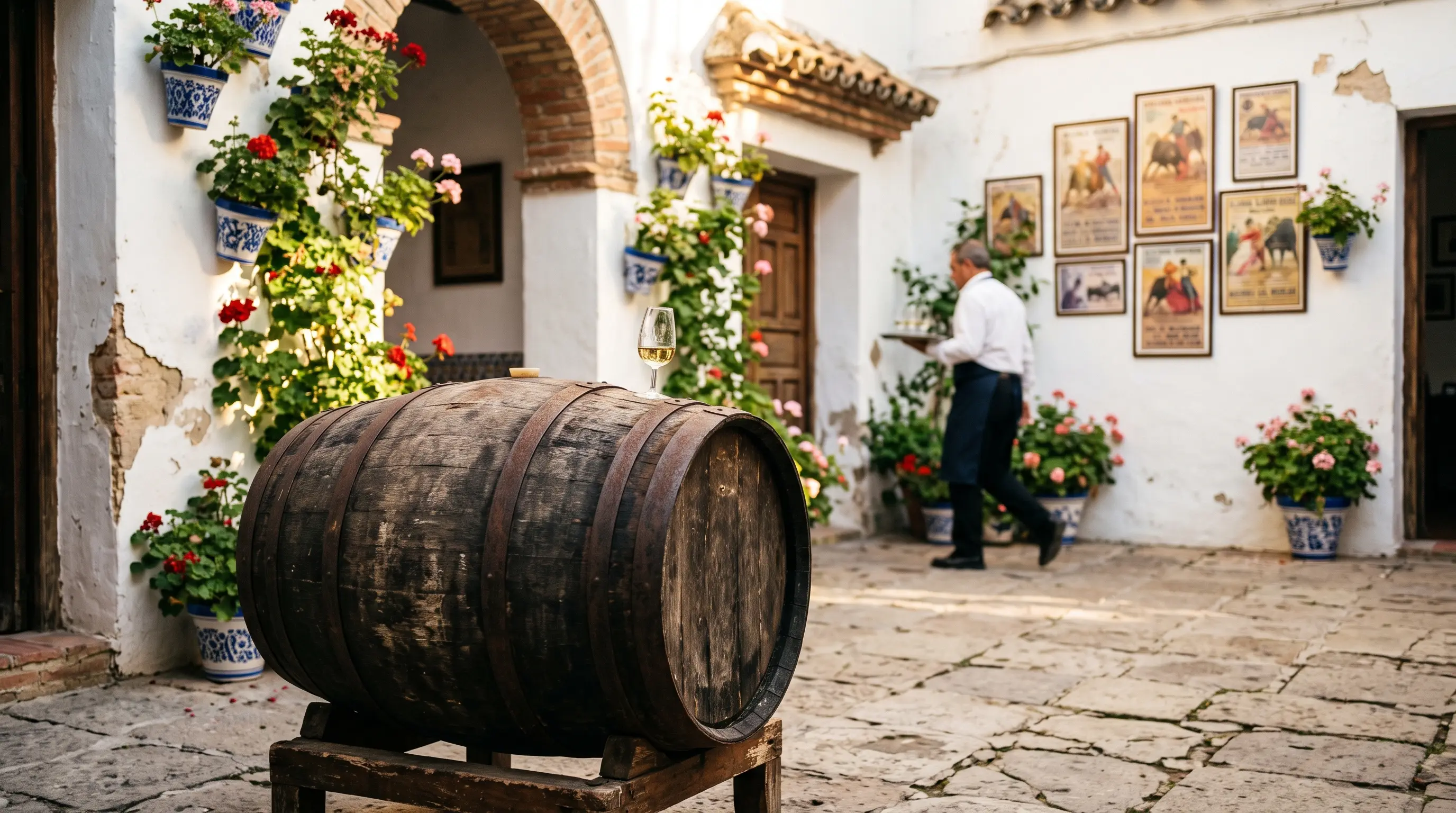
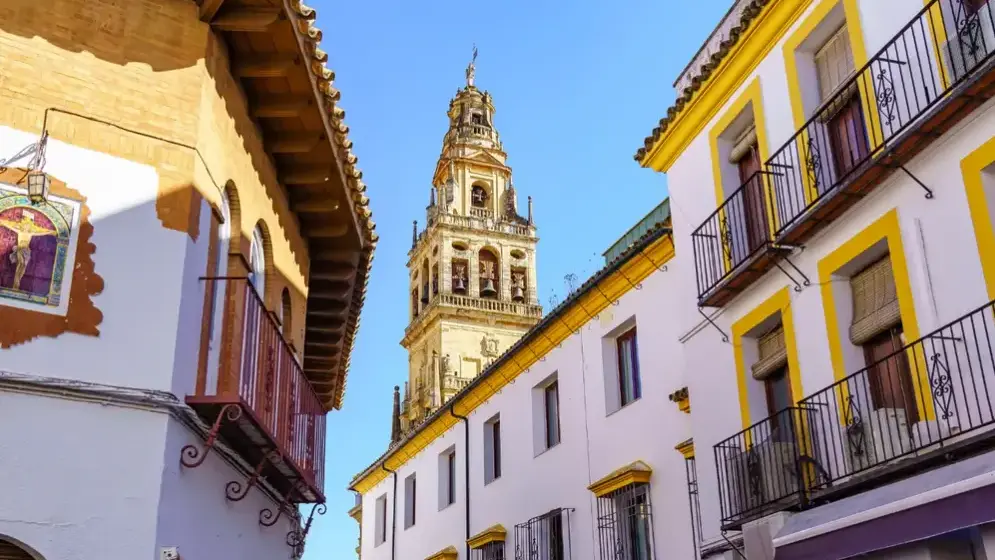
Today the site combines old houses and typical Cordovan courtyards from various eras in the Axerquía, near the Julio Romero de Torres Museum, and its warehouses and courtyards come from the early wine cellar.[6] Courtyards of different periods folded into one house are why Campos reads as a warren rather than a single grand building.
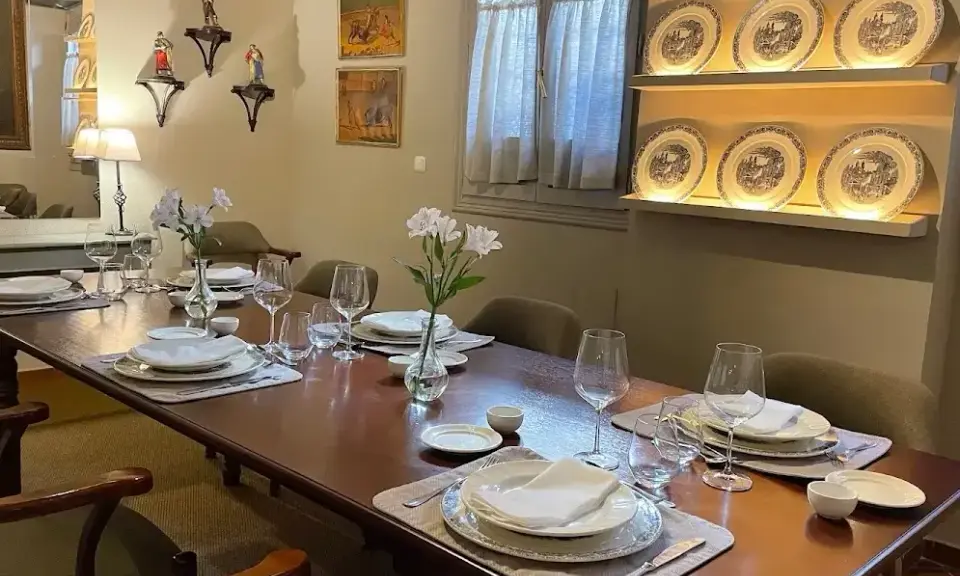
At Bodegas Campos the cellar's early warehouses and courtyards now serve as dining and event rooms.[7] Inside, the eye lands on rows of oak botas signed by distinguished visitors and a collection of bullfighting posters.[8] Solano Márquez calls the accumulation of mementos in the rooms and galleries a popular museum.[9]
A signed barrel proves who ate there, not when the cellar opened. Enjoy the memorabilia as atmosphere and keep the 1908 date apart from it.
Read against the rest of this story, the Campos claim is the oldest and the least checkable. Casa Rubio's 1920 and Casa Pepe's 1928 come with owners, nicknames and sale dates. Campos comes with a founder, a book and a house that has gone on collecting things for more than a century. That is fine evidence for atmosphere. For a date, it is thin.
Campos dates itself to 1908, before Montilla-Moriles had legal names
Campos opened into a wine country that had not yet agreed what to call itself. The name Montilla began to establish itself for the region's wines only from the mid-19th century, through international competitions.[10]
The next names came late. The town of Zapateros became Moriles in 1912, four years after Campos's founding date,[11] and the Wine and Vineyard Statute of 1932 gave both Montilla and Moriles legal protection.[12] Even then the machinery lagged. The Civil War and bureaucratic delays meant the Regulating Council took effect only in December 1944, with its regulations approved in October 1945.[13]
Timeline
1908
Campos dates its beginnings
A wine business under Domingo Campos del Santo.[1]
1912
Zapateros becomes Moriles
The town takes the name the wine region now uses.[11]
Pepe Giménex Aroca buys a house that was already a tavern.[14]
1932
Statute and a new name
The Wine and Vineyard Statute protects Montilla and Moriles; "El Rubio" buys the Cojo tavern.[12][15]
1944
Regulating Council effective
Founded in December, regulations approved the following October.[13]
1995
Campos taberna opens
Beside the main entrance of the historic house.[3]
That late start still shapes the region's quarrel with Jerez over who may use the word amontillado. It also changes how to read the houses in this story. The 1908, 1920 and 1928 dates all fall before the 1932 statute, so each of them was pouring into a trade whose names were still being settled.
Twelve years separate the statute from a working council. Protection on paper came first, and the body to administer it followed after a war. For a tavern keeper in 1932 that meant the names were safe in law while the machinery behind them did not yet exist.
Casa Rubio: from El Cojo to El Rubio
Casa Rubio dates to 1920, when the tavern was known as the Taberna de El Cojo de San Nicolás, a nickname that translates as the lame man of San Nicolás. The city, the regional tourism authorities and the restaurant itself all repeat the year.[2][16][17]
The name changed with the owner. In 1932 José María Jiménez Márquez, known as El Rubio, bought the tavern, and it has carried his nickname since.[15] The calendar rhymes with the wine law: 1932 is also the year the statute protected Montilla and Moriles.[12]
The building is newer than the story. Miguel Cabezas Morón rebuilt and modernised the tavern in 2001 and gave it the form it has now.[18] So Casa Rubio holds three different kinds of date: 1920 for the business, 1932 for the name, 2001 for what you see. When a Córdoba taberna says "since", ask whether it means the business, the name or the walls.
Twelve years sit between the tavern's first date and its new name. One sale was enough to replace the old name with the buyer's nickname. Campos went the other way and still carries its founder's surname.
Casa Pepe de la Judería: bought in 1928, a tavern already
Pepe Giménex Aroca bought what is now Casa Pepe de la Judería in 1928, but it was already a tavern under another name.[14] The house's own website counts its life from that year, as a meeting point for Córdobans and travellers.[19]
So 1928 marks a change of hands, not a first opening. That is the honest way to read most "since" dates in the old town, and the reason this history keeps asking who bought what.
The tavern's best-told anecdote concerns its most famous guest. It is said to have welcomed Angelo Roncalli, then nuncio in Paris and later Pope John XXIII, as an ordinary tourist.[20] Treat it as tavern lore. Either way, Casa Pepe de la Judería is a good illustration of how a Córdoba tavern collects visitors and stories long before anyone writes either down.
Casa Pepe's sale in 1928 and Casa Rubio's in 1932 sit four years apart, both in the run-up to Córdoba's wine names being fixed in law. It is tempting to call that a pattern. Two sales do not make one, but they show how much of the old town's tavern history is really a history of owners.
1995: a new taberna in an old house
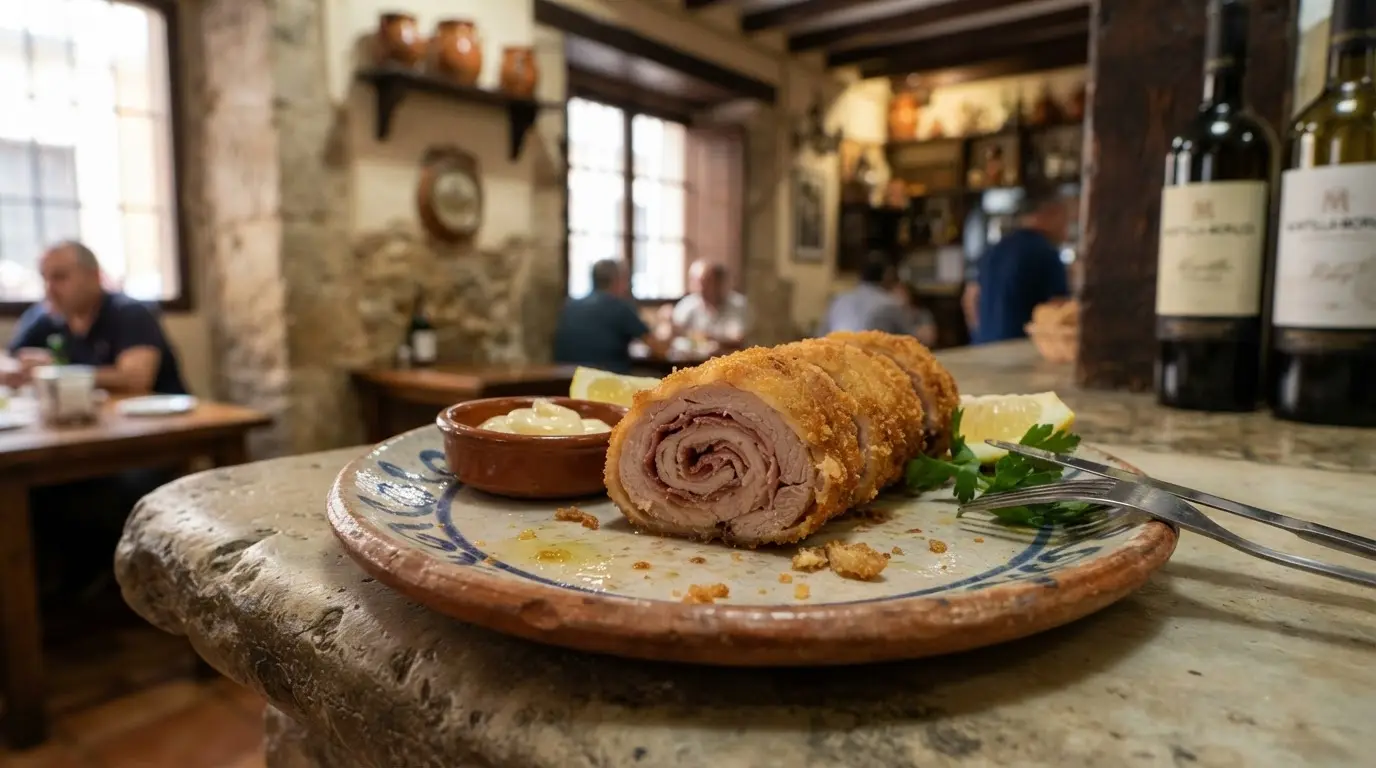
The Bodegas Campos taberna opened its doors at the beginning of 1995, next to the main entrance of the historic house.[3] Its pitch was nostalgia on purpose: the atmosphere of the old Cordovan taverns, described as "main square, gossip shop and even a bit academic".[21]
The taberna is a revival, then, of a form that Casa Rubio and Casa Pepe never stopped being. A 1920 tavern and a 1928 tavern were the real thing before anyone thought to sell the idea. Campos sold the idea in 1995 and, with a house full of signed barrels behind it, sold it well.
Across the century the pattern is consistent: a cellar dated 1908, taverns dated 1920 and 1928, a wine law in 1932, a bar built to feel old in 1995. Each date is a different kind of claim, and the useful skill is knowing which. To test them against the rooms themselves:
The Campos taberna for the 1995 revival, beside the main entrance
Casa Rubio for the 1920 business and the 1932 name
Casa Pepe de la Judería for the 1928 change of hands
Solano Márquez's 2008 book arrived thirteen years after the taberna opened. The house was already staging its past before it had a published account of it, and that order of events is the fairest one-line summary of the place.
Frequently asked questions
What is the history of Bodegas Campos in Córdoba?
Bodegas Campos dates itself to 1908, when Domingo Campos del Santo began a wine business in what is now a patchwork of old houses and courtyards in the Axerquía. The taberna beside the main entrance is much younger and opened at the start of 1995. The restaurant and event rooms occupy the early warehouses and courtyards.
Who founded Bodegas Campos and when?
Domingo Campos del Santo, an entrepreneur from Soria who settled in Córdoba, is credited with founding it in 1908. That date comes from the house itself and from the city tourism board, so treat it as the founding claim rather than an archive-proven fact.
When did the Bodegas Campos taberna open?
The taberna opened at the beginning of 1995, next to the main entrance of the historic house. It was designed to evoke the old Cordovan taverns, which it describes as main square, gossip shop and even a bit academic.
When was Casa Rubio founded and how did it get its name?
Casa Rubio dates its tavern to 1920, when it was the Taberna de El Cojo de San Nicolás. In 1932 José María Jiménez Márquez, known as El Rubio, bought it and the name has stuck. The tavern was rebuilt and modernised in 2001.
Has Casa Pepe de la Judería been a tavern since 1928?
It has been a tavern for longer than that. Pepe Giménex Aroca bought it in 1928, but it was already a tavern under another name. The house counts its own life from the year of purchase.
When did Montilla and Moriles wine get legal protection?
The Wine and Vineyard Statute of 1932 legally protected the names Montilla and Moriles. The Regulating Council took effect only in December 1944, delayed by the Civil War and bureaucracy, and its regulations were approved in October 1945.
“Today, the warehouses and courtyards from the early wine cellar create the ideal place to organise any type of event, celebration, banquet or even an intimate lunch”
“The Civil War and various bureaucratic issues delayed the founding of the Regulating Council, which did not become effective until December 1944, with its Regulations being approved in October 1945.”