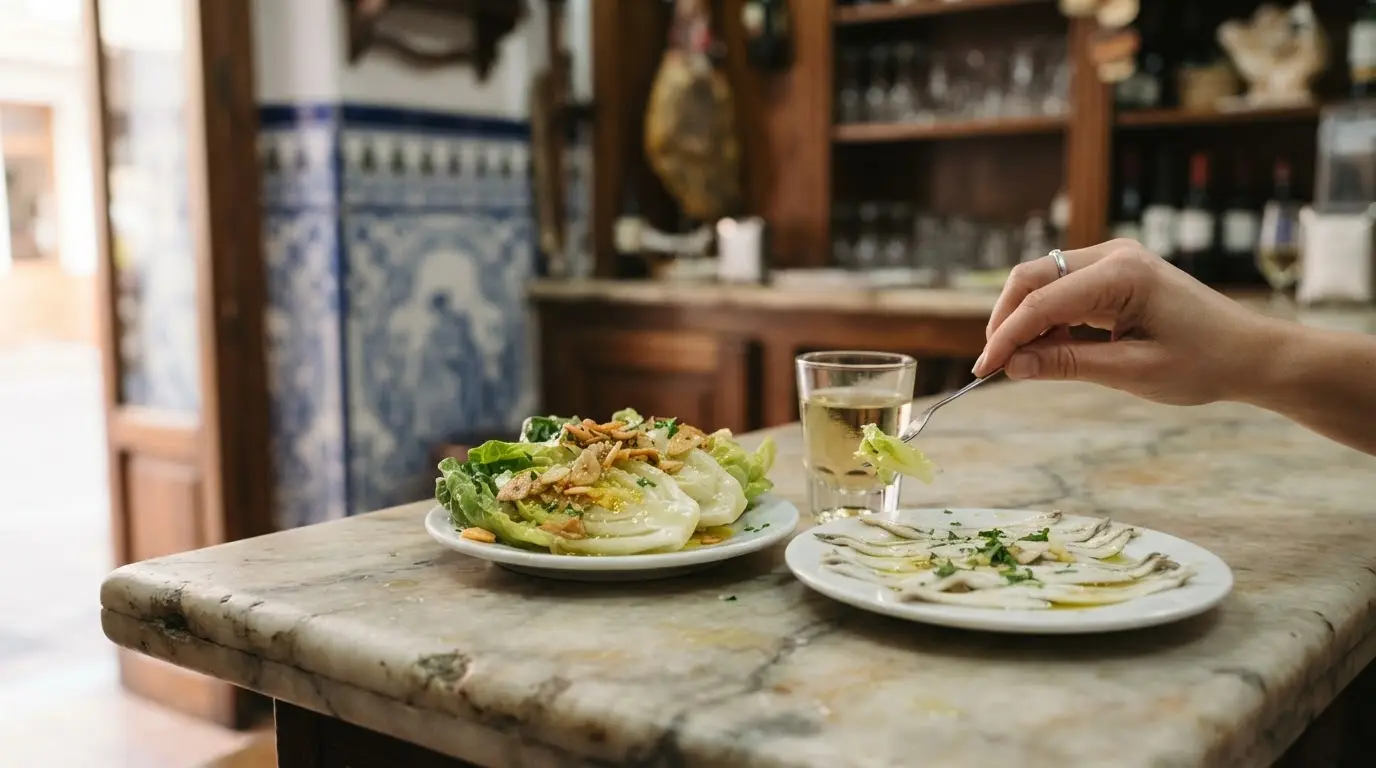

What lechuga al ajillo is, and where a Córdoba bar has listed it
Cogollos con ajitos means tender lettuce hearts with little bits of garlic fried in olive oil[4]; lechuga al ajillo is the chunkier cousin, large pieces of lettuce dressed with grated or diced fried garlic, olive oil and vinegar[5]. The hearts are the gentler version, the chunks the blunter one. Either way the garlic is the point, and the vinegar keeps it from sitting heavy.
Bar El Pozo on Plaza de la Corredera[6] has listed cogollitos al ajillo, baby lettuce hearts with fried garlic dressing, at €8 on its English menu[7]. The menu is undated, so read it as a sign of what the kitchen does rather than tonight's price, and ask before you plan a meal around it.
Taste of Córdoba · Dish
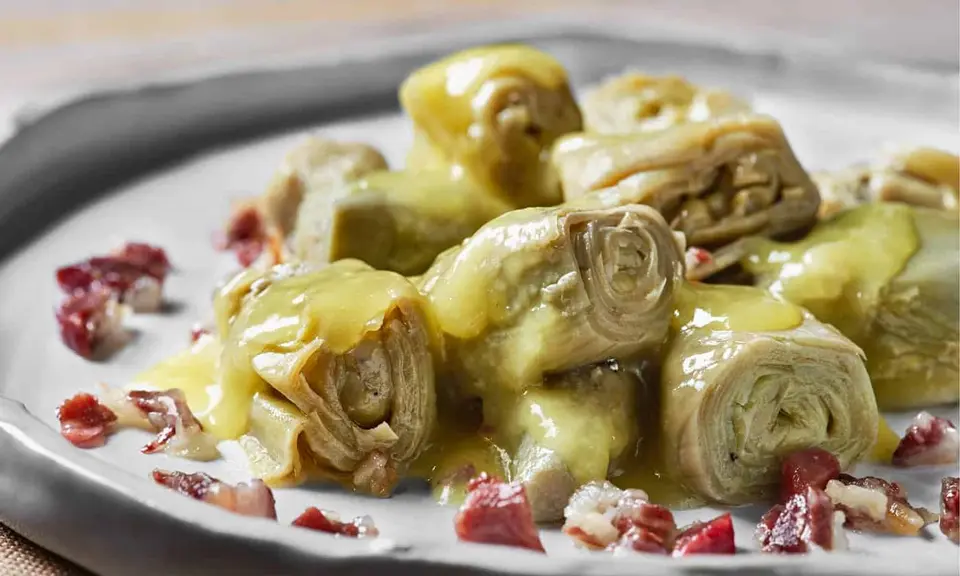
Alcachofas a la Montillana
Artichoke hearts braised in Montilla white wine with garlic and olive oil — a spring-only dish from Córdoba's countryside. Try them at Taberna Salinas.
Dishes sold "al ajillo" are seasoned with garlic, usually with olive oil and sometimes a guindilla chilli[8], so the phrase names a method rather than a recipe. Prawns and mushrooms get the treatment too, but the lettuce is the version that suits a hot Córdoba afternoon.
None of this makes the dish Córdoba's own. A Granada menu lists cogollos de lechuga con bacon al ajillo[9], so treat it as a bar standard that Córdoba kitchens list rather than a local invention, and judge it by the garlic: golden slivers, not brown, and a dressing that pools instead of drowning the leaves. Next to a bowl of salmorejo, the lettuce plate is the lighter way to start.
Tapa, media ración, ración: the size decides the bill
A Córdoba menu will often sell the same dish at two or three sizes, and the size matters more than the name. Tapas run roughly €2-7, depending on whether the plate is vegetable, meat, fish or seafood, and raciones cost €7-15[1]. The media ración sits between them, a half portion; not every bar lists it, so ask rather than assume.
Do not count on a free tapa with the drink. Treat every small plate as a paid one, which is how the bars in our guide to the best tapas bars in Córdoba work: you order each plate and you pay for it, so budget for the food as well as the caña.
The practical consequence is a calculation you make at the table. For a group, the usual rule of thumb is roughly one ración per person, shared[3]. Four people each ordering a tapa get four small bites and four separate decisions; two or three raciones in the middle of the table get you dinner. A tapa is the small plate and a ración the full-size one, close to what you would eat for dinner[10], so pick the size by how long you plan to stay.
Boquerones en vinagre, the cold plate that sets up the fried ones
Boquerones en vinagre are fresh anchovy fillets marinated in vinegar, or in vinegar and olive oil, and seasoned with garlic and parsley[11]. They are a tapa found all over Spain rather than a Córdoba original, and local bar menus carry them next to japuta en adobo, alcachofas a la montillana and a long run of fried plates[12].
Serve them cold. Beer is the usual partner rather than wine, because the anchovies already carry vinegar[13]. Expect a small plate of soft, pale fillets with a sharp edge, and enough oil in the dish to mop up with bread.
Raw fish worries some visitors, so the rule is worth knowing. Spanish health law requires anchovies to be frozen before they go into vinegar, which stops Anisakis larvae surviving[14]. The plate is a routine order rather than a dare.
Two places come up when people talk about them. A taberna on Calle Conde de Torres Cabrera, listed as Taberna Góngora, draws its customers above all for boquerones al limón, among the most famous in the city[15]. In the Judería they count among the classics, and the advice there is to take them with a splash of local olive oil[16]. Marinated in vinegar, they are what puts the taste of the sea on a Córdoba table, and La Lonja is a restaurant the Michelin Guide ties to them[17]. Taberna El Abanico, on Calle Velázquez Bosco 7, lists a small dish of them as a starter[18].
Pisto con huevo and the plates that fill out the first round
At Casa El Pisto the name gives it away: the signature plate is pisto con huevo, the slow vegetable stew crowned with an egg[19]. Casa El Pisto is the nickname of Taberna San Miguel, a bar that has been trading for well over a century, so the egg-topped stew has had plenty of time to settle into the menu[20]; it stands on the plaza next to the church of the same name[21]. Order it for the table rather than for yourself. It is the one starter on this list that eats like a small meal.
The same kitchen is recommended for its tomato-and-tuna salad and its fried anchovies[22], a useful reminder that the cold and the fried often share a menu line.
The starters worth recognising on a bar menu:
- Lechuga or cogollos al ajillo: lettuce, fried garlic, olive oil, often vinegar
- Boquerones en vinagre: cold, sharp, best with beer
- Pisto con huevo: warm, soft, the one that fills you up
- Ensaladilla: potato salad, with a catch described below
- Japuta en adobo and fried plates: the next step up in weight
Deep dive · Article
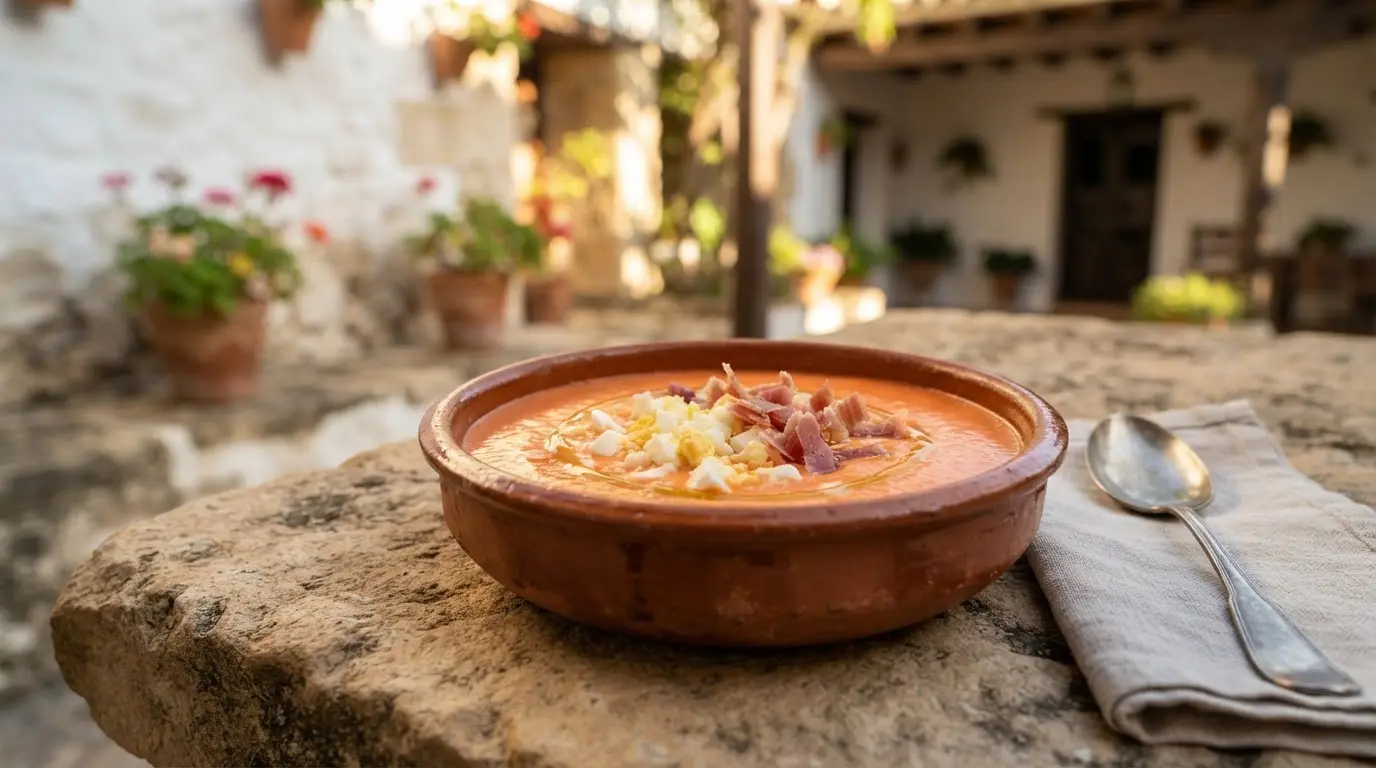
Salmorejo — The Córdoba Dish That Took 2,000 Years to Perfect
Two thousand years from Roman mortar to Córdoba's signature cold soup. The full history of salmorejo — and where to taste the real thing in Córdoba today.
On the old bar at Taberna Pepe Salinas, the traditional kitchen runs to japuta, ajoblanco and naranjas picás con bacalao[23]. That is the register to look for: plates a bar has made for decades, written plainly on the board.
Recommended tours
Tours are selected for quality, not commission. We earn a small fee if you book — at no extra cost to you.



Do not assume the vegetarian-looking plates are meat-free. The classic ensaladilla comes with prawns, and the grilled mushrooms arrive with diced jamón serrano[24].
The fried plates that follow, from chocos fritos to berenjenas con miel, are what the cold starters are there to set up. Ask for them after the first round, not with it, so the table has something to cut through.
Drinks, pace and where to start
The case for starting cold is the heat: lettuce in garlic and oil is described as the perfect way to start a meal in Córdoba, particularly in the hot summers[25]. Boquerones work the same way, which makes the two a sensible first round when the terrace is in full sun and you do not want to commit to a hot plate yet.
In the glass, fino is the traditional aperitif at 15-17% alcohol, and it suits tapas and shellfish[2]. A fino from Montilla-Moriles is the local choice, and the dry, nutty edge is a better match for fried garlic than a sweet wine would be.
Tapear is a social ritual, but an informal one: bars are busy, and people eat standing at the bar or at small tables[26]. A plate lands, you eat it within minutes and the next order follows. Do not hold a table for ceremony.
A first round, in order
- Ask whether the cogollos or lechuga al ajillo are on today, since online menus are undated
- Check the size beside the price: tapa, media ración or ración
- For a group, roughly one ración per person, shared
- Start cold (lettuce, boquerones), then the fried plates
- Ask what is in the vegetable-looking plates before you order them
For where to go, the Judería and Plaza de las Tendillas are the two main areas for bars and tabernas[27]. Start in either, and keep the first order small.
My own rule after seven years of eating through the city's tabernas: one cold plate first, one ración to share, and the fried plates only once the table has settled. Rabo de toro and serranito often come next; the must-try dishes in Córdoba pick out the best of those.