
What it is
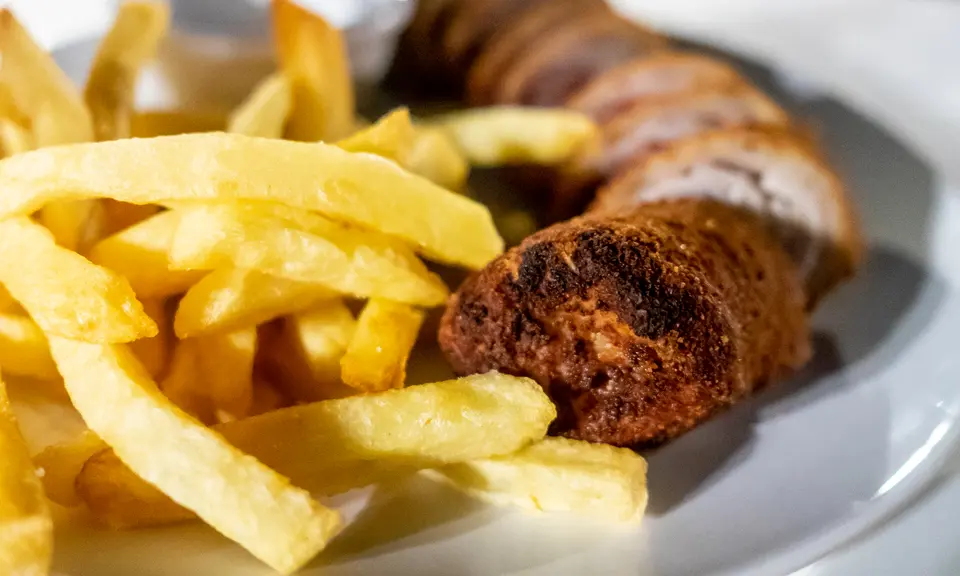
Flamenquín is a roll of thin pork escalope wrapped around slices of serrano ham, coated in egg and breadcrumbs, then fried in olive oil until the crust turns deep gold. Cut it open and the ham spiral is visible inside, the meat still moist from the fry. It arrives hot, sliced into thick rounds, usually with chips or a simple salad on the side.
The name comes from flamenco — the flamingo — because the original shape recalled the bird's long neck. Born in the city centre taverns in the 1960s, it spread across Andalusia fast enough to become genuinely iconic.
The technique matters
The escalope needs to be pounded thin enough to roll without cracking. The breading should be fine enough to crisp without turning to armour. And the oil temperature has to be right — too cool and the coating goes greasy; too hot and the pork doesn't finish cooking through. When it's done properly, the crust shatters on first bite.
Some kitchens add a slice of cheese inside the roll for extra richness. Most stick to pork and ham.
When and how to eat it
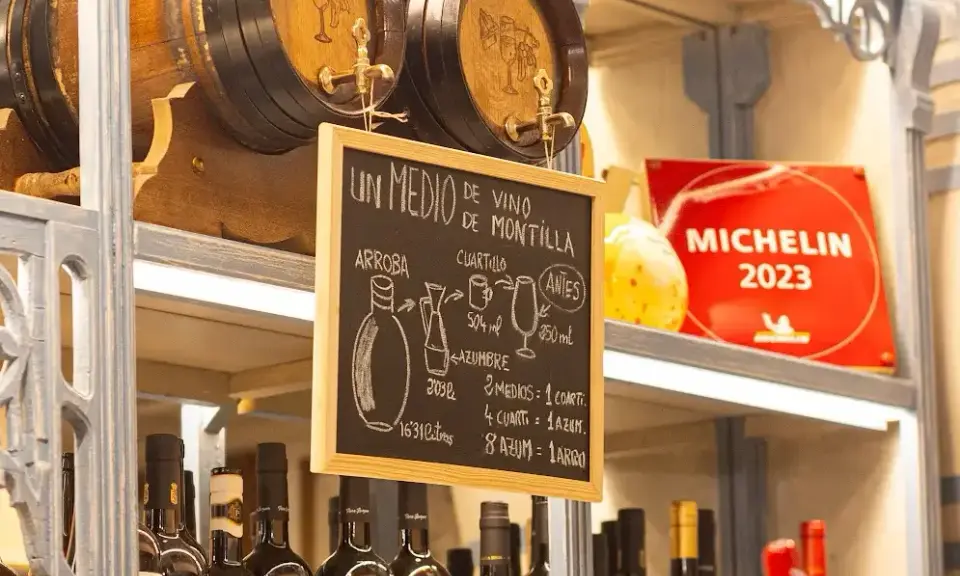
Flamenquín is on menus year-round, as a tapa or a full ración. It's a good pairing with a Montilla-Moriles amontillado — the hazelnut notes in the wine hold up against the richness of the fry. A young regional red works equally well. Start with a salmorejo first and you have a complete Córdoba meal.
Where to order it
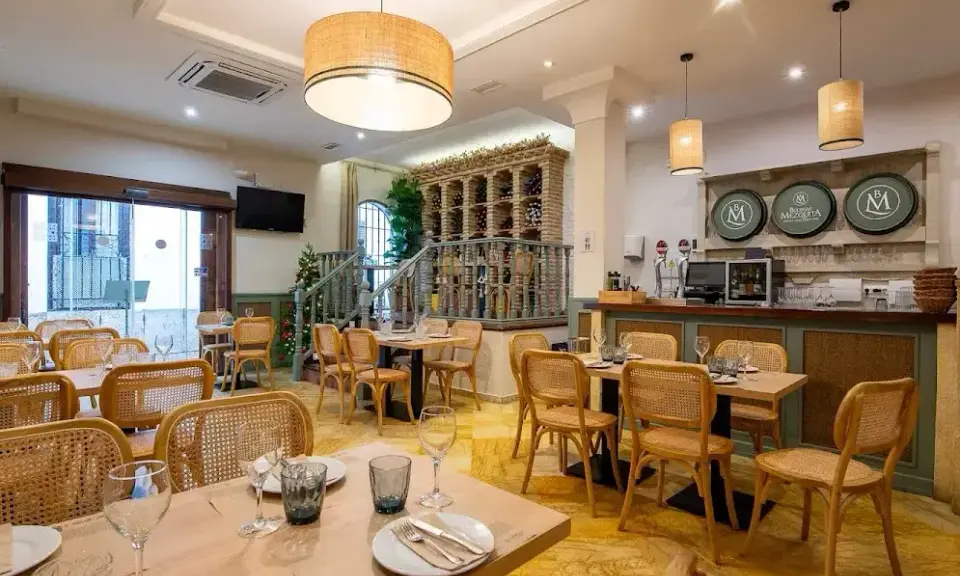
Taberna Salinas and Bodegas Campos are the reference addresses. Casa Pepe de la Judería and Bodegas Mezquita do solid versions close to the original. Every tavern in the city has its own small variation, but all share the same generosity.
The Córdoba gastronomic tour covers flamenquín with a local guide who explains the context and history of the dish.