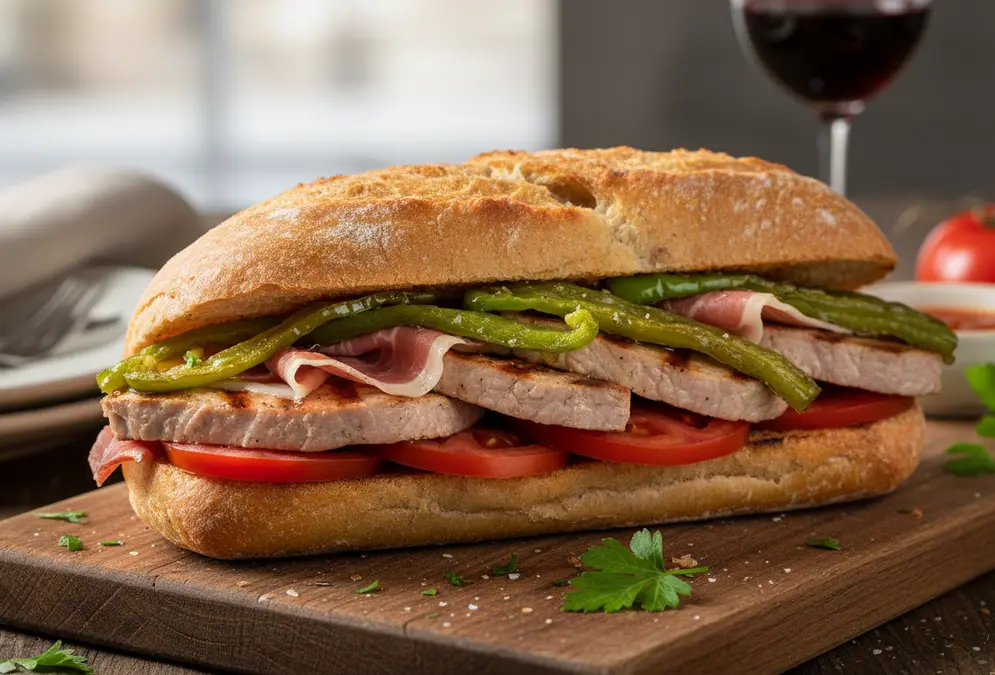

What a serranito is
A serranito is a bocadillo built in layers: a grilled pork loin fillet, two or three slices of jamón serrano, a fried green pepper that's gone slightly charred at the edges, and a slice of fresh tomato, all packed into a warm crusty roll. The whole thing costs between €3 and €6 depending on where you eat it, and it takes about four minutes to put together.
It was invented in Seville in the 1970s — not in Córdoba — but it spread across Andalusia fast enough that every bar in the region makes one, and nobody thinks of it as a foreign import. In Córdoba, it sits alongside flamenquín and salmorejo as one of the default midday options. A working lunch, not a tourist lunch.
Why the pepper is not optional
The fried green pepper is what makes a serranito a serranito. It provides a slightly smoky, sweet-sharp note that cuts through the fat in the ham and the char on the pork. Without it, you have a pork and ham sandwich. With it, you have something that tastes specifically of Andalusian bar kitchens at noon.
Some places use a whole pimiento de padrón-style pepper. Others fry a larger Italian green pepper, cut lengthwise. Either way, the pepper needs to be cooked properly — not barely warmed — until it softens and takes on colour. A pale, limp pepper is the main way a serranito goes wrong.
The pork loin should be thin, grilled quickly on high heat so it stays juicy in the middle while getting some browning on the outside. The jamón serrano goes in after, warming through from the heat of the meat rather than cooking further.
Where to find one in Córdoba
The serranito appears on bar menus throughout the Centro and Judería. The sit-down versions at Taberna Salinas and Bodegas Campos tend to use better cuts of pork and higher-quality serrano. Casa Pepe de la Judería serves a solid version in a location that's convenient after the Mezquita.
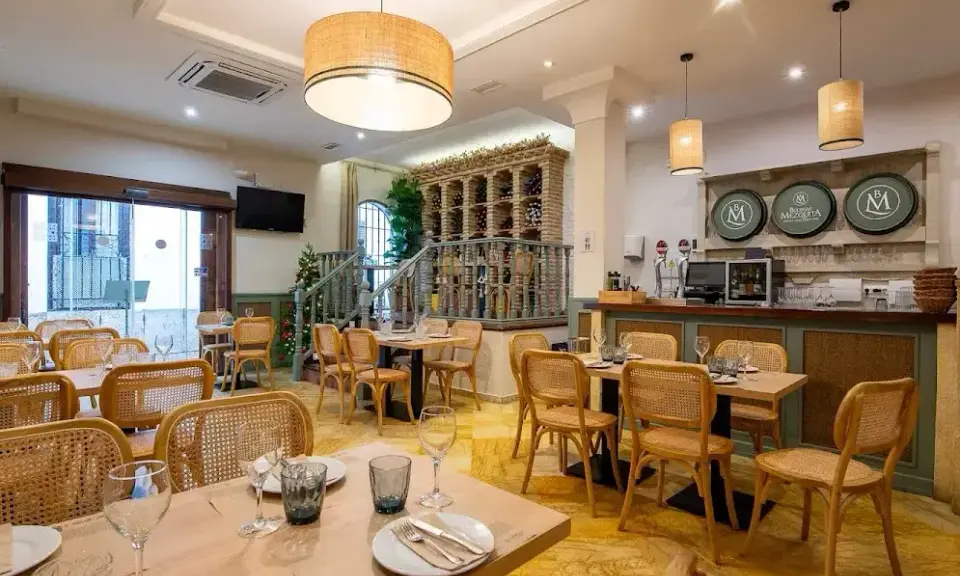
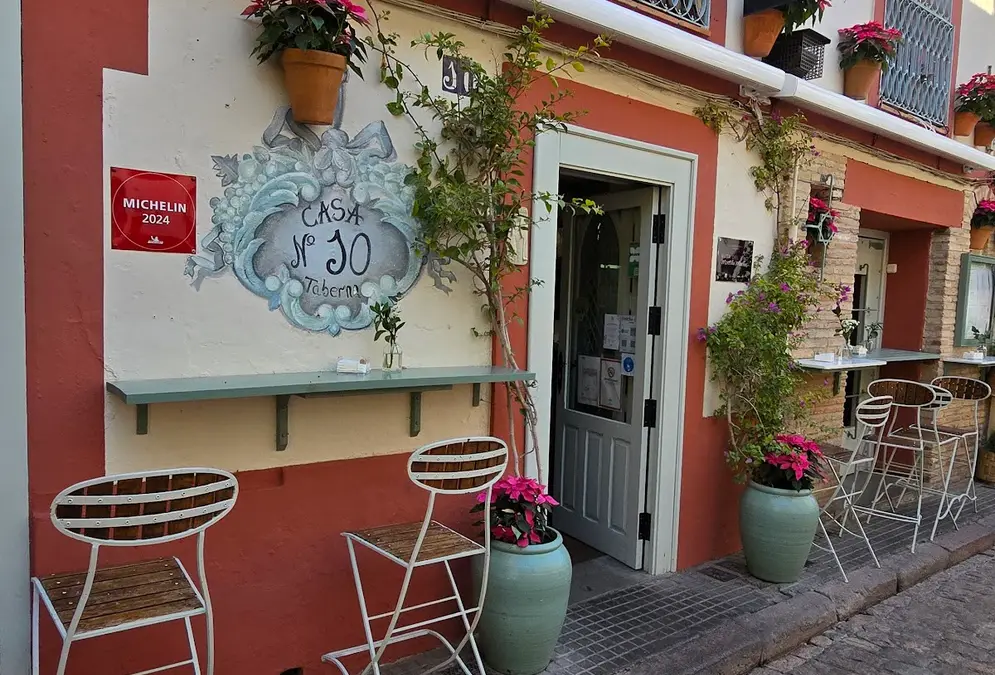
Bodegas Mezquita, El Churrasco, and Taberna El Número 10 are also reliable options if you're moving around the centre.
For a more structured introduction to Córdoba's street food scene — serranito included — the food tour covers the main dishes with a local guide.
What to drink with it
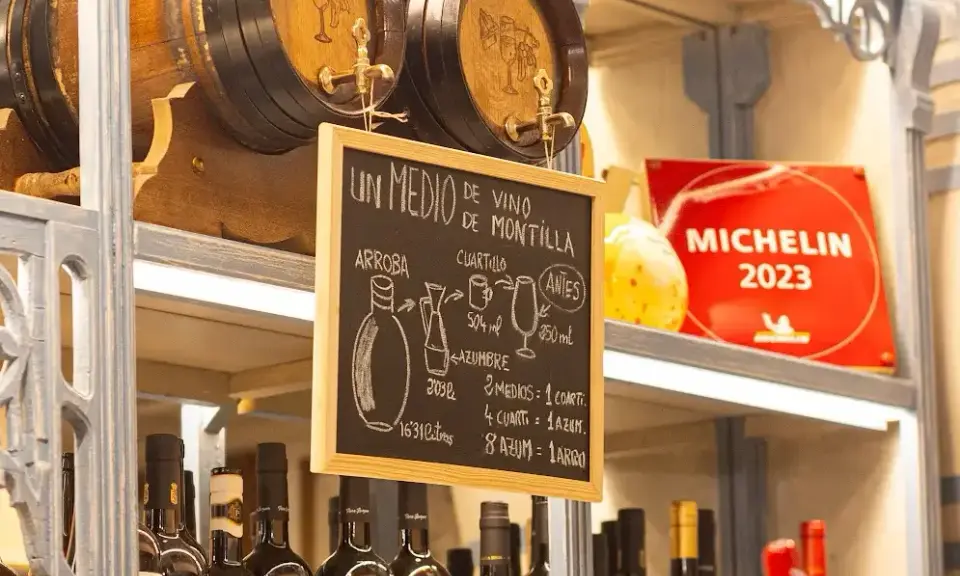
At lunch, a cold glass of Montilla-Moriles fino is the right pairing. The wine's dry, slightly nutty character holds up against the richness of the ham and pork without overwhelming the lighter flavours from the pepper and tomato. Spanish beer works well too, particularly outside on a warm afternoon. The fino is what a local would order.
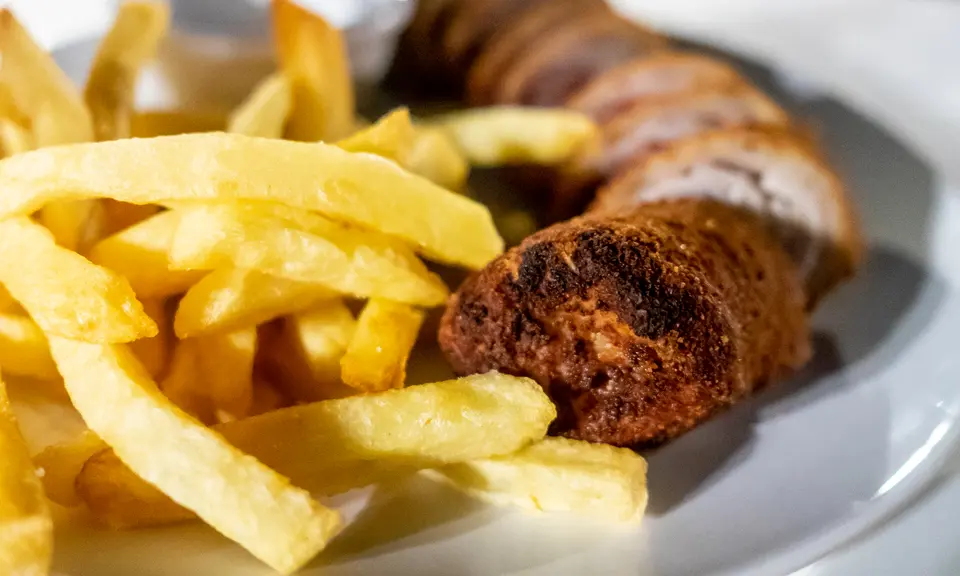
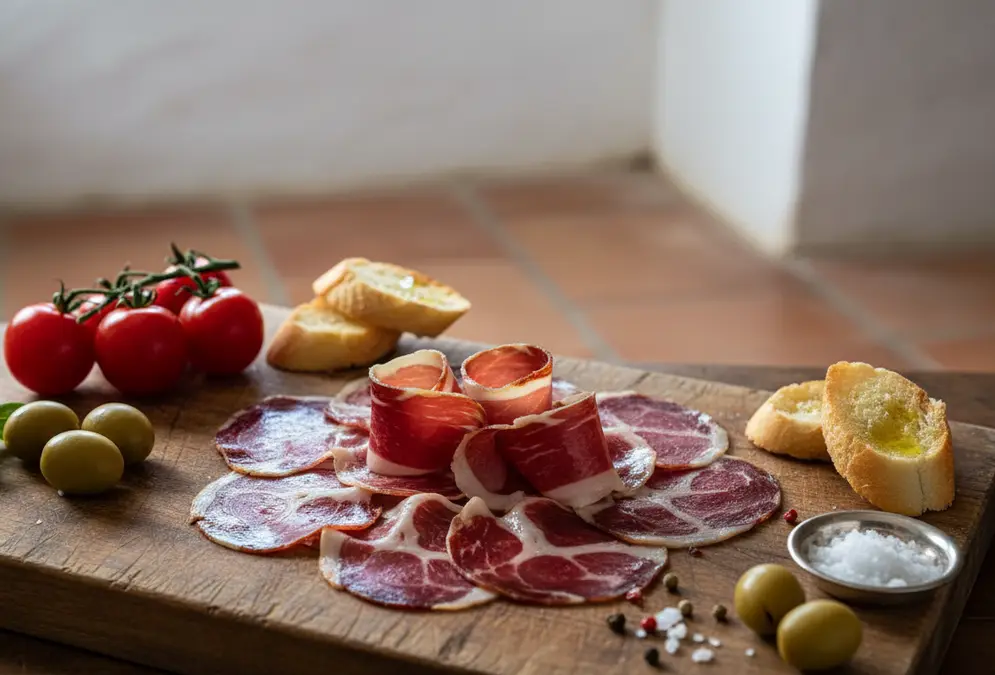
The serranito belongs to the same family as other Andalusian pork preparations across Córdoba. Jamón ibérico appears as an ingredient throughout the bar menu, including in flamenquín, where the ham is rolled inside breaded pork escalope. The serranito is simpler, faster, cheaper — the everyday version of the same logic.
When to eat one
Most bars serve it from noon until around 4pm. This is what you eat standing at a bar counter at 1pm after a morning walking the city — order it with something cold and eat it there. It was designed for that exact situation, and it shows.