
What makes Jamón Ibérico worth the fuss
Spain produces a lot of cured ham. Most of it is fine. Jamón Ibérico is something else entirely — and Córdoba's contribution to it, through the Los Pedroches Denomination of Origin, is one of the best arguments for visiting the province's northern valleys.
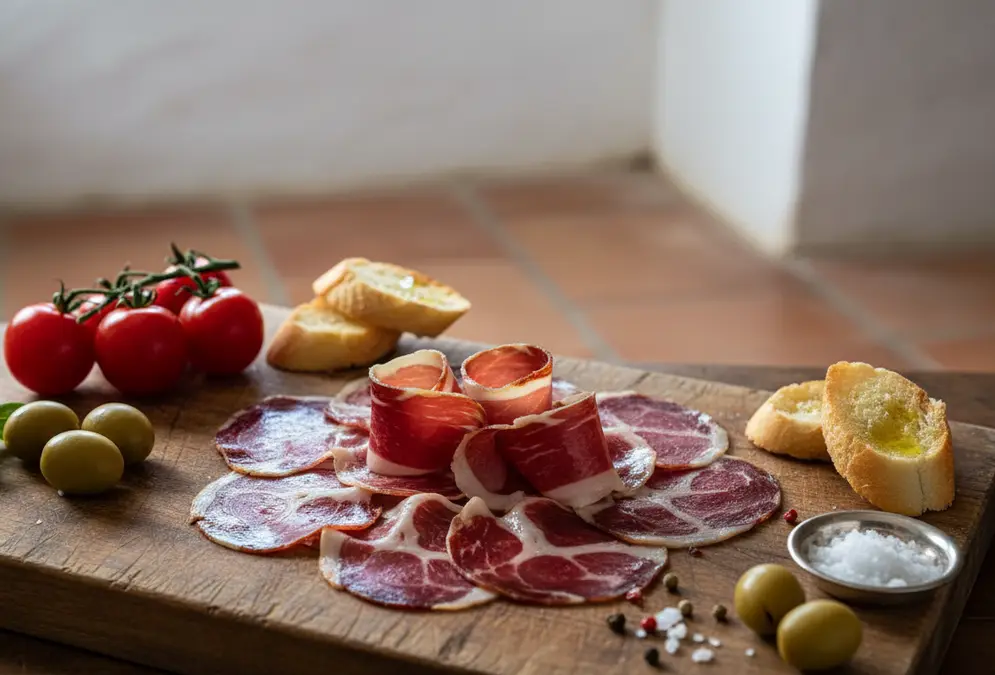
The Los Pedroches D.O., awarded in 2006 and the most recent of Spain's four Iberian ham designations, covers a stretch of oak dehesa north of the city. The pigs here are purebred Black Iberian, a breed hardwired to store fat within the muscle rather than around it. That intramuscular marbling is what you see when a skilled cortador fans out tissue-thin slices on a plate — streaks of white fat running through deep red flesh.
The grades explained
Not all Jamón Ibérico is the same. The label tells you everything:
- Bellota 100% ibérico (black label): pigs from purebred parents, free-range, fattened exclusively on acorns during the montanera season. This is the top tier.
- Bellota ibérico (red label): crossbred pigs, also acorn-fed and free-range during montanera.
- Cebo de campo ibérico (green label): free-range pigs fed a mix of natural pasture and feed.
- Cebo ibérico (white label): pigs raised indoors on compound feed.
The Los Pedroches valley produces primarily bellota hams, and the local terrain — granite soils, holm and cork oak — shapes the acorns the pigs eat, which in turn affects the fat composition and final flavor.
How to eat it
Serve at room temperature. Cold dulls the fat and kills the aromatics. A proper slice should almost melt — the fat softens between your fingers if you hold it for a few seconds. Eat it on its own, or with bread rubbed with tomato and olive oil. Anything more elaborate competes with the ham rather than letting it speak.
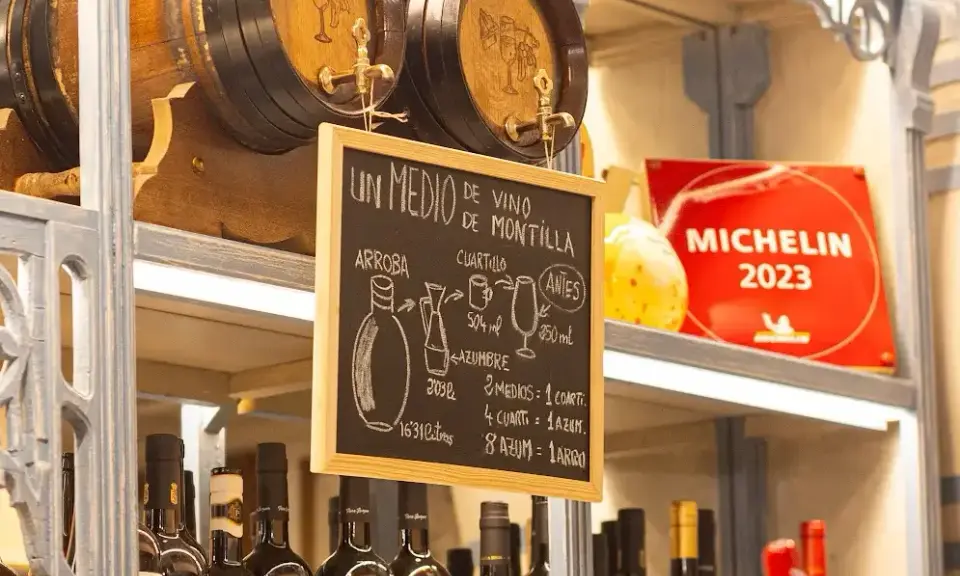
For wine, Córdoba's own Montilla-Moriles appellation is the natural pairing: a chilled fino or dry amontillado cuts through the fat without overwhelming the flavor. A glass of local white from the Subbética hills works well too.
Where to find it in Córdoba
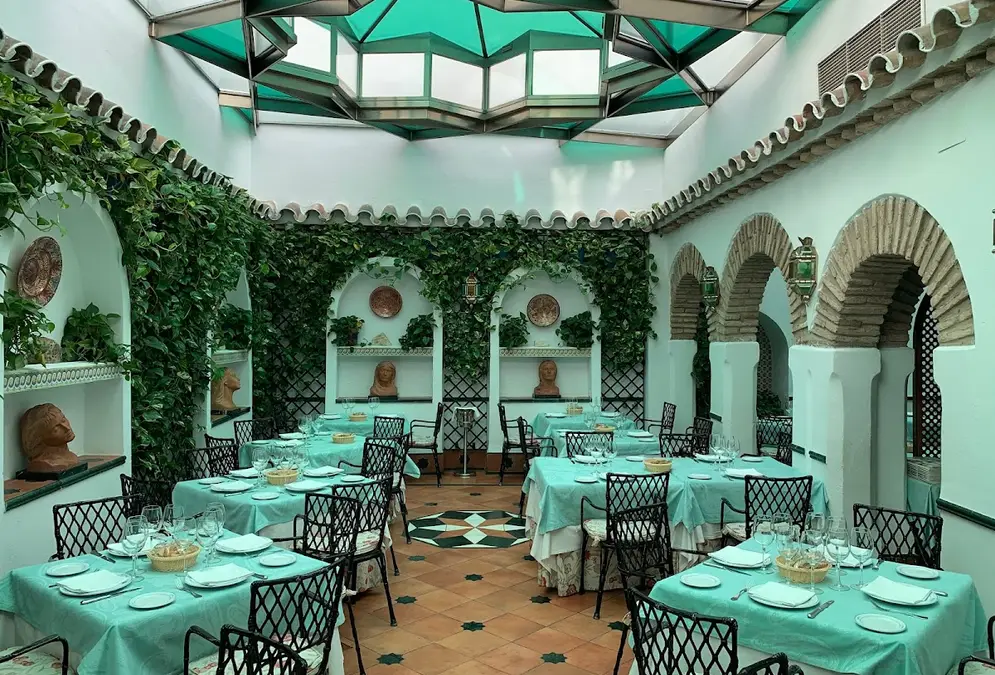
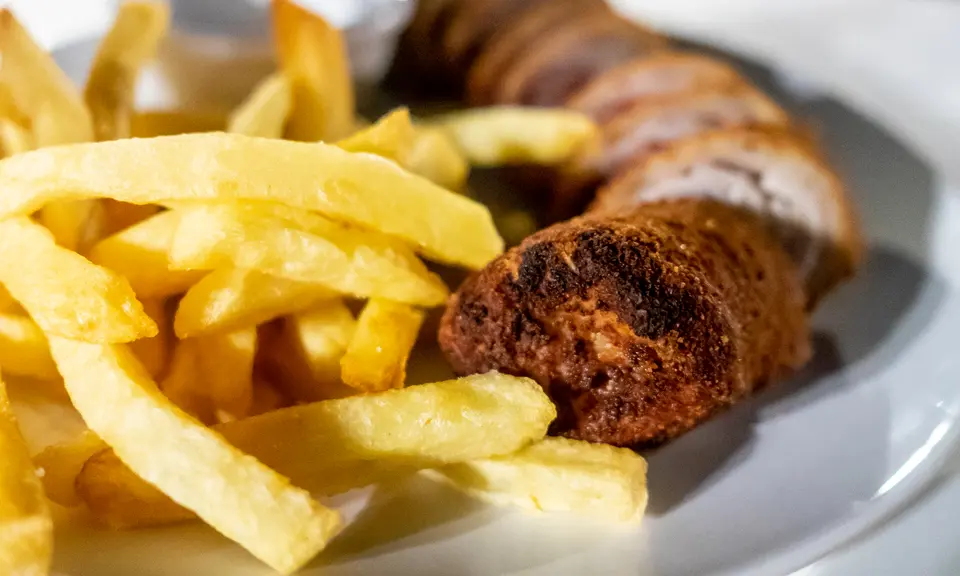
Most traditional bars and restaurants in the city serve Jamón Ibérico as a tapa or in a charcuterie plate. Pata negra — the common informal name for the highest grades — appears on menus across the old quarter. For context on how it fits into the broader Córdoba table, see also Salmorejo and Flamenquín, two other Andalusian staples you will encounter alongside it.
If you want to take some home, specialist delicatessens in the city center stock whole legs and vacuum-packed slices from Los Pedroches producers — considerably cheaper than buying the same ham abroad.