Juan de Mesa Carved the Gran Poder, and Córdoba Claims Him
Juan de Mesa, the Córdoba-born sculptor who carved Seville's Gran Poder, was long misattributed. A 1620 receipt and his last work in San Agustín tell it.
Art history background with eight years writing interpretive content on Córdoba's Caliphal heritage.
Published
art-lovershistory-buffs
Jesús del Gran Poder, the cedar Nazarene that processes in Seville's Madrugá, was carved by Juan de Mesa, a sculptor baptised in Córdoba on 26 June 1583[1]. He acknowledged 2,000 reales for it and a San Juan in a 1620 payment receipt[2], yet the image was long credited to his master Martínez Montañés until a find reported in ABC on 7 February 1930 restored Mesa's name[3]. For a visit, jump to the last section on where to see Mesa in Córdoba today: his last work, the Angustias group of 1627, was made for a Córdoba brotherhood and still stands in the church of San Agustín[4].
Juan de Mesa y Velasco was baptised in Córdoba on 26 June 1583[1], reportedly at the church of San Pedro[5]. What came next is far better documented than what came before.
In 1606, aged 23, he entered the Seville workshop of Martínez Montañés[6], the master under whose name some of his finest work would later circulate. The pupil would spend the rest of his short career in Seville, and Seville's Holy Week would claim the credit.
The Córdoba connection is not decorative. The Angustias group, a work of his final year that stays in his native city, was commissioned by a Córdoba brotherhood[4].
The 1620 payment receipt that returned the Gran Poder to Mesa
The proof is a carta de pago, a notarial payment receipt, in which Mesa acknowledges 2,000 reales for a Christ carrying the cross and a San Juan Evangelista[2]. The Cofradía de Nuestra Señora del Traspaso had commissioned both figures[7], and the Holy See later dated the image's making and delivery to 1 October 1620, granting a Jubilee Year for the 400th anniversary that ran from 23 November 2019 to 22 November 2020[8]. The receipt never uses the name Gran Poder, only a Christ with the cross on his back, but the image it describes is the 1.81 m cedar Nazarene now venerated in Seville[9].
Until the document surfaced, the Gran Poder had long been attributed to Montañés, and to the astonishment of Seville it proved to be the work of his most gifted pupil[10]. One February morning in 1930, Heliodoro Sancho Corbacho came upon the receipt in the city's notarial archive[11], and ABC announced the find on 7 February[3].
Timeline
1583
Baptism in Córdoba
Juan de Mesa y Velasco is baptised on 26 June.
1606
Seville apprenticeship
Aged 23, he enters the workshop of Martínez Montañés.
1 Oct 1620
Gran Poder delivered
The date the Holy See later used for the image's making and delivery.
1627
Death in Seville
He dies aged 44, leaving the Angustias group needing only retouching.
7 Feb 1930
ABC reports the find
Sancho Corbacho's discovery of the payment receipt is published.
Apr 2004
Statue in Córdoba
José Manuel Belmonte's bronze is inaugurated beside San Pedro.
15 Mar 2014
Angustias return
The group goes back to San Agustín after decades at San Pablo.
Two years later Antonio Muro Orejón published Mesa's will, dated 26 November 1627, the year of his death, and that document secured the authorship of the Angustias group in Córdoba[12].
Realism in cedar: what Mesa took from Montañés
Mesa's surviving output is mostly processional effigies, and they remain objects of devotion rather than museum pieces[13]. With the later Pedro de Mena and Luisa Roldán he belongs to the Baroque carvers who heightened and humanised Montañés's highly realistic approach to wood sculpture[14]. In Holy Week sculpture that meant a Christ meant to be read at street level, by torchlight, from the pavement beside the paso, the float that carries each image.
He also left thorns embedded in some carvings, among them the Gran Poder, the Cristo del Amor and the Montserrat[15]. On a polychrome face already painted to bruise, a real thorn is a small act of insistence: the carver wants the wound believed.
Mesa's record is thinner than his reputation. Few of his works are firmly signed and backed by documents, and the unsigned pieces of high quality tend to be credited to him or to Montañés[16]. The Cristo del Amor was carved in 1618 and was his first crucifix[17]. The Gran Poder itself is articulated, so it can be presented as a Nazarene carrying the cross[18]. That matches the receipt's wording, a Christ with the cross on his back.
The Gran Poder itself stays in Seville, where it processes during the Madrugá, the stretch of night between Holy Thursday and Good Friday[19]. Córdoba's share of Mesa is smaller and quieter, and it comes at the very end of his life.
The Angustias: Mesa's last work, made for Córdoba
The Angustias group, a Virgin of Anguish with the dead Christ, is a Mesa work that stays in his native city, carved in 1627 for Córdoba's Nuestra Señora de las Angustias brotherhood[4]. It was not entirely finished by his hand: Mesa died in Seville in 1627, aged 44[20], with only some retouching still to do[21].
His will admits that the Virgin for the convent church of San Agustín lacked three days of work[22]. The cause of death is a different matter. Tuberculosis is the diagnosis usually given, but it is an inference from his early death and the gaps in his biography, not a documented record[23]. The 4,003 reales the group cost were paid by the faithful and the brothers[24].
For historians the group matters beyond devotion. The Virgin of Angustias is the only dolorosa whose attribution to Mesa is perfectly documented, which makes it the reference point for judging every other Virgin credited to him[25].
The group has also travelled within the city. It moved to San Pablo in 1961 and returned to San Agustín on 15 March 2014[26].
The two commissions are worth setting side by side. The Gran Poder fee of 2,000 reales bought two figures, a Christ and a San Juan[2], while the Angustias group cost 4,003 reales, raised from the faithful and the brothers rather than a single patron[24]. Neither sum says what the carving was worth, only who paid: a Seville confraternity in 1620, and in 1627 a Córdoba community waiting on a sculptor who did not live to finish.
Where to see Mesa in Córdoba today
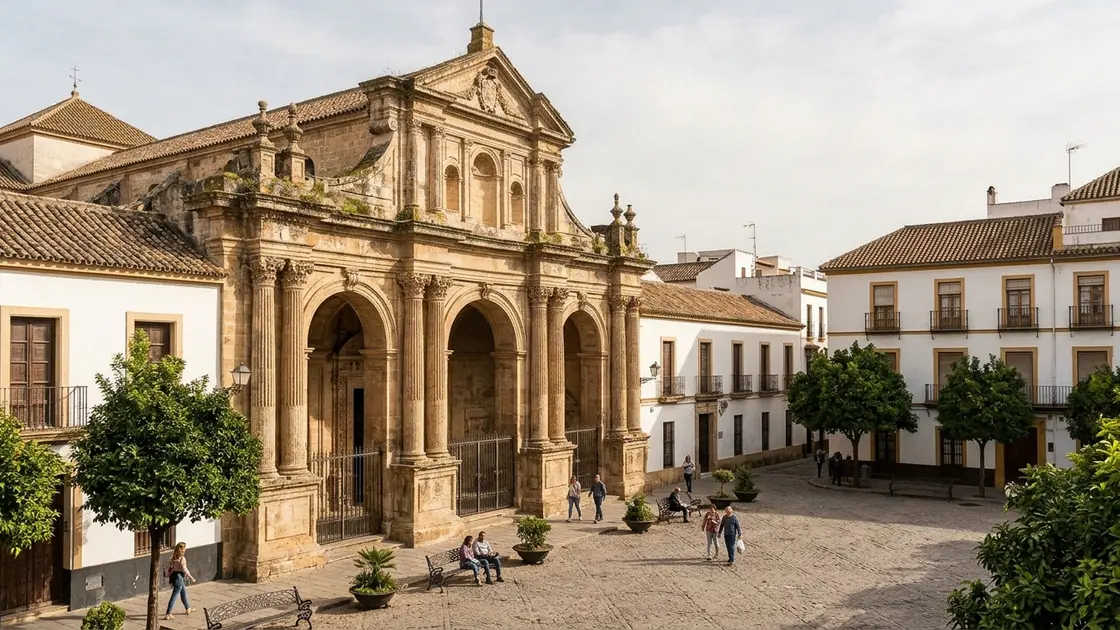
The Angustias group has been a Bien de Interés Cultural since Decreto 160/2014 of 11 November 2014, and it is kept in San Agustín at Plaza de San Agustín 7[27]. Holy Thursday is the day to see it outside. In 2026, local press reported it leaving San Agustín at 19:00[28], going out by Arroyo de San Andrés, Hermanos López Diéguez, Plaza de San Pedro, Lineros and Paseo de la Ribera[29], and returning at 01:15 on Good Friday[30]; times change every year. The wider calendar is in Holy Week 2027.
Recommended tours
Tours are selected for quality, not commission. We earn a small fee if you book — at no extra cost to you.
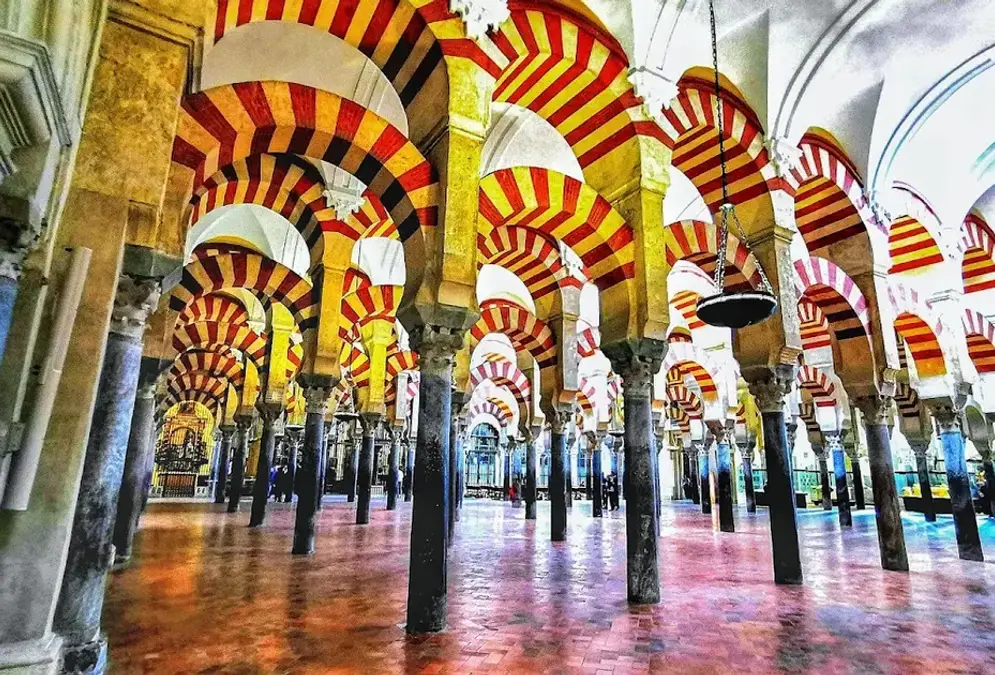
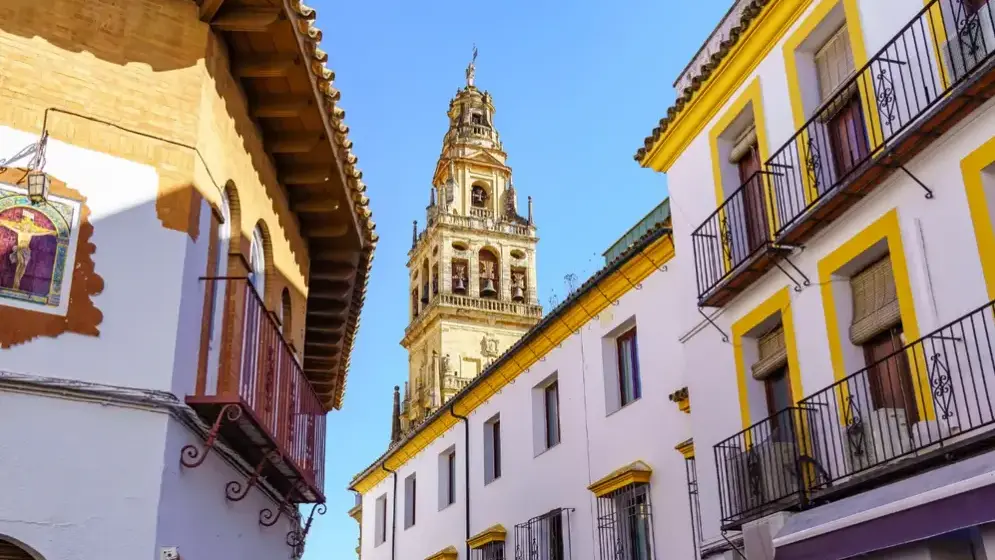
San Agustín, San Pablo and San Pedro are all stops on the Mosque-Cathedral's Fernandine Churches Route[31]. The churches stay open to worship[32], and the route is free with a Mosque-Cathedral ticket[33]; in November it runs 10:00 to 14:00 and 15:00 to 18:00, and the hours change by month[34].
For a walk built around Mesa, these are the stops:
San Agustín: the Angustias group in its church.
San Pablo: the group's home from 1961 to 2014.
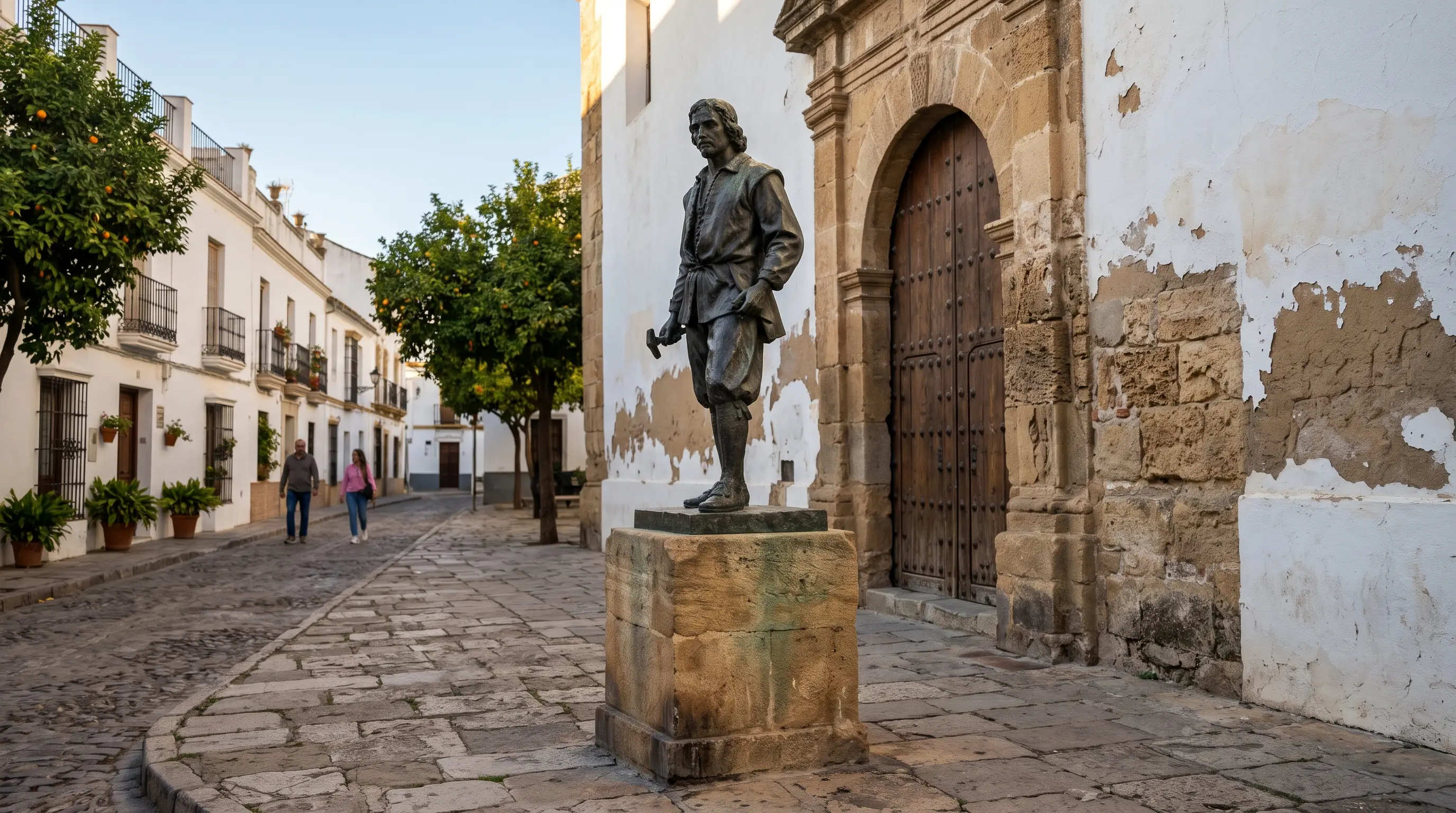
Plaza de San Pedro: José Manuel Belmonte's bronze monument to Mesa, inaugurated in April 2004 at the side of the church[35].
Seville, church of San Martín: Mesa's tomb, with none of his works inside[36].
Belmonte had no portrait to work from, since none of Mesa survives, so he modelled the bronze's face on Carlos Puya, a costalero of the Angustias brotherhood[37]. A Córdoba sculptor, a Córdoba costalero, a Córdoba Virgin. Anyone pairing the route with another carved image can add the Cristo de los Faroles, whose legend belongs to another carver.
In Seville, the Gran Poder has had its final seat since 1965 in the basilica on Plaza de San Lorenzo[38]. From 1 October to 31 May the basilica is open Monday to Thursday 08:00 to 13:30 and 17:30 to 21:00[39]; from 1 June to 30 September, 08:00 to 13:00 and 18:00 to 21:00[40]. Fridays are the traditional day of veneration[41].
Frequently asked questions
Who was Juan de Mesa, the sculptor behind the Gran Poder?
Juan de Mesa y Velasco was a Baroque imaginero baptised in Córdoba on 26 June 1583[1], who worked in Seville after entering Martínez Montañés's workshop in 1606[6]. His best-known work is Jesús del Gran Poder, for which he acknowledged 2,000 reales, together with a San Juan, in 1620[2]. He died in Seville in 1627, aged 44[20].
Was Juan de Mesa born in Córdoba?
He was baptised in Córdoba on 26 June 1583[1], reportedly at the church of San Pedro[5]. The baptism is the date that survives; his birth date is not the point of the record.
Did Martínez Montañés or Juan de Mesa carve the Gran Poder?
Mesa did. The image was long attributed to Montañés[10], but a 1620 payment receipt found by Heliodoro Sancho Corbacho and reported in ABC on 7 February 1930 documents Mesa's work[3].
Where can you see Juan de Mesa's work in Córdoba?
The Angustias group is in the church of San Agustín[27], and Belmonte's bronze monument to Mesa stands at the side of San Pedro, inaugurated in April 2004[35]. The Gran Poder itself is in Seville.
What did Juan de Mesa die of?
Tuberculosis is the usual answer, but it is speculation drawn from his early death and the gaps in his biography rather than a recorded cause[23]. He died in Seville in 1627, aged 44[20].
When does the Angustias group process in Córdoba?
On Holy Thursday, with a route that passes through Plaza de San Pedro[29]. In 2026 it left San Agustín at 19:00 and returned at 01:15[28][30]; times change each year.
“dos mil reales de a treinta y quatro maravedís cada uno, que yo obe de aver por la hechura de un Cristo con la cruz a cuestas y de un San Juan Evangelista”
“Publicación en ABC del hallazgo, por parte de Heliodoro Sancho Corbacho, de la carta de pago de Juan de Mesa por la realización de la imagen de Jesús del Gran Poder.”
“fue realizado por el escultor cordobés Juan de Mesa y Velasco, en el año 1627, por encargo de la citada Hermandad y cofradía de Nuestra Señora de las Angustias”
“Carta de pago de Juan de Mesa por la hechura de las imágenes de Jesús del Gran Poder y de San Juan Evangelista, para la cofradía de Nuestra Señora del Traspaso.”
“con motivo de los 400 años de la realización y entrega, el 1 de octubre de 1620, para la veneración de la imagen del Jesús del Gran Poder por parte del escultor Juan de Mesa y Velasco.”
“que hasta el momento se había atribuido a Martínez Montañés, aunque para la sorpresa de todos los sevillanos, se trataba de una obra de su discípulo más aventajado: Juan de Mesa.”
“Fue una mañana de febrero de 1930 cuando Heliodoro Sancho Corbacho dio en el Archivo de Protocolos Notariales con el documento más valioso de la historia de las cofradías sevillanas”
“La autoría del grupo escultórico fue documentada en el año 1932, al publicar Antonio Muro orejón el testamento de Juan de Mesa, fechado el 26 de noviembre de 1627, año de su muerte.”
“aunque haya contadas obras bien firmadas por ellos y con documentos relativos a su autoría, todas las obras anónimas que son de gran calidad son atribuidas a ellos”
“La talla de la Virgen de las Angustias de córdoba, al ser la única cuya autoría está perfectamente documentada, es una importante referencia para la investigación de las imágenes de Dolorosas realizadas por Mesa.”
“The route is integrated by seven fernandinos temples located in the Axerquía and declared of Cultural Interest: San Pablo, San Francisco, San Pedro, Santiago Apostle, San Lorenzo, San Agustín”
“Debido a la ausencia de representaciones gráficas de Juan de Mesa y Velasco, Belmonte se basó en el rostro de un costalero de la cofradía de la Virgen de las Angustias, Carlos Puya”