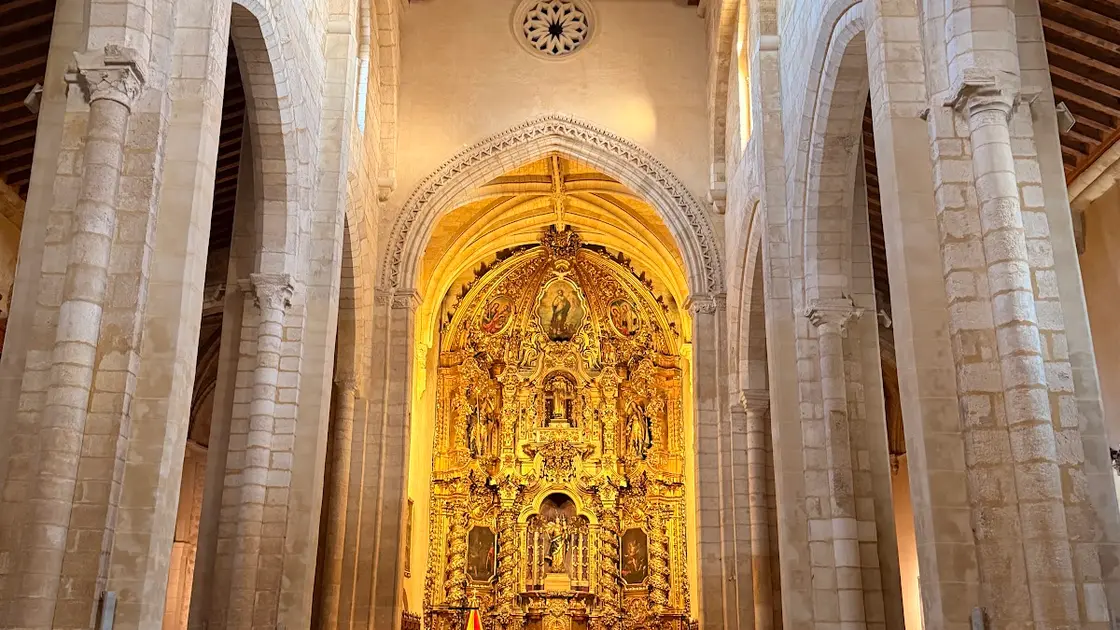
The Basílica Menor de San Pedro is one of the Fernandine churches of the Axerquía, the Gothic parish churches raised after Ferdinand III's conquest of Córdoba. It stands on Plaza de San Pedro, gives its name to the surrounding barrio, and is worth a stop for three things: a Gothic body altered by the Renaissance and the Baroque, a Baroque chapel built for the relics of Córdoba's martyrs, and a youthful painting by Juan de Valdés Leal.
What the church is
San Pedro was built in the late 13th and early 14th century over the ruins of an earlier temple. It was conceived as Gothic, but the building you see is layered: it took major Renaissance and Baroque interventions afterwards. The plan keeps three naves with a polygonal main apse flanked by two semicircular side apses.
The church is also a basilica in the formal sense. In 2006 Pope Benedict XVI granted it the title of minor basilica, which is why the official name is Basílica Menor de San Pedro rather than simply Iglesia de San Pedro. Heritage protection came earlier: a Junta de Andalucía decree of 2 May 1985 declared it a monument of national historic-artistic character and placed its protection under the Junta.
An older church beneath the plaza
The area is thought to be the site of the early Christian church of the Three Saints, dating to the 4th century. Nothing of it survives above ground, so treat it as context for the plaza rather than something to look for inside.
Check the route page, not the church door
No hours are published for San Pedro on its own. The Mezquita-Catedral's Fernandine Churches Route page gives seasonal hours for the whole route and a €6 general price, or free entry with a Mezquita-Catedral ticket. Read it before you walk over.
What to look for
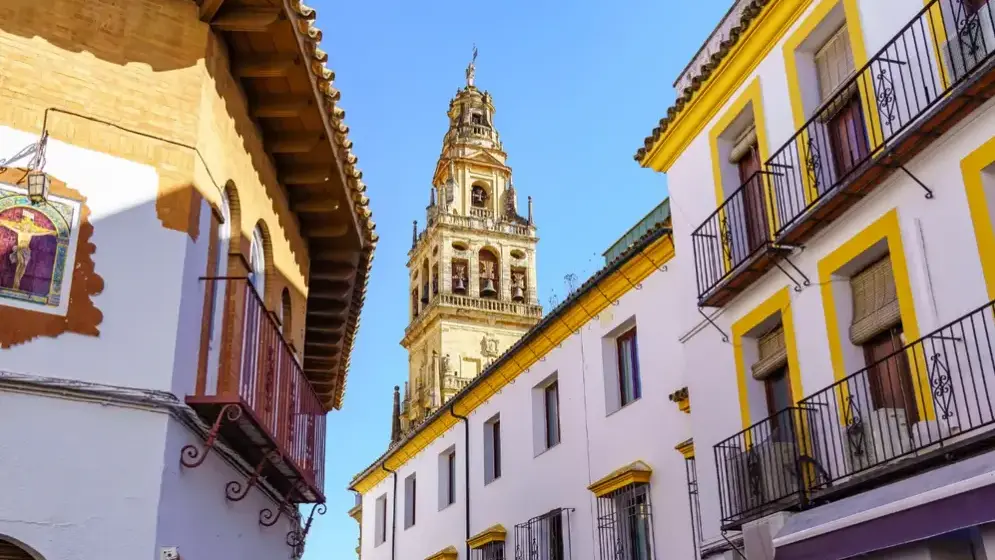
Start outside. Two medieval portals and part of the tower survive, Mudéjar in style. The Renaissance architect Hernán Ruiz II built a new portal in 1542 because the original was in poor condition, so the façade tells the church's history in two eras at once. A statue of the sculptor Juan de Mesa, put up in 2004, stands outside the church; Mesa was baptised here in 1583.
Inside, head for the apse on the epistle side. It holds a painting of Saint Peter made in the youth of Juan de Valdés Leal, described as the church's most valuable artwork. Then look at the epistle-side nave, where the Chapel of the Holy Martyrs was built between 1742 and 1764 to house the relics of Córdoba's martyrs. It is the clearest Baroque statement in an otherwise Gothic interior.
The church was closed for rehabilitation in 1986, a work that began but was soon interrupted.