
The Church of the former Convent of Regina Coeli is a protected conventual church in the old Axerquía, on the Plaza de Regina. It was declared a Bien de Interés Cultural on 6 July 1979, and it is one of the few Córdoba monuments whose next chapter is being written right now: the city council began restoring it in March 2025, and as of August 2026 the works were still going. Treat it as a building to look at from the outside and to watch, not yet one to plan a morning around.
What Regina Coeli is
The convent began as a private house. Spanish Wikipedia says it was the home of Mencía de los Ríos, who left it in her will to the Dominican Order, and it became a convent in 1499. The church that survives dates, according to the Andalusian press history of the site, from the middle of the 16th century.
The church is a single rectangular nave with a choir. Of the convent around it, only the conventual church and some ruins with two patios remain. The convent belonged to the parish of San Pedro, which makes the Basílica Menor de San Pedro the natural companion stop.
What is inside
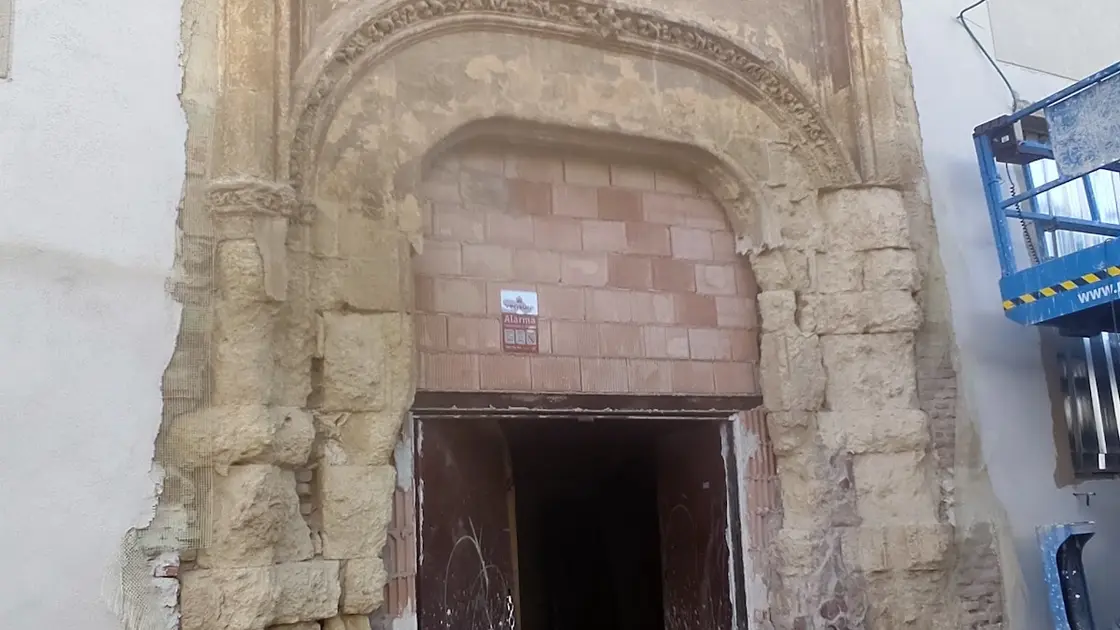
The interior holds a Renaissance carved wooden ceiling, an artesonado. The restoration project has also drawn attention to a roof structure built from eight-pointed stars, which press coverage of the works describes as one of the main attractions of the finished space. On the north wall of the convent, a Gothic doorway is among the oldest surviving elements, and the works include recovering it.
Check access before you walk over
No opening hours are published in the sources checked, and the restoration was still running in August 2026. Ask the city council or the tourist office whether the church is open before you plan a visit around it.
From convent to many lives
A yellow fever epidemic in 1804 killed fourteen nuns of this convent, and the community moved to Scala Coeli. The building was expropriated in 1835 under Mendizábal's desamortización, first the convent and later the church, and was assigned to Córdoba's city council.
What followed was a string of uses. Press accounts record that it served as a bacon and meat drying store at one point, and, most memorably, as a counterfeit-coin workshop whose person responsible turned out to be a child.