
history-buffsarchitecturephotographers
Convento de Santa Clara (Córdoba)
Monument No admission price published.

Santa Clara Convent

No permanent opening hours published.

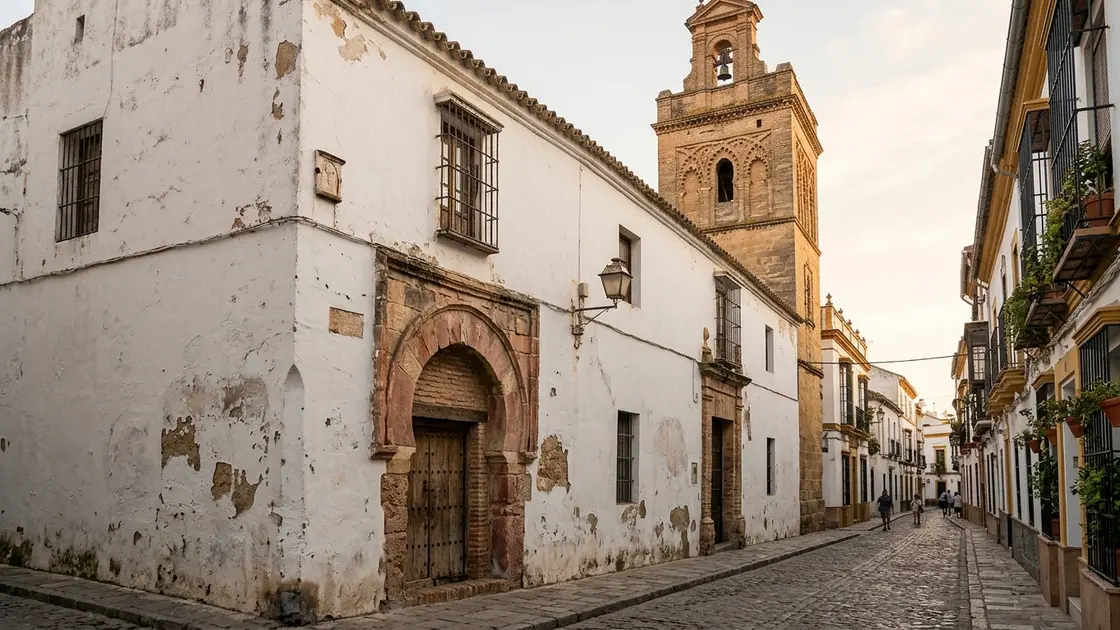
The Convento de Santa Clara is a former Poor Clares convent on Calle Rey Heredia, built on a mosque dating from 976, and the mosque's minaret still stands as its bell tower. It is the kind of building Córdoba has plenty of and few visitors notice: a palimpsest of Caliphal, Byzantine-era and Christian layers behind a plain street front. Come to read its two street faces from the pavement, not to tour an interior. No official source confirms public access, and the city is restoring it.

What the building is

The convent stands near the middle of Calle Rey Heredia, at the corner of Calle Osio, at number 22. It is defunct as a convent. Its history is one of repeated reuse: founded on and reusing parts of a mosque begun in the time of Almanzor, then a women's monastery, then, after the nuns, a powder magazine, a military barracks and even a laundry.

The Poor Clares came in 1256, twenty years after Ferdinand III's troops took Córdoba, which makes this the first women's monastery founded in the city after the Reconquista. For the wider picture of what happened to the city's mosques after 1236, see what the Mezquita conversion actually looked like in 1236. The building has carried three names over the centuries: Santa Catalina originally, Santa Clara once the Clarisas moved in, and Santa Isabel at a later point. Santa Clara is the one that stuck.

Do not plan the visit around going inside

No official hours or tickets are published and the building is under restoration. Treat it as an exterior stop and check locally before expecting a door to be open.

The mosque underneath

The mosque is the reason to care. The convent reused its qibla wall, its ablutions courtyard and a minaret in a high state of preservation, and a blind horseshoe arch can still be seen from Calle Osio. Compare it with the far larger Mezquita-Catedral: Santa Clara shows what a modest neighbourhood mosque of the same caliphate looked like once it was taken over rather than rebuilt around.

The minaret and the Calle Osio arch

The city's tourism board describes the minaret as the part to look for. The lower part dates from Muslim times, while the upper part is a Christian addition, and the entrance from Calle Osio also survives from the 10th century. The arch on that street is badly deteriorated, so lower your expectations: it is a worn, partly filled-in opening, not a restored showpiece.

The Christian layers

The building was deeply transformed in the 16th century, and a baroque portal was added later; the English-language sources give the 18th century, while the Spanish ones lean earlier, so do not hold the date against a guide who says otherwise. The tourism board notes that the main entrance on Calle Rey Heredia keeps 18th-century features.

Inside, the old prayer room holds the church of St Catherine, on a slightly irregular Greek cross plan, with a mosaic from the Byzantine period of 554 to 572. The Spanish record adds a caution: more recent studies reject its identification as a church and read the remains as a domestic complex. Treat the Byzantine layer as a debate, not a settled fact.
Popular tours in Córdoba

Best Seller
Mosque-Cathedral Skip-the-Line Guided Tour

Mosque-Cathedral Skip-the-Line Guided Tour

Skip the queue and explore the Mezquita-Cathedral with a knowledgeable local guide. Discover 13 centuries of layered history in one of Spain's most iconic monuments.

Skip the line
1.5 hours

From €29

4.7 (7,293 reviews)
Reserve Your Spot

✓ Verified GetYourGuide reviews

Books up weeks ahead in peak season

Best Seller
Jewish Quarter, Mosque & Alcázar Tour

Jewish Quarter, Mosque & Alcázar Tour

A comprehensive guided tour covering Córdoba's three UNESCO-listed highlights: the Mezquita, the medieval Jewish Quarter, and the Alcázar de los Reyes Cristianos.

3 hours

From €49

4.6 (5,547 reviews)
Reserve Your Spot

✓ Verified GetYourGuide reviews

Books up weeks ahead in peak season

Best Seller
Mosque-Cathedral E-Ticket with Audio Guide

Mosque-Cathedral E-Ticket with Audio Guide

Explore the Mosque-Cathedral at your own pace with a detailed audio guide that brings every arch, mihrab, and chapel to life. Skip the ticket queue with your e-ticket.

Self-guided

From €18.50

Less than a restaurant lunch

4.2 (3,722 reviews)
Reserve Your Spot

✓ Verified GetYourGuide reviews

Books up weeks ahead in peak season

Best Seller
Caballerizas Reales Equestrian Show

Caballerizas Reales Equestrian Show

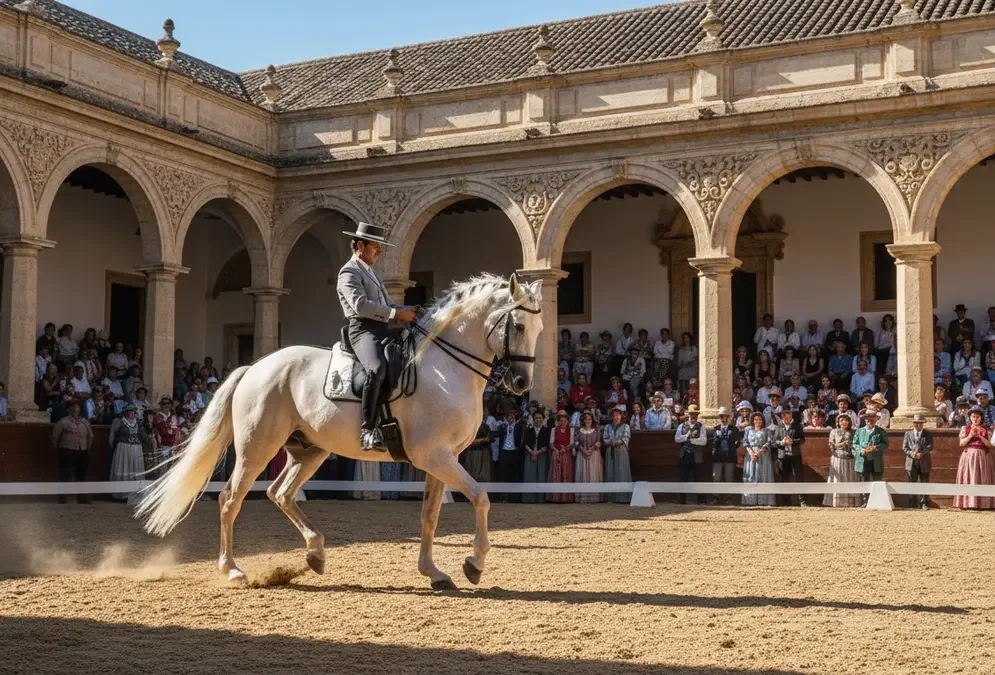
70 minutes of Andalusian dressage and live flamenco at Córdoba's historic 1570 Royal Stables. Pure Spanish breed horses perform classical techniques — piaffe, passage, garrocha — in a breathtaking vaulted arena.

70 minutes

From €18.50

Less than a restaurant lunch

4.5 (2,879 reviews)
Reserve Your Spot

✓ Verified GetYourGuide reviews

Books up weeks ahead in peak season

Best Seller
Mosque & Jewish Quarter Tour with Tickets

Mosque & Jewish Quarter Tour with Tickets

Explore two of Córdoba's most iconic sites — the Mezquita and the medieval Jewish Quarter — with skip-the-line tickets and an expert local guide included.

Skip the line
2 hours

From €35.55

4.6 (2,181 reviews)
Reserve Your Spot

✓ Verified GetYourGuide reviews

Books up weeks ahead in peak season

Best Seller
Mosque-Cathedral, Jewish Quarter & Alcázar Tour

Mosque-Cathedral, Jewish Quarter & Alcázar Tour

A comprehensive guided tour of Córdoba's three UNESCO highlights: the Mezquita-Cathedral, the ancient Jewish Quarter, and the magnificent Alcázar gardens.

3.5 hours

From €49.99

4.6 (1,908 reviews)
Reserve Your Spot

✓ Verified GetYourGuide reviews

Books up weeks ahead in peak season

Best Seller
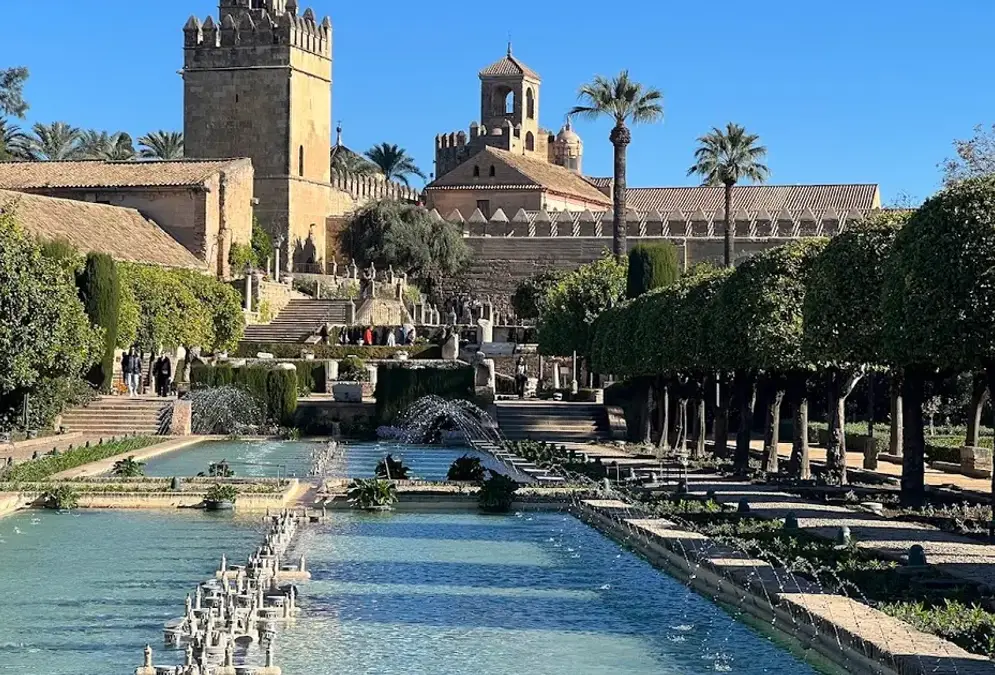
Alcazar Guided Tour and Skip-the-Line

Alcazar Guided Tour and Skip-the-Line

Bypass the queue and explore the Alcázar de los Reyes Cristianos with a guide. Check the listing for what is open on your date.

Skip the line
1.5 hours

From €19

Less than a restaurant lunch

4.2 (1,863 reviews)
Reserve Your Spot

✓ Verified GetYourGuide reviews

Books up weeks ahead in peak season

Best Seller
Mosque-Cathedral Guided Tour with Tickets

Mosque-Cathedral Guided Tour with Tickets

Entry tickets and expert guide included for an in-depth tour of the Mosque-Cathedral. Discover the prayer hall, the gilded mihrab, and the soaring bell tower.

1.5 hours

From €31.10

4.5 (1,703 reviews)
Reserve Your Spot

✓ Verified GetYourGuide reviews

Books up weeks ahead in peak season

Best Seller
Skip-the-Line Mosque-Cathedral History Tour

Skip-the-Line Mosque-Cathedral History Tour

Skip the line and uncover 13 centuries of layered history inside the Mosque-Cathedral with a specialist guide. From Roman columns to Visigoth foundations to Renaissance cathedral.

Skip the line
1.5 hours

From €32

4.7 (1,701 reviews)
Reserve Your Spot

✓ Verified GetYourGuide reviews

Books up weeks ahead in peak season

Best Seller
Flamenco Show Ticket with Drinks

Flamenco Show Ticket with Drinks

Experience the passion and drama of authentic Andalusian flamenco at one of Córdoba's premier tablaos. Ticket includes a drink at the bar.

1 hour

From €25

4.8 (1,158 reviews)
Reserve Your Spot

✓ Verified GetYourGuide reviews

Books up weeks ahead in peak season

Best Seller
Guided Tour of Medina Azahara

Guided Tour of Medina Azahara

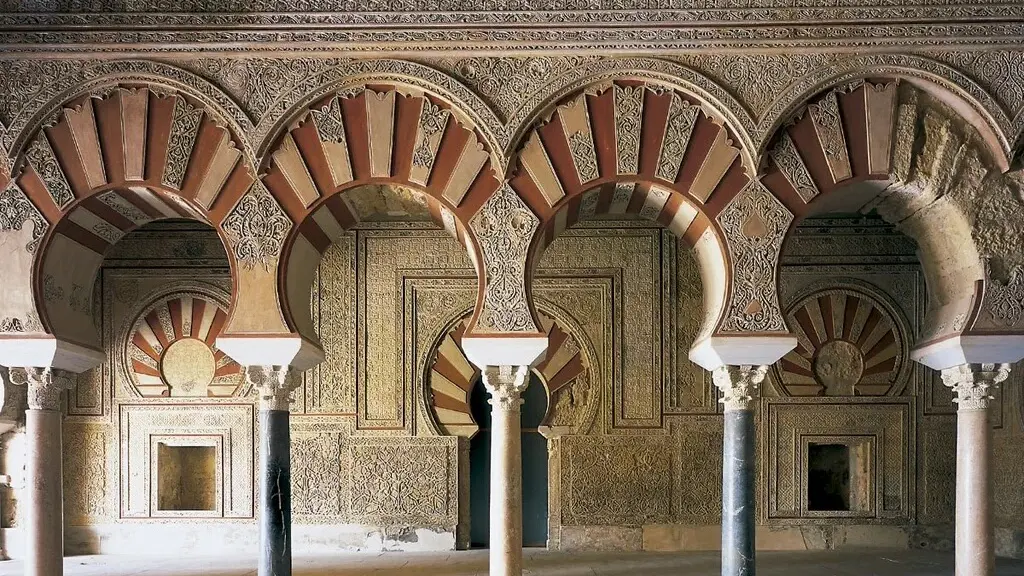
Explore the 10th-century Umayyad palace city of Medina Azahara with a specialist guide. Uncover the scale and splendour of Caliph Abd al-Rahman III's once-magnificent capital.

3 hours

From €20

Less than a restaurant lunch

4.6 (1,131 reviews)
Reserve Your Spot

✓ Verified GetYourGuide reviews

Books up weeks ahead in peak season

Best Seller
Authentic Patios: 2-Hour Tour

Authentic Patios: 2-Hour Tour

Discover the famous flower-filled patios of the Judería on a guided walking tour. Learn about the centuries-old tradition that earned Córdoba's patios UNESCO recognition.

2 hours

From €18.83

Less than a restaurant lunch

4.3 (1,096 reviews)
Reserve Your Spot

✓ Verified GetYourGuide reviews

Books up weeks ahead in peak season

Tours are selected for quality, not commission. We earn a small fee if you book — at no extra cost to you.

Restoration and what comes next

The building was long left to decay. When the historic centre was inscribed as a UNESCO World Heritage Site in 1994, the local press says, Santa Clara was the one blot on it. In June 2026 the city council received the first phase of a restoration, costing about €480,000, which consolidated the minaret and the first bay. The full project is expected to cost about €2 million and cover the whole building.

Archaeological test pits have added information about the mosque, which coexists with an early-Christian building and the convent. The next phase is planned to make the building the seat of the Brotherhoods' association and to house a Museo Cofrade. No opening date for that is published, so do not plan around it.

Planning a visit

No permanent opening hours or admission price are published, and no official page confirms that visitors can go in. With restoration under way, treat the outside as the dependable part of any visit.

  • Address: Calle Rey Heredia 22, at the corner of Calle Osio, Córdoba.
  • Status: the minaret has been listed as a Bien de Interés Cultural since 1931.
  • Owner: the city council, which is carrying out the restoration.

Ten minutes is enough to walk both faces of the building. For another convent church in the old town with a Junta de Andalucía protection record, see the former Santa Isabel de los Ángeles convent.

Reporter notebook

Insider tips

Photo spot

Look for the horseshoe arch on Calle Osio

The old courtyard entrance on Calle Osio is a very deteriorated Caliphal horseshoe arch of the 10th century. Take the side street, not just the Calle Rey Heredia front, and look up for the minaret.

Local custom

Read the minaret from bottom to top

The lower stage is Muslim-era work and the upper part is a later Christian addition. Look for the change where one builds on the other, which is the whole story of the building in one tower.

Practical information

Opening hours
No permanent opening hours published.
Admission
No admission price published.
Address
Calle Rey Heredia 22, Córdoba, Spain View on Google Maps
Interactive map — loads as you scroll (requires JavaScript)

Frequently asked questions

Can you visit the Santa Clara convent in Córdoba?

No official source confirms public access, and no opening hours or admission price are published. The building is under municipal restoration, so plan to see the exteriors on Calle Rey Heredia and Calle Osio.

What is the minaret at the Santa Clara convent?

It is the minaret of a 10th-century mosque, reused as the convent's bell tower. The tourism board says its lower part is Islamic and its upper part is a Christian addition.

Is there a mosque under the Santa Clara convent?

Yes. The convent was built on and reuses parts of a mosque dating from 976. The qibla wall, the ablutions courtyard and the minaret survive, and a blind horseshoe arch can be seen from Calle Osio.

Who founded the Santa Clara convent in Córdoba and when?

The Poor Clares instituted it in 1256, which makes it the first women's monastery founded in Córdoba after the 1236 Reconquista. It was first known as Santa Catalina.

What will the Santa Clara convent become after restoration?

The plan is for the building to house the Brotherhoods' association and a Museo Cofrade, with cultural rather than administrative use. No opening date is published.

Further reading

Sources

18 references Show
  1. Wikipedia, Convento de Santa Clara (Córdoba) (opens in a new tab)

    “This building stands near the middle of Calle del Rey Heredia, at the corner of Calle Osio.”

  2. Wikipedia, Convento de Santa Clara (Córdoba) (opens in a new tab)

    “It was founded on - and reusing parts of - a mosque, which had been rising in times of Almanzor,[2] and dated from 976.”

  3. Wikipedia, Convento de Santa Clara (Córdoba) (opens in a new tab)

    “This is the first women's monastery established in Cordoba after the Reconquista. It was instituted in 1256, just twenty years after the successful siege of Cordoba by the troops of Ferdinand III of Castile in 1236.”

  4. Wikipedia, Convento de Santa Clara (Córdoba) (opens in a new tab)

    “Later, the building of Santa Clara convent in Calle del Rey Heredia was used as a powder magazine, a military barracks and even a laundry.”

  5. Wikipedia, Convento de Santa Clara (Córdoba) (opens in a new tab)

    “In the 16th century it underwent a profound transformation. In the 18th century a baroque portal was added.[2]”

  6. Wikipedia, Convento de Santa Clara (Córdoba) (opens in a new tab)

    “It dates from the time of the Byzantine control over the city, between 554 and 572.[2]”

  7. Wikipedia, Convento de Santa Clara (Córdoba) (opens in a new tab)

    “The minaret was re-used as a bell-tower;[3] it was declared a Bien de Interés Cultural in 1931.[7]”

  8. Wikipedia, Convento de Santa Clara (Córdoba) (opens in a new tab)

    “On the outside, in Calle Osio, there is still a very deteriorated Caliphal horseshoe dated 10th century, that was the entrance to the courtyard.[2][3]”

  9. Turismo de Córdoba, Convent of Santa Clara (archived 2013) (opens in a new tab)

    “The convent was built on top of a primitive 10th century mosque, and both the minaret (now a bell-tower) and the entrance from calle Osio still survive from this period.”

  10. Turismo de Córdoba, Convent of Santa Clara (archived 2013) (opens in a new tab)

    “The lower part of the minaret dates from Moslem times, although the upper part is a Christian addition.”

  11. Turismo de Córdoba, Convent of Santa Clara (archived 2013) (opens in a new tab)

    “The main entrance onto calle Rey Heredia, preserves some 18th century features.”

  12. Wikipedia (ES), Convento de Santa Clara (Córdoba) (opens in a new tab)

    “Actualmente todavía pueden observarse una cantidad relevante de esta estructura como el muro de qibla, el patio de abluciones, un alminar en un alto grado de conservación y un arco de herradura cegado que se aprecia desde la calle Osio.[6]”

  13. Wikipedia (ES), Convento de Santa Clara (Córdoba) (opens in a new tab)

    “A lo largo de su historia, el convento se ha denominado «de Santa Catalina» (nombre original), «de Santa Clara» (tras la instalación allí de las Hermanas Clarisas) y «de Santa Isabel» (como tributo a Isabel de Francia, fuertemente vinculada a la Corona española), perdurando el segundo.”

  14. Wikipedia (ES), Convento de Santa Clara (Córdoba) (opens in a new tab)

    “No obstante, estudios más recientes discrepan de su catalogación como templo y creen que se trata de un complejo doméstico.[7]”

  15. El Debate (La Voz de Córdoba), 9 June 2026 (opens in a new tab)

    “El convento de Santa Clara era el único borrón existente en 1994 cuando el centro histórico recibió la distinción de Patrimonio de la Humanidad.”

  16. El Debate (La Voz de Córdoba), 9 June 2026 (opens in a new tab)

    “El Ayuntamiento acaba de recibir las obras de la primera fase de restauración, en las que se han destinado unos 480.000 euros, y que son sólo el primer paso de un proyecto más ambicioso, en el que se prevé la inversión de unos dos millones de euros, que intervendrán en la totalidad del edificio.”

  17. El Debate (La Voz de Córdoba), 9 June 2026 (opens in a new tab)

    “Además, se han hecho algunas catas arqueológicas que han ofrecido más información sobre la mezquita del siglo IX”

  18. El Debate (La Voz de Córdoba), 9 June 2026 (opens in a new tab)

    “entre los que destaca el de ser sede de la Agrupación de Cofradías y albergar el Museo Cofrade”