history-buffsarchitecture
Iglesia de San Pablo
Monument

Iglesia de San Pablo

No church-specific opening hours published. Fernandine Churches Route winter hours: 10:00-14:00 and 15:00-18:00; the schedule changes by season.

The Iglesia de San Pablo is a Dominican convent church in the Axerquía, founded in the first wave of Ferdinand III's conquest of Córdoba and still run as a working parish. It is a Romanesque-Gothic building with Cistercian influence, with a painted timber ceiling over the nave, a Gothic chapel for the Virgin of the Rosary and a Baroque street portal dated 1708. It is one of seven Fernandine churches on the Mezquita-Catedral's visiting route, and the one that sits right next to the Palacio de Orive.

A Dominican foundation on layered ground

The Dominicans obtained permission to found a convent here in 1236, and a royal document of 1241 confirmed it by donating the land. The convent was one of five founded together in the first phase of the conquest, and it was placed under St Paul because he was the saint of the day Córdoba fell. The ground had already been used before: the site was first the Roman circus of Córdoba, then an Almohad palace, and only then a Christian convent.

The church itself went up in the last third of the 13th century and the first third of the 14th, was altered in the 15th and received Baroque changes in the 18th. The Junta de Andalucía's heritage guide describes it as built over Roman and Almohad structures. A restoration between 1897 and 1903 tried to return the building to its original appearance as far as possible. In 1904 the Claretian fathers took over the church, and it has functioned as a regular parish ever since.

Use your Mezquita ticket

The Fernandine Churches Route is free with a Mezquita-Catedral entrance, so if you have already paid for the cathedral you do not need the separate €6 route ticket. Check the route page for the season's hours, as none are published for San Pablo alone.

What to look for inside

The plan is basilican: three naves without a transept, the central one wider than the aisles, with a narthex and four bays ending in apses. Look up in the central nave. The roof is a painted timber par y nudillo ceiling decorated with interlaced lacework and held together by iron tie-rods.

The features worth your time:

  • The Rosary chapel and camarín. The chapel is a square Gothic space with ribbed vaulting; the camarín behind it is Baroque, with a polygonal vault.
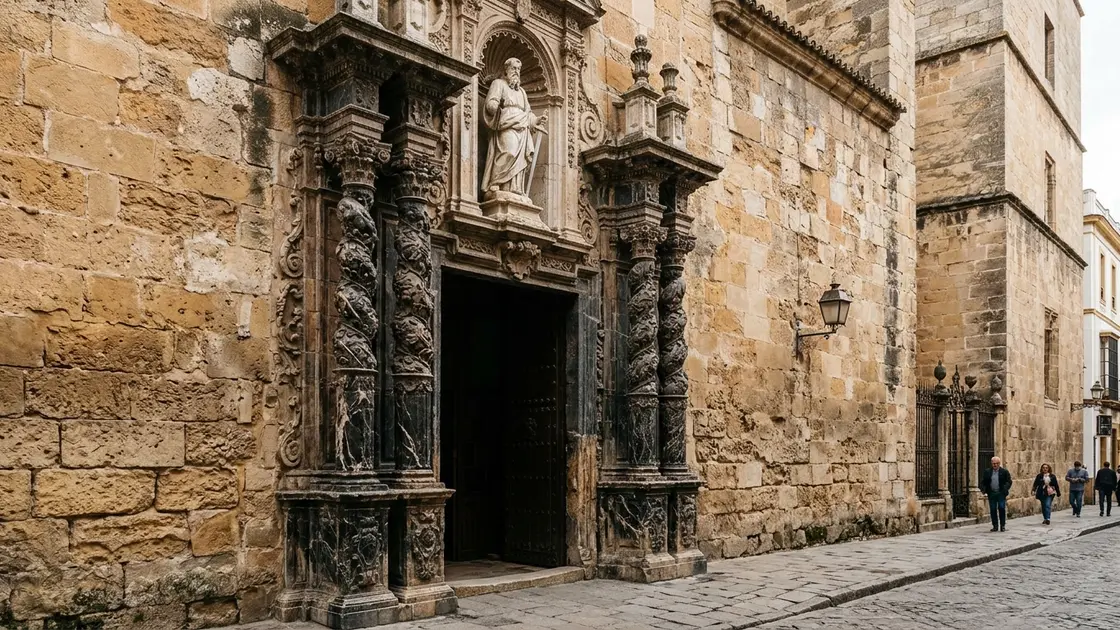
  • The 1708 portal. The Baroque doorway on Calle Capitulares carries a figure of St Paul with the date 1708 carved at his feet, so you can read the year off the stone.
  • A medieval writer's tomb. Leonor López de Córdoba, a 14th-century Castilian author and a pioneer of the memoir, is buried in the Rosary chapel.
  • The carillon. The bell carillon was bought by Father Pueyo at the 1900 Paris Exposition and is one of very few of its kind in Spain.

Juan de Mesa's Nuestra Señora de las Angustias (1627) was kept here from the 1960s until it went back to its historic home in the church of San Agustín on 14 March 2014, so do not come looking for it.
Popular tours in Córdoba

Best Seller
Mosque-Cathedral Skip-the-Line Guided Tour

Mosque-Cathedral Skip-the-Line Guided Tour

Skip the queue and explore the Mezquita-Cathedral with a knowledgeable local guide. Discover 13 centuries of layered history in one of Spain's most iconic monuments.

Skip the line
1.5 hours

From €29

4.7 (7,293 reviews)
Reserve Your Spot

✓ Verified GetYourGuide reviews

Books up weeks ahead in peak season

Best Seller
Jewish Quarter, Mosque & Alcázar Tour

Jewish Quarter, Mosque & Alcázar Tour

A comprehensive guided tour covering Córdoba's three UNESCO-listed highlights: the Mezquita, the medieval Jewish Quarter, and the Alcázar de los Reyes Cristianos.

3 hours

From €49

4.6 (5,547 reviews)
Reserve Your Spot

✓ Verified GetYourGuide reviews

Books up weeks ahead in peak season

Best Seller
Mosque-Cathedral E-Ticket with Audio Guide

Mosque-Cathedral E-Ticket with Audio Guide

Explore the Mosque-Cathedral at your own pace with a detailed audio guide that brings every arch, mihrab, and chapel to life. Skip the ticket queue with your e-ticket.

Self-guided

From €18.50

Less than a restaurant lunch

4.2 (3,722 reviews)
Reserve Your Spot

✓ Verified GetYourGuide reviews

Books up weeks ahead in peak season

Best Seller
Caballerizas Reales Equestrian Show

Caballerizas Reales Equestrian Show

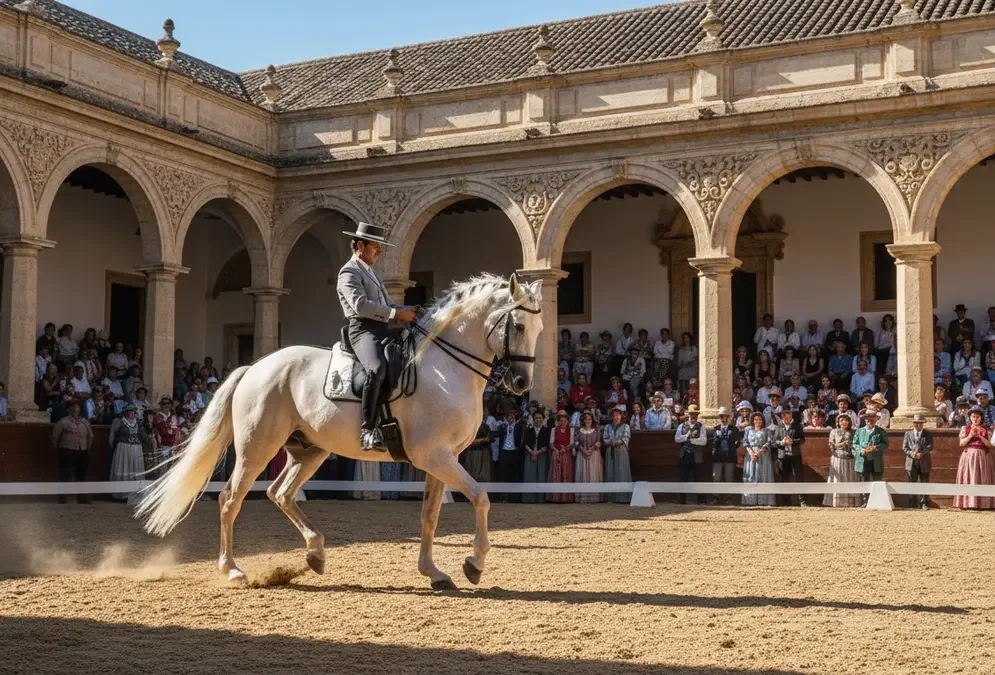
70 minutes of Andalusian dressage and live flamenco at Córdoba's historic 1570 Royal Stables. Pure Spanish breed horses perform classical techniques — piaffe, passage, garrocha — in a breathtaking vaulted arena.

70 minutes

From €18.50

Less than a restaurant lunch

4.5 (2,879 reviews)
Reserve Your Spot

✓ Verified GetYourGuide reviews

Books up weeks ahead in peak season

Best Seller
Mosque & Jewish Quarter Tour with Tickets

Mosque & Jewish Quarter Tour with Tickets

Explore two of Córdoba's most iconic sites — the Mezquita and the medieval Jewish Quarter — with skip-the-line tickets and an expert local guide included.

Skip the line
2 hours

From €35.55

4.6 (2,181 reviews)
Reserve Your Spot

✓ Verified GetYourGuide reviews

Books up weeks ahead in peak season

Best Seller
Mosque-Cathedral, Jewish Quarter & Alcázar Tour

Mosque-Cathedral, Jewish Quarter & Alcázar Tour

A comprehensive guided tour of Córdoba's three UNESCO highlights: the Mezquita-Cathedral, the ancient Jewish Quarter, and the magnificent Alcázar gardens.

3.5 hours

From €49.99

4.6 (1,908 reviews)
Reserve Your Spot

✓ Verified GetYourGuide reviews

Books up weeks ahead in peak season

Best Seller
Alcazar Guided Tour and Skip-the-Line

Alcazar Guided Tour and Skip-the-Line

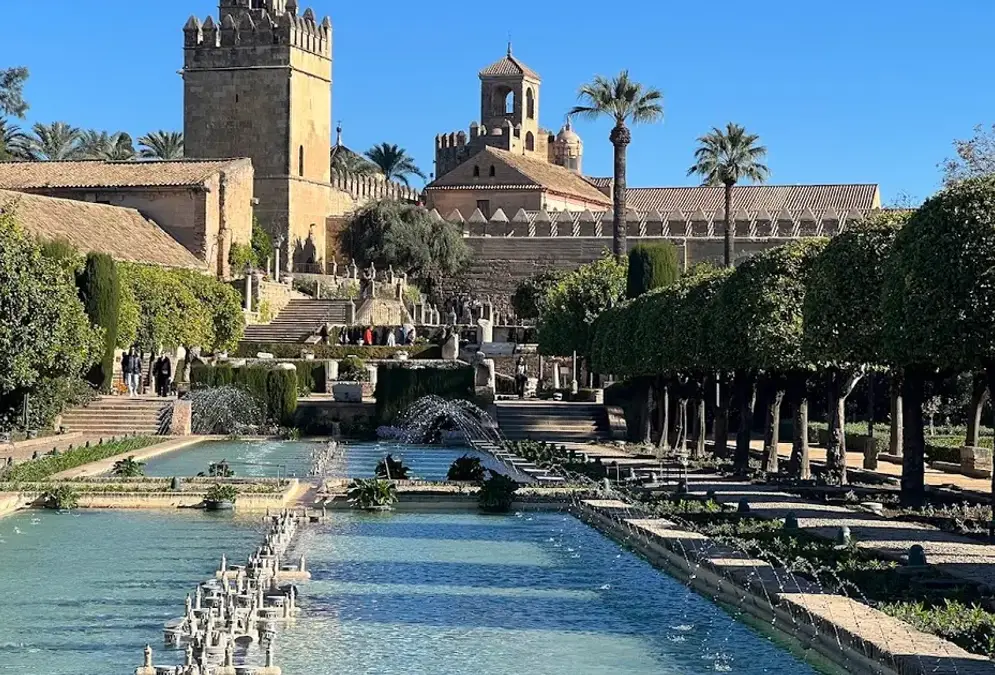
Bypass the queue and explore the Alcázar de los Reyes Cristianos with a guide. Check the listing for what is open on your date.

Skip the line
1.5 hours

From €19

Less than a restaurant lunch

4.2 (1,863 reviews)
Reserve Your Spot

✓ Verified GetYourGuide reviews

Books up weeks ahead in peak season

Best Seller
Mosque-Cathedral Guided Tour with Tickets

Mosque-Cathedral Guided Tour with Tickets

Entry tickets and expert guide included for an in-depth tour of the Mosque-Cathedral. Discover the prayer hall, the gilded mihrab, and the soaring bell tower.

1.5 hours

From €31.10

4.5 (1,703 reviews)
Reserve Your Spot

✓ Verified GetYourGuide reviews

Books up weeks ahead in peak season

Best Seller
Skip-the-Line Mosque-Cathedral History Tour

Skip-the-Line Mosque-Cathedral History Tour

Skip the line and uncover 13 centuries of layered history inside the Mosque-Cathedral with a specialist guide. From Roman columns to Visigoth foundations to Renaissance cathedral.

Skip the line
1.5 hours

From €32

4.7 (1,701 reviews)
Reserve Your Spot

✓ Verified GetYourGuide reviews

Books up weeks ahead in peak season

Best Seller
Flamenco Show Ticket with Drinks

Flamenco Show Ticket with Drinks

Experience the passion and drama of authentic Andalusian flamenco at one of Córdoba's premier tablaos. Ticket includes a drink at the bar.

1 hour

From €25

4.8 (1,158 reviews)
Reserve Your Spot

✓ Verified GetYourGuide reviews

Books up weeks ahead in peak season

Best Seller
Guided Tour of Medina Azahara

Guided Tour of Medina Azahara

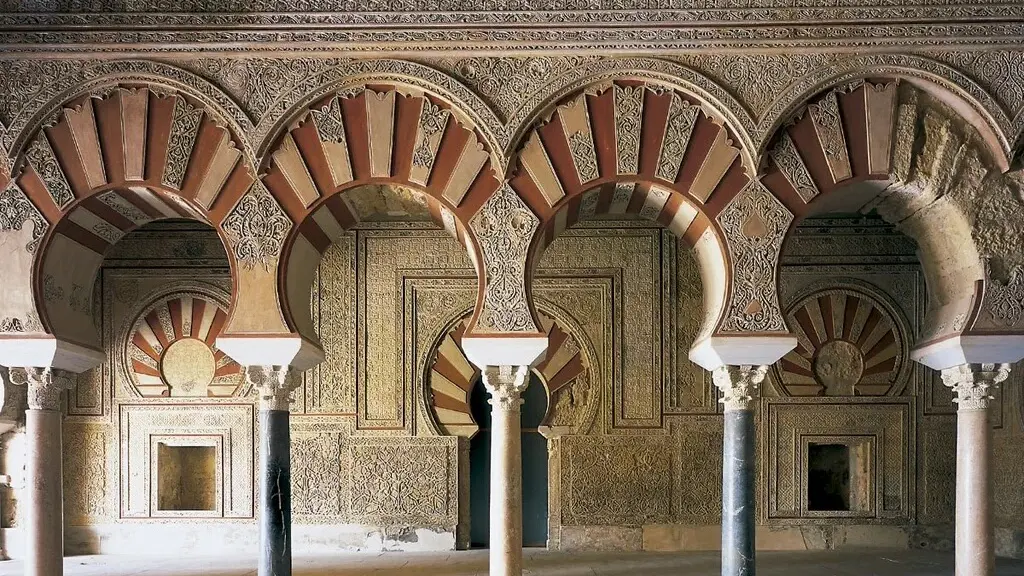
Explore the 10th-century Umayyad palace city of Medina Azahara with a specialist guide. Uncover the scale and splendour of Caliph Abd al-Rahman III's once-magnificent capital.

3 hours

From €20

Less than a restaurant lunch

4.6 (1,131 reviews)
Reserve Your Spot

✓ Verified GetYourGuide reviews

Books up weeks ahead in peak season

Best Seller
Authentic Patios: 2-Hour Tour

Authentic Patios: 2-Hour Tour

Discover the famous flower-filled patios of the Judería on a guided walking tour. Learn about the centuries-old tradition that earned Córdoba's patios UNESCO recognition.

2 hours

From €18.83

Less than a restaurant lunch

4.3 (1,096 reviews)
Reserve Your Spot

✓ Verified GetYourGuide reviews

Books up weeks ahead in peak season

Tours are selected for quality, not commission. We earn a small fee if you book — at no extra cost to you.

What the convent became

After the 19th-century confiscations the convent buildings passed out of Dominican hands and the cloister fell into ruin before being demolished. Parts of the complex are now public in other forms: the old cloister and novitiate house hold the Junta de Andalucía's culture delegation, the former convent orchard is the Orive Gardens, and the abandoned sacristy is the Sala Orive, used by the city council for cultural events. A short walk through the gardens next door shows you the back of the same convent that the church fronted.

Planning a visit

The church is on Calle Capitulares 9. It is a Bien de Interés Cultural, declared in 1931, and part of the Fernandine Churches Route, the Mezquita-Catedral's ticket for seven Axerquía churches that stay open to worship.

  • Tickets: the general route ticket is €6. Access is free with a Mezquita-Catedral entrance, and also free for children under 10 and for anyone born or resident in the diocese of Córdoba.
  • Hours: no church-specific hours are published. The route lists winter hours of 10:00-14:00 and 15:00-18:00, but the schedule changes by season, so check the Mezquita-Catedral route page before you go.
  • Etiquette: it is a parish church, so expect services and keep clear of worshippers.

For the rest of the circuit, Iglesia de San Lorenzo and Iglesia de Santa Marina are the other Fernandine churches in the northern Axerquía, and the Mezquita-Cathedral is where the route ticket is sold. San Pedro and San Agustín are further Axerquía churches on that route, and the Carmen de Puerta Nueva parish was added to the circuit for its Valdés Leal altarpiece.

Reporter notebook

Insider tips

Photo spot

Read the date on the portal

The Baroque portal on Calle Capitulares has the year 1708 carved at the feet of the white marble St Paul, set against black jasper columns. Photograph it before going in, then look up in the nave for the painted timber ceiling.

Local custom

Walk on into the Orive Gardens

The convent's former orchard is now the Orive Gardens, next to the Palacio de Orive. Finish your visit there to see how the old convent grounds were split between church, gardens and municipal buildings.

Practical information

Opening hours
No church-specific opening hours published. Fernandine Churches Route winter hours: 10:00-14:00 and 15:00-18:00; the schedule changes by season.
Admission
Fernandine Churches Route ticket €6; free with Mezquita-Catedral entry, for children under 10 and for those born or resident in the diocese of Córdoba.
Address
Calle Capitulares 9, Córdoba, Spain View on Google Maps
Interactive map — loads as you scroll (requires JavaScript)

Frequently asked questions

Is the Church of San Pablo in Córdoba free to enter?

Not by itself. Entry is part of the Fernandine Churches Route, whose general ticket is €6. It is free with a Mezquita-Catedral entrance, for children under 10 and for anyone born or resident in the diocese of Córdoba.

What is the Fernandine Churches Route?

It is the Mezquita-Catedral's visiting route through seven Fernandine churches in the Axerquía, all declared of Cultural Interest and all still open to worship. San Pablo is the first one listed.

Who built the Church of San Pablo and when?

The Dominicans received permission to found a convent here in 1236, confirmed by a royal document of 1241. The church was built in the last third of the 13th century and the first of the 14th, then altered in the 15th and given Baroque changes in the 18th.

Is San Pablo still a working church?

Yes. The Claretian fathers took over the church in 1904 and it has operated as a regular parish since, so visits sit around the needs of worship.

What can you see inside San Pablo?

A painted timber par y nudillo ceiling over the central nave, the Gothic Rosary chapel with its Baroque camarín, and the tomb of the memoirist Leonor López de Córdoba. The street portal is dated 1708.

Further reading

Sources

22 references Show
  1. Mezquita-Catedral de Córdoba, Fernandine Churches Route (opens in a new tab)

    “There is the peculiarity that all these churches remain open to worship and that they have not only preserved their medieval legacy but also the artistic contributions that are subsequently developed.”

  2. Mezquita-Catedral de Córdoba, Fernandine Churches Route (opens in a new tab)

    “The route is integrated by seven fernandinos temples located in the Axerquía and declared of Cultural Interest: San Pablo, San Francisco, San Pedro, Santiago Apostle, San Lorenzo, San Agustín, Santa Marina and San Andrés.”

  3. Mezquita-Catedral de Córdoba, Fernandine Churches Route (opens in a new tab)

    “Access to this monumental itinerary will be free with the entrance to the Mosque-Cathedral.”

  4. Mezquita-Catedral de Córdoba, Fernandine Churches Route (opens in a new tab)

    “Free. Those born and/or resident in diocese of Córdoba and children under 10”

  5. Mezquita-Catedral de Córdoba, Fernandine Churches Route (opens in a new tab)

    “Winter time: from 10:00 a.m. to 2:00 p.m. and from 3:00 p.m. to 6:00 p.m.”

  6. IAPH Guía Digital, Iglesia de San Pablo (opens in a new tab)

    “Los dominicos obtuvieron el permiso de fundar en 1236 y se les confirmó en un documento real con fecha de 1241, donde se les dona el terreno.”

  7. IAPH Guía Digital, Iglesia de San Pablo (opens in a new tab)

    “El convento se pone bajo la advocación de San Pablo por ser el santo del día en que se conquistó Córdoba.”

  8. IAPH Guía Digital, Iglesia de San Pablo (opens in a new tab)

    “El Convento de San Pablo se funda junto a otros cuatro en un primer momento de la conquista de Córdoba por Fernando III.”

  9. IAPH Guía Digital, Iglesia de San Pablo (opens in a new tab)

    “La iglesia se construye en el último tercio del siglo XIII y el primero del XIV.”

  10. IAPH Guía Digital, Iglesia de San Pablo (opens in a new tab)

    “El estilo de la iglesia es románico-gótico cisterciense, construida sobre edificaciones romanas y almohades.”

  11. IAPH Guía Digital, Iglesia de San Pablo (opens in a new tab)

    “De 1897 a 1903 duran las obras de restauración en las que se intenta, en lo posible, devolver al templo su primitivo aspecto.”

  12. IAPH Guía Digital, Iglesia de San Pablo (opens in a new tab)

    “La iglesia actual es románico-gótica con influencia cisterciense, de planta basilical, con tres naves sin crucero, la central de ancho superior a las laterales, con nártex y cuatro tramos, terminadas aquellas en ábsides;”

  13. IAPH Guía Digital, Iglesia de San Pablo (opens in a new tab)

    “La nave central se cubre con armadura de madera de par y nudillo, pintada, con decoración de lazo apeinazado y con tirantes de hierro.”

  14. IAPH Guía Digital, Iglesia de San Pablo (opens in a new tab)

    “A los pies de la figura de San pablo se halla grabada la fecha de construcción 1708.”

  15. IAPH Guía Digital, Iglesia de San Pablo (opens in a new tab)

    “la Capilla y el Camarín de la Virgen del Rosario, espacio gótico cuadrado y cubierto con nervaduras el primero, y barroco el segundo, con bóveda poligonal.”

  16. IAPH Guía Digital, Iglesia de San Pablo (opens in a new tab)

    “Su carrillón de campanas comprado por el padre Pueyo en la Exposición Universal de París en 1900, es uno de los pocos de esta clase que existen en España.”

  17. Wikipedia (ES), Iglesia de San Pablo (Córdoba) (opens in a new tab)

    “Primero fue el circo romano cordobés, luego, los almohades construyeron un palacio y finalmente los cristianos un convento de los dominicos.”

  18. Wikipedia (ES), Iglesia de San Pablo (Córdoba) (opens in a new tab)

    “| Dirección | calle Capitulares (9) | | ”

  19. Wikipedia (ES), Iglesia de San Pablo (Córdoba) (opens in a new tab)

    “la huerta del convento son los jardines de Orive y la sacristía abandonada es la Sala Orive, usada por el Ayuntamiento de Córdoba para actos culturales.”

  20. Wikipedia (ES), Iglesia de San Pablo (Córdoba) (opens in a new tab)

    “En 1904 los Padres Claretianos se hicieron cargo del templo, que hasta nuestros días funciona como parroquia de culto regular.”

  21. Wikipedia (ES), Iglesia de San Pablo (Córdoba) (opens in a new tab)

    “Leonor López de Córdoba, escritora castellana del siglo XIV pionera en el género de las memorias, enterrada en la capilla de la Virgen del Rosario.”

  22. Wikipedia (ES), Iglesia de San Pablo (Córdoba) (opens in a new tab)

    “aunque el 14 de marzo de 2014 fue trasladada a su antigua sede canónica: la iglesia de San Agustín.”