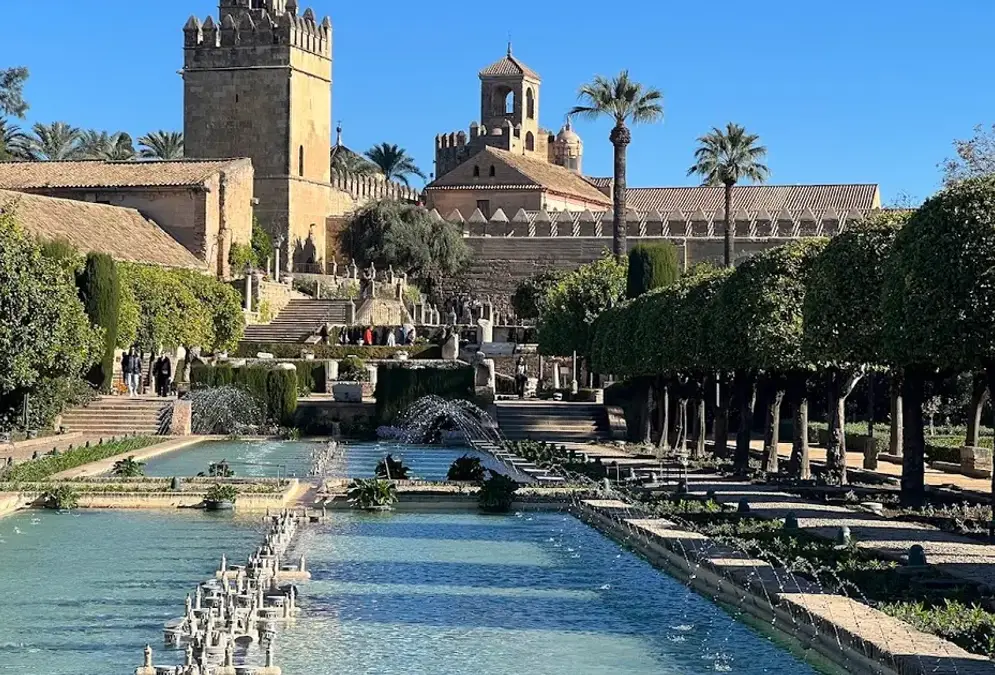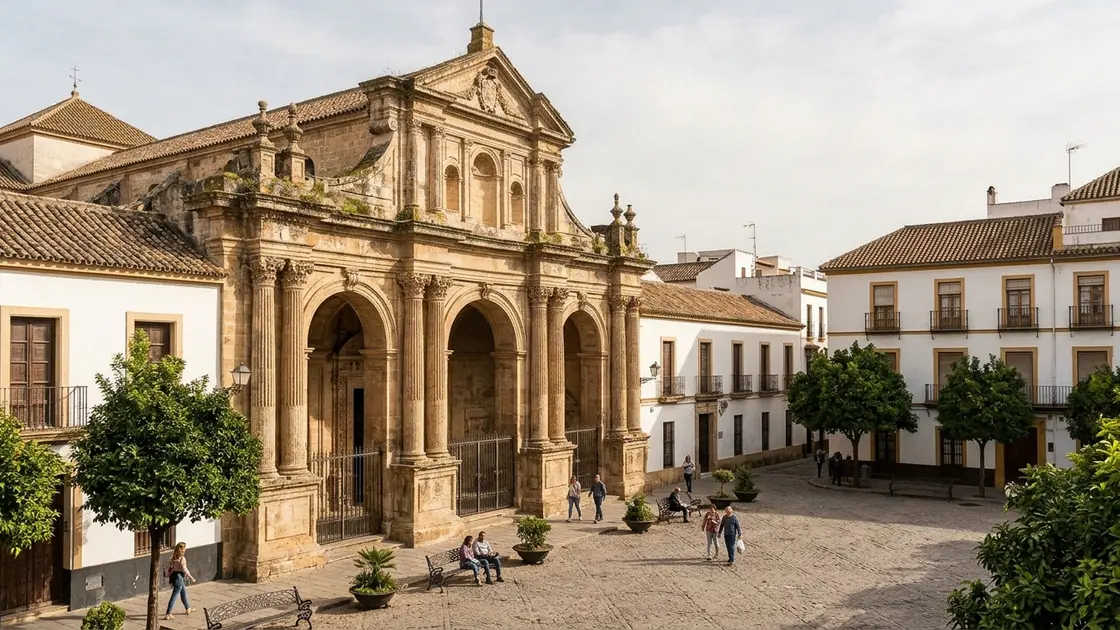
The Church of San Agustín is one of the Fernandine churches of the Axerquía, begun in 1328 and dressed in Baroque in the early 17th century. It stands in the Plaza de San Agustín, a short walk from the Alcázar de los Reyes Cristianos, and it is still a working church. Come for the arched Baroque front and for the Holy Week image it shelters, and treat it as a stop on a wider walk rather than a destination with its own queue.
A church founded because of a castle
The Augustinian friars did not choose this site for its views. In 1328 King Alfonso XI began the Alcázar de los Reyes Cristianos in the neighbourhood, and the friars were moved to the plot the church occupies today. Building started that same year. Work on the chancel chapel is documented in 1335, when Córdoba's alcaide Fernando Díaz and his wife María García founded it as their own burial place.
That makes San Agustín a church of the generation after Ferdinand III's conquest, when the Cathedral Chapter's route counts seven Fernandine temples in the Axerquía, all of them open for worship. Two of its neighbours on that route are San Pablo and Santa Marina.
Check the route hours, not just the church
No hours are published for San Agustín alone. Use the Cathedral Chapter's route hours as a guide, confirm them on its page, and have a second church on the circuit in mind in case the door is shut.
What you see: Baroque over a medieval frame
The present look is from the first third of the 17th century, and the Baroque layers cover the medieval aesthetic. The facade is the part worth stopping for: a succession of arches, Corinthian columns and a broken pediment, which one regional newspaper calls one of the jewels of Cordoban Baroque.
Inside, murals and frescoes recovered in the 2007-2009 restoration are the other draw. The main altarpiece is not the original. A fire in the Civil War damaged the marble altarpiece, and a copy in wood and plaster was made in the 1960s.
Nuestra Señora de las Angustias
The church has housed Nuestra Señora de las Angustias Coronada for centuries. Her brotherhood processes every Holy Thursday, which is the one day of the year the building stops being a quiet interior and becomes the start of a street event. If Holy Week is your reason for visiting Córdoba, check the brotherhood's schedule rather than assuming a fixed time.