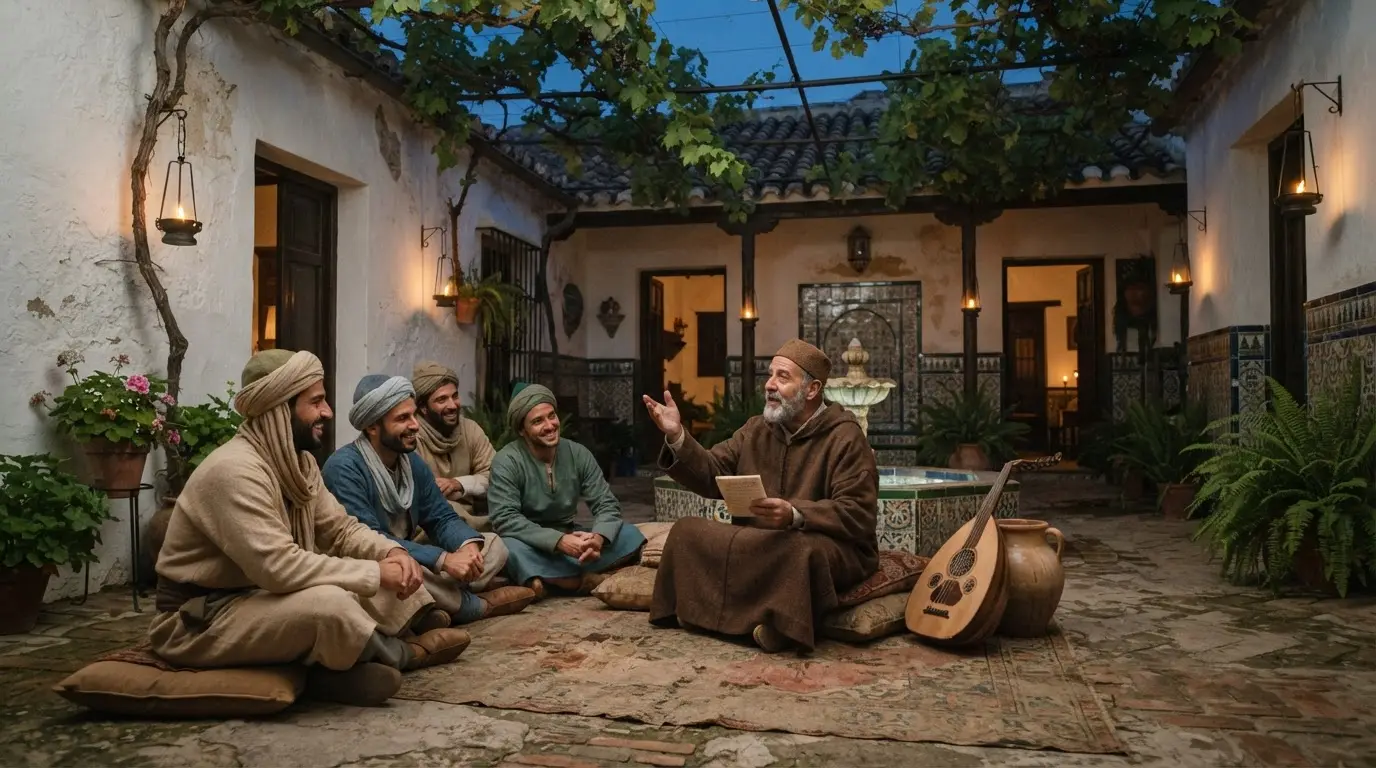

Who was Ibn Quzman, the Córdoba poet?
He was a Córdoban from first to last: born in the city, dead in it, and, by one account, from a family of possibly Gothic descent, though some scholars say Arab.[1] His working life ran through the Almoravid domination of the peninsula.[5]
Nobody can give his birth year with confidence. He says in his poems that he was between six and eight at the battle of Zalaca on 23 October 1086, which lets scholars conjecture 1078 to 1080.[6] The Turkish Islamic Encyclopedia instead places his birth after 1086.[7] Around the 1080s is the defensible phrase.
The fuzziness is built into the evidence. We know little about his life, and what survives is a scatter of references in his own diwan.[8] A Spanish reference site adds the warning every reader should keep: he was a gran fabulador, a man who liked to play with jest and earnest as it suited him.[9] His zajal on Zalaca shows the habit. He undercuts the Almoravid victory of 1086 with a joke about his own conception.
“In my father's testicles I was and did not see / But the one who did narrated the story to me.[10]”
It is a battle remembered from inside his father's body, and it is typical of his register. Ibn Zaydún, a courtier-poet of the taifa Córdoba that came before, wrote in another mode, and his story is told in Ibn Zaydún: Córdoba's Exiled Poet Turned Ambassador.
What a zajal is, and what Ibn Quzman did with it
A zajal is strophic verse in the vernacular Arabic of al-Andalus, and Ibn Quzman is celebrated as its outstanding composer.[2] It is written in colloquial language and follows a typical rhyme scheme, with every strophe closing on the refrain's rhyme:[11]
- first strophe: aaab
- second strophe: cccb
- third strophe: dddb
The b line rhymes with a refrain of one or two lines that keeps coming back. The poem arrives at the same sound again and again, however far the strophes wander.

Explore nearby · Monument
Mezquita-Catedral de Córdoba
856 columns, 1,300 years of Islamic and Christian history. UNESCO monument in Córdoba, Andalusia. Red-and-white arches, Byzantine mosaics, a Renaissance nave.
He did not invent the form. The usual scholarly view, as Spanish Wikipedia summarises it, credits Ibn Bayya of Zaragoza with inventing the zajal and holds that Ibn Quzman was the first great writer to use it and gave it its definitive shape.[12] In the introduction to his diwan, the Turkish encyclopedia reports, he says he studied the zajals of earlier poets, reformed the genre and put it on a system.[13]
He was also remembered as the "imam of the zajal poets".[14] That imam means leader of a craft. I found no source connecting the title to the mosque story, but anyone searching the two will meet them together.
Patrons, satire and a death sentence
Almoravid Córdoba changed the market he wrote for. According to the Turkish encyclopedia, Yusuf ibn Tashfin ended in 1096 the era in which poets lived in luxury at court and enjoyed largesse in al-Andalus.[15] A poet without a court needs patrons, and Ibn Quzman had to travel widely to find new ones.[16]
His reputation as a satirist rests on that mix of poverty and nerve. English Wikipedia describes his verse as "satire, verging on the licentious, aimed at religious experts".[17] Jurists returned the compliment: the Turkish encyclopedia says they criticised him harshly for flouting moral rules and for lust, in the manner of Abu Nuwas.[18] The same entry adds a correction worth keeping. He did not turn to personal lampoon, so the label "anti-clerical satirist" needs care.[19]
The consequences were not only verbal. The encyclopedia says he was accused of heresy and impiety and thrown in prison; condemned to death, he was saved through the intercession of Muhammad b. Sir, one of the Almoravid notables.[4]
The zajal in which Ibn Quzman becomes an imam
The claim as it circulates is flat. English Wikipedia says he became a mosque imam towards the end of his life.[21] The Turkish entry that does detail the heresy charge and the death sentence says nothing about an imamate.[4]
What the sources do offer is a poem. In one zajal, as Spanish Wikipedia quotes it, a voice speaks of Ibn Quzman in the third person: he now goes up and down the muezzin's tower, and "has become imam in the mosque and prays, prostrating and bowing".[3][22] The English is my translation of that Spanish text, not of the Arabic original, which the source does not give.
Read it as a confession and it is a spectacular reversal for a man jailed on a charge of impiety. Read it as a joke and it is the tavern poet in the pulpit, pious and absurd at once. Nothing I found chooses between the two.
Three things argue for caution. The Spanish reference site that calls him a fabulist warns that he played with jest and earnest.[9] A poem is not a record. And no source I could open names a mosque, a date or a congregation.
Another zajal asks, in the Spanish quotation, for a turban of vine shoots to be put on his head.[25] A turban made of vine is a gag about wine dressed as piety, though no source tells us it is meant that way.
So the honest summary is smaller than the legend and more interesting. A poem says Ibn Quzman became an imam. Whether it reports a late career, a repentance he staged or a joke at his own expense, the surviving evidence cannot say. The best-known mosque of his city is now the Mezquita-Catedral, though no source puts him in it.
Reading Ibn Quzman today
Only 149 of his poems appear in the manuscript in Saint Petersburg that was the subject of a notice published in 1881.[26] Corriente's Cairo edition of 1995 adds zajals quoted in other sources and reaches 193 in total.[27] The two numbers belong to different editions; they are not rival estimates.
A reader without Arabic has English. Monroe's The Mischievous Muse (Brill, 2017) gathers all his known works, most of them zajals.[28] The Diwan of Ibn Quzman has also been translated into Spanish by Federico Corriente, as Cancionero hispanoárabe, and into English by Monroe.[29]
He was not always read. Andalusi and North African critics, who could not deny his achievements, tended to downplay them.[30] The modern case rests on the diwan itself, and on a voice that mocks the pious and, when it suits him, himself. Few strands of al-Andalus poetry are as irreverent.
Deep dive · Article
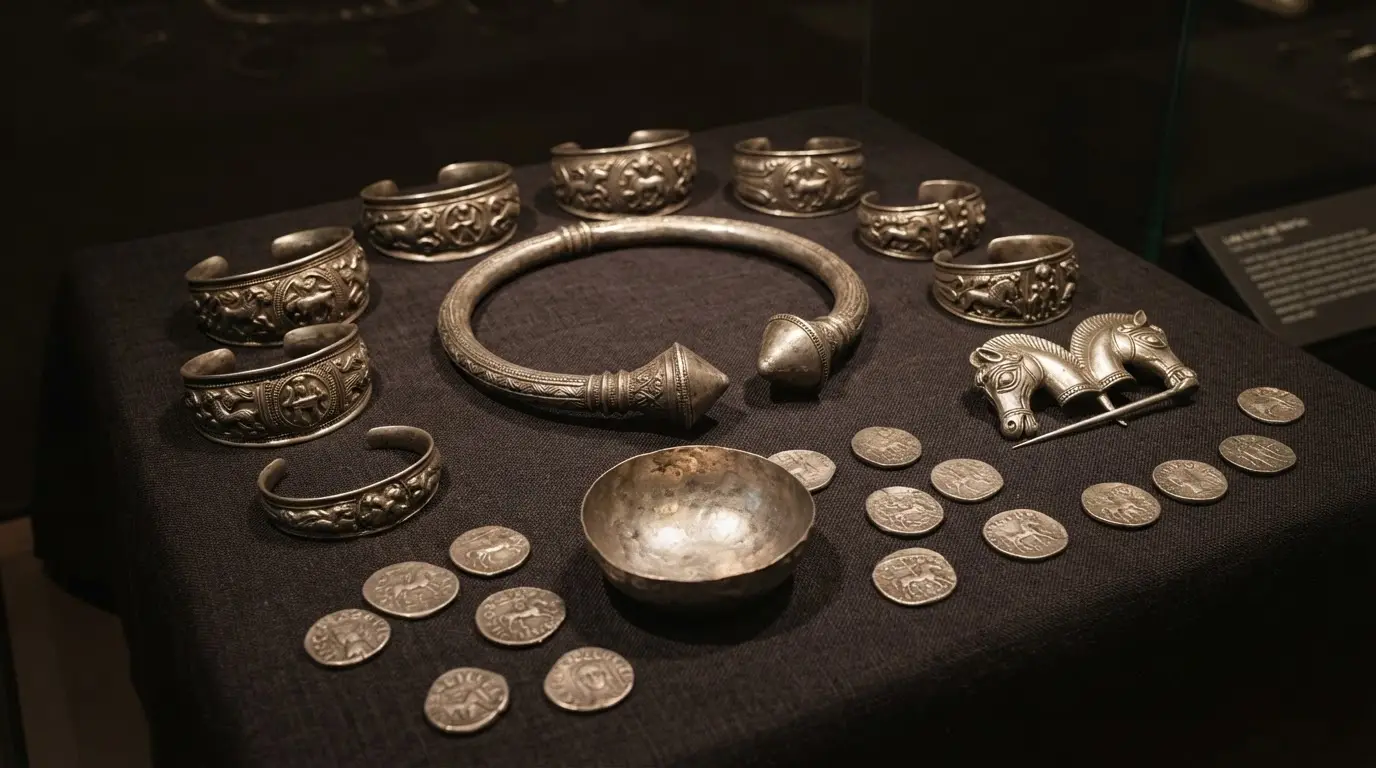
An Andalusian Treasure Has Sat in the British Museum Since 1932
A silver hoard dug up in Córdoba in 1915 left Spain against the law and has been in the British Museum since 1932. Here is how, and what a 2026 study found.
If you are reading around him, Wallada bint al-Mustakfi and Ibn Hazm's Ring of the Dove are the nearest voices on this site, each told in their own article. This piece makes no comparison between them and him, because the sources behind it make none.
Recommended tours
Tours are selected for quality, not commission. We earn a small fee if you book — at no extra cost to you.
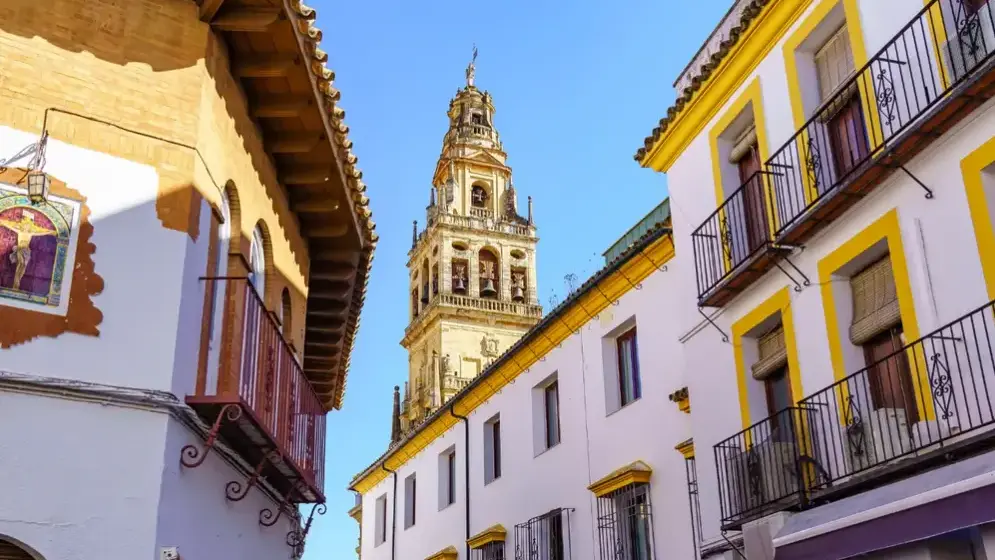
Nothing in those sources ties him to a street, a mosque or a house in Córdoba today. Go for the setting, and read the zajals on the way.