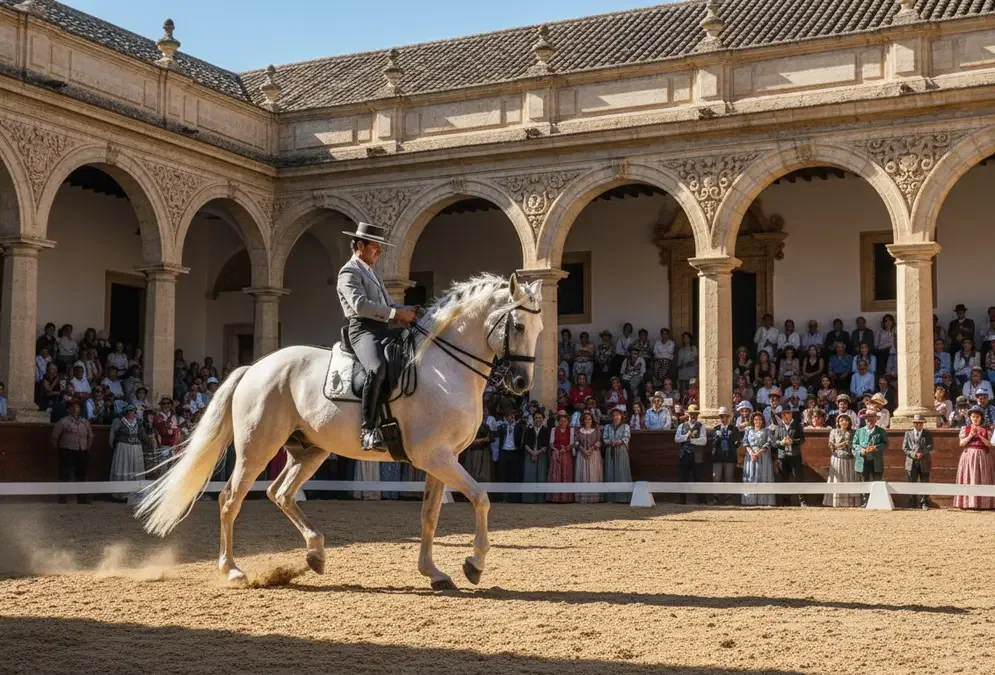
history-buffsart-lovers
Written by Sophie Marchand
Modern Córdoba · 1808–today
  • 5 min
  • 21 sources

The Sombrero Cordobés Has Three Birth Dates and No Winner

Was the sombrero cordobés born in the 17th, 18th or 19th century? Trace the disputed origin from field labourers to the rejoneador Antonio Cañero and Manolete.
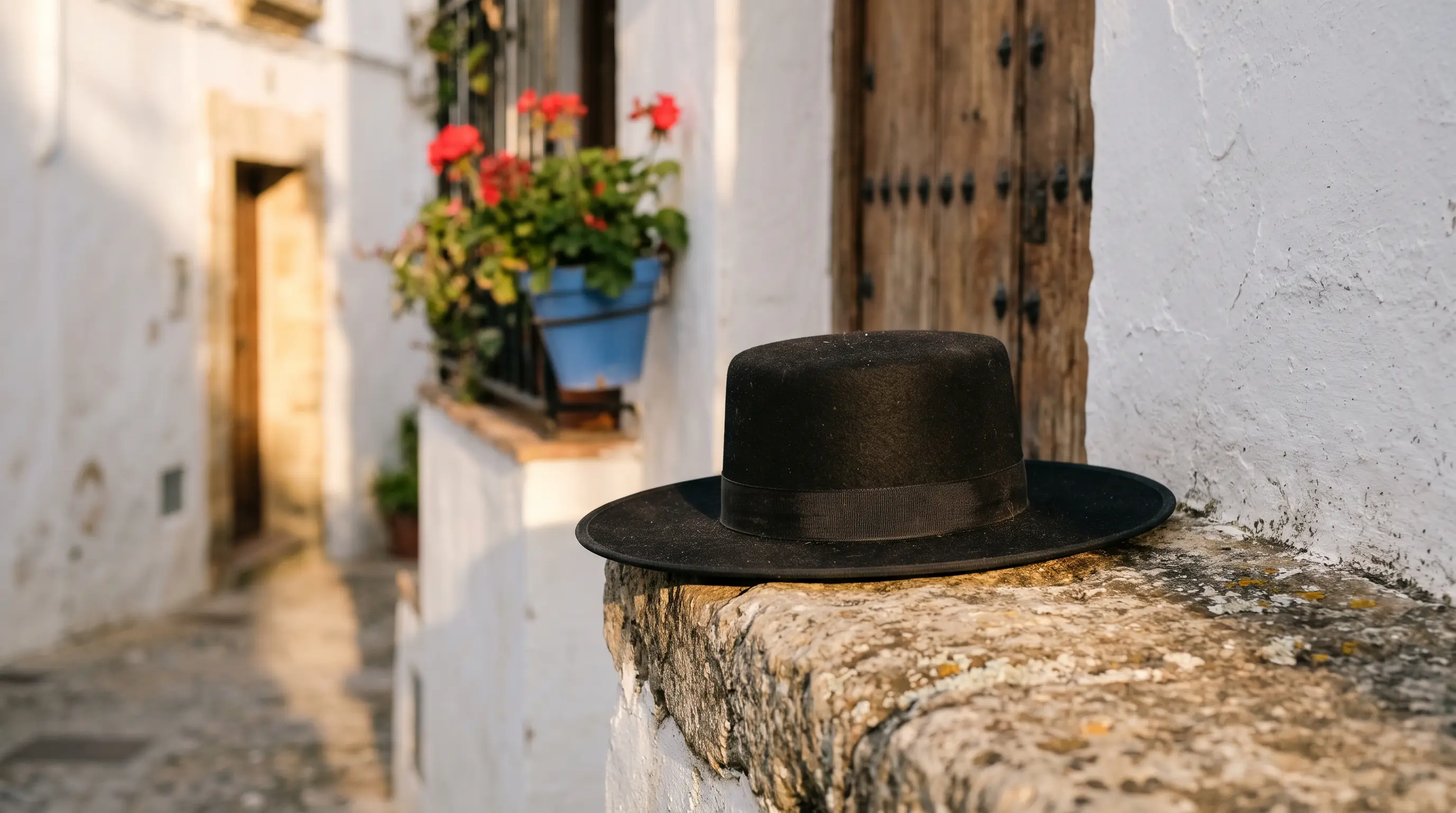
Sombrero cordobés history in a single object: a black felt hat with a broad flat brim and tall cylindrical crown resting on a worn stone ledge in a Córdoba lane at golden hour

Wide use of the hat is placed only in the 19th and early 20th centuries, though some 17th-century engravings are said to show labourers wearing it.

Nobody can say for certain when the sombrero cordobés, Córdoba's flat-brimmed felt hat, first appeared. Some 17th-century engravings are said to show day labourers wearing it,[1] a popular account puts its birth in 18th-century Córdoba,[2] and the director of the hat-maker Fernández y Roche says its point of origin is not clear.[3] On one point all three agree: the hat began as working dress for people who spent their days in the fields.
Engravings said to show it
17th century
Some engravings show labourers in it; general use came later[1]
Fernández y Roche founded
1885
The hat-maker has specialised in these hats ever since[4]
Hats for Dior in Seville
1,300+
Made by Fernández y Roche for models and guests at the cruise show[5]

Three dates and no clear winner

The sombrero cordobés has no agreed birth date, because the accounts that exist point to three different centuries. One summary says some 17th-century engravings show day labourers (jornaleros) wearing it, then adds that general use came only in the 19th and early 20th centuries.[1] A popular account instead traces it to 18th-century Córdoba, where it began as a practical garment for farm workers and horsemen.[2]
The hat-maker's view is plainer. The director of Fernández y Roche says the point of origin is not clear, only that the hat was born tied to field work, to shield farmers and cattle breeders from sun and rain.[3] That makes the hat-maker a good witness to what the hat was for and a weak one on when it began, which is the gap the engravings and the popular claim try to fill.
Wide brims were already a Spanish habit by then: the chambergo, a different hat, had been a very Spanish wide-brimmed hat since the 17th century.[6] That makes a broad brim in a 17th-century image unsurprising and proves nothing about this particular hat. What the evidence supports is an outline: a working hat for the countryside, wear that spreads in the 19th and early 20th centuries,[1] and a firm specialising in it by 1885.[4] Three dates, then, mark the limits of what can be said: a claim, a counter-claim and a trade, with no document that settles between them.

A felt hat built for sun, rain and fiestas

The Real Academia Española defines the sombrero cordobés as a felt hat with a broad, flat brim and a tall cylindrical crown.[7] Makers describe the same pattern: ala ancha y plana, copa cilíndrica and felt (fieltro) as the main fabric.[8] Felt holds a flat brim stiff, which is why modern descriptions call the hat rigid.
The same hat goes by other surnames.[9]
  • andaluz
  • sevillano
  • de ala ancha
No standard size exists: the crown can run from 10 to 12 cm and the brim from 8 to 12 cm.[10] A brim of that width shades the face and neck, which is the job a labourer asked of it. Its survival owes less to the field than to the fair. Workers also wore it to village fiestas, the romerías and ferias, and that habit is credited as the key to the hat outliving the work it was made for.[11] The Feria de Córdoba sits in that same tradition of dressing up for the fair.

Antonio Cañero and the rider's short suit
The hat's other name, Cañero, alludes to the surname of the rejoneador (mounted bullfighter) Antonio Cañero, who is named among its wearers.[12][13] The 18th-century account already counts horsemen among the first wearers,[2] so a rider's surname on the hat is less of a leap than it first looks.
Cañero was born in Córdoba on 1 January 1885 at calle Osario 31 and baptised in the same font as Manolete.[14] The Real Academia de la Historia considers him the first modern rejoneador,[15] and his public debut came on 14 October 1921 at a patriotic bullfight for the wounded of the Moroccan war, alongside Juan Belmonte.[16] He also introduced the traje corto for Spanish rejoneadores.[17]
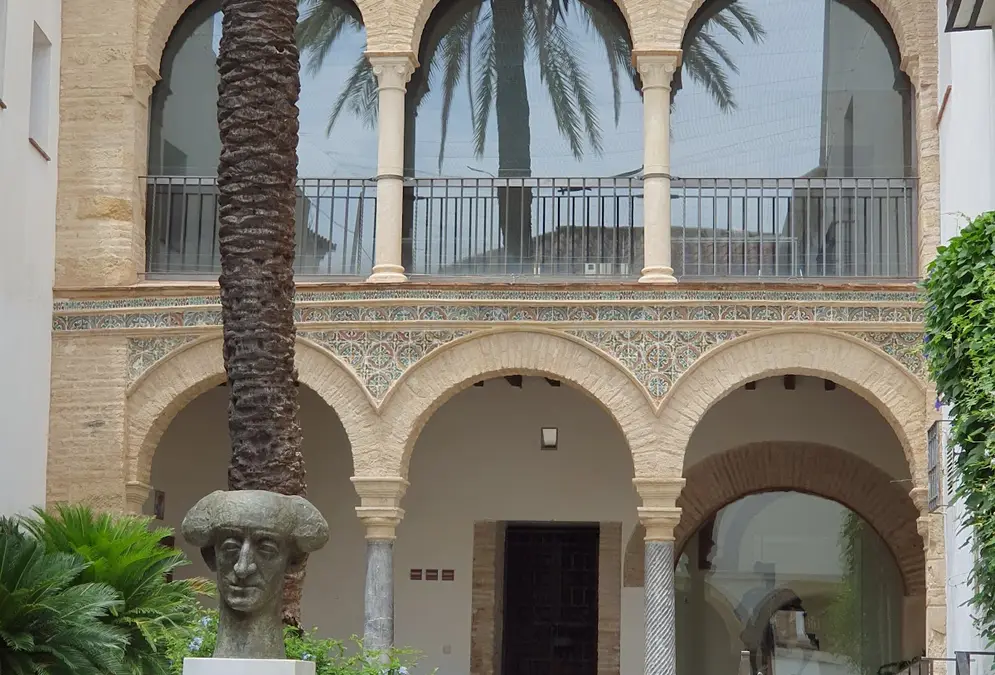
Interior patio of the Museo Taurino de Córdoba inside the 16th-century Casa de las Bulas

Explore nearby · Museum

Museo Taurino de Córdoba

Córdoba's bullfighting museum occupies a 16th-century mansion in the Judería. Trace the legacy of five legendary matadors, including Manolete, for just €5.

Photographs complicate the nickname. A Vandel photograph held by the Madrid regional library shows him in the costume of the old mounted bullfighters of the 17th century,[18] a reminder that Cañero the man and "Cañero" the hat are not the same picture. His legacy is also argued over: the plaza de los Derechos Humanos was due in 2019 to recover the name Antonio Cañero, which it had carried since 1986, for a figure the press called thorny.[19]
The label cuts both ways. A firm was already specialising in these hats in 1885,[4] the year Cañero was born, so the nickname follows the hat rather than the other way round. Whatever he did for its fame, he did not invent it, and on every dating in play he came to a hat that already existed.

From Romero de Torres's canvases to Dior's runway

Julio Romero de Torres put the sombrero cordobés in his paintings, and the same roll of wearers names the flamenco singer Juanito Valderrama, Antonio Cañero and Manolete.[13] Manolete, an idol for the masses in Spain and Mexico who also influenced fashion, is the best-known name on it.[20] The roll carries no dates, so the Cañero and Manolete link is the tradition's own story, not a documented chain.
Today the rigid hat, in black or red, is tied to casticismo, the self-consciously Spanish look, and to flamenco in Córdoba, and it goes closely with the Spanish cape.[21] The brim that once shaded labourers now signals identity rather than weather. In effect the hat has two lives: a plain working garment in the accounts of its origin and a costume in the accounts of its fame.

Recommended tours

Tours are selected for quality, not commission. We earn a small fee if you book — at no extra cost to you.
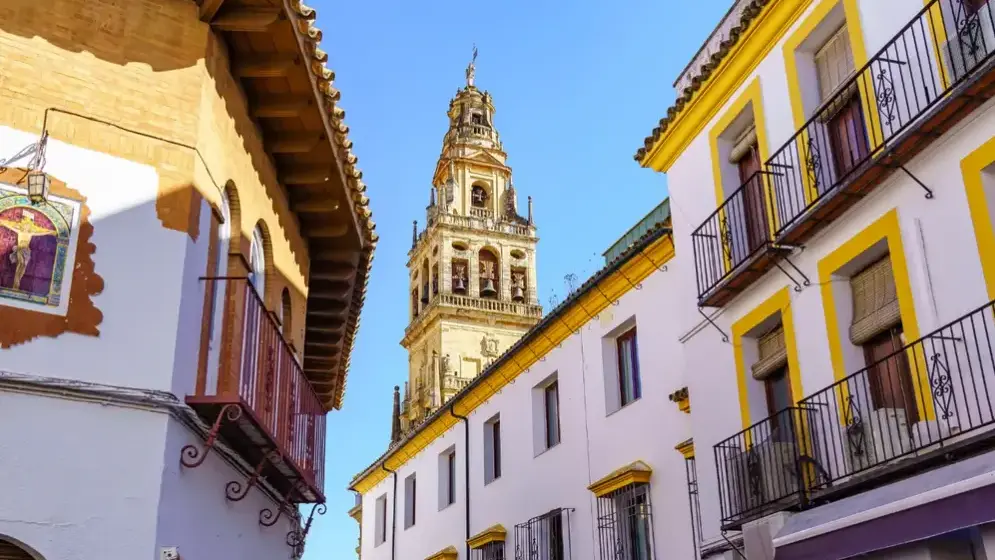
The hat has also reached the runway: Fernández y Roche says it made more than 1,300 hats for models and guests at Dior's cruise show in Seville.[5] A hat built for a field worker's head has now been fitted to a runway crowd.

Where to follow the hat's trail in Córdoba today

Four stops in Córdoba hold pieces of the sombrero cordobés story, and none of them is a hat shop.
  • The address where Antonio Cañero was born on 1 January 1885, calle Osario 31.[14]
  • The plaza de los Derechos Humanos, due in 2019 to recover the name Antonio Cañero, which it had carried since 1986.[19]
  • The Museo Taurino, the bullfighting museum, for the world of rejoneadores and matadors that supplied the hat's best-known wearers.
  • The Julio Romero de Torres Museum, devoted to the painter in whose canvases the hat appears.[13]
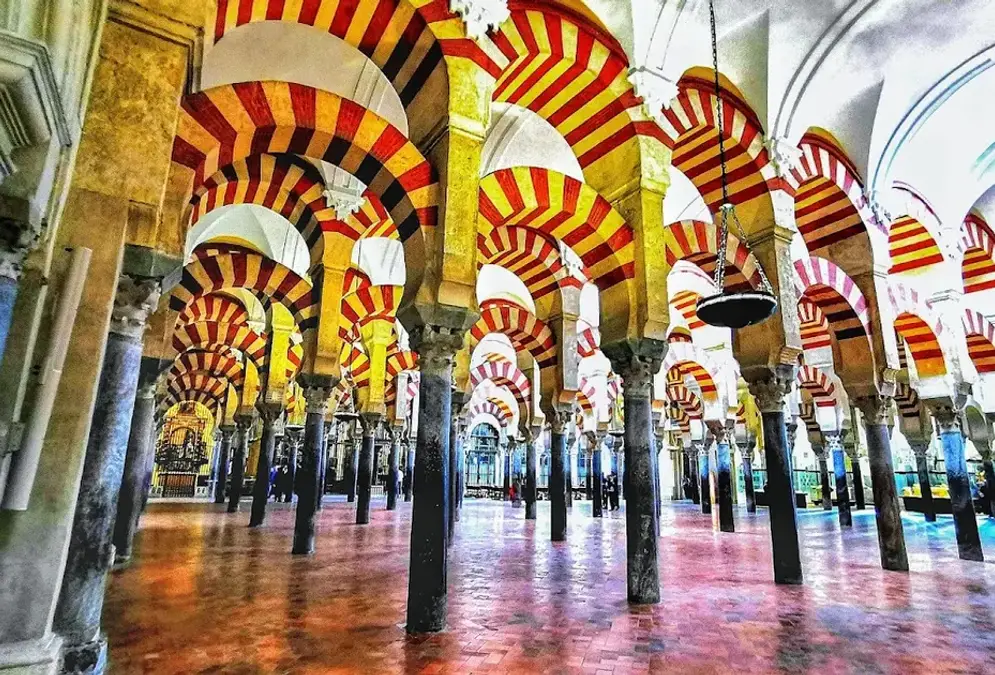
Reconstruction view of the original Great Mosque of Córdoba founded by abd al-rahman i cordoba in 785 CE, striped red and white double arches over Roman and Visigothic columns, golden midday light through the prayer hall, photorealistic

Deep dive · Article

Abd al-Rahman I: The Fugitive Who Founded Córdoba

Abd al-Rahman I survived the massacre of his Umayyad family in 750 CE, fled six years across North Africa, and founded the Emirate of Córdoba at just 25.

A sensible order starts at the painter's museum for the canvases, moves to the bullfighting museum for the rider and the matador, and ends on the street stops, because the museums supply the names that make the two addresses mean something. Check current opening times with each museum before setting out. Of the four, the museums give the most for the time; the two street stops are for readers who already know why the name matters.

Frequently asked questions

What is the history of the sombrero cordobés?

The history of the sombrero cordobés is disputed: some 17th-century engravings are said to show labourers wearing it, a popular claim dates it to 18th-century Córdoba, and general use comes only in the 19th and early 20th centuries.[1][2]

Where does the sombrero cordobés come from?

The sombrero cordobés comes from Córdoba's farm country, where labourers, farmers and horsemen wore it as protection from sun and rain.[2][3] Its exact point of origin is not clear.[3]

Why is the sombrero cordobés also called a Cañero?

The hat takes its second name from the rejoneador Antonio Cañero, whose surname it alludes to.[12] Cañero, born in Córdoba in 1885, is named among its wearers and is considered the first modern rejoneador.[13][14][15]

What is the sombrero cordobés made of?

The sombrero cordobés is made mainly of felt, with a wide flat brim and a cylindrical crown.[8] The Spanish dictionary specifies a tall crown.[7]

Is the sombrero cordobés only worn in Córdoba?

The sombrero cordobés is not confined to Córdoba: it is also known as the andaluz or sevillano hat.[9]

Who wore the sombrero cordobés?

Named wearers of the sombrero cordobés include the flamenco singer Juanito Valderrama, the rejoneador Antonio Cañero and Manolete, and it appears in the paintings of Julio Romero de Torres.[13]

Sources

21 references Show
  1. es.hispanopedia.com (opens in a new tab)

    “Sus orígenes no están claros, ya que aunque en algunos grabados del siglo XVII se puede ver a algunos jornaleros que lo visten, no fue hasta el siglo XIX y principios del siglo XX cuando se generaliza su uso.”

  2. eldebate.com (opens in a new tab)

    “Su origen se remonta al siglo XVIII en Córdoba, donde comenzó como una prenda funcional para labradores y jinetes.”

  3. yucatan.com.mx (opens in a new tab)

    “Esta prenda nació vinculada a las tareas del campo, para proteger a agricultores y ganaderos tanto del sol como de la lluvia”

  4. theobjective.com — Sombrero cordobes moda internacional (opens in a new tab)

    “Esta empresa, que nació en 1885, está especializada desde entonces en confeccionar estos sombreros.”

  5. theobjective.com — Sombrero cordobes moda internacional (opens in a new tab)

    “Realizamos más de 1.300 sombreros entre modelos y asistentes”

  6. theobjective.com — Manifestaciones del sombrero (opens in a new tab)

    “el chambergo, sombrero muy español desde el siglo XVII, de ala bastante ancha”

  7. dle.rae.es (opens in a new tab)

    “de fieltro, de ala ancha y plana, con copa alta cilíndrica.”

  8. theobjective.com — Sombrero cordobes moda internacional (opens in a new tab)

    “Ala ancha y plana, copa cilíndrica y el uso del fieltro como tela principal caracterizan al sombrero cordobés.”

  9. theobjective.com — Sombrero cordobes moda internacional (opens in a new tab)

    “Este tipo de sombrero, además de cordobés, también recibe otros apellidos como andaluz, sevillano o de ala ancha.”

  10. es.hispanopedia.com (opens in a new tab)

    “La horma puede variar desde 10 a 12 cm, mientras que el ala puede variar entre los 8 y 12 cm de ala.”

  11. theobjective.com — Sombrero cordobes moda internacional (opens in a new tab)

    “Estos trabajadores también lo usaban en las fiestas populares de los pueblos, como las romerías o las ferias, y esa ha sido la clave de su supervivencia”

  12. es.hispanopedia.com (opens in a new tab)

    “De hecho se le conoce también como "Cañero", en alusión al apellido del citado rejoneador.”

  13. es.hispanopedia.com (opens in a new tab)

    “Algunos personajes que lo vistieron fueron el cantaor flamenco Juanito Valderrama, el rejoneador Antonio Cañero[2] y el torero Manolete. Aparece en las pinturas de Julio Romero de Torres.”

  14. elespanol.com (opens in a new tab)

    “el niño Antonio nació en Córdoba el 1 de enero de 1885, en el número 31 de la calle Osario, y que fue bautizado en la misma pila en la que después recibiría las aguas purificadoras el mismísimo Manolete.”

  15. elespanol.com (opens in a new tab)

    “La Real Academia de la Historia le considera el primer rejoneador moderno.”

  16. elespanol.com (opens in a new tab)

    “Fue el 14 de octubre de 1921 el día que debutó con público como rejoneador”

  17. elespanol.com (opens in a new tab)

    “También introdujo el traje corto para los rejoneadores españoles.”

  18. bibliotecavirtualmadrid.comunidad.madrid (opens in a new tab)

    “Antonio Cañero, vestido como los antiguos toreros a caballo del siglo XVII, luce su arte haciendo cabriolas.”

  19. elespanol.com (opens in a new tab)

    “la plaza de los Derechos Humanos de Córdoba recuperará el nombre que tenía desde 1986, el del rejoneador Antonio Cañero, un personaje espinoso.”

  20. en.andalucia.org (opens in a new tab)

    “He influenced fashion in dressing and was a true idol for the masses both in Spain and in Mexico”

  21. theobjective.com — Manifestaciones del sombrero (opens in a new tab)

    “El rígido sombrero cordobés (en negro o en rojo) se vincula con lo castizo o lo flamenco, muy unido a la capa española.”