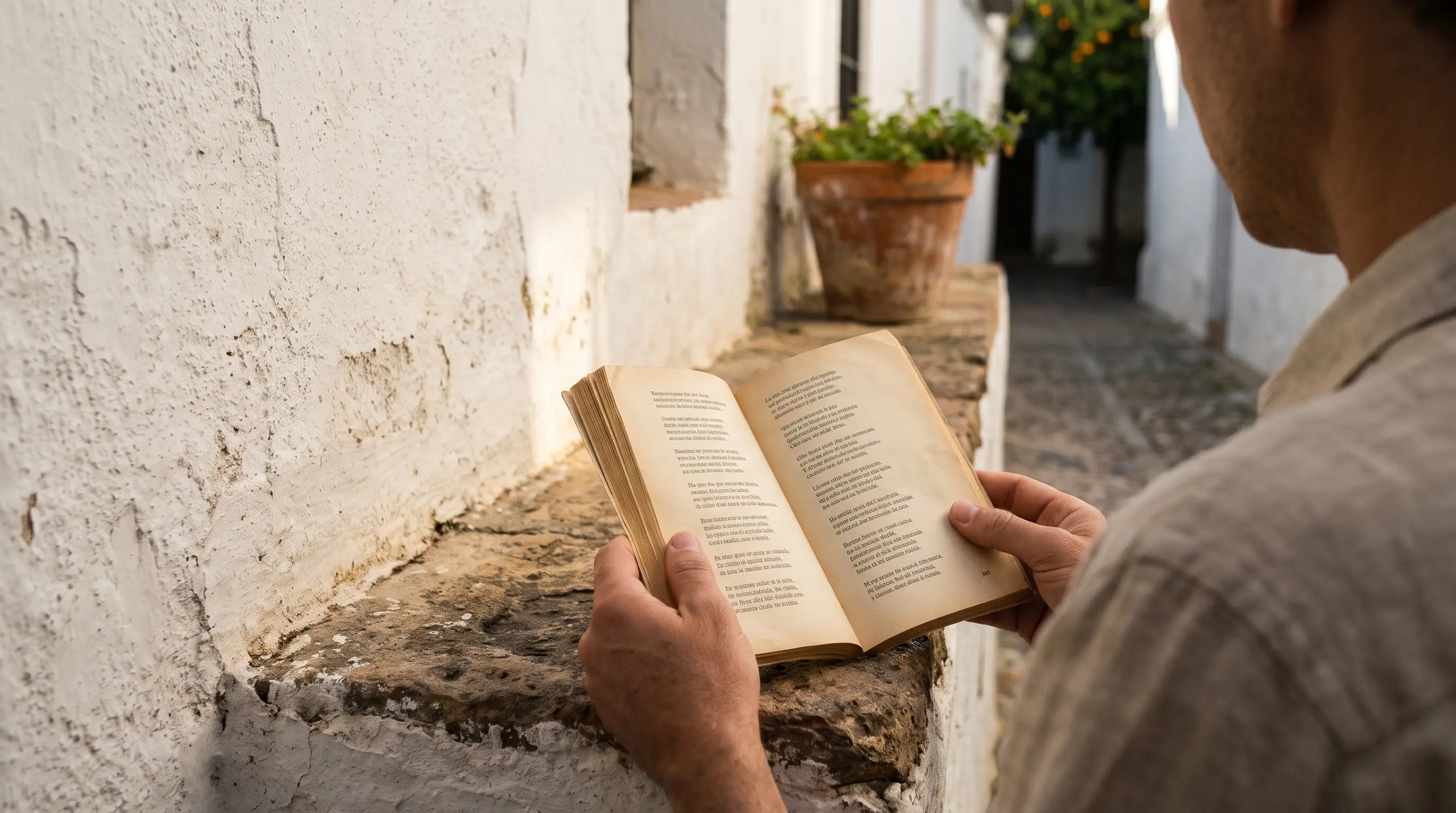
Juan de Mena, the Córdoba Poet Who Wrote Castile's Labyrinth
Art history background with eight years writing interpretive content on Córdoba's Caliphal heritage.
In this article
Jump to a section
A Córdoba childhood that left almost no paper
Court secretary, city alderman, doubtful chronicler
Explore nearby · Monument
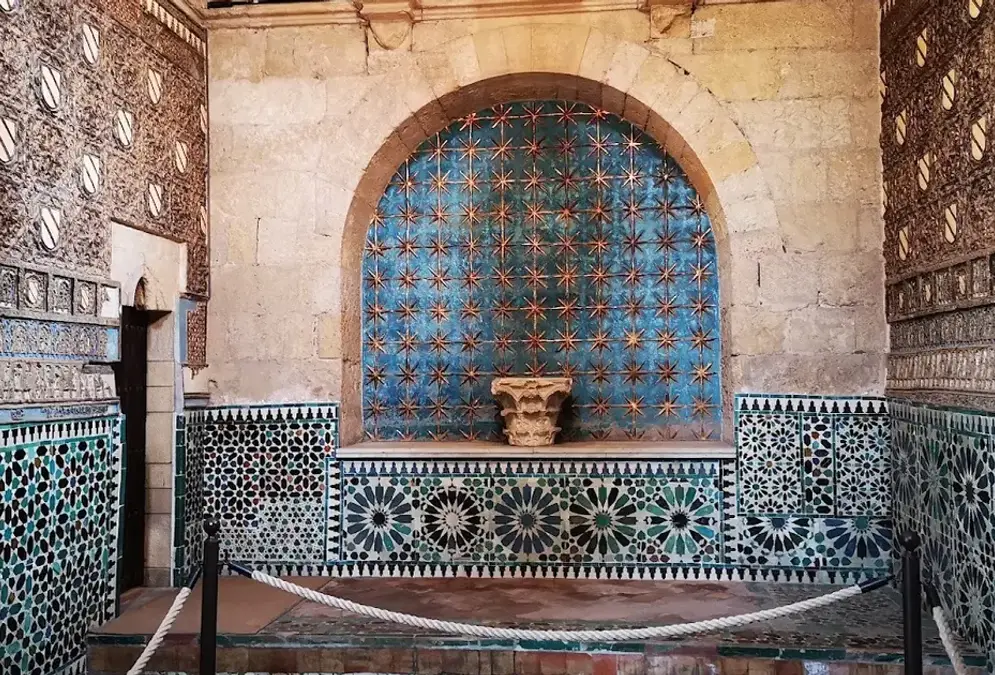
Capilla de San Bartolomé
A late 14th-century Gothic-Mudéjar chapel in Córdoba with exquisite plasterwork, blending Christian and Islamic artistic traditions over 600 years old.
Inside the Laberinto de Fortuna: 300 stanzas, no labyrinth
A Latinate language and its Córdoba lineage
Deep dive · Article
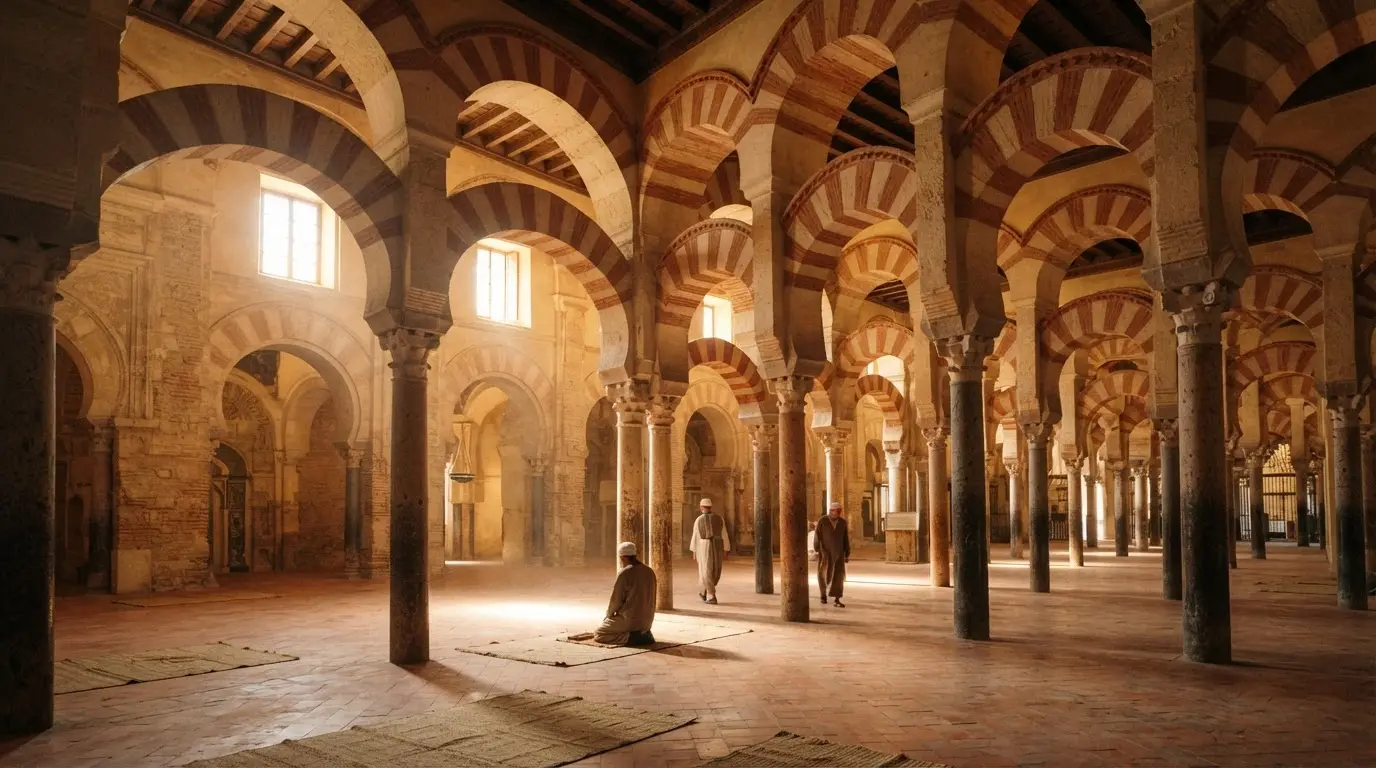
Abd al-Rahman I: The Fugitive Who Founded Córdoba
Abd al-Rahman I survived the massacre of his Umayyad family in 750 CE, fled six years across North Africa, and founded the Emirate of Córdoba at just 25.
Recommended tours
Tours are selected for quality, not commission. We earn a small fee if you book — at no extra cost to you.
Torrelaguna, a short street and the 2011 venues
No birthplace to visit
Calle Juan de Mena
The 2011 congress venues
- Alcázar de los Reyes Cristianos: host of the congress's evening reception, with a welcome, a concert and a light-and-sound show[24]. As listed by the city council in November 2026, winter hours (16 September to 15 June) run Tuesday to Friday 8:15 to 20:15 and Saturday 9:30 to 17:30[25]. Summer hours (16 June to 15 September) are Tuesday to Sunday 8:15 to 14:15, winter Sundays 8:15 to 14:15, and it is closed on Mondays[26].
- Capilla de San Bartolomé: a stop on the congress programme, with a half-hour visit scheduled[27]. It stands in the grounds of the University of Córdoba's Faculty of Philosophy and Letters and dates from the beginning of the 15th century[28], and the faculty occupies the Hospital del Cardenal Salazar in the heart of the Judería[29].
An afternoon in order
- Calle Juan de Mena, in the centre, as a short detour with the Tendillas cistern story in mind.
- The Capilla de San Bartolomé in the Judería, after confirming access with the faculty.
- The Alcázar de los Reyes Cristianos, last in winter, when weekday opening runs to 20:15. In summer it shuts at 14:15 and closes all day Monday, so make it the first stop of a morning instead.
Frequently asked questions
Who was Juan de Mena?
Was Juan de Mena born in Córdoba?
What is the Laberinto de Fortuna about?
Why is the Laberinto de Fortuna also called Las Trescientas?
How did Juan de Mena die?
Is there a Juan de Mena statue or monument in Córdoba?
How did Lucan influence Juan de Mena?
Sources
31 references Show Hide
- Wikipedia — Juan de Mena (opens in a new tab)
“There is scant evidence about the early part of Mena's life, but most modern scholars agree that he was born at Córdoba, Spain, his father died shortly after his birth, and his mother a few years later.”
- notascordobesas.com (opens in a new tab)
“Murió en 1456, con 45 años, en la muy noble ciudad de Torrelaguna”
- Wikipedia — Laberinto de Fortuna (opens in a new tab)
“The work is also known as Las treszientas (The Three-Hundred) because it consists of 300 stanzas (although some manuscripts include only 297).”
- cilengua.es (opens in a new tab)
“JUAN DE MENA: ENTRE LA CORTE Y LA CIUDAD”
- ebsco.com (opens in a new tab)
“Imperfect church records indicate that he was born sometime around 1411, most likely near Córdoba.”
- notascordobesas.com (opens in a new tab)
“No existe documentación relativa a sus progenitores, por lo que deducen algunos biógrafos que eran posiblemente judeoconversos.”
- redalyc.org (opens in a new tab)
“Juan de Mena nació en Córdoba en 1411, en el seno de una familia modesta: hacia los veintitrés años pasó a Salamanca, donde obtuvo el título de Maestro de Artes;”
- artehistoria.com (opens in a new tab)
“Nacido en Córdoba en 1411, donde habita hasta los 23 años, se sabe también que estudia en Salamanca y viaja a Roma, en donde su formación se complementa con el influjo humanista.”
- Wikipedia — Juan de Mena (opens in a new tab)
“who appointed him veinticuatro (one of twenty-four aldermen) of Córdoba, secretario de cartas latinas (secretary of Latin letters) and cronista real (royal chronicler).”
- redalyc.org (opens in a new tab)
“en 1443 fue nombrado secretario de cartas latinas del rey Juan II de Castilla, y un año después obtuvo el cargo de cronista oficial del reino;”
- notascordobesas.com (opens in a new tab)
“Juan II lo nombró Cronista Oficial del reino, aunque parece que no es suya la paternidad de la Crónica de Juan II, por la que ha sido cuestionado por algún erudito.”
- Wikipedia — Laberinto de Fortuna (opens in a new tab)
“Scholars generally accept that Mena delivered the poem to Juan II in person in 1444.”
- Wikipedia — Laberinto de Fortuna (opens in a new tab)
“it is certainly worth mentioning that the Laberinto actually contains no labyrinth.”
- redalyc.org (opens in a new tab)
“el contenido supone un claro apoyo a la monarquía castellana y a la política seguida por Álvaro de Luna; sus fuentes principales son Virgilio, Ovidio y Lucano.”
- escritores.org (opens in a new tab)
“Es el primer poeta castellano que se plantea crear un lenguaje poéticamente literario, distinto de la lengua vulgar.”
- rae.es (opens in a new tab)
“constituye un modelo indiscutible de creación de una nueva lengua poética de finales del siglo xv.”
- artehistoria.com (opens in a new tab)
“Su estilo rigurosamente cultista tiene como modelos a Dante, Boecio, Virgilio, Lucano y Ovidio”
- es.catholic.com (opens in a new tab)
“Junto a una influencia primordial de Dante, se aprecia también una considerable influencia del poeta latino Lucano en su obra maestra poética, el «Laberinto» (también llamado Las Trecientas).”
- cilengua.es (opens in a new tab)
“Guerras civiles y virtud republicana. Nota sobre la influencia de Lucano en Juan de Mena”
- Wikipedia — Juan de Mena (opens in a new tab)
“Modern critics have reinstated Mena's importance to Spain's literary history and consider him to be one of the three major poets of the fifteenth century, along with Íñigo López de Mendoza and Jorge Manrique.”
- notascordobesas.com (opens in a new tab)
“A su muerte el Marqués de Santillana mandó construir un suntuoso sepulcro, del que no existe rastro.”
- notascordobesas.com (opens in a new tab)
“La calle Juan de Mena es una calle del centro de la ciudad, antes se llamó del Hilete”
- notascordobesas.com (opens in a new tab)
“su casa tenía (¿?) la entrada o unas de las entradas al misterioso aljibe de las Tendillas”
- cilengua.es (opens in a new tab)
“A las 22: recepción en el Alcázar de los Reyes Cristianos (palabras de bienvenida, concierto y espectáculo de luz y sonido).”
- alcazardelosreyescristianos.cordoba.es (opens in a new tab)
“Martes a Viernes / Tuesday to friday - 8:15h a 20:15h”
- alcazardelosreyescristianos.cordoba.es (opens in a new tab)
“Los lunes, el 1 de enero y el 25 de diciembre permanecerán los centros cerrados.”
- cilengua.es (opens in a new tab)
“19-19.30: visita a la Capilla de San Bartolomé.”
- uco.es (opens in a new tab)
“The grounds also include the Chapel of San Bartolomé, dating from the beginning of the 15th century, one of the most outstanding examples of mudéjar Gothic art in the province of Córdoba.”
- uco.es (opens in a new tab)
“is located in the heart of the Judería, or Jewish Quarter, at the emblematic Hospital del Cardenal Salazar, one of the most interesting examples of 18th-century civil architecture in Córdoba.”
- rae.es (opens in a new tab)
“Edición, estudio y notas de Juan Casas Rigall, Madrid, Real Academia Española-Espasa, 2024.”
- rae.es (opens in a new tab)
“acompañada de una contextualización y una anotación que restituyen la singularidad del empeño poético, intelectual y político de Juan de Mena.”