Inca Garcilaso: The Chronicler Buried in the Mezquita
Art history background with eight years writing interpretive content on Córdoba's Caliphal heritage.
- Chapter decision on chapel
- 29 Oct 1612
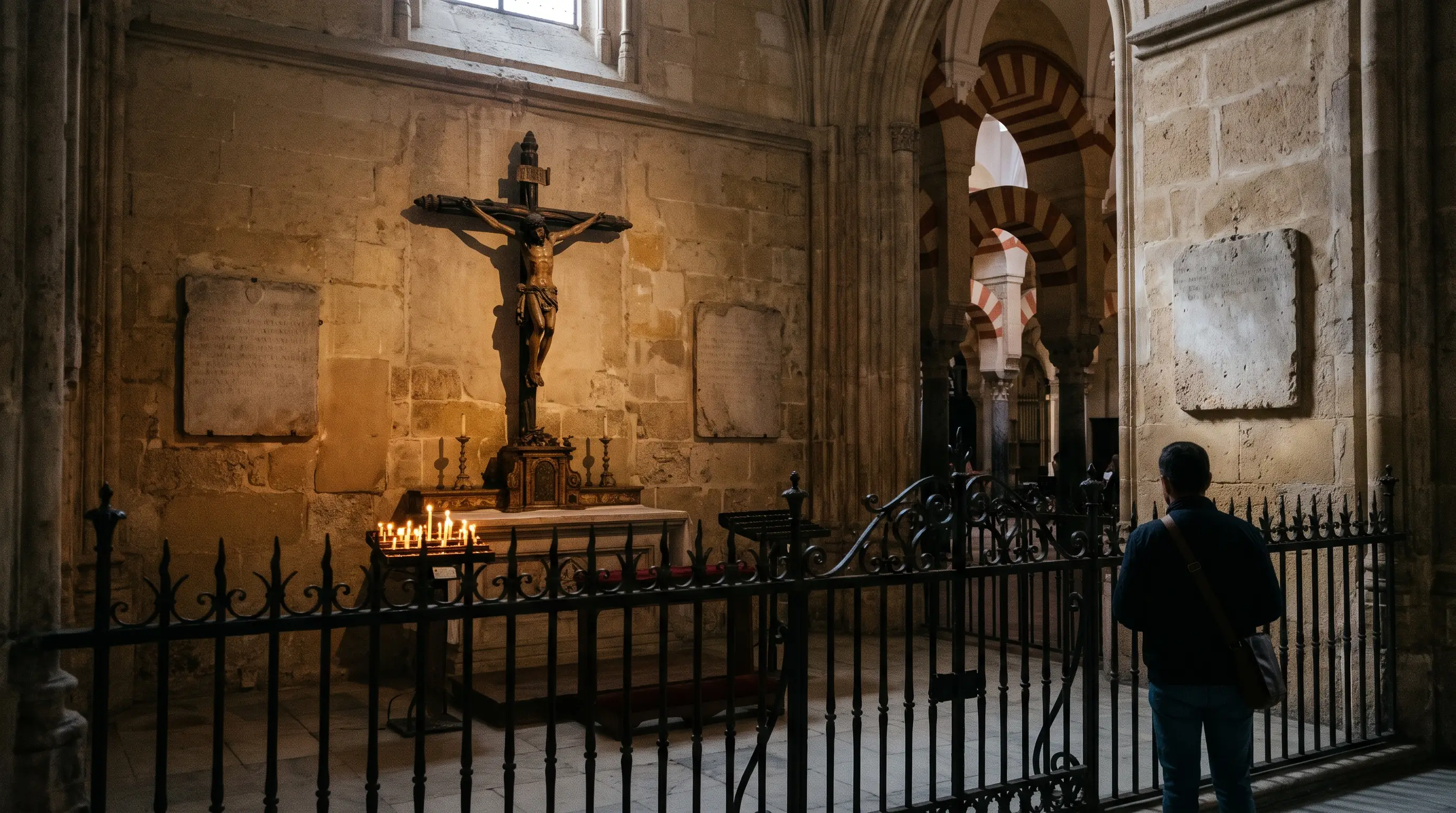
- Cathedral Chapter decision on the Chapel of the Souls for his chapel and tomb[1]
Jump to a section
Cusco to Montilla: a mestizo's long road to Spain
Visiting basics
Córdoba from 1591: minor orders and three books
- The translation of Leon Hebreo's Dialoghi d'amore (1590), with Inga printed on the title page[9]
- La Florida del Inca (1605), an account of de Soto's expedition to the south-east of today's United States, built on the memories of the veteran Gonzalo Silvestre[10]
- The first part of the Comentarios Reales (Lisbon, 1609), on pre-Hispanic Peru[11]
The Chapel of the Souls of Purgatory
Explore nearby · Monument
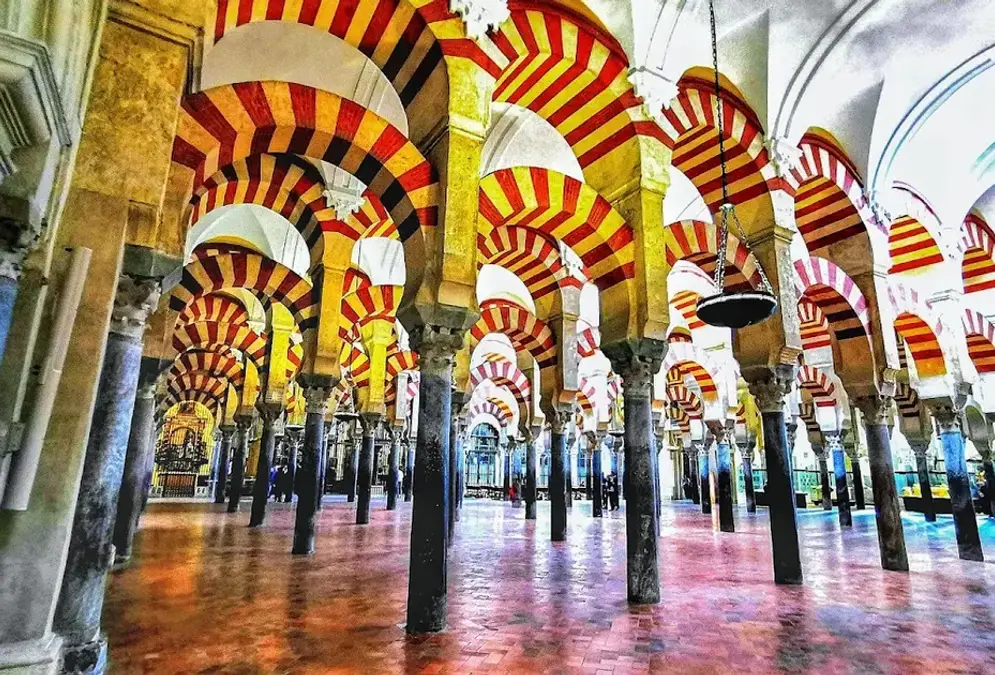
Mezquita-Catedral de Córdoba
856 columns, 1,300 years of Islamic and Christian history. UNESCO monument in Córdoba, Andalusia. Red-and-white arches, Byzantine mosaics, a Renaissance nave.
April 1616 and the afterlife of the books
Deep dive · Article
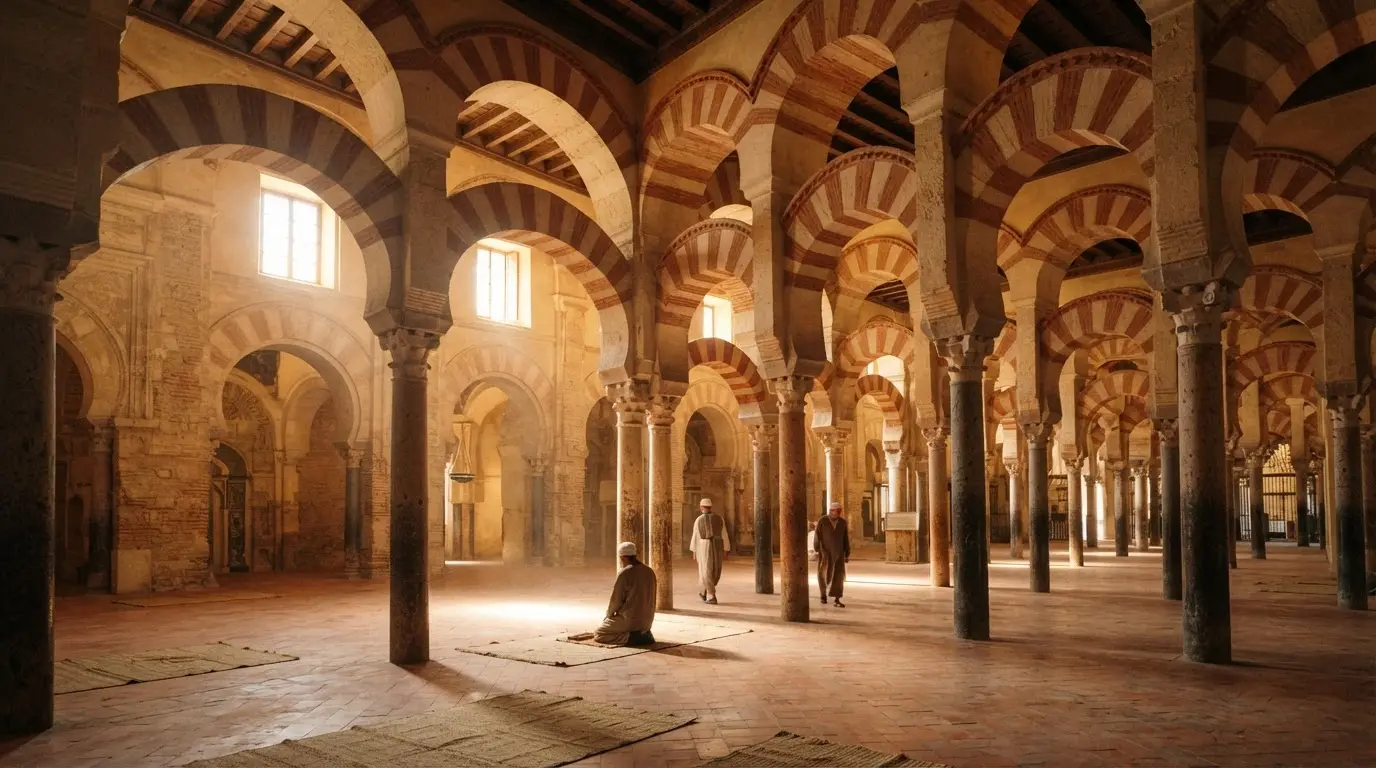
Abd al-Rahman I: The Fugitive Who Founded Córdoba
Abd al-Rahman I survived the massacre of his Umayyad family in 750 CE, fled six years across North Africa, and founded the Emirate of Córdoba at just 25.
Finding Garcilaso in Córdoba today
Recommended tours
Tours are selected for quality, not commission. We earn a small fee if you book — at no extra cost to you.
Frequently asked questions
Who was Inca Garcilaso de la Vega?
Why is Inca Garcilaso de la Vega buried in Cordoba?
Where is Inca Garcilaso de la Vega buried in the Mezquita?
When did Inca Garcilaso die?
What are the Comentarios Reales?
Is Inca Garcilaso a reliable historian?
Further reading
Sources
34 references Show Hide
- mezquita-catedraldecordoba.es — Capilla de las animas del purgatorio (opens in a new tab)
“the Cathedral Chapter granted this space on 29 October 1612 so that he could establish his chapel and tomb.”
- Wikipedia (opens in a new tab)
“It is recorded that he died in Córdoba on 23 April 1616, but it could have been up to two days earlier because of the inaccuracy of the existing documents.”
- cervantesvirtual.com (opens in a new tab)
“En 1591, tras la muerte de su tía Luisa Ponce de León, Garcilaso se traslada a vivir a Córdoba, entra con órdenes menores al servicio de la Iglesia”
- rarebooks.library.nd.edu (opens in a new tab)
“Garcilaso de la Vega, the "Inca," was born Gomez Suarez de Figueroa in Cuzco on April 12th, 1539.”
- rarebooks.library.nd.edu (opens in a new tab)
“Their son was thus one of the first Peruvian mestizos, and both sides of the family took care to ensure that he was exposed to the traditions of their respective cultures.”
- cervantesvirtual.com (opens in a new tab)
“Parte de Cuzco el 20 de enero de 1560”
- cervantesvirtual.com (opens in a new tab)
“Entre 1568 y 1570 participa en los combates contra el levantamiento de los moriscos en Las Alpujarras de Granada”
- bbva.com (opens in a new tab)
“Aunque le pidió permiso al rey Felipe II para volver a Perú y se lo concedió, nunca regresó.”
- rarebooks.library.nd.edu (opens in a new tab)
“yet he called attention to his mestizo status by styling himself "Inga" on the title page.”
- rarebooks.library.nd.edu (opens in a new tab)
“For years he had collaborated with Gonzalo Silvestre, a survivor of de Soto's expedition to what are now the southeastern United States”
- Wikipedia (opens in a new tab)
“While in Spain, Garcilaso wrote his best-known work, Comentarios Reales de los Incas, published in Lisbon in 1609.”
- bbva.com (opens in a new tab)
“para “cumplir la obligación, que a la patria y a los parientes maternos, se les debía”.”
- cervantesvirtual.com (opens in a new tab)
“aunque terminada hacia 1612, sólo se publicaría ya póstumamente en 1617”
- mezquita-catedraldecordoba.es — Capilla de las animas del purgatorio (opens in a new tab)
“the relationship between Garcilaso and the Cathedral began prior to this, as is revealed in the documentary sources which tell us of his position as sacristan.”
- mezquita-catedraldecordoba.es — Capilla de las animas del purgatorio (opens in a new tab)
“gave the chapel a carving of a Crucifixion, commissioned from Felipe Vázquez de Ureta, and a railing, the work of Gaspar Martínez.”
- mezquita-catedraldecordoba.es — Capilla de las animas del purgatorio (opens in a new tab)
“The author of La Florida, whose life and work is described in two side inscriptions”
- bbva.com (opens in a new tab)
“Vivió en Córdoba con mucha religión, murió ejemplar; dotó esta capilla, enterróse en ella; vinculó sus bienes al sufragio de las ánimas del Purgatorio.”
- cervantesvirtual.com (opens in a new tab)
“Comentó La Florida, tradujo a León Hebreo y compuso los Comentarios Reales.”
- cervantesvirtual.com (opens in a new tab)
“probablemente el 23 de abril, el autor había muerto en Córdoba tras una larga enfermedad”
- rarebooks.library.nd.edu (opens in a new tab)
“In his last years Garcilaso became a minor cleric, took on duties at a charitable hospital”
- bbva.com (opens in a new tab)
“Murió un 23 de abril de 1616, como dos grandes autores de la literatura universal, Cervantes y Shakespeare.”
- Wikipedia (opens in a new tab)
“he meanders, forgets, romanticises, or blatantly distorts too often to remain authorative.”
- rarebooks.library.nd.edu (opens in a new tab)
“all known copies of the Inca's History in Peru were quietly seized by royal officials in the wake of the 1781 Tupac Amaru II uprising.”
- bbva.com (opens in a new tab)
“El 25 de noviembre de 1978, el Rey Juan Carlos viajó a Perú y depositó, en la Catedral de Cuzco, una arqueta con parte de las cenizas del Inca Garcilaso de la Vega”
- andina.pe (opens in a new tab)
“La jornada conmemorativa se inició con la ofrenda floral en la capilla de las Animas de la Mezquita Catedral, donde se encuentran enterrados los restos del Inca.”
- bbva.com (opens in a new tab)
“En la localidad cordobesa se encuentra la Casa del Inca, donde vivió y escribió una parte importante de su obra.”
- mezquita-catedraldecordoba.es — Mezquita catedral (opens in a new tab)
“Reduced price: €12 For people over the age of 65, students between the ages of 15 and 26 and holders of the “European Youth Card””
- mezquita-catedraldecordoba.es — Mezquita catedral (opens in a new tab)
“Free of charge: People who were born in or are residents of the Diocese of Córdoba, children under 10”
- mezquita-catedraldecordoba.es — Mezquita catedral (opens in a new tab)
“Monday to Saturday: 8:30 to 9:30 hrs free visit. Except on day of extraordinary celebration. Group visits are not allowed in this schedule.”
- mezquita-catedraldecordoba.es — Entradas y horarios (opens in a new tab)
“From 10:00 to 19:00”
- mezquita-catedraldecordoba.es — Entradas y horarios (opens in a new tab)
“Last entry to the Monumental Site is half an hour before closing time and after this time no more tickets will be sold and there will be no access allowed.”
- mezquita-catedraldecordoba.es — Entradas y horarios (opens in a new tab)
“The opening days and times may be modified on an exceptional basis when special events are held.”
- montilla.es (opens in a new tab)
“CASA DEL INCA GARCILASO DE LA VEGA”