food-lovershistory-buffs
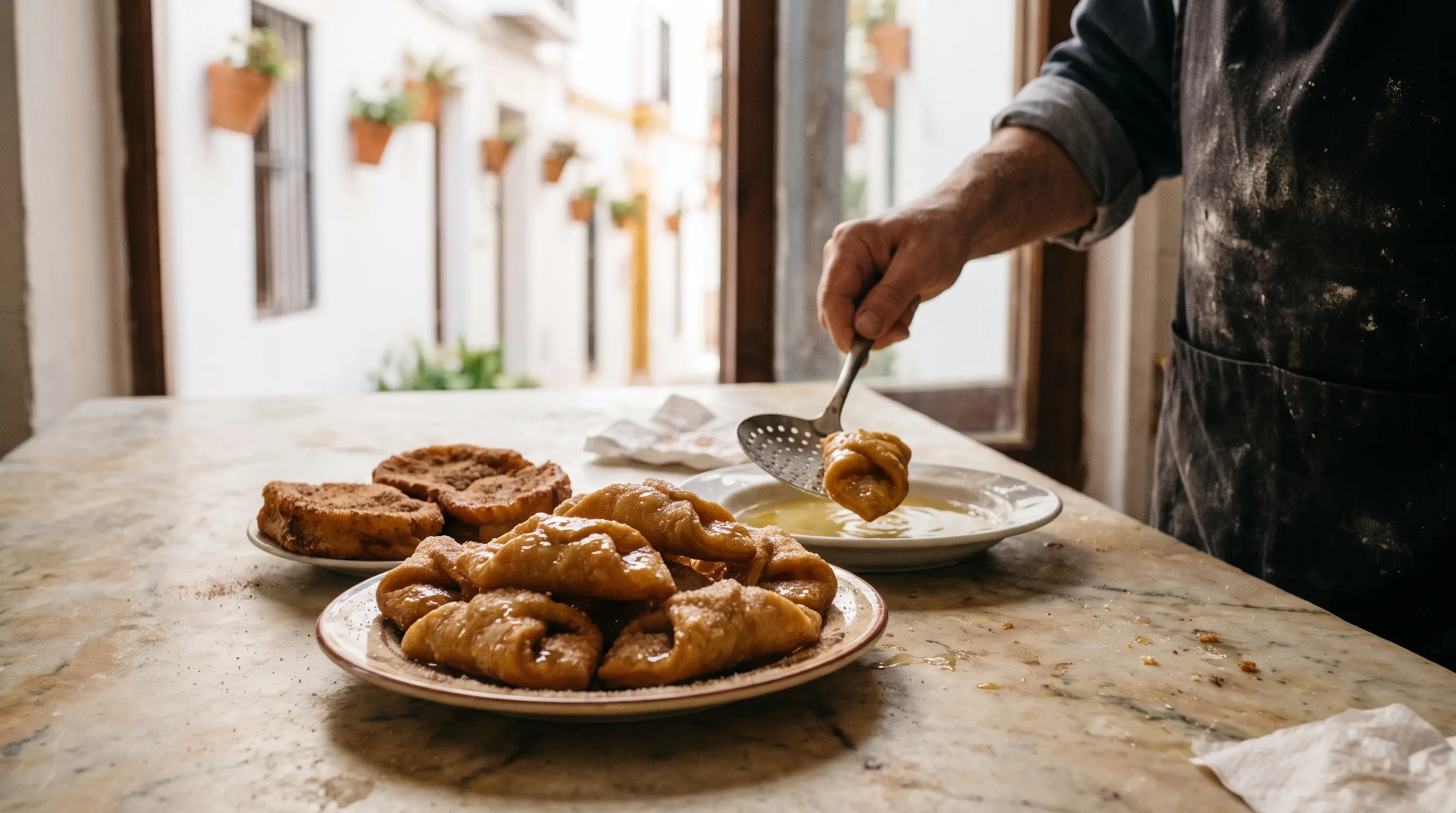
Cordoba fried sweets on a marble café counter: honey-glazed pestiños, golden torrijas dusted with cinnamon and a plate of flores in warm Andalusian morning light

Córdoba's Fried Sweets and Why Andalusia Claims to Fry Best
Córdoba fried sweets explained: pestiños, torrijas, flores and buñuelos, when each turns up in the calendar, how they are made and where convents sell them.

Portrait of Pedro Del Pozo
Written by

Seven years covering Córdoba's gastronomy, taberna culture, and the Montilla-Moriles DO.

Published
One university account has pestiños fried preferably in pork lard until the 16th century, with olive oil the norm only afterwards.[1] That matters in Córdoba, whose 376,967 hectares of olive groves are the second-largest olive area in Spain after Jaén.[2] Which fried sweet you can find depends on the month, and the Al-Andalus origin story that comes with them is a hypothesis, not a record.
Olive groves in Córdoba
376,967 ha
Second in Spain after Jaén, 2025/26 survey[2]
Pestiños fried in lard
16th century
One university account: lard preferred until then[1]
Convent sweets go on sale
1835
After the Mendizábal disentailment; before, gifts to benefactors[24]

Why Andalusians are said to fry like nobody else

The short answer: Andalusia's frying reputation rests on the calendar and on olive oil, not on any proven superior skill. Córdoba produces olive oil on a scale few places match: the 2025/26 campaign forecast is 269,100 tonnes of oil, second in Andalusia,[3] and the Baena designation of origin alone covers groves in seven towns of the province, among them Zuheros, Luque and Cabra.[4] Most of the sweets below are fried in plenty of it.
The reputation is younger than the legend suggests. A Universidad Pablo de Olavide article says pestiños were preferably fried in pork lard until the 16th century, because Jewish dietary rules barred oil,[1] but that is contested: the cook Martínez Montiño's 1611 Arte de cocina, as quoted in the Diccionario de autoridades, has them fried in lard or oil.[5] Either way, the olive-oil frying Andalusia now boasts about is not a timeless fact of the recipes. Whether Córdoba's oil makes its frying better is plausible rather than demonstrated.
The calendar matters as much as the oil. Lent's fast, one meal a day and no meat, is the stated reason Andalusia produced energy-rich sweets such as torrijas, leche frita and pestiños.[6] The baked pastel cordobés sits outside that frying tradition.
Read the claim as a calendar rather than a boast. Fried sweets cluster around the fast and the feast that follows it, so what is on a counter tells you roughly where you are in the year. A café that sells torrijas in July is offering a menu item; one that sells them in Holy Week is selling the season.

Pestiños: the recipe and the Al-Andalus question
A pestiño is a fried dough of wheat flour, white wine and olive oil, scented with orange and lemon peel and anise or sesame seeds, then rolled, cut, fried and usually soaked in honey or dusted with sugar.[7] Take the honey version if you have the choice: the wine and aniseed in the dough have something to push against.
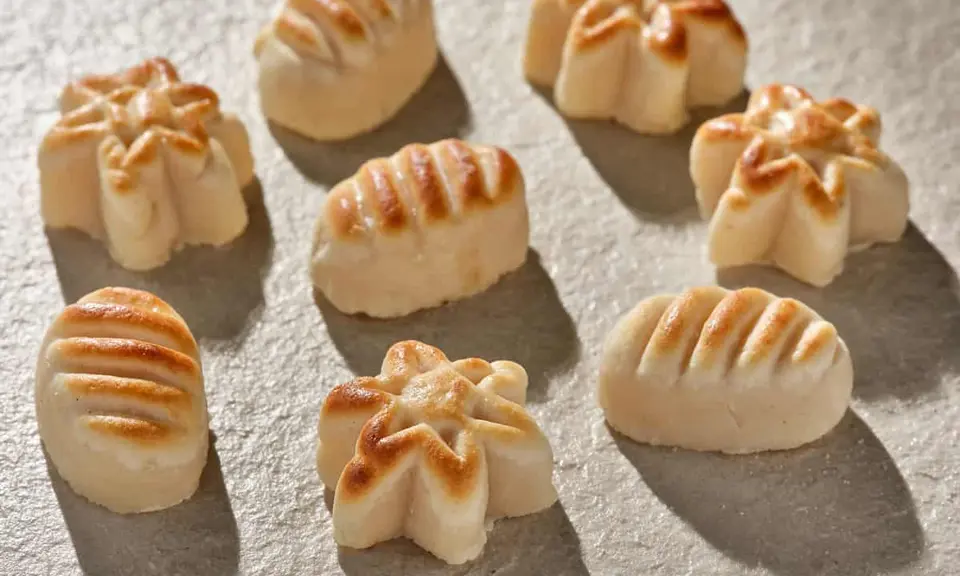
Golden mazapán de Córdoba figurines arranged on a traditional platter

Taste of Córdoba · Dish

Mazapán de Córdoba

Creamy Marcona almond marzipan hand-shaped in Córdoba since the Moorish Caliphate. Sold year-round in the city's pastry shops — the best souvenir to eat.

The usual origin story is a fusion of Roman, Jewish and Muslim cooking in Al-Andalus.[8] Two older relatives are offered as evidence: the frictilia of ancient Rome, a very similar sweet eaten at Saturnalia, which fell at Carnival-time,[9] and shebakía, a close cousin still prepared for Ramadan.[10] These are resemblances rather than a documented line of descent, so treat Al-Andalus as the widely held hypothesis, not the proven birthplace.
Pestiño recipes vary from house to house, so expect differences in aniseed, citrus and how heavily the honey is applied. To judge one, look at the crust: a good pestiño is crisp outside and tender inside, and it tastes of wine and orange rather than only of sugar.

Torrijas: the Semana Santa sweet in Córdoba's cafés

A torrija is bread soaked in milk or wine, coated in flour and egg and fried in plenty of hot oil.[11] The word is documented in Spain by the 15th century,[12] and in Córdoba the sweet is a Holy Week fixture.
In the city's cafés, confectioners and restaurants the torrija is the gastronomic queen of Semana Santa, sharing the street with processions and penance, and it is a dessert inherited from both Andalusi and Christian culture.[13][14]
As reported in March 2024, torrijas turned up in these places:
  • Pastelería San Rafael 1920 made a classic torrija and one soaked in PX wine, the sweet style Montilla-Moriles growers are known for, at weekends all year and daily in season.[15]
  • Panadería-pastelería Rio Grande baked a dedicated olive-oil bread for its torrijas and served them with custard, honey, cinnamon sugar or chocolate.[16]
  • Restaurant El Envero cooked a torrija on telera bread that was billed as the most Córdoban in town.[17]
Opening patterns change, so treat the list as a starting point and check before crossing town. Only San Rafael reported a rhythm that runs outside the Holy Week season. Eat a torrija warm if you can: the egg coating is crisp for only a few minutes, and the milk-soaked crumb is what separates a good one from a damp sponge.

Flores, buñuelos and other sweets from the frying pan
Flores and their relatives belong to the frutas de sartén, batter sweets fried in the pan, a technique described as Sephardic in origin and still cooked across Andalusia and La Mancha at Easter.[18] The Easter timing is read as a memory of Jewish Passover rather than a Christian rite.[18]
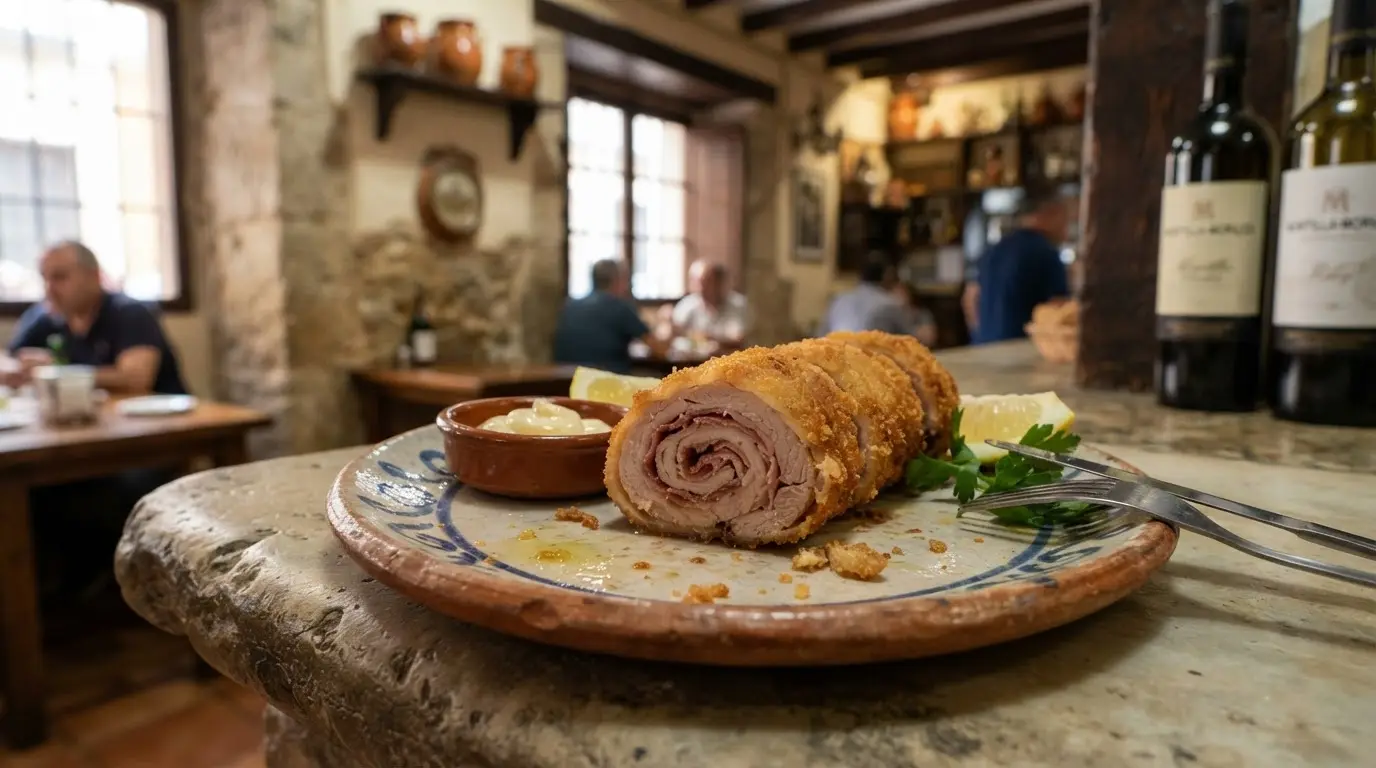
Flamenquín cordobés history: a golden crispy fried pork roll on a rustic ceramic plate at a traditional Córdoba taberna, sliced open to reveal the jamón serrano filling, natural Andalusian light on a stone counter

Deep dive · Article

A 1908 Córdoba Ad Offered Flamenquín. Is It the Dish We Eat Now?

The word flamenquín appears in a Córdoba newspaper in 1908; the only dated recipe story is Andújar 1939. What the record proves, and why both towns claim it.

Flores, the flower-shaped fritters, are made by heating an iron mould in boiling oil, dipping it in the batter and frying it again until golden.[19] They are the one sweet here that keep for days or weeks, while most fried sweets are eaten freshly made.[20] That makes them the realistic souvenir.
Buñuelos are first known among Spain's Morisco population,[21] and in Madrid and Andalusia they are eaten with special assiduity around All Saints on 1 November.[22] The pattern is described for Andalusia as a whole, so ask locally whether a given Córdoba bakery makes them.
SweetWhen to look for itWhat it is
PestiñosLentDough of flour, white wine and olive oil, fried then honeyed or sugared
TorrijasSemana SantaBread soaked in milk or wine, coated in flour and egg, fried
FloresEaster; keeps for days or weeksBatter fried in the pan, one of the frutas de sartén
BuñuelosAround All Saints, 1 NovemberMorisco-rooted fritters, tied to All Saints in Andalusia
Fried dough has long sat at both ends of the Lenten calendar. The Roman precedent for pestiños fell at Carnival-time,[9] and the Easter frutas de sartén arrive after the fast. Whether a given Córdoba stall or bakery fries anything for Carnival is a question to put to the seller, and the Córdoba Carnival page is the place to check dates before you plan around it.

Where to find fried sweets in Córdoba, and when

Convent kitchens are the traditional alternative to the pastry shop, and the sweets are bought through the torno, a turntable hatch in the wall of a cloistered convent, which beats any supermarket aisle as an experience.[23] Selling itself is recent: it became common after the 1835 Mendizábal disentailment, when earlier sweets had been gifts for benefactors.[24]
In the city, the brotherhoods of Calvario, Descendimiento, Sentencia and Buena Muerte run convent-sweet sales at the start of the Christmas season,[25] which lines up with Christmas in Córdoba. Those sales are the easiest way into convent baking without queueing at a hatch.

Check before you go

Product lists, opening days and prices at convent tornos change, and a given convent may not sell pestiños at all. Ask the convent or the city's tourism office before building a detour around one.
Two Córdoba convents are cited for particular sweets, though neither is a pestiño, so ask at the torno what is fried and when:

Recommended tours

Tours are selected for quality, not commission. We earn a small fee if you book — at no extra cost to you.
Plan the month first and the shop second: a spring visit gets pestiños and torrijas, a late-autumn one gets convent trays and, by Andalusian custom, possibly buñuelos. For a first visit in Holy Week, a café torrija, a honeyed pestiño from a bakery and one purchase through a convent torno make a fair sample of the whole tradition in a single day.

Frequently asked questions

What are the main Córdoba fried sweets to look for?

Pestiños, torrijas, flores and buñuelos. Pestiños and torrijas belong to Lent and Semana Santa, flores are an Easter sweet that keeps for days or weeks, and buñuelos are tied to All Saints on 1 November in Madrid and Andalusia.

What is the difference between pestiños and torrijas?

A pestiño is a fried dough of wheat flour, white wine and olive oil, flavoured with citrus peel and anise or sesame, then soaked in honey or dusted with sugar. A torrija is bread soaked in milk or wine, coated in flour and egg and fried in plenty of hot oil.

When are torrijas eaten in Córdoba?

Mainly during Semana Santa, when Córdoba's cafés, confectioners and restaurants treat the torrija as the season's star. One pastry shop reported making them at weekends all year and daily in season.

Why are fried sweets eaten at Easter in Andalusia?

Lent's fast, one meal a day and no meat, is the stated reason energy-rich sweets such as torrijas and pestiños arose in Andalusia. Batter sweets fried in the pan are also described as a Sephardic technique, still made at Easter as a memory of Jewish Passover.

Are pestiños Arab or Jewish in origin?

The recipe is presented as a fusion of Roman, Jewish and Muslim cooking in Al-Andalus, with ancient Rome's frictilia and the Ramadan sweet shebakía as relatives. That is a widely held hypothesis rather than a documented descent.

Can you buy sweets from nuns in Córdoba?

Yes, cloistered convents sell through the torno, a turntable hatch. Stock, days and hours vary by convent and season, so check locally. Brotherhoods also run convent-sweet sales at the start of the Christmas season.

What are flores fritas?

Flores are flower-shaped batter fritters fried in the pan, part of the frutas de sartén family. Unlike most fried sweets they keep for days or weeks.

Further reading

Sources

27 references Show
  1. upo.es (opens in a new tab)

    “se sabe que hasta el siglo XVI, los pestiños se freían preferiblemente en manteca de cerdo, ya que el aceite era un alimento cuyo consumo prohibía la religión judía.”

  2. eldebate.com — Cordoba celebra dia mundial olivo reivindicando cultivo esencial economia paisaje 358936 (opens in a new tab)

    “Córdoba concentra 376.967 hectáreas de olivar, lo que la sitúa como la segunda provincia andaluza y española en superficie dedicada a este cultivo, solo por detrás de Jaén.”

  3. eldebate.com — Cordoba celebra dia mundial olivo reivindicando cultivo esencial economia paisaje 358936 (opens in a new tab)

    “El mismo aforo prevé para esta campaña 1.530.900 toneladas de aceituna para almazara y 269.100 toneladas de aceite, manteniendo a Córdoba como segunda productora de Andalucía.”

  4. iaph.es (opens in a new tab)

    “Baena, Doña Mencía, Luque, Nueva Carteya, Zuheros, Castro del Río y Cabra, todos ellos en la provincia de Córdoba.”

  5. theobjective.com (opens in a new tab)

    “los quales se frien en manteca o azéite, y luego se les echa miel mui espumada”

  6. upo.es (opens in a new tab)

    “Es por ello que en nuestra tierra nacieron las torrijas, la leche frita o los pestiños.”

  7. upo.es (opens in a new tab)

    “Los pestiños consisten en una masa elaborada a base de harina de trigo, vino blanco y aceite de oliva que se adereza con cáscara de naranja, limón y semillas de anís o ajonjolí.”

  8. upo.es (opens in a new tab)

    “Esta receta final que ha llegado hasta nuestros días es producto de la fusión de las culturas romana, judía y musulmana que durante tantos años convivieron en Al-Ándalus.”

  9. upo.es (opens in a new tab)

    “se comía un dulce muy similar al pestiño, los frictilia, que, además, se entregaban como ofrenda a Silvano, un dios menor.”

  10. upo.es (opens in a new tab)

    “Incluso en la actualidad se prepara por Ramadán un dulce muy similar a los pestiños, la shebakía.”

  11. Wikipedia — Torrija (opens in a new tab)

    “Luego se rebozan en harina y huevo y se fríen en abundante aceite caliente.”

  12. Wikipedia — Torrija (opens in a new tab)

    “En España, el término «torrija» o «torreja» aparece ya documentado en el siglo xv.”

  13. eldebate.com — Donde saborear comprar mejores torrijas cordoba 182167 (opens in a new tab)

    “La torrija es la auténtica reina gastronómica de la Semana Santa, la gran protagonista que convive con las procesiones y penitencias.”

  14. eldebate.com — Donde saborear comprar mejores torrijas cordoba 182167 (opens in a new tab)

    “este postre típico de pan mojado en leche, herencia de la cultura andalusí y cristiana.”

  15. eldebate.com — Donde saborear comprar mejores torrijas cordoba 182167 (opens in a new tab)

    “Cuentan con una versión clásica y otra con vino PX que se pueden encontrar todos los fines se semana del año y todos los días en temporada.”

  16. eldebate.com — Donde saborear comprar mejores torrijas cordoba 182167 (opens in a new tab)

    “Las realizan con un pan casero fabricado especialmente para este dulce, con aceite de oliva, crema pastelera, miel, o azúcar con canela o chocolate.”

  17. eldebate.com — Donde saborear comprar mejores torrijas cordoba 182167 (opens in a new tab)

    “tienen la torrija más cordobesa cocinada con pan de telera.”

  18. Wikipedia — Fruta de sartén (opens in a new tab)

    “hoy en día aún se siguen elaborando en muchos sitios de Andalucía y La Mancha por Semana Santa”

  19. Wikipedia — Flor frita (opens in a new tab)

    “El molde se calienta en aceite hirviendo y tras ello se remoja en la masa.”

  20. Wikipedia — Fruta de sartén (opens in a new tab)

    “mientras que otras como las "Flores" se conservan durante días o semanas para su consumo.”

  21. Wikipedia — Buñuelo (opens in a new tab)

    “Buñuelos are first known to have been consumed among Spain's Morisco population.”

  22. Wikipedia — Buñuelo (opens in a new tab)

    “In Madrid and Andalusia, they are consumed with special assiduity during the Festival of Saints”

  23. eldebate.com — Mejores dulces navidenos estan estos conventos monasterios 162594 (opens in a new tab)

    “En la era de Amazon y de las grandes superficies, resulta una experiencia memorable comprar a través del torno de una institución de clausura.”

  24. eldebate.com — Mejores dulces navidenos estan estos conventos monasterios 162594 (opens in a new tab)

    “En un principio, los dulces monásticos y conventuales no se comercializaban, la necesidad llevó a los conventos a vender productos de repostería, especialmente tras la desamortización de Mendizábal, en 1835”

  25. eldebate.com — Olor convento 78019 (opens in a new tab)

    “En nuestra ciudad hermandades como el Calvario, pionera en estas lides, y otras muchas que se han ido sumando como el Descendimiento, la Sentencia o la Buena Muerte, proponen la adquisición de algunos de estos ricos manjares.”

  26. eldebate.com — Olor convento 78019 (opens in a new tab)

    “exquisitos mancheguitos de las Carmelitas Descalzas de Santa Ana”

  27. eldebate.com — Olor convento 78019 (opens in a new tab)

    “unas rosquillas tan singulares como las que elaboran solamente en estas fechas las Capuchinas”