
Two ingredients, centuries of history
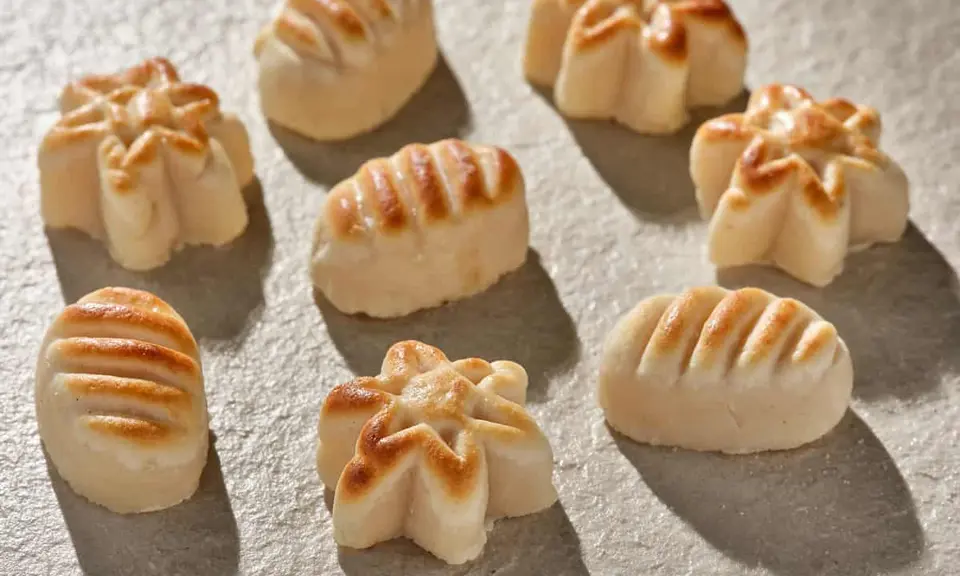
Mazapán is simpler than it looks. Ground Marcona almonds and icing sugar, roughly two-thirds to one-third, kneaded until smooth. Some recipes add a drop of rose water or orange-blossom water — a technique that goes back to medieval Andalusian confectioners. The paste is hand-shaped or pressed into moulds, brushed with egg yolk, and baked just long enough to set a faint glaze. That's it.
What makes the Córdoba version distinct is the quality of the almonds. Marcona almonds are rounder, softer, and more oily than the commercial varieties used elsewhere. They dissolve into the paste in a way that produces a different texture — closer to butter than to paste.
The route from palace to convent to pastry shop
The word mazapán likely derives from the Arabic mawthaban, a sweetened bread. In the 10th-century Caliphate, Córdoba was one of the wealthiest cities in Europe, and refined confections based on almonds and sugar appeared on palace tables. After the Reconquista, the knowledge passed to Córdoba's convents, as described in our gastronomy guide. The nuns shaped the paste into figurines — saints, animals, simple geometric forms — and passed the recipe to the family bakeries that carry it today.
How to eat it
At room temperature, not cold. Refrigeration dulls the almond aromas. Small pieces work better than large ones — it's rich. Traditionally associated with Christmas, but sold in the historic centre and Judería shops throughout the year.
The natural pairing is Pedro Ximénez — the sweet Montilla-Moriles wine whose dark, raisined character matches the density of the marzipan without overwhelming it. Strong coffee works too, cutting the sweetness without competing with the almond flavour.
Where to buy it
The pastry shops of Córdoba's historic centre are the right place to start. Confitería-Pastelería San Cayetano follows ancestral methods and is frequently cited as the reference. Pastelería Roldán and La Flor de Córdoba both do quality versions, often packaged in boxes that make an ideal traditional gift to take home — for more souvenir ideas beyond edibles, see Córdoba's shopping and crafts guide. During Christmas, the traditional markets in the Judería have mazapán in every form imaginable — from classic figurines to variations that bend the original recipe while keeping the almond base intact.