history-buffsfood-lovers
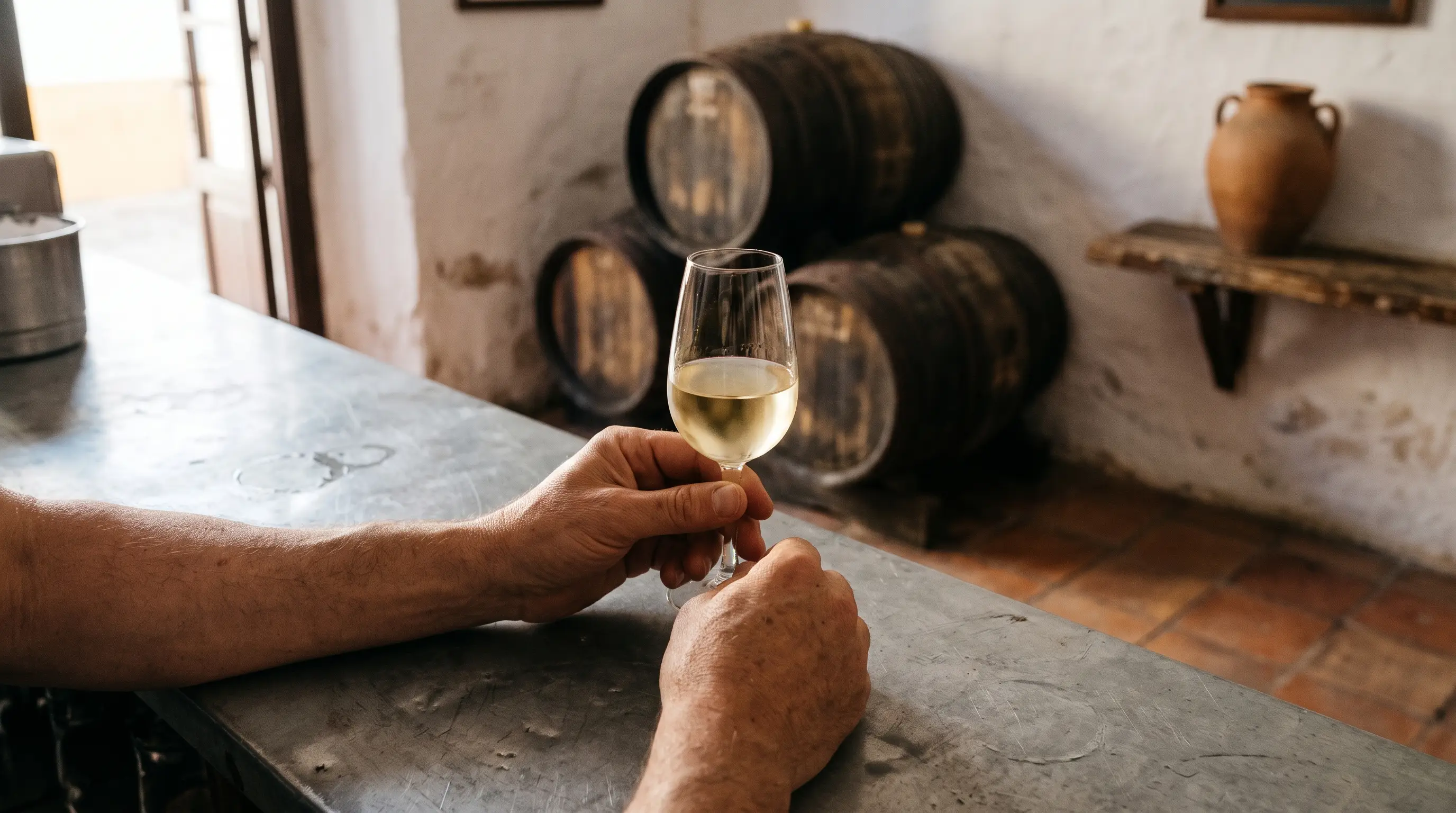
Hands holding a glass of fino on a zinc counter in a Córdoba taberna, a modern echo of the oldest wine in the world

The Oldest Wine in the World Sits in Carmona. Was It Fino?
Carmona's Roman urn holds the oldest wine in the world, and its polyphenols resemble fino. What the Córdoba team found, what it can't prove, and where to sip.

Portrait of Pedro Del Pozo
Written by

Seven years covering Córdoba's gastronomy, taberna culture, and the Montilla-Moriles DO.

Published
Roman Corduba206 BCE–572
Carmona's burial urn held about five litres of reddish liquid[1], and a Universidad de Córdoba team identified it as the oldest wine ever discovered, ahead of the Speyer bottle found in 1867[2]. As for whether it was fino, the lead chemist found it close to Montilla-Moriles, Jerez and Sanlúcar wines[3], a resemblance in a degraded sample and not proof that Romans made fino. The modern wine it is compared with can be tasted at Bodegas Campos in Córdoba.
Liquid in the urn
5 litres
Reddish liquid beside cremated bones and a gold Janus ring[1]
Age of the necropolis
1st century AD
Unearthed near Seville in 2019[7]
Acidity of the sample
pH 7.5
Essentially water; typical wine sits near pH 3[8]

Carmona holds the record, and Speyer is the rival that matters

The wording that circulates runs like this: the Carmona urn holds the world's oldest wine, and it was something like fino. The first half has a published analysis behind it. The second half is a comparison, and the gap between the two is the whole story.
The record belongs to a single urn. A Universidad de Córdoba team led by Prof José Rafael Ruiz Arrebola, working with the City of Carmona, identified its contents as the oldest wine ever discovered[2], and the chemical analyses ran at the university's Central Research Support Service (SCAI)[4].
The qualifier matters because of the rival. The Speyer bottle, found near Speyer in Germany in 1867[5] and dated to the 4th century AD, holds a liquid that is only thought to be wine, and one report says it has never been chemically analysed[6]. Carmona's necropolis, unearthed in 2019 and dated to the 1st century AD[7], is older by some centuries and has a published lab analysis behind it.

A pH of 7.5 leaves only the polyphenols to read

The sample is the first caveat. Time has degraded the liquid so far that it now reads as essentially water on the pH scale[8]. Whatever the analysts learned came from the compounds that survived.

pH 7.5

The Carmona liquid today. Typical wine sits near pH 3, so the sample has degraded substantially[8].
A reading of 7.5 against the usual 3 is the gap between water and wine[8]. The identification therefore leans on markers that survived, such as the polyphenols[9].
Those compounds are the source of the fino link, and the wording is a ranking. Among modern Andalusian wines, fino and manzanilla matched most closely on the urn's markers[9], and the ranking spans two regions: inland Montilla-Moriles and coastal Sanlúcar de Barrameda. Nearest is not identical. Ruiz Arrebola described it more loosely, as quite similar to wines from Andalucía: Montilla-Moriles, sherry-type wines from Jerez, and manzanilla from Sanlúcar[3].
Colour is a second open point. Syringic acid forms when the pigment of red wine decomposes, so its absence suggested an originally white wine[10], but the team itself clarifies that the missing acid may be due to degradation over time[11]. Absence is a weak signal either way, because a molecule that never formed and one that broke down leave the same empty spot on a chromatogram. Taken together, the profile describes a wine at home in the Andalusian white tradition, and that is as far as it goes.

A funeral offering with no Roman wines to compare
The wine was a funeral offering, not a bottle laid down for drinking. Alongside the liquid the urn held cremated bone and a gold ring bearing the god Janus[1], and the likeliest explanation is a libation poured during the burial rite to help the deceased in their transition to a better world[12]. The urn found alongside it, with a cremated woman, held amber jewels, a perfume bottle and silk remnants instead[13]. That contrast is the useful part: grave goods were chosen, so the wine in the first urn was a deliberate act, not a leftover.
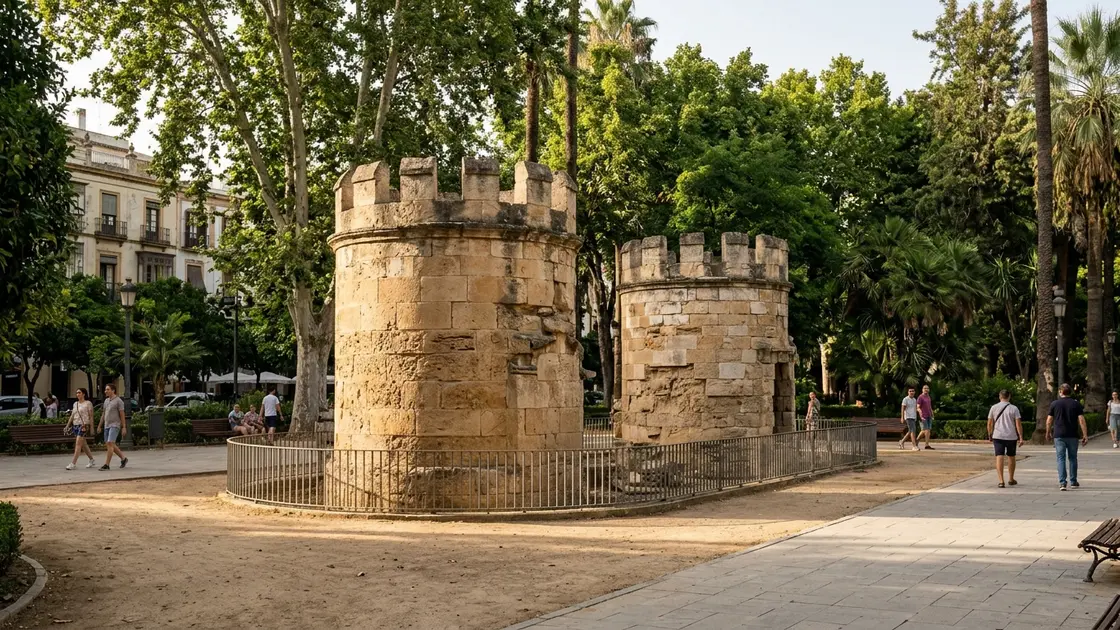
Two reconstructed cylindrical Roman mausoleums with battlemented parapets in the Jardines de la Victoria, Córdoba, seen in afternoon light with garden trees behind

Explore nearby · Monument

Roman Mausoleums of Puerta de Gallegos

Roman mausoleums of Puerta de Gallegos in Córdoba: two 13 m cylindrical tombs from Tiberius's reign beside the Via Augusta. Visiting status is unconfirmed.

The setting also frames how far the result can travel. The team had no wines of the same era to compare against, so the origin of the liquid proved hard to pin down[14]. Every comparison with Andalusian wine is therefore a comparison with a modern bottle, not with another Roman one. Córdoba has its own Roman funerary architecture, and the Roman mausoleums at the Puerta de Gallegos are the nearest place in the city to see how Romans housed their dead.

Was it fino? A resemblance, not an identification
The claim holds as a resemblance and fails as an identification. A polyphenol profile describes what is left in the glass, and in a degraded sample that is not much.
The record itself is narrower than it sounds. The Speyer liquid is only thought to be wine[6], so Carmona's title rests on a published analysis of its own liquid, not on beating a proven rival. A claim about age and a claim about identity are different things, and the evidence supports the first much better than the second.
Even the wine it is compared with resists shortcuts: Montilla-Moriles is not sherry, whatever the two share in method and style. Read "similar to Jerez" as a family likeness, not a pedigree.
A claim-by-claim reading of the Carmona story:
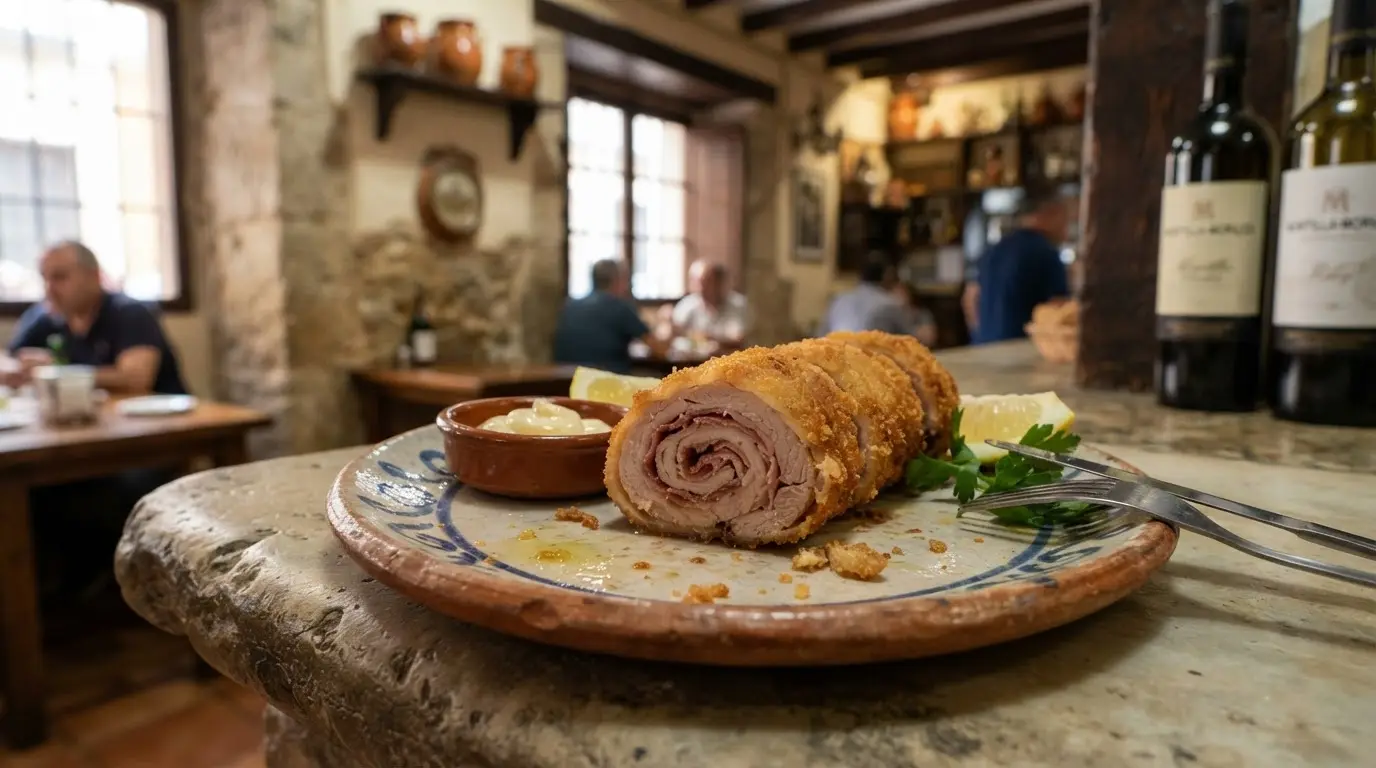
Flamenquín cordobés history: a golden crispy fried pork roll on a rustic ceramic plate at a traditional Córdoba taberna, sliced open to reveal the jamón serrano filling, natural Andalusian light on a stone counter

Deep dive · Article

A 1908 Córdoba Ad Offered Flamenquín. Is It the Dish We Eat Now?

The word flamenquín appears in a Córdoba newspaper in 1908; the only dated recipe story is Andújar 1939. What the record proves, and why both towns claim it.

  • Oldest wine ever discovered: supported, with the Speyer liquid only thought to be wine[2][6]
  • Originally white: possible, though the missing acid may be degradation[11]
  • Similar to fino, manzanilla and Jerez: supported as similarity of polyphenols[9][3]
  • A Roman fino: not shown by any of the above
  • Safe or pleasant to drink: not shown, and the lead chemist would have concerns about tasting it even though tests showed it non-toxic[15]
So was it fino? Its chemistry sits close to fino and manzanilla, and no analysis of a degraded sample can honestly go further.

Taste fino at Bodegas Campos, then go 40 minutes to the cellars

Fino is the most universal of the generoso wines, and in Montilla-Moriles it is raised under velo de flor, the biofilm that forms on the wine's surface after fermentation[16][17]. The denomination's rules ask for 100% Pedro Ximénez must for fino, a grape that covers about 95% of the vineyard land[18]. The method is shared with sherry: crianza bajo velo de flor, the wine ageing beneath that living film[20]. In the glass, expect a dry, yellow wine with almond and yeast notes[16]. Order it by the glass before you commit to a bottle.

Recommended tours

Tours are selected for quality, not commission. We earn a small fee if you book — at no extra cost to you.
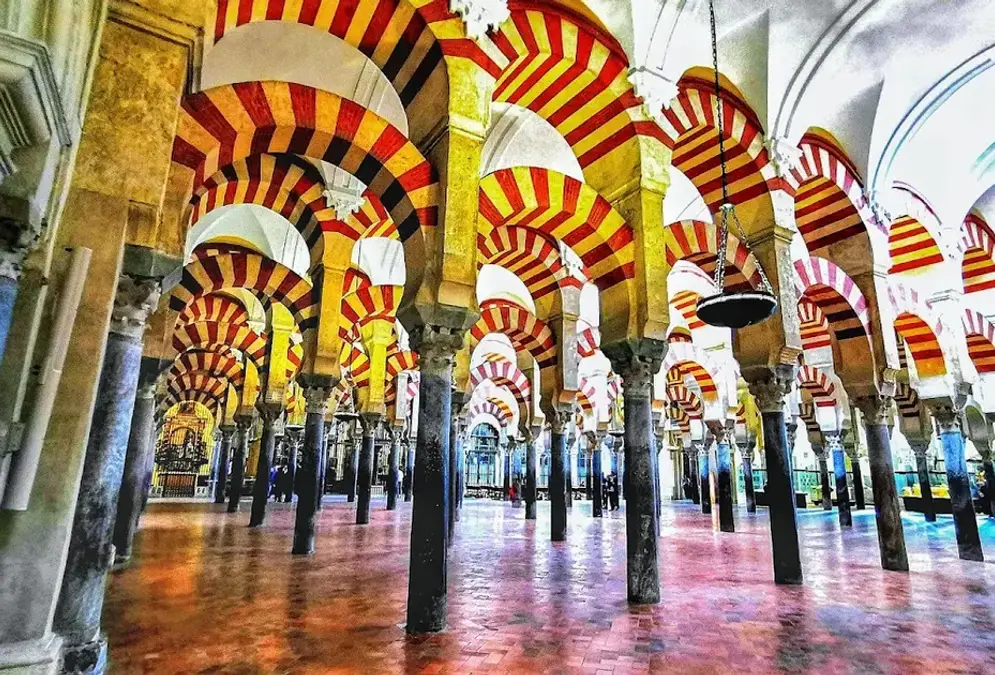
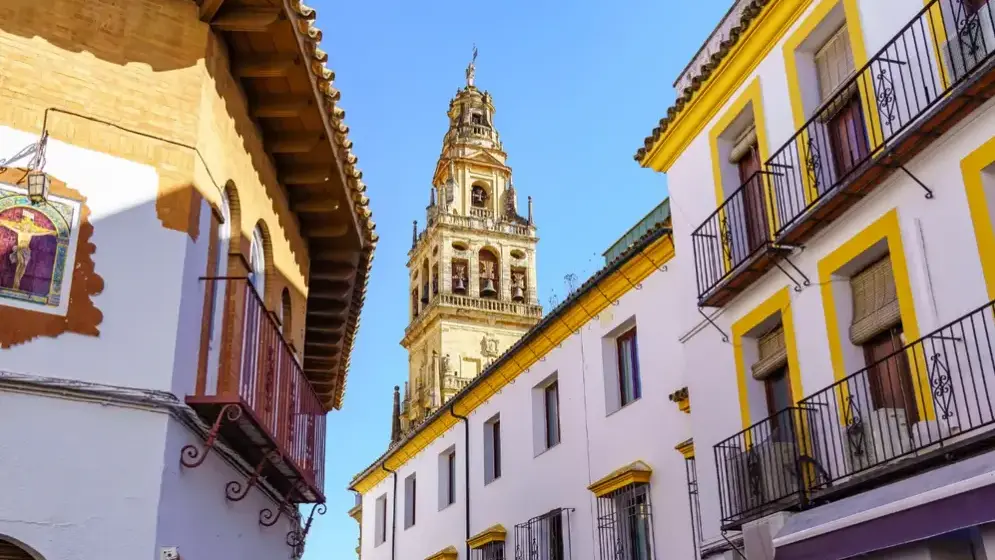
Back in Córdoba, the guide to traditional bodegas and tabernas lists the counters that pour it by the glass, and Bodegas Campos is a sensible first stop.
The cellars themselves are close: most municipalities on the Montilla-Moriles wine route lie about forty minutes from Córdoba city[19], and Montilla, Spain's City of Wine for 2027 is where many of the cellar doors are.

Frequently asked questions

What is the oldest wine in the world?

The liquid in a Roman urn from Carmona, near Seville, which a Universidad de Córdoba team identified as the oldest wine ever discovered[2]. It tops the Speyer bottle, whose contents are only thought to be wine[6].

Was Roman wine like fino or sherry?

The Carmona wine's polyphenols matched most closely those of fino and manzanilla made in Montilla-Moriles and Sanlúcar today[9]. That is a resemblance in a degraded sample, not evidence that Romans made fino.

Where was the Carmona Roman wine found?

In a Roman necropolis near Seville, unearthed in 2019 and dated to the 1st century AD[7]. The wine was in an urn that also held cremated bone and a gold ring bearing the god Janus[1].

Could the oldest Roman wine be drunk?

Not advised. The liquid has degraded to a pH of 7.5, essentially water[8], and the chemist who led the analysis would have concerns about tasting it, even though tests showed it non-toxic[15].

Is the Speyer bottle older or younger than the Carmona wine?

Younger. The Speyer bottle, found in 1867[5], dates to the 4th century AD[6], while the Carmona necropolis dates to the 1st century AD[7].

Can you taste Montilla-Moriles fino near Córdoba?

Yes. Fino is raised under velo de flor in the denomination's cellars[16], and most municipalities on the wine route are about forty minutes from Córdoba city[19].

Sources

20 references Show
  1. decanter.com (opens in a new tab)

    “As well as cremated bone remains and a gold ring bearing the image of the god Janus, the jar was full to the brim with a preserved, reddish liquid – about five litres in total.”

  2. phys.org (opens in a new tab)

    “has identified it as the oldest wine ever discovered, thus toppingthe Speyer wine bottle discovered in 1867”

  3. theguardian.com (opens in a new tab)

    ““The wine turned out to be quite similar to wines from here in Andalucía: Montilla-Moriles; sherry-type wines from Jerez, and manzanilla from Sanlúcar,” said Ruiz Arrebola.”

  4. vinetur.com (opens in a new tab)

    “A series of chemical analyses conducted at UCO's Central Research Support Service (SCAI) confirmed this hypothesis.”

  5. Wikipedia — Speyer wine bottle (opens in a new tab)

    “Discovered | 1867 Near Speyer, Rhineland-Palatinate, Germany”

  6. decanter.com (opens in a new tab)

    “That find has been dated to the 4th century AD but the liquid inside is only thought to be wine as it has never been chemically analysed.”

  7. decanter.com (opens in a new tab)

    “In 2019, archaeologists in the Spanish city of Carmona near Seville unearthed a Roman necropolis dating to the 1st century AD/CE.”

  8. decanter.com (opens in a new tab)

    “The pH of the liquid had degraded substantially, and at 7.5 is essentially water (wines typically have a pH of 3).”

  9. decanter.com (opens in a new tab)

    “Polyphenolic markers in the ancient wine matched most closely with those found in Fino and Manzanilla styles made in Montilla-Moriles and Sanlúcar de Barrameda today”

  10. decanter.com (opens in a new tab)

    “The absence of syringic acid, which forms by the decomposition of the pigment in red wines, also indicated that the original colour of the wine was white.”

  11. phys.org (opens in a new tab)

    “the team clarifies that the fact that this acid is not present may be due to degradation over time.”

  12. decanter.com (opens in a new tab)

    “the urn must have been filled with wine in a sort of libation ritual in the burial ceremony or as part of the burial rite to help the deceased in their transition to a better world.”

  13. newatlas.com (opens in a new tab)

    “Another urn was found alongside a cremated woman, but instead of wine it contained amber jewels, a bottle of perfume and remnants of a silk fabric.”

  14. vinetur.com (opens in a new tab)

    “Determining the exact origin of the wine proved more challenging due to the lack of comparable samples from the same era.”

  15. decanter.com (opens in a new tab)

    “Dr. José Rafael Ruiz Arrebola of the University of Córdoba, who led the chemical analysis, told The Guardian that he would have concerns about tasting it.”

  16. upo.es (opens in a new tab)

    “El Fino es el vino generoso más universal. Se cría bajo velo de flor en las bodegas de la denominación de origen Montilla-Moriles.”

  17. bio-conferences.org (opens in a new tab)

    “Biological ageing occurs after fermentation of the grape must and it is due to the appearance of a biofilm on the surface of the wine called “veil of flor”.”

  18. upo.es (opens in a new tab)

    “Esta variedad cubre el 95% de los terrenos y es necesario que el 100% del mosto proceda de ella para la elaboración de los finos”

  19. Spain.info (opens in a new tab)

    “desde Córdoba capital la mayoría de municipios se encuentran a cuarenta minutos aproximadamente.”

  20. Wikipedia — Montilla Moriles (opens in a new tab)

    “This region produces mainly sweet dessert wines using similar techniques to those used for the production of sherry, that is, by crianza bajo velo de flor”