
history-buffsphotographers
Roman Mausoleums of Puerta de Gallegos
Monument No admission price published.

Roman Mausoleums of Puerta de Gallegos

No permanent opening hours published. Confirm access with the city council or tourist office before visiting.

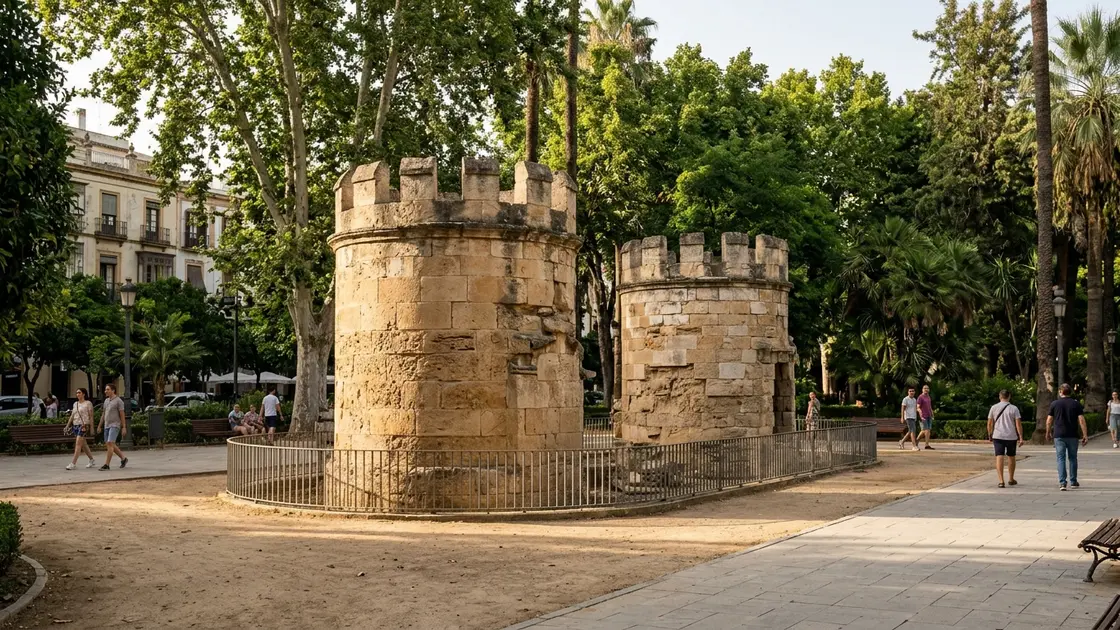
The Roman mausoleums of Puerta de Gallegos are two cylindrical funerary monuments, each 13 metres across, standing in the Jardines de la Victoria beside the road that once led out of Roman Córdoba towards Hispalis (Seville). They are among the most emblematic funerary monuments of the Roman city. They are also a site where you should check access before you plan around it, because public opening has been an open question for years.

What the mausoleums are

The University of Córdoba's archaeology service calls the pair two of the most emblematic examples of monumental funerary architecture in Roman Córdoba, both for their size and for a cylindrical type of Italic origin with no exact parallel in Hispanic funerary architecture. The remains preserve the burial chamber, remnants of the base, cornices and a battlemented parapet.

The two drums were built under the emperor Tiberius (14–37 CE) with identical dimensions but different functions. The northern mausoleum was the resting place of an unknown patrician. The southern one served as a columbarium, a collective burial for his relatives. Original pieces of the Roman road surface can still be seen on the site.

A necropolis that kept changing

The cylinders were the high point of a much older burial ground. Under Augustus a first funerary monument, with an ustrinum (the place where bodies were cremated) and a burial area, was built, and the road was paved with slabs of local pudding-stone. By the middle of the 1st century part of the necropolis made way for a residential district beside the amphitheatre. Once that quarter was abandoned, by the end of the 3rd century, the ground went back to funerary use.

Confirm access before you walk over

No permanent hours or ticket price are published, and the 2023 opening contract is not a timetable. Ask the city tourist office or council whether the site is open that day.

How they were built and rediscovered

The builders used ashlar masonry (opus quadratum), the local stone known as piedra de mina, and mortared rubble core, with marble for decoration. What you see today is partly a reconstruction. The remains were found in 1993 during archaeological excavations and then rebuilt following the original patterns, so treat the parapet and cornices as an informed restoration, not untouched Roman stone.

The road they flank is the way out of the city to the west. Roman cemeteries lay outside the walls and along main roads, which is why tombs of this scale stood where travellers would pass them. For the temple that stood inside the Roman city, see the Roman Temple.
Popular tours in Córdoba

Best Seller
Mosque-Cathedral Skip-the-Line Guided Tour

Mosque-Cathedral Skip-the-Line Guided Tour

Skip the queue and explore the Mezquita-Cathedral with a knowledgeable local guide. Discover 13 centuries of layered history in one of Spain's most iconic monuments.

Skip the line
1.5 hours

From €29

4.7 (7,461 reviews)

✓ Verified GetYourGuide reviews

Books up weeks ahead in peak season

Reserve Your Spot
Best Seller
Jewish Quarter, Mosque & Alcázar Tour

Jewish Quarter, Mosque & Alcázar Tour

A comprehensive guided tour covering Córdoba's three UNESCO-listed highlights: the Mezquita, the medieval Jewish Quarter, and the Alcázar de los Reyes Cristianos.

3 hours

From €49

4.6 (5,636 reviews)

✓ Verified GetYourGuide reviews

Books up weeks ahead in peak season

Reserve Your Spot
Best Seller
Mosque-Cathedral E-Ticket with Audio Guide

Mosque-Cathedral E-Ticket with Audio Guide

Explore the Mosque-Cathedral at your own pace with a detailed audio guide that brings every arch, mihrab, and chapel to life. Skip the ticket queue with your e-ticket.

Self-guided

From €18.50

Less than a restaurant lunch

4.2 (3,875 reviews)

✓ Verified GetYourGuide reviews

Books up weeks ahead in peak season

Reserve Your Spot
Best Seller
Caballerizas Reales Equestrian Show

Caballerizas Reales Equestrian Show

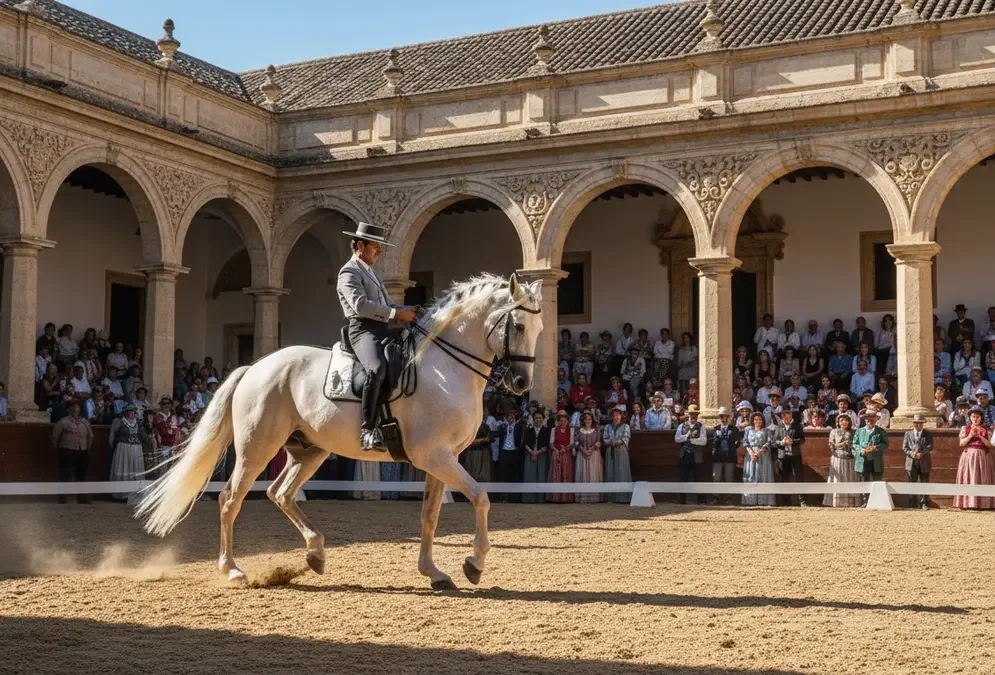
70 minutes of Andalusian dressage and live flamenco at Córdoba's historic 1570 Royal Stables. Pure Spanish breed horses perform classical techniques — piaffe, passage, garrocha — in a breathtaking vaulted arena.

70 minutes

From €18.50

Less than a restaurant lunch

4.5 (2,979 reviews)

✓ Verified GetYourGuide reviews

Books up weeks ahead in peak season

Reserve Your Spot
Best Seller
Mosque & Jewish Quarter Tour with Tickets

Mosque & Jewish Quarter Tour with Tickets

Explore two of Córdoba's most iconic sites — the Mezquita and the medieval Jewish Quarter — with skip-the-line tickets and an expert local guide included.

Skip the line
2 hours

From €35.55

4.6 (2,232 reviews)

✓ Verified GetYourGuide reviews

Books up weeks ahead in peak season

Reserve Your Spot
Best Seller
Mosque-Cathedral, Jewish Quarter & Alcázar Tour

Mosque-Cathedral, Jewish Quarter & Alcázar Tour

A comprehensive guided tour of Córdoba's three UNESCO highlights: the Mezquita-Cathedral, the ancient Jewish Quarter, and the magnificent Alcázar gardens.

3.5 hours

From €49.99

4.6 (1,934 reviews)

✓ Verified GetYourGuide reviews

Books up weeks ahead in peak season

Reserve Your Spot
Best Seller
Alcazar Guided Tour and Skip-the-Line

Alcazar Guided Tour and Skip-the-Line

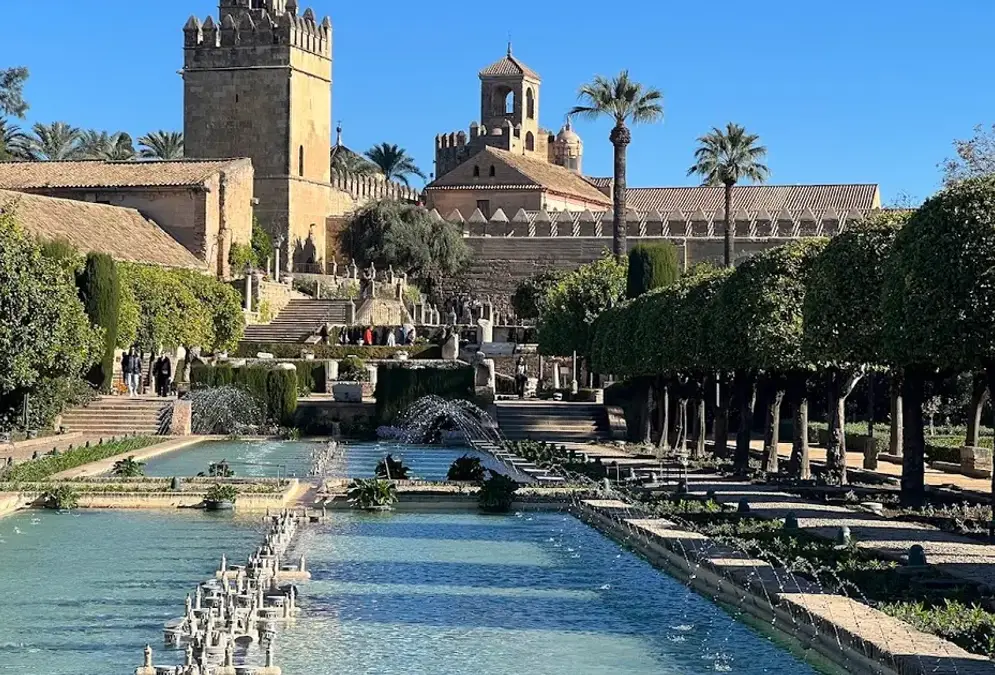
Bypass the queue and explore the Alcázar de los Reyes Cristianos with a guide. Check the listing for what is open on your date.

Skip the line
1.5 hours

From €19

Less than a restaurant lunch

4.2 (1,915 reviews)

✓ Verified GetYourGuide reviews

Books up weeks ahead in peak season

Reserve Your Spot
Best Seller
Mosque-Cathedral Guided Tour with Tickets

Mosque-Cathedral Guided Tour with Tickets

Entry tickets and expert guide included for an in-depth tour of the Mosque-Cathedral. Discover the prayer hall, the gilded mihrab, and the soaring bell tower.

1.5 hours

From €31.10

4.5 (1,708 reviews)

✓ Verified GetYourGuide reviews

Books up weeks ahead in peak season

Reserve Your Spot
Best Seller
Skip-the-Line Mosque-Cathedral History Tour

Skip-the-Line Mosque-Cathedral History Tour

Skip the line and uncover 13 centuries of layered history inside the Mosque-Cathedral with a specialist guide. From Roman columns to Visigoth foundations to Renaissance cathedral.

Skip the line
1.5 hours

From €32

4.7 (1,701 reviews)

✓ Verified GetYourGuide reviews

Books up weeks ahead in peak season

Reserve Your Spot
Best Seller
Flamenco Show Ticket with Drinks

Flamenco Show Ticket with Drinks

Experience the passion and drama of authentic Andalusian flamenco at one of Córdoba's premier tablaos. Ticket includes a drink at the bar.

1 hour

From €25

4.8 (1,189 reviews)

✓ Verified GetYourGuide reviews

Books up weeks ahead in peak season

Reserve Your Spot
Best Seller
Guided Tour of Medina Azahara

Guided Tour of Medina Azahara

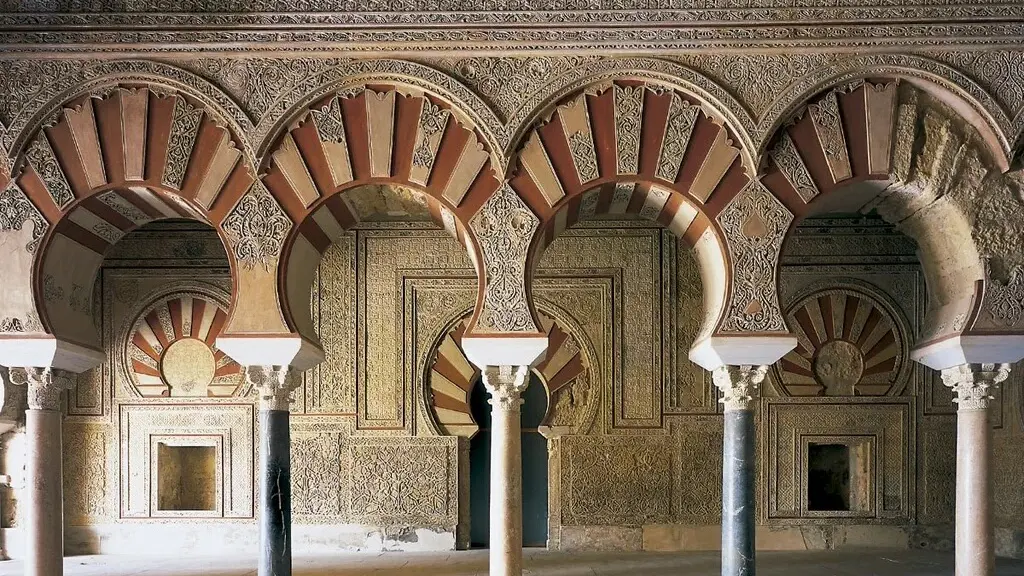
Explore the 10th-century Umayyad palace city of Medina Azahara with a specialist guide. Uncover the scale and splendour of Caliph Abd al-Rahman III's once-magnificent capital.

3 hours

From €20

Less than a restaurant lunch

4.6 (1,151 reviews)

✓ Verified GetYourGuide reviews

Books up weeks ahead in peak season

Reserve Your Spot
Best Seller
Authentic Patios: 2-Hour Tour

Authentic Patios: 2-Hour Tour

Discover the famous flower-filled patios of the Judería on a guided walking tour. Learn about the centuries-old tradition that earned Córdoba's patios UNESCO recognition.

2 hours

From €18.83

Less than a restaurant lunch

4.3 (1,119 reviews)

✓ Verified GetYourGuide reviews

Books up weeks ahead in peak season

Reserve Your Spot

Tours are selected for quality, not commission. We earn a small fee if you book — at no extra cost to you.

Planning a visit

No permanent opening hours or admission price have been published for the mausoleums. In 2021 the University of Córdoba proposed opening them on Saturdays and Sundays in agreement with the city council. In February 2023 the council approved the contract to open the site to the public and run visits, a one-year tender worth €17,811 for tourism animation of the Centro de Interpretación del Mundo Funerario housed in the mausoleums.

Those are plans and procurement, not a timetable. Ask the city tourist office, or the council, whether the site is open and under what conditions before you set out.

  • Where: Jardines de la Victoria, by the former Puerta de Gallegos, western edge of the historic centre.
  • What to expect: two reconstructed drum-shaped tombs and fragments of the Roman road.
  • Mobility and facilities: not published.

For the full account of how the necropolis grew and what the debates are, read the history of Córdoba's Roman mausoleums. This page is the visitor guide and does not retell it.

Reporter notebook

Insider tips

Photo spot

Look for the cornice and parapet detail

The battlemented parapet and cornices are what separate these tombs from plain stone drums. They are reconstructed after the 1993 excavation, so photograph them as a restoration, not original masonry.

Local custom

Read the site as a roadside cemetery

Romans buried their dead outside the walls, along the road. Standing by the tombs and the paving fragments, imagine the road traffic passing them, which is exactly what the builders intended.

Practical information

Opening hours
No permanent opening hours published. Confirm access with the city council or tourist office before visiting.
Admission
No admission price published.
Address
Jardines de la Victoria, Puerta de Gallegos, Córdoba, Spain View on Google Maps
Interactive map — loads as you scroll (requires JavaScript)

Frequently asked questions

What are the Roman mausoleums of Puerta de Gallegos?

They are two cylindrical Roman funerary monuments, each 13 metres in diameter, in the Jardines de la Victoria in Córdoba. They preserve the burial chamber, base remnants, cornices and a battlemented parapet.

When were the Roman mausoleums in Córdoba built?

The two cylindrical monuments date to the reign of Tiberius (14–37 CE). They stand on an older burial ground, where a first funerary monument and the paved road date to the time of Augustus.

Can you visit the Roman mausoleums in Córdoba?

No permanent opening hours or admission price are published. The University of Córdoba proposed weekend opening in 2021, and the city council approved a contract for opening and visits in February 2023, so confirm current access with the council or tourist office first.

Where are the Roman mausoleums in Córdoba?

They are in the Jardines de la Victoria, beside the former Puerta de Gallegos, next to the Roman road that ran from the city towards Hispalis.

Why were Roman tombs built outside the city gate?

Roman burial grounds lay outside the walls and along main roads. The mausoleums flank the road out to the west, where travellers would pass them.

Sources

14 references Show
  1. Wikipedia, Roman mausoleum of Córdoba (opens in a new tab)

    “These are two cylindrical funerary monuments, each 13 meters in diameter.”

  2. Wikipedia, Roman mausoleum of Córdoba (opens in a new tab)

    “The remains were discovered in 1993 during archaeological excavations, after which they were reconstructed following original patterns.”

  3. Wikipedia, Roman mausoleum of Córdoba (opens in a new tab)

    “The Roman mausoleum of Córdoba is an ancient structure in the Jardines de la Victoria, Córdoba, Andalusia, southern Spain.”

  4. Wikipedia, Roman mausoleum of Córdoba (opens in a new tab)

    “During the reign of Emperor Tiberius (14-37 AD), the Northern Mausoleum was constructed, serving as the final resting place for an unknown patrician.”

  5. Wikipedia, Roman mausoleum of Córdoba (opens in a new tab)

    “By the end of the 3rd century, after the abandonment of this residential area, the original funerary function of the place was restored.”

  6. Wikipedia, Roman mausoleum of Córdoba (opens in a new tab)

    “Original remnants of the pavement from that era can be observed in the archaeological site.”

  7. Wikipedia, Roman mausoleum of Córdoba (opens in a new tab)

    “In 2021, the University of Córdoba proposed opening the monument to the public on Saturdays and Sundays in agreement with the Córdoba City Council.”

  8. University of Córdoba, ArqueoCórdoba (archived) (opens in a new tab)

    “Los monumentos funerarios de Puerta de Gallegos son dos de los ejemplos más señeros de la arquitectura monumental funeraria de la Córdoba romana, tanto por sus dimensiones, 13 m. de diámetro,”

  9. University of Córdoba, ArqueoCórdoba (archived) (opens in a new tab)

    “Fue en tiempos de Augusto cuando se construyó un primer monumento funerario compuesto por un ustrinum y una zona de deposición funeraria”

  10. University of Córdoba, ArqueoCórdoba (archived) (opens in a new tab)

    “En época del emperador Tiberio, ese proceso de monumentalización alcanza su apogeo con la construcción de dos monumentos funerarios cilíndricos de dimensiones idénticas pero de funcionalidad diversa.”

  11. University of Córdoba, ArqueoCórdoba (archived) (opens in a new tab)

    “su tipología, de directa filiación itálica, pero para el que no existen paralelos exactos en la arquitectura funeraria hispana”

  12. University of Córdoba, ArqueoCórdoba (archived) (opens in a new tab)

    “como es el caso del opus quadratum o el empleo de "la piedra de mina"”

  13. Cordópolis, city council contract to open the mausoleums (opens in a new tab)

    “ha aprobado este lunes el expediente de contratación para abrir al público y realizar visitas a los Mausoleos Romanos ubicados en Puerta Gallegos.”

  14. Cordópolis, city council contract to open the mausoleums (opens in a new tab)

    “para el servicio de dinamización turística del Centro de Interpretación del Mundo Funerario en los Mausoleos Romanos.”