
The Cercadilla Roman palace is a late Roman imperial complex dated by an inscription to between 1 March 293 and 1 May 305. Most of it is gone or buried, and the visitor-adapted remains have been reported closed in recent press. Treat this as a site to check before you plan around it, and to read about alongside the museum collections.
What Cercadilla is
The palace stood north of the old amphitheatre and covered a much larger area than anything you can see today. The Junta de Andalucía describes a semicircular cryptoportico 180 metres wide, with a colonnaded upper corridor; other studies give a smaller figure, so treat the exact width with caution.
The Andalusian heritage declaration of 1997 calls the monument a unique building, with no known formal parallel in the Roman world. It also suggests the palace may have served as the seat of the emperor Maximian during his stay in Hispania in 296 and 297, a hypothesis rather than a settled fact. The debate over who built it, and why, is told in the Cercadilla Roman palace article, so this page sticks to the ground.
A site with many lives
The declaration records a stratigraphic sequence running from the High Empire to the post-Caliphal period. The monument was reused from at least the mid-6th century, and the Junta's visitor leaflet lists a Christian worship centre with an associated necropolis and Caliphal houses alongside the palace itself.
Confirm access before you walk out
Press reported the site closed in 2018 and again in 2021, and no permanent hours are published. Ask the tourist office or the municipal heritage service first, and do not plan a day around it.
What survives and what to look for
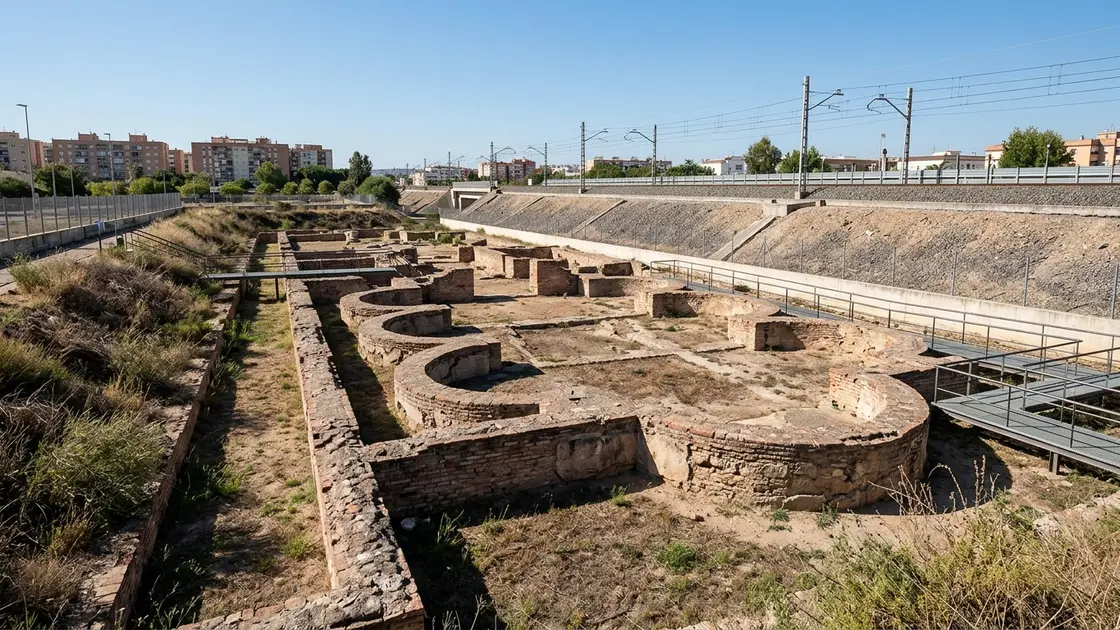
The Junta lists three areas adapted for visits:
- The north section of the Roman palace, the palace itself.
- A Christian worship centre and its necropolis, the post-Roman reuse.
- Caliphal houses at Avenida Vía Augusta.
Much of the palace was used to build the current railway station, and more is still hidden under Avenida de América, Avenida Vía Augusta and neighbouring streets. The remains came to light in 1991 during high-speed rail works. That is why the site feels like a fragment: you are looking at what the station and avenues left.
The 1997 declaration says the site survived at all because it sat on railway land.