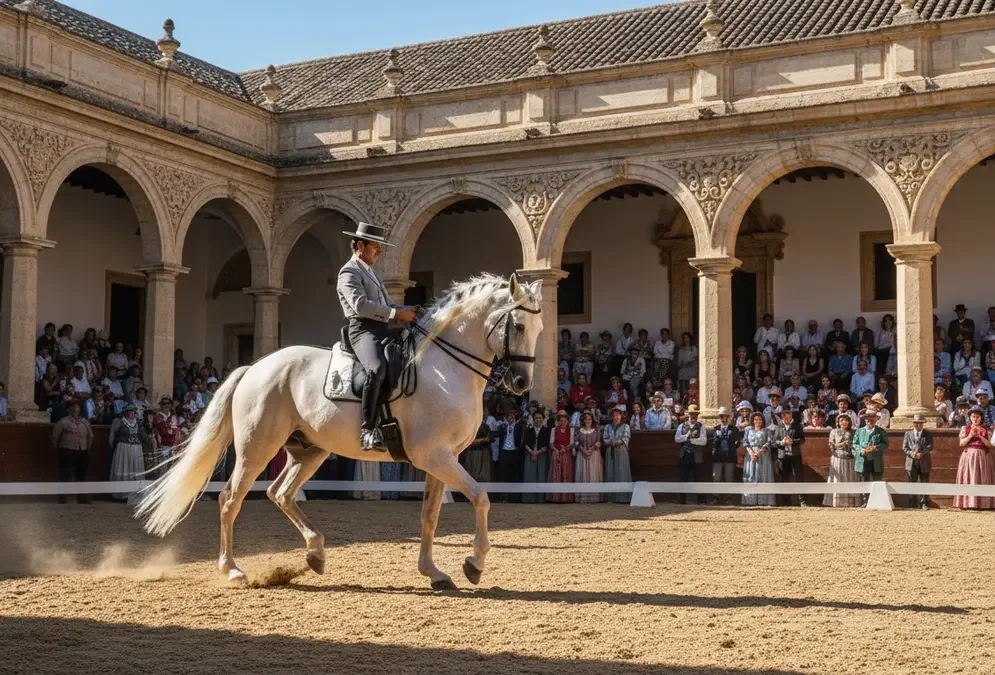
music-lovershistory-buffs
Paco Pena flamenco guitarist theme: a seated guitarist's hands on a flamenco guitar, spotlight on a Córdoba theatre stage, red velvet seats blurred behind, warm amber light

Paco Peña, Flamenco Guitarist Who Gave Córdoba a Festival
Who is Paco Peña? The Córdoba-born flamenco guitarist who built the courses behind the festival in 1981, led it about a decade, then gave it to the city.

Portrait of Sophie Marchand
Written by

Art history background with eight years writing interpretive content on Córdoba's Caliphal heritage.

Published
Modern Córdoba1808–today
On 1 July 2026 Paco Peña was billed to return to the stage of the Gran Teatro de Córdoba with his show Solera, introduced locally as the founder of the city's guitar festival.[1] The flamenco guitarist, born in Córdoba in 1942,[2] made his career in London and started the courses that grew into that festival. He led it for about ten years by his own account, then gave it to the city.[3]
Solera at the Gran Teatro
1 July 2026
Peña billed as the festival's founder when he returned to the stage[1]
Born in Córdoba
1942
Francisco Peña Pérez; guitar lessons from his brother at six[2]
Years leading the festival
~10 years
By his own account, before he gave it to the city[3]

From a Córdoba childhood to London's concert halls

Paco Peña was born Francisco Peña Pérez in Córdoba in 1942, which makes him 84 in 2026. He began learning guitar from his brother at six and gave his first professional performance at twelve.[2] Most children that age are still deciding which instrument to abandon.
In the late 1960s he left Spain for London, where his flamenco recitals caught the public's imagination.[4] The solo career that followed took him from the intimate Ronnie Scott’s Jazz Club to the Royal Albert Hall, Carnegie Hall in New York and the Concertgebouw in Amsterdam.[5] A guitarist whose first teacher was his brother ended up playing rooms built for orchestras. Those rooms ask very different things of a player, from the hush of a jazz club to the acoustics of a concert hall, and he worked in all of them.
He is a purist about restraint, and says so: virtuosity for its own sake is not to his taste.[6] It is a position that sits well with the unhurried temperament of Córdoba's flamenco. London did not erase the city; it gave him a distance from which to build something for it.

1981: the Centro Flamenco and the first Encuentro
The Centro Flamenco Paco Peña dates to 1981, according to Peña's own biography,[7] though the idea, he wrote in a 1983 report, had been conceived a year earlier.[8] What pushed him was a gap: he says he checked and found no guitar festival anywhere in Spain.[9] So he filled it.
Córdoba Town Council backed the project with money and with the use of the Posada del Potro for courses and recitals.[10] The first Encuentro Flamenco ran from 20 July to 16 August 1981 in that Posada, the old inn on the Plaza del Potro.[11] That is nearly four weeks of teaching in the height of a Córdoba summer, in a building the council had lent for the purpose. Later accounts of the festival's origins begin there, with a flamenco centre and its gathering of guitar students.[12]
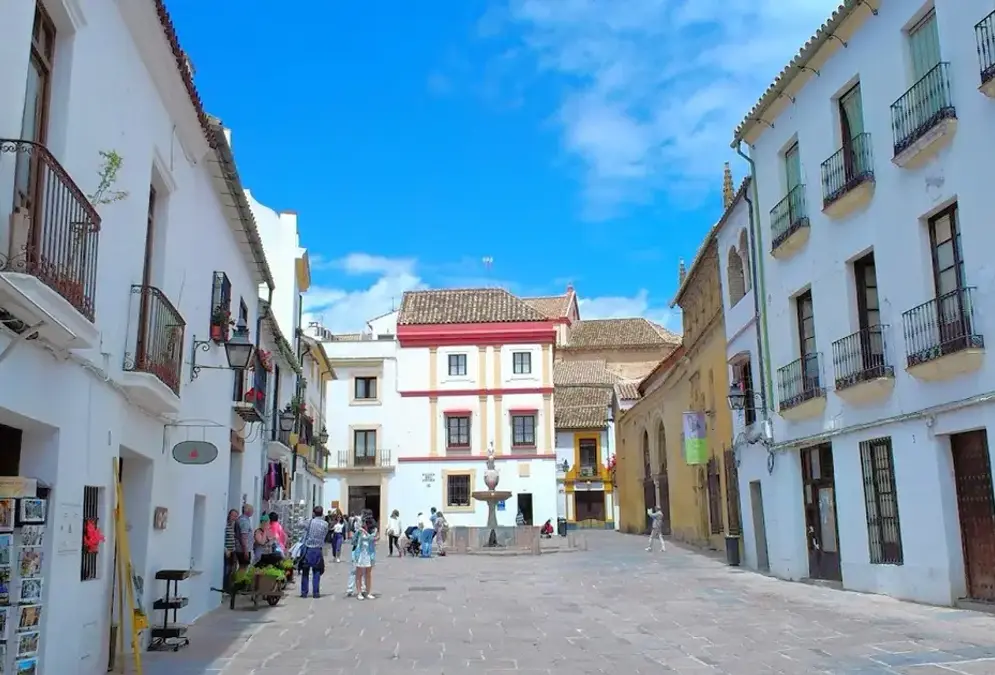
Plaza del Potro with its Renaissance fountain and historic facades

Explore nearby · Monument

Plaza del Potro

Cited by Cervantes in Don Quixote. The 1577 fountain still stands; the Fine Arts Museum, Fosforito Flamenco Centre and Julio Romero Museum all face the square.

Peña says he gave many courses and staged concerts with the door open and no charge to get in.[13] That open door is the detail worth holding on to. A festival that now sells tickets began as free music in a former inn that anyone walking past could enter.

From courses to a festival, and why he let go

The festival grew out of the courses rather than replacing them. In 1983 Peña's own proposal still spoke of creating an international music festival in Córdoba like those in other cities of cultural importance,[14] so the Córdoba Guitar Festival did not arrive fully formed in 1981. The courses came first and the festival was layered on top.
The distinction matters for anyone sorting out who did what. A 1989 newspaper line gives Peña the creation,[15] while the 1983 proposal shows a plan still being drafted.[14] His own account, decades later, describes a gift rather than a sale.

68 to 250+

Students on the courses: 68 from 15 countries in 1981, and more than 250 from about thirty countries expected in 1984.[17]
El País wrote in 1989 that the festival was created in 1981 by the Córdoba guitarist Paco Peña,[15] and in 1984 called him the soul of the whole organisation.[16] That same year the city council took on the sponsorship, and the courses had swollen far beyond the first intake.[17]
After three years Peña widened the programme to classical Spanish guitar, with the odd nod to other cultures.[18] He also persuaded King Juan Carlos to serve as honorary director for a year, which, as he puts it, is no small thing.[19]
Then he let go. Ten years is a long time to run anything. After about ten years he gave the festival to the city, reasoning that he had already written enough chapters.[3] The credit he is owed is therefore precise: founder of the courses that became the festival and its driving force for about a decade, not its permanent owner.

Rotterdam, the Mass and a painter from home
In the mid-1980s Julian Bream interviewed Peña for Channel 4's Guitarra!, a series tracing the guitar's development in Spain,[20] and in 1985 Rotterdam Conservatory established a post that, his official biography says, made him the world's first Professor of Flamenco Guitar.[21] The teaching ran alongside the Córdoba courses, so the same man held a classroom in the Netherlands and a summer school in a Spanish inn.
His stage work kept pace. Misa Flamenca, in 1991, set the Mass for his company alongside a classical choir.[22] Eight years later Musa Gitana turned to a Córdoba subject: the show was based on the life and work of the painter Julio Romero de Torres, another artist from the city.[23] Peña left Córdoba to make his career, then kept putting the city into it, a festival in 1981 and a painter on stage in 1999.
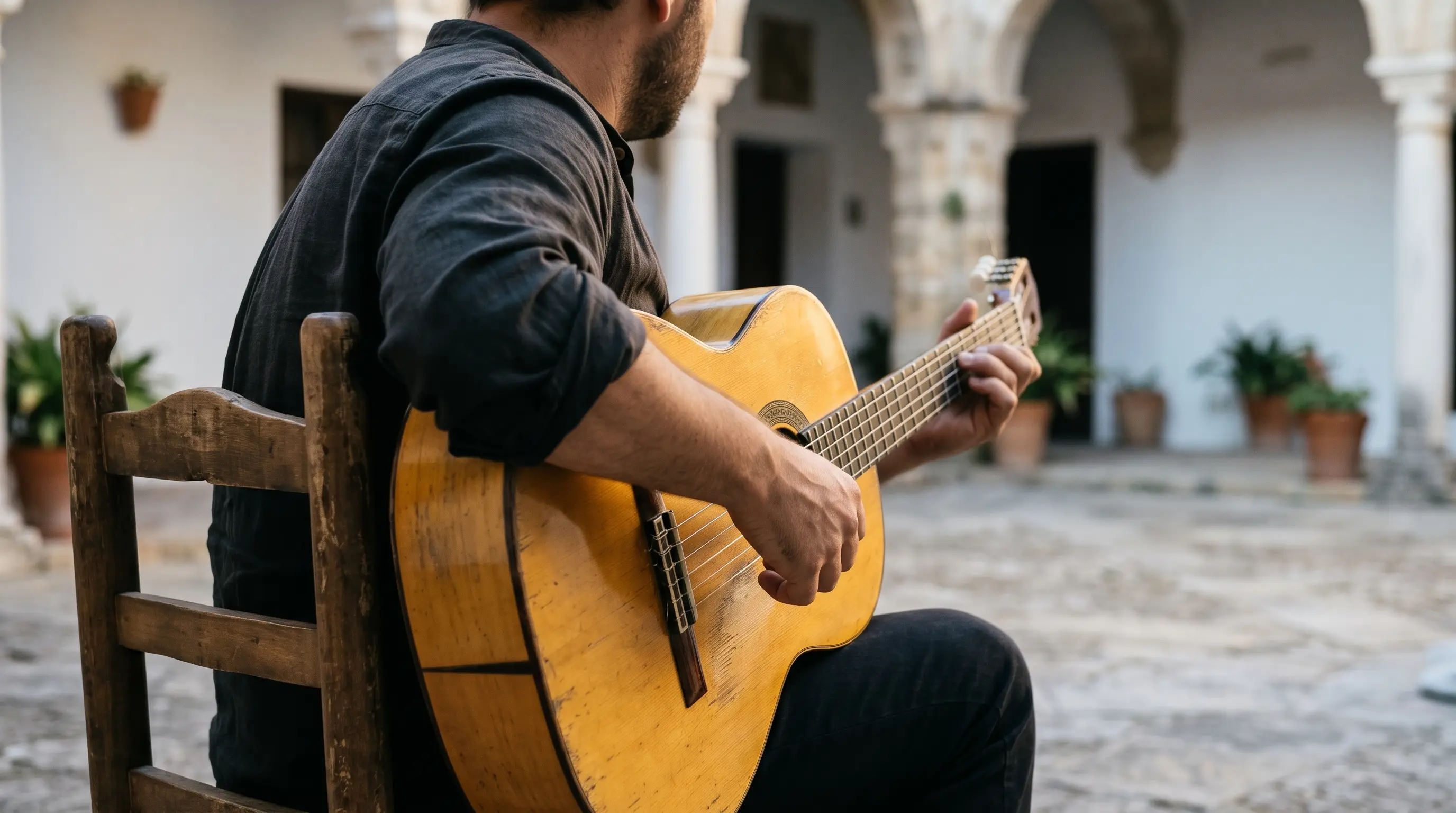
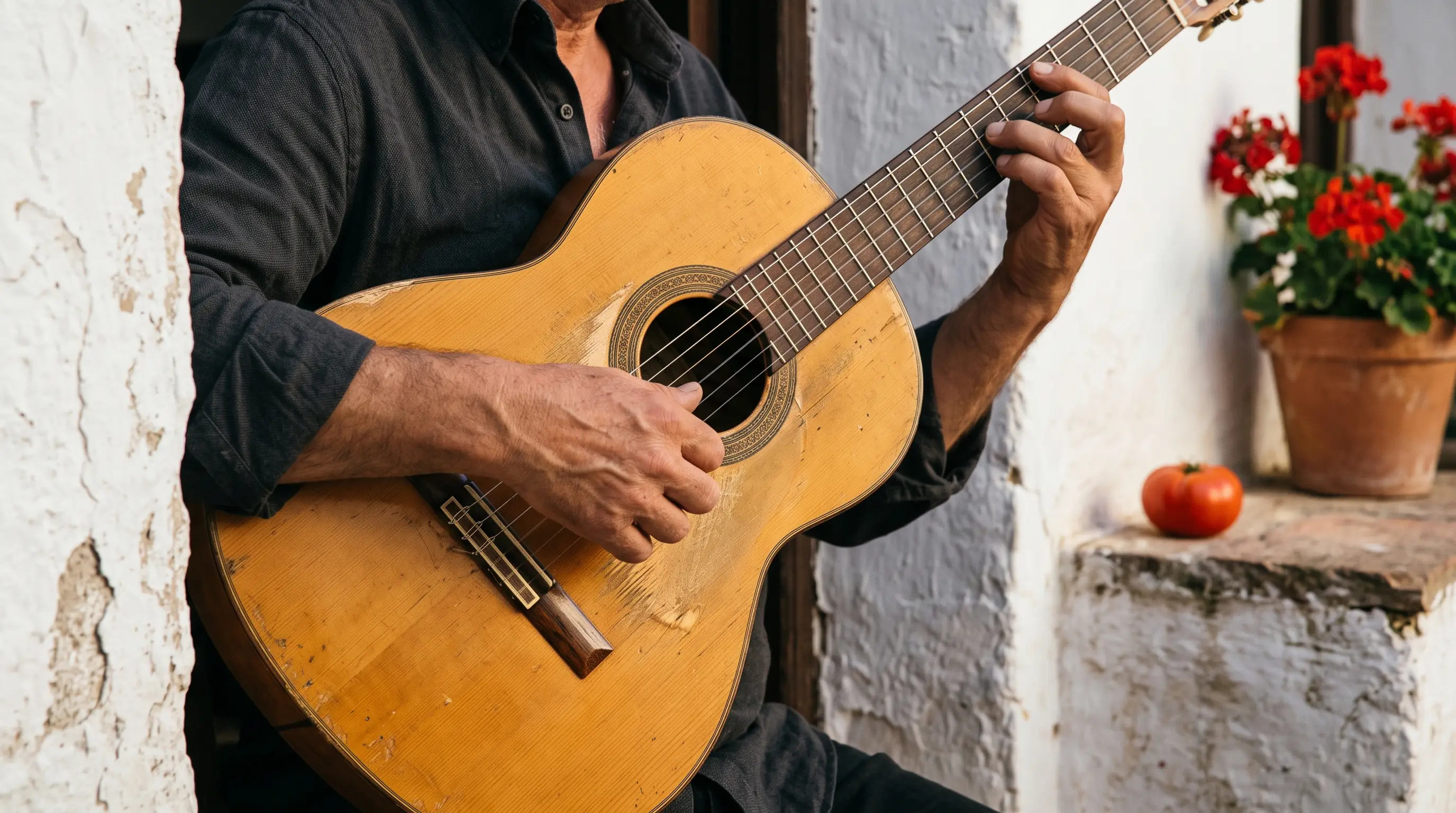
Aserejé meaning Las Ketchup: close-up of a man's hands playing a worn flamenco guitar in a whitewashed Córdoba courtyard doorway, a red tomato and a pot of red geraniums on the stone sill, warm late-afternoon light

Deep dive · Article

Aserejé Means Nothing. Three Córdoba Sisters Made It No. 1

Aserejé has no dictionary meaning. How three Córdoba sisters, a flamenco guitarist father and a small local label turned a rap-inspired chorus into a No. 1.

Through all of it he kept a company. Since 1970 he has performed regularly with his own hand-picked dancers, guitarists and singers.[24] The honours followed: the Orden del Mérito Civil in 1997, and in May 2012 the Gold Medal in the Arts from the Kennedy Center in Washington.[25] The New York Times heard something in 1995 that fits a guitarist who distrusts show, a player who combines rapid-fire flourishes with a colourist's sense of shading.[26] Reference works place him among the traditionalists, as one of traditional flamenco's most vocal and dedicated proponents,[27] and the critic Ángel Álvarez Caballero, writing in El País in 1984, praised his "toque brillante y sobrio", brilliant and sober playing.[28]

Where to find Peña's Córdoba today

Three places carry Paco Peña's story in Córdoba, and none of them is a museum with his name on the door.
The municipal Centro Flamenco Fosforito belongs to the history of flamenco in Córdoba, and it is a different institution from Peña's Centro, with its own programme and its own namesake.

Recommended tours

Tours are selected for quality, not commission. We earn a small fee if you book — at no extra cost to you.
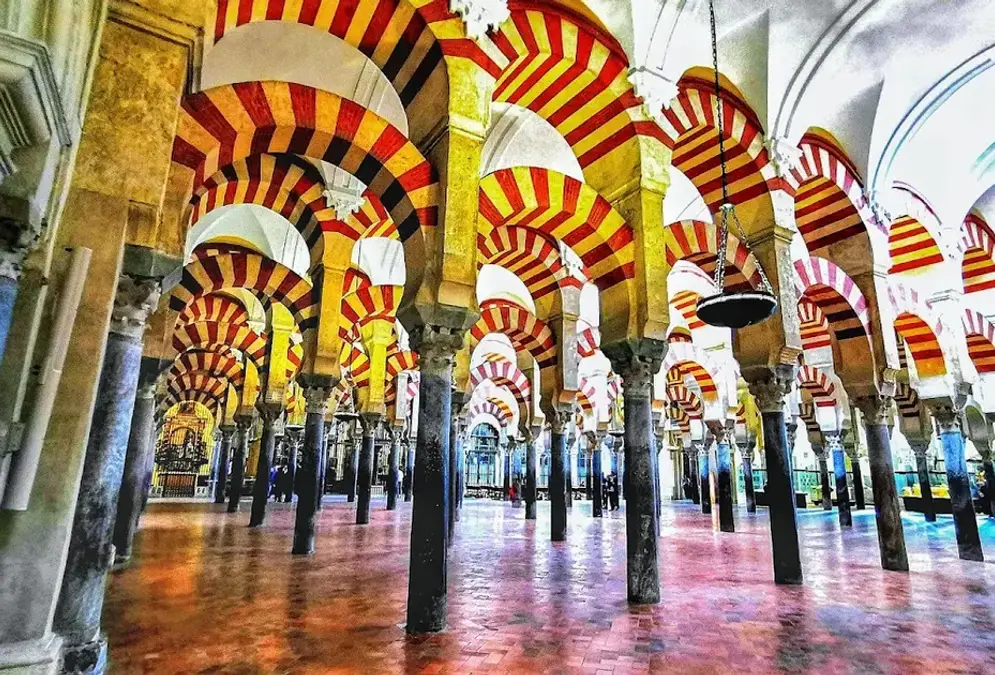
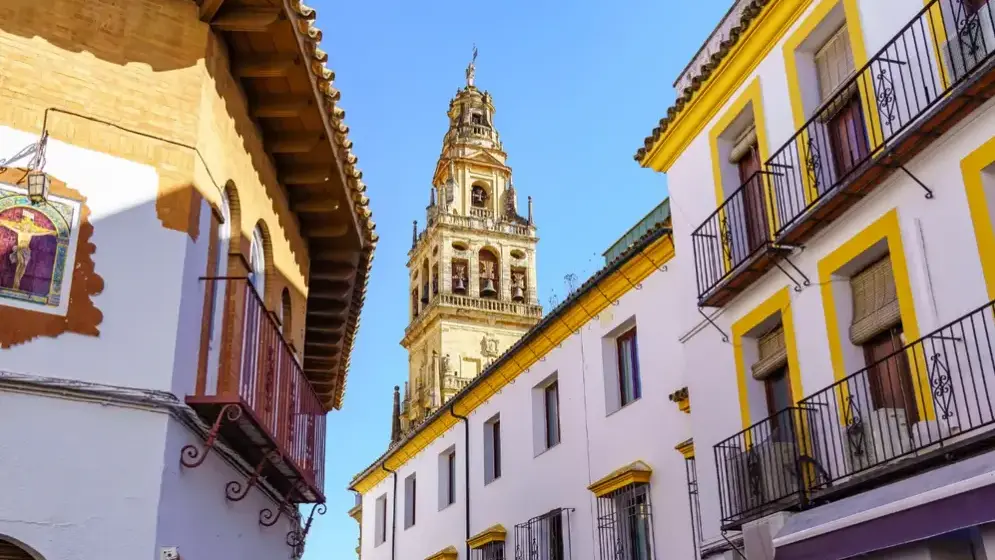
Peña himself is harder to find than a monument. The best chance of hearing him in Córdoba is a festival programme rather than a venue with fixed hours, since the most recent return announced was a single Gran Teatro date. Expect programmes, not plaques. Check the theatre's listings before planning around him, and treat the July festival as the natural place to look, because that is where the courses he began in 1981 ended up.

Frequently asked questions

Who is Paco Peña, the flamenco guitarist?

Paco Peña is a flamenco guitarist born in Córdoba in 1942 who built his career in London after moving there in the late 1960s. He founded the Centro Flamenco Paco Peña in 1981, started the courses that grew into the Córdoba Guitar Festival, and later became the world's first Professor of Flamenco Guitar, at Rotterdam Conservatory.

How old is Paco Peña?

Paco Peña was born in 1942, so he is 84 in 2026. Reporting from 1984 already described him as a 42-year-old Córdoba guitarist living in London.

Did Paco Peña found the Córdoba Guitar Festival?

He founded the courses that became it. El País wrote in 1989 that the festival was created in 1981 by Peña, and he says he ran it for about ten years before giving it to the city, which had become its sponsor in 1984. He is its founder, not its permanent owner.

Is the Centro Flamenco Paco Peña the same as the Centro Flamenco Fosforito?

No. The Centro Flamenco Paco Peña is the course and recital project Peña started in 1981. The Centro Flamenco Fosforito is a separate municipal museum named after the singer Fosforito.

What is Misa Flamenca?

Misa Flamenca is a 1991 setting of the Mass in which Peña's company of flamenco artists performs alongside a classical choir. It counts among the landmark productions of his career.

What was Musa Gitana about?

Musa Gitana, from 1999, was based on the life and work of the painter Julio Romero de Torres, another artist from Córdoba. Peña built the show around the painter's world rather than around a story.

Was Paco Peña the world's first professor of flamenco guitar?

His official biography says so. The post was established in 1985 at Rotterdam Conservatory in the Netherlands, and it describes him as the world's first Professor of Flamenco Guitar.

Where did Paco Peña's first Córdoba courses take place?

In the Posada del Potro, on the Plaza del Potro. The first Encuentro Flamenco ran there from 20 July to 16 August 1981, with the city council supplying the building and some funding.

Sources

28 references Show
  1. eldebate.com — Paco pena regresa festival guitarra cordoba mismo creo 397461 (opens in a new tab)

    “Paco Peña, fundador del certamen, volverá a subirse al escenario del Gran Teatro el próximo 1 de julio con su espectáculo Solera”

  2. Wikipedia (opens in a new tab)

    “Born on 1 June 1942 in Córdoba, Spain, as Francisco Peña Pérez, Paco Peña began learning to play the guitar from his brother at the age of six and made his first professional appearance aged 12.”

  3. eldebate.com — Quiero me recuerden como hijo rosario perez 435824 amp (opens in a new tab)

    “Pasados unos diez años, se lo regalé a la ciudad: ya había escrito suficientes capítulos.”

  4. pacopena.net — Page (opens in a new tab)

    “In the late 1960s he left Spain for London, where his recitals of flamenco music captured the public imagination.”

  5. pacopena.net — Page (opens in a new tab)

    “Venues for his solo performances have included the intimate Ronnie Scott’s Jazz Club and the monumental Royal Albert Hall in London, New York’s Carnegie Hall and the Concertgebouw, in Amsterdam.”

  6. pacopena.net — Page (opens in a new tab)

    “In 1981 he founded the Centro Flamenco Paco Peña in Cordoba, later becoming artistic director of the Córdoba International Guitar Festival.”

  7. pacopena.net — Page (opens in a new tab)

    “The idea of a Centro Flamenco in Cordoba was conceived in 1980.”

  8. eldebate.com — Quiero me recuerden como hijo rosario perez 435824 amp (opens in a new tab)

    “comprobé que no había un festival de guitarra en toda España”

  9. pacopena.net — Page (opens in a new tab)

    “Firstly through financial backing and secondly, through accepting the proposal made at the time that the Posada del Potro be made available to house the courses, recitals etc.”

  10. pacopena.net — Page (opens in a new tab)

    “The First Flamenco Encuentro took place between 20 July and 16 August 1981 in the posada del Potro.”

  11. idealista.com (opens in a new tab)

    “The origins of the festival go back to the eighties, when the renowned Spanish guitarist Paco Peña founded a flamenco centre and, with it, a meeting of students of this string instrument from all over the world.”

  12. eldebate.com — Quiero me recuerden como hijo rosario perez 435824 amp (opens in a new tab)

    “Daba muchos cursos, y ponía conciertos en la Posada del Potro, con la puerta abierta, sin que hubiera que pagar nada por entrar.”

  13. pacopena.net — Page (opens in a new tab)

    “to create an international music festival in Cordoba like those that exist in other cities of noted cultural importance.”

  14. archive.org — 1989 06 22 FESTIVAL DE LA GUITARRA DE CORDOBA EL PAIS text.pdf (opens in a new tab)

    “El festival fue creado en 1981 por el guitarrista cordobés Paco Peña”

  15. archive.org — 1984 07 09 CORDOBA FESTIVAL INTERNACIONAL DE LA GUITARRA EL PAIS text.pdf (opens in a new tab)

    “si en 1981 fueron 68 estudiantes de 15 países los que acudieron a la primera edición, este año serán más de 250 de una treintena de países.”

  16. eldebate.com — Quiero me recuerden como hijo rosario perez 435824 amp (opens in a new tab)

    “A los tres años lo abrí a la guitarra clásica española, con algún guiño a otras culturas, pero centrado sobre todo en ella.”

  17. eldebate.com — Quiero me recuerden como hijo rosario perez 435824 amp (opens in a new tab)

    “En ese tiempo también conseguí que el rey Juan Carlos fuera, un año, director honorífico del festival, que no es poca cosa.”

  18. Wikipedia (opens in a new tab)

    “In 1984, Peña was interviewed by Julian Bream for the Channel 4 television series Guitarra!, which traces the development of the guitar in Spain.”

  19. pacopena.net — Page (opens in a new tab)

    “complementing his work as the world's first Professor of Flamenco Guitar, a role established in 1985 at Rotterdam Conservatory in the Netherlands.”

  20. pacopena.net — Page (opens in a new tab)

    “Another landmark was Misa Flamenca, a 1991 setting of the Mass that juxtaposed Peña’s company with a classical choir.”

  21. pacopena.net — Page (opens in a new tab)

    “Peña based the piece on the life and work of another artist from Córdoba, the painter Julio Romero de Torres.”

  22. pacopena.net — Page (opens in a new tab)

    “Since 1970 Paco Peña has performed regularly with his own hand-picked company of dancers, guitarists and singers in a succession of groundbreaking shows.”

  23. pacopena.net — Page (opens in a new tab)

    “In 1997 Paco Peña was proud to be named Oficial de la Cruz de la Orden del Mérito Civil, and in May of 2012, he was thrilled to be awarded the Gold Medal in the Arts by the John F. Kennedy Center for the Performing Arts in Washington”

  24. pacopena.net — Page (opens in a new tab)

    “He combines rapid-fire flourishes with a colourist’s sense of shading”

  25. encyclopedia.com (opens in a new tab)

    “He is also one of traditional flamenco's most vocal and dedicated proponents.”