

A chorus that began as a game
The verses tell a small story: Diego walks into a nightclub and hears the record he loves best, Rapper's Delight by the Sugarhill Gang.[8] The chorus is not a translation of anything. It began as a game in which the producer Queco and his children babbled Rapper's Delight, and the babble was kept.[1]
Queco's own version, given to Diario de León in January 2003, is smaller still: he was playing with his son, invented a rhythm to play with, and noted that children pick things up at dizzying speed.[9] That rhythm began as a nursery game, not as a palo of flamenco or a dance like sevillanas, and it explains why no translation exists. The title word, spelled aserejé, asereje or acereje depending on who is typing, was never a word.
The recording moved as quickly as the game had. Lucía Muñoz recalled that Queco had the lyrics ready two days after bringing the idea, and the sisters went into the studio to record.[10] They had not written it: Queco created the song and first meant to offer it to Remedios Amaya and the Gipsy Kings.[11]
Three sisters, a guitarist father and a label with a demo
Las Ketchup is a pun on a stage name. The sisters' father is a flamenco guitarist from Córdoba known as El Tomate, Tomato, and the group took its name from him as a tribute.[2] He comes from a city with a long flamenco tradition of its own, which makes a nightclub sing-along an unlikely export.
The trio was an accident of timing as much as design. Pilar, the eldest, acted; Lucía, the youngest, sang in a flamenco-fusion group; Lola still had an industrial-relations degree to finish.[12]
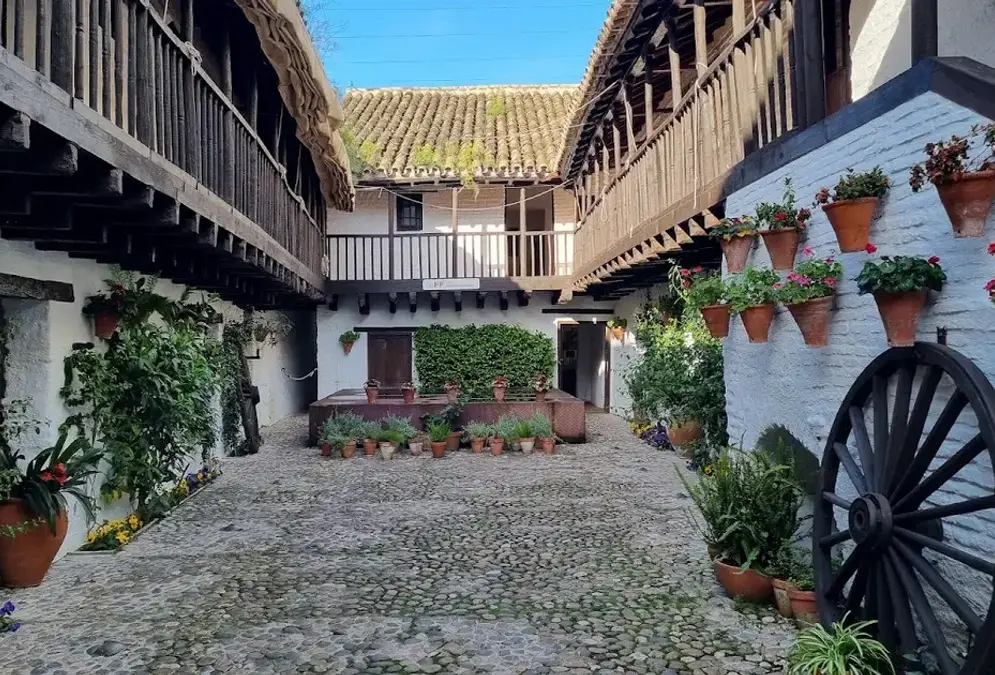
Explore nearby · Museum
Centro Flamenco Fosforito
Córdoba's premier flamenco museum in the historic Posada del Potro. Interactive exhibits, seasonal Sunday recitals and bilingual displays for all ages.
From a demo pile to No. 1 in 24 countries
By October 2002 the single had entered the British chart at No. 1 on 105,781 first-week sales.[7] That opening week alone is roughly 15% of the 692,000 UK sales recorded by 2020, nine-tenths of them physical or download: a front-loaded hit, not a slow burner.[16]
The totals people repeat come from different moments, so the record reads better as dated snapshots:

Deep dive · Article
Feria Córdoba vs Seville: The Real Differences
Córdoba's casetas need no invitation; Seville's 1,000+ are mostly private. Founded in 1284 vs 1847 — see how the two ferias compare, and why it matters.
Recommended tours
Tours are selected for quality, not commission. We earn a small fee if you book — at no extra cost to you.

The satanic rumour that fed on the blank chorus
A chorus with no apparent meaning invites explanations, and soon after its release some Honduran listeners supplied one. In some religious schools in San Pedro Sula, in the north of the country, pupils were banned from listening,[3] and the Honduran newspaper Tiempo said the story had spread through e-mails from Mexico.[20]
The logic was circular. An aide at an evangelical school argued that a song without apparent meaning must be hiding something.[21] That is the rumour's whole engine, and it turns a producer's game into a theological problem.
Nobody connected to the song took it seriously. A Sony Music executive said it was laughable and came from idle people,[4] and Pilar Muñoz later insisted the lyrics hold nothing satanic.[22] The group's own summary, given to Rolling Stone and reported by La Nación in 2024, is blunter: the song is about Diego, not about them.[23]
After the hit: exhaustion, Eurovision and the wrong Córdoba
Success arrived faster than the sisters could take it in. Pilar Muñoz later said they barely enjoyed any of it because of the exhaustion.[24]
“We weren't expecting to be a success even in Spain.[25]”
Spain sent the group to Eurovision in 2006, where it finished 21st of 24[26] with only 18 points,[27] a long way from the chart runs of 2002.
The trio comes from Córdoba in Andalusia, not from the Argentine city of the same name, a mix-up that apparently fed a 2023 social-media row over whether Aserejé is Argentine.[28] The flamenco side of their story stays with flamenco in Córdoba, the city El Tomate comes from.
The origin of the chorus is still argued over. Queco told Diario de León in January 2003 that the song shares only one phonetically similar syllable with the rap record,[29] while other accounts trace the chorus to a game of babbling Rapper's Delight.[1] One side has a producer who hears a single echo, the other a song about a man hearing his favourite record in a club, and the chorus keeps its famous emptiness either way.