The Córdoba Guitars Named for a Door Nobody Can Source
Miguel Rodríguez's Church Door guitars carry a name dealers explain three ways: an old door, a cathedral sound, a cut of rosewood. The family line is on record.
Art history background with eight years writing interpretive content on Córdoba's Caliphal heritage.
Published
music-loversart-lovershistory-buffs
The guitars of Córdoba's Miguel Rodríguez family carry the name Church Door, yet none of the dealer listings checked names the church, the year or the carpenter behind the door. A Church Door is a Rodríguez guitar made mostly from the mid-1970s, and Solera Flamenca calls Pepe Romero's 1973 "La Wonderful" the first and most famous[1]. Dealers offer three explanations for the name, a centuries-old door[2], a cathedral-sized sound[3] and a cut of rosewood[4], while the family itself is on record from 1923 to 1996.
Family workshop address
Alfaros 15
Where the twin sons worked beside their father from 1939, per El Debate[11]
Family 1968 guitar sold
2014
Sold to remodel the Alfaros workshop, per dealer Guitar Salon International[31]
Last guitars begun in 1996
3 guitars
Pepe Rodríguez died that year; Miguel Jr. finished them, per dealer GSI[22]
In this article
Jump to a section
⌄
A workshop on Calle San Fernando, a guitar for a friend
Miguel Rodríguez Beneyto was born on 1 July 1888 at Calle Fernando de Lara 4, according to the municipal register, and baptised at the church of San Lorenzo[5]. From 1906 he was building guitars in a workshop on Calle San Fernando[6].
One of his first successful guitars was made for his friend Antonio "El del Lunar", who played it at the popular Las Margaritas verbena in Córdoba on 26 August 1923[7]. A grandson, Rafael Rodríguez, remembers how the founder waved away questions about the unseen interior work with a single line: "I see it and that is enough"[8].
When he died is already contested. Local reporting gives 1970[9]; Guitar Salon International's genealogy of the family says 1975[10].
Alfaros 15 and the twins
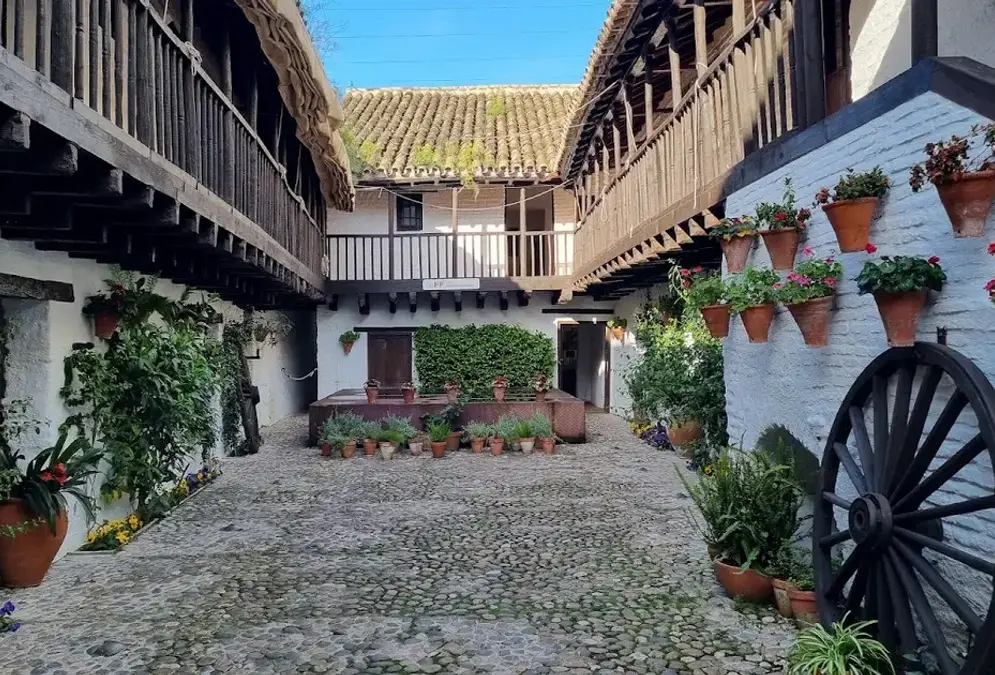
By 1939 the founder was installed in the workshop at Calle Alfaros 15, and his twin sons were working there beside him[11]. Guitar Salon International names them as Rafael Rodríguez Serrano (1921–1965) and Miguel Rodríguez Serrano (1921–1998), the Miguel Jr. of the trade listings[10].
GSI's maker page calls José Rodríguez Álamo (1949–1996), known as Pepe, Miguel Jr.'s son and the fourth maker in that tree[12]. The same dealer calls the Miguel Jr. and Pepe years, the 1970s to 1998, perhaps the best-known phase[13], and that is where the Church Door name lives.
Pepe Romero, whose 1973 "La Wonderful" is the best-known Church Door, is quoted by the dealer: "What the jet engine did for aviation, the Rodríguez family did for the guitar."[14] The line comes second-hand, relayed by a seller rather than taken from an interview. Even so, it explains why Córdoba's guitarreros, the city's guitar makers, are still discussed far from Córdoba.
Three stories for one name
The door is the version that travels. Classic Guitars International passes on the legend of a century-old Andalusian church door whose wood supposedly soaked up the vibrations of organs and human voices[15], then admits it does not know whether that is myth or truth[16]. None of the listings reviewed names the church or the carpenter, or says when the name or any of its three explanations first appeared.
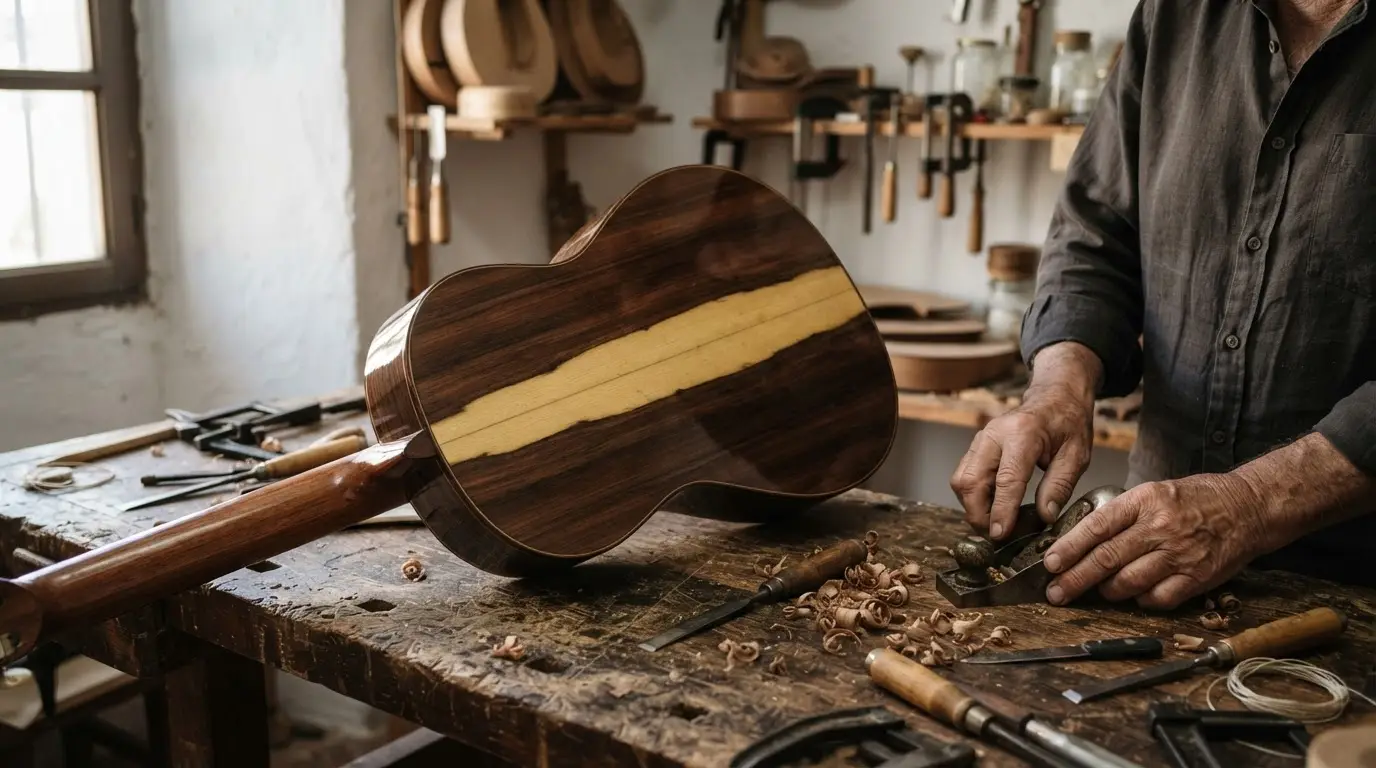
The second account drops the door altogether. Solera Flamenca, another dealer, writes that the name may be symbolic rather than literal, a nod to a wide, powerful sound that recalls the acoustics inside a church[17]. A third reading comes from Guitar Salon International's page for La Wonderful, which says the guitars are named for the cuts of rosewood used for backs and sides, set dramatically against yellow-ish sapwood[4].
The look, at least, is real. A listing for a Church Door once owned by Angel Romero describes back and sides that run from very strong yellow sapwood to darker, browner heartwood, a swirling texture no one would mistake for a plain set[18].
The species is dealer-specific too. Guitar Salon International lists CSA rosewood for the 1973 La Wonderful[19], while Solera Flamenca lists Brazilian rosewood for a Church Door it places in 1968 at Alfaros Street[20][21], though Solera Flamenca dates most Church Doors to the mid-1970s[1].
Reading a Church Door listing
Which origin story it tells, and who it credits for it
The back-and-sides species, word for word
The build date, and whether it fits the 1973 to mid-1970s start one dealer gives
Whether the listing names Miguel Rodríguez the younger as the maker
Three guitars in 1996 and a remodelled workshop
In 1996 Pepe Rodríguez began a final set of three guitars, fell ill and died the same year. Miguel Jr. completed them and died himself in 1998[22].
Romero names keep turning up in the listings. Guitar Salon International says Angel Romero owned and played a Churchdoor for many years[23], and that La Wonderful was one of six guitars from Pepe Romero's personal collection shown at a showroom event on 1 June 2013[24].
Buyers chase them for the sound. Guitar Salon International says the look made Church Doors the top choice of collectors and performers[25], and that La Wonderful has been Pepe Romero's constant companion for an estimated 60 recordings[26]. Its listings describe a big, broad, lush sound with a flamenco-like response[27]; Solera Flamenca adds deep basses and clear trebles with very long sustain[28]. Classic Guitars International calls its Church Door a holy grail for Rodríguez lovers[29]. Solera Flamenca asked €32,000 for a 1968 Church Door, now marked sold with no sale date[30].
Timeline
1 Jul 1888
Founder born
Miguel Rodríguez Beneyto, at Calle Fernando de Lara 4[5]
Per GSI's listing, to remodel the workshop at 15 Alfaros Street[31]
The address outlived both makers. According to a Guitar Salon International listing, a family-held 1968 guitar was sold in 2014 to remodel the family workshop, which the listing says is still located at 15 Alfaros Street[31]. Another Córdoba maker whose story reaches buyers through dealer listings is Manuel Reyes.
The one physical trace the dealers name is an address, Calle Alfaros 15, where an undated listing says the family workshop still stands[31].
As for the name, the door, the sound and the wood cut each rest on a dealer's say-so. Until a church, a year or a carpenter turns up, the verifiable parts are the family tree and the grain of the wood.
“Most “Church Door” guitars started appearing in the mid 70s, being the most famous one the first to come: the one belonging to the performer Pepe Romero, made in 1973 and affectionately called “La Wonderful”.”
“named for the specific cuts of rosewood that were used for the backs and sides that features a very dramatic and unique interplay with the more yellow-ish sapwood”
“En esa casa nació el 1 de julio de 1888 el niño Miguel Rodríguez Beneyto, según consta en el padrón municipal. Fue bautizado en la iglesia de San Lorenzo.”
“The legend is that the wood is from a century old Church Door in Andalucia, and some say the old door absorbed the vibrations of the organs and human voices”
“Other sources say this name is just symbolic, rather than literal, and comes from its wide and powerful sound, reminding us of the acoustics inside an actual church.”
“the grain patterns in the back and sides contrast between very strong yellow colored sapwood to the darker, browner heartwood, giving rise to a very dramatic and swirling texture”
“In 1996 Pepe Rodríguez started a last batch of three guitars, but he fell ill and passed away the same year; the guitars were completed by Miguel Jr., who himself passed away in 1998.”
“This instrument was one of six guitars from Pepe Romero's personal collection that were featured in a memorable event in the GSI showroom on June 1, 2013.”