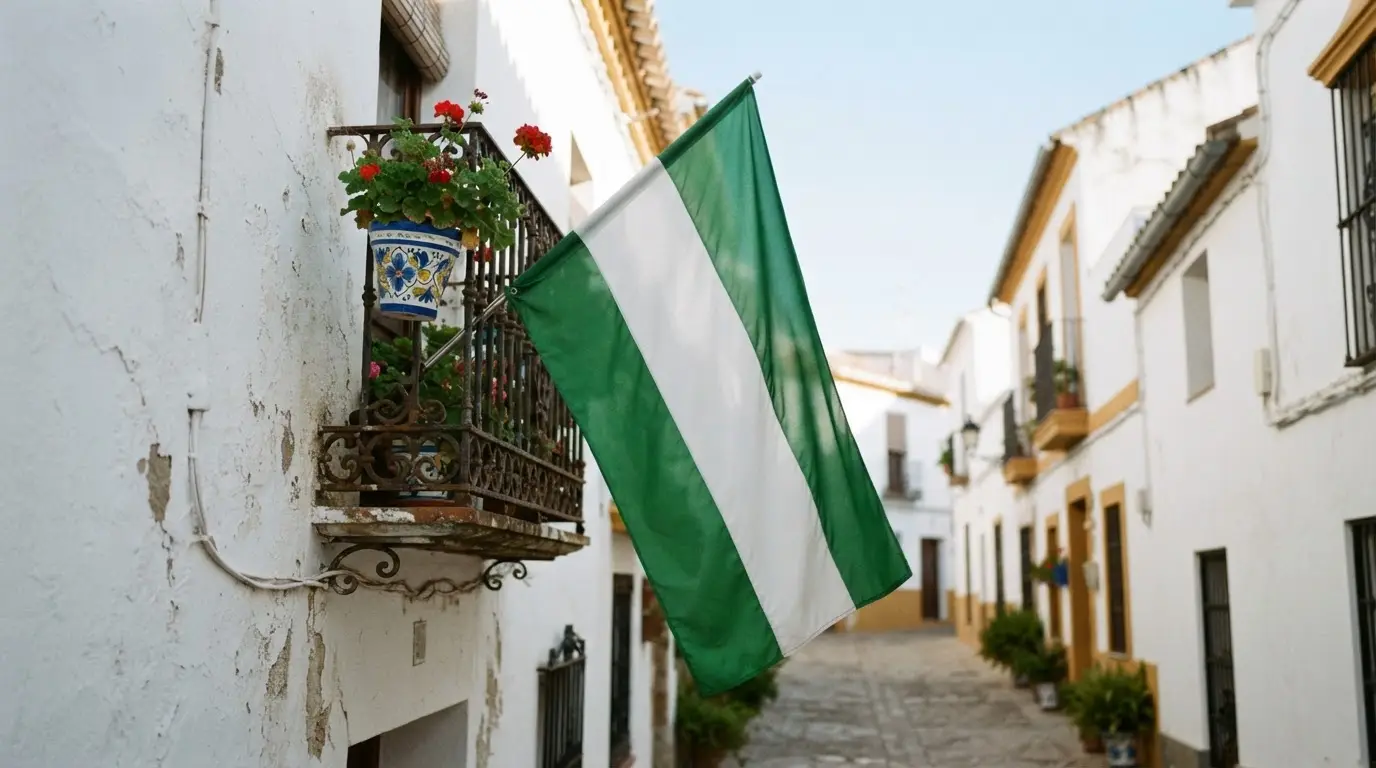

Córdoba 1919 and the flag: not confirmed, Ronda is official
The verdict is not confirmed. Ronda 1918 is the official attribution, Córdoba 1919 is a minority hypothesis, and the earliest documented description of the flag is Infante's own article. Where the sources conflict, the weight sits with the Statute and the Junta de Andalucía, not with one hedged line.
The mix-up is easy to make because Córdoba 1919 really was a turning point. Academic accounts treat two assemblies, Ronda in January 1918 and Córdoba in March 1919, as the opening and closing of the period when Andalusianism turned nationalist.[4] Remember the second and forget the first, and the flag lands in the wrong city.
Timing helps the myth along. The first documented description of the flag is Blas Infante's article of 31 December 1919,[5] which belongs to the same year as the Córdoba meeting and reads like its sequel. Anyone watching the banner go up on Andalusia Day in Córdoba is hearing a story with a thinner paper trail than the ceremony suggests.
What the record gives to Ronda
In the Junta de Andalucía's account, the story of the insignia begins at Ronda: a January 1918 assembly that put forward proposals for what Infante called las insignias de Andalucía.[6] Official texts keep pointing back to that meeting rather than to anything in Córdoba.
Beyond that account, three documents carry the attribution:
- The Statute of Autonomy, article 6.2, as reproduced in the 1983 law on the regional symbols: the anthem and coat of arms are to take into account the agreements of the Ronda assembly of 1918.[7]
- A Junta cultural-archive document from February 2021, which says Andalusia was proclaimed a national reality and the flag and shield were approved, to become official later.[8]
- An academic study of the 1918-1919 turn, in which the first assembly drew up the programme of political action and approved the coat of arms and flag.[9]
The firmest of them is the Statute now in force. Article 3.1 describes the flag as the traditional green, white and green bands "as approved at the Ronda assembly of 1918".[10] The looser "take into account" wording quoted above covers only the anthem and the coat of arms.
Córdoba 1919: a manifesto, and one report's flag
The only institutional source we found that puts the flag in Córdoba is the IAPH restoration report, which says it is thought the symbols were approved there in 1919.[3] What Córdoba 1919 undeniably produced is a different document.
The Córdoba text is the Manifesto of Nationality, dated 1 January 1919 and agreed by the self-styled Directorio Andaluz de Córdoba.[11] The assembly of March 1919 closed the nationalist phase, and the manifesto it is tied to states that Andalusia is a nationality.[4][2]
That is a statement about status and self-government. It calls for making Andalusia an "autonomous democracy" and for overcoming centralist powers,[12] which is a constitutional demand, not a design brief for a banner.
Córdoba did host a later autonomy assembly with a documented venue: the Regional Assembly of 29 to 31 January 1933 met in the salons of the Círculo de la Amistad,[13] three years before the Civil War reached Córdoba. It is a different event from 1919.
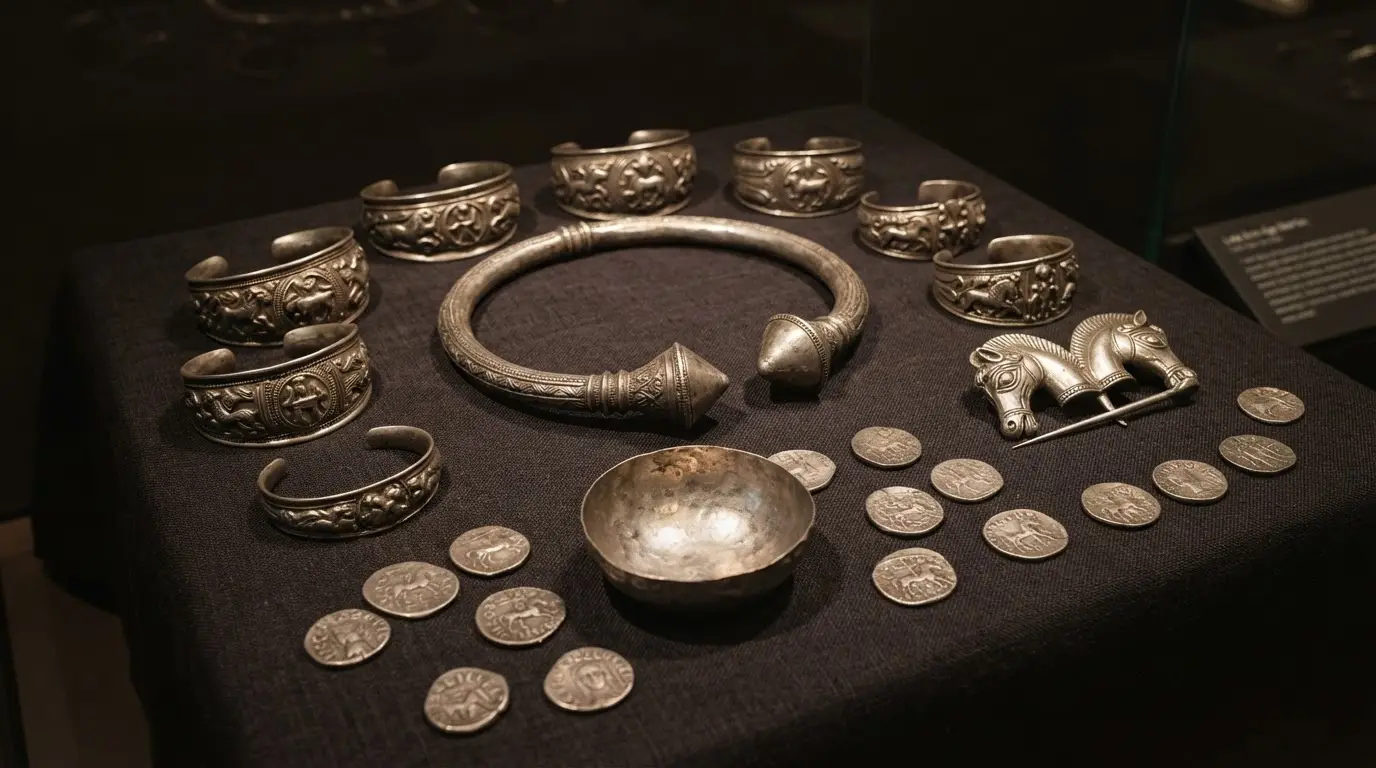
Deep dive · Article
An Andalusian Treasure Has Sat in the British Museum Since 1932
A silver hoard dug up in Córdoba in 1915 left Spain against the law and has been in the British Museum since 1932. Here is how, and what a 2026 study found.
The Andalusian Institute of Historical Heritage (IAPH), which restored the surviving flag, is the body that gives the Córdoba reading. Its restoration report concedes that tradition says the flag was approved at Ronda in 1918,[14] notes that the historian Enrique Iniesta Collaut-Valera rejects that because the Ronda minutes say nothing about a flag or other symbols,[15] and then adds that it is thought the symbols were approved a year later at the Córdoba assembly of 1919.[3]
Read closely, that is a chain of hedges. The objection attributed to Iniesta is an objection to Ronda, not an argument for Córdoba, and "it is thought" is the report's own wording. The safe phrasing for a visitor is that Ronda 1918 is the official attribution and one report suggests Córdoba 1919.
What exists in writing, and where to look in Córdoba
The earliest documented trace is Infante's "Las insignias de Andalucía", published in the review Andalucía on 31 December 1919.[5] In it a white and green flag is reported as voted for Andalusia as its national flag, three equal horizontal bands with the white one in the centre and green at the edges,[16] and the coat of arms is that of Cádiz, with Hercules between the columns holding two lions.[17] The article fixes the date of the first description. It does not fix the vote.
The surviving flag, restored by the IAPH, was sewn around 1919 by Infante's wife, Angustias García Parias.[18] It dates from the year of the Córdoba assembly, which is the closest the physical evidence comes to the 1919 story.
Recommended tours
Tours are selected for quality, not commission. We earn a small fee if you book — at no extra cost to you.

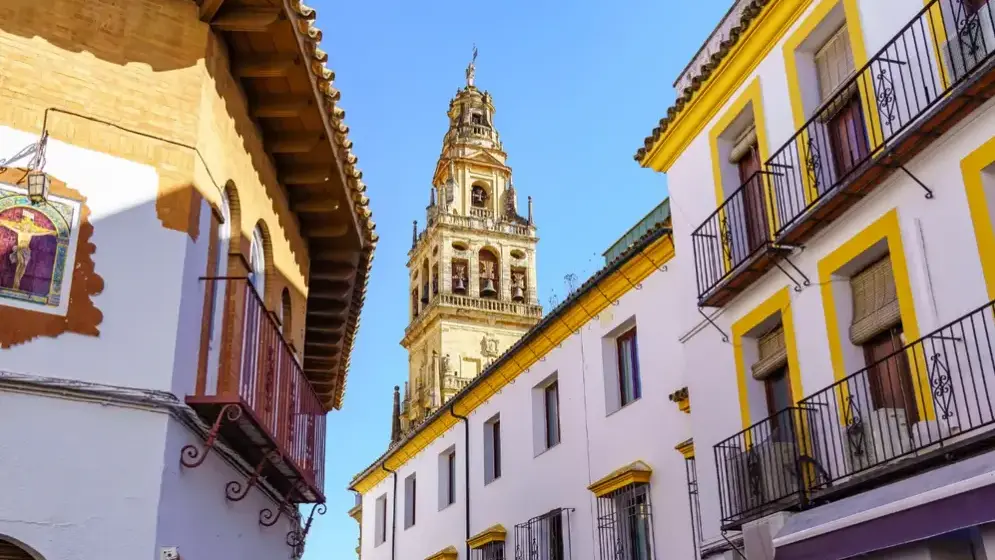
In Córdoba the sites tied to this story are modest. The Círculo de la Amistad, venue of the 1933 assembly,[13] stands on calle Alfonso XIII, very near Plaza de las Tendillas,[19] and hosts cultural events and private celebrations,[20] so check what is on before you plan to go in.

Explore nearby · Monument
Plaza de las Tendillas
Córdoba's central square, with a clock that chimes guitar chords on the hour. Equestrian statue of El Gran Capitán, terrace cafés and the main shopping streets.
If a guide tells you the flag was born in Córdoba in 1919, the correction takes two sentences. Ronda is the official attribution, and Córdoba gave the Manifesto of Nationality.