For 597 years Córdoba was a kingdom without a king: a territorial jurisdiction of the Crown of Castile that began with the conquest of 1236 and lasted until the provincial division of 1833[1]. Its territory is put at about 12,638 km², and around 1752 it held an estimated 215,446 people[2][3]. The decree that finally dissolved it still describes Andalusia as the four kingdoms of Córdoba, Granada, Jaén and Seville, so the name outlived the institution it described[4].
Old kingdom's extent
12,638 km²
Territory of the Ensenada-era kingdom, a modern estimate[2]
Population c.1752
215,446
Estimated inhabitants of the whole kingdom, not the city alone[3]
Decree ending the kingdom
30 Nov 1833
Article 2 turns Andalusia's four kingdoms into eight provinces[4]
In this article
Jump to a section
⌄
A kingdom with a capital but no crown
Within 22 years Castile took Baeza, Córdoba, Jaén and Seville[5], and the last three became the heads of kingdoms of their own. Granada, conquered in 1492, made the fourth. Together they were what royal officials meant by Andalusia, and the grouping was administrative from the start: four capital cities, each with a surrounding territory, each answering to the same distant court.
The word reino misleads English readers. No king ever sat in Córdoba, and none of the four kingdoms had a crown of its own. Córdoba's was a territorial jurisdiction of the Crown of Castile[1], defined by its boundaries, by a capital whose council spoke for it and by the royal officials sent to supervise that council.
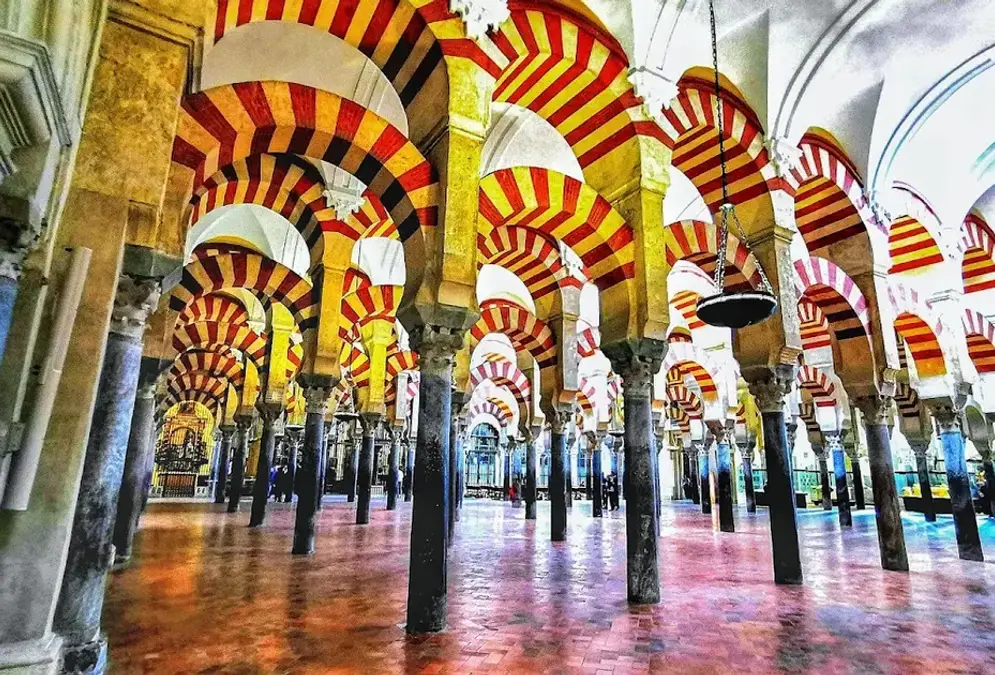
The city had been a capital long before Castile arrived, the seat of a caliphate that dissolved in civil war in 1031. What Ferdinand III's conquest of 1236 created was a different kind of capital: the head of a district that took its orders from elsewhere. Understanding the kingdom therefore means asking about land, councils and officials rather than about monarchs.
Realengo and señorío: whose jurisdiction was it?
Inside the kingdom the line that mattered ran between realengo and señorío. Realengo was land where the king held jurisdiction in full, personally or through a concejo[6]; señorío was land where a noble, the Church or a military order held it instead. The concejo's members, the regidores, were called caballeros veinticuatros in Andalusia because the regimiento had originally counted 24 of them[7]. The city's fifteenth-century elite shows up in the records by its posts: veinticuatros, jurados and comendadores of the military orders[8].
Who held señorío varied. In Andalusia nobles and institutions such as the Church and the military orders took over almost all government and administration on their lands[9]. In the kingdom of Córdoba the realengo centred on the capital, with extensive territorial señoríos north and south of it belonging to the house of Aguilar-Priego, the house of Cabra and the county of Santa Eufemia[10]. The late-medieval Aguilar estate took in Montilla, Monturque and other campiña villages[11], and in fifteenth-century Córdoba the cathedral chapter was, without doubt, the largest owner and landlord of houses in the city[12].
A mid-eighteenth-century survey shows how that split looked on the ground. Of the kingdom's four cities, two were royal and two lordly[13]:
Córdoba: realengo.
Bujalance: realengo.
Lucena: señorío, part of the estates of the Duke of Medinaceli.
Montilla: señorío, part of the same Medinaceli estates.
A traveller leaving the capital for Lucena crossed a jurisdictional frontier that no landscape marked, from the king's justice to a duke's. That was the ordinary condition of Antiguo Régimen government, a patchwork no map could show in a single colour.
The corregidor, the oligarchy and the Cortes
Day-to-day government was a contest between two parties. One was the urban oligarchy of the concejo, the council whose first form came with Ferdinand III's fuero of 1241; the other was the corregidor, the royal official sent to preside over it.
Who held the leverage shifted over time, and Córdoba shows the shift unusually well. It never produced a clean victory for the Crown, only a slow change in who could say no.
The corregidor versus the veinticuatros
From 1717 to 1722 the Córdoba corregidor and most of the veinticuatros were locked in open conflict over municipal offices that the Crown had alienated[14]. The heat makes sense once you see what was at stake. An office the Crown had sold off was property to the family that held it, so a corregidor trying to claw it back was attacking an investment as well as a privilege.
From corregidor to intendant
The man who symbolises the next stage is Fernando Valdés y Quirós, appointed corregidor of Córdoba in 1747, whose post was joined on 2 December 1749 to that of intendant of the province[15]. The union was not new in itself, since the corregidor of the 1717-1722 clash was already styled corregidor and intendant by 1720[16]. What 1749 did was re-establish the provincial intendancies, through the Instruction of 13 October 1749[17], and Valdés held both offices in Córdoba. One royal appointee now presided over the city's council and administered the wider territory, a far more useful instrument for Madrid than the veinticuatros had ever allowed.
A vote in the Cortes
The kingdom's other institutional voice was the Cortes of Castile, where Córdoba sat among the cities with a vote, alongside Burgos, León, Toledo, Seville, Jaén and eleven others[18]. That club was small and slow to change: Juan II summoned only 12 cities in 1425, the number was fixed at 17 from the Cortes of Madrid in 1435, the Cortes of Toledo sanctioned the privilege in 1480, and Granada made it 18 from 1498-99[19][20][21][22]. Each city sent two procuradores, and the urban oligarchy controlled their choice[23]. In practice the voice that spoke for Córdoba in the Cortes was the veinticuatros' voice. In the debate of 10 December 1650 on selling procuraciones, Córdoba's representatives were among only four, with Galicia, Segovia and Toro, to speak in favour[24].
Precedence is easier to document than influence. The Cortes of 1655 followed a customary order among the cabezas de reino: Burgos, León, Granada, Seville, then Córdoba, Murcia and Jaén[25]. That put Córdoba third among the four Andalusian kingdoms, behind Granada and Seville and ahead of Jaén. Whether that rank translated into political weight is harder to show, and it is safer to read a Córdoba vote as the city's rather than the whole jurisdiction's.
What the Ensenada survey found around 1750
The fullest portrait of the kingdom comes from the Catastro de Ensenada, which began as a tax reform. The Marquis of Ensenada wanted a single contribution to replace the patchwork of provincial taxes, and to tax revenue fairly he first had to know what existed[26].
In Córdoba's case the survey found a capital sitting in a hollowed countryside. The city held about 10,000 vecinos, taxable households, packed into a very large old town and ringed by nineteen big despoblados, the abandoned medieval settlements of the countryside[27]. The kingdom around it is put at 12,638 km² by Gómez-Navarro and Lama Romero (2020), close to the 12,968 km² of Peñín Rodríguez (1991)[28]; a regional territorial atlas gives 12,170 km² for the late eighteenth century[29].
Lordship had spread far beyond Lucena and Montilla. By the mid-eighteenth century noble señoríos held 54% of the cities, villas and places of the four kingdoms, and the share was especially high in Seville and Córdoba[30]. For a Crown that had conquered the region in the thirteenth century, that is a striking result: more than half the settlements answered to a noble rather than the king, before counting Church and military-order lands.
Reform came late, and it came from Madrid for the whole of Castile rather than for Córdoba alone. The urban oligarchy kept exclusive control of local power until Charles III's reform of 1766[31], long after the corregidor had become an intendant. An auto acordado of 5 May 1766[32] created the diputados del común and the síndico personero[33], offices meant to give townspeople a voice beside the council.
From kingdom to province, 1810 to 1833
The end came on paper, in three stages, and only the last one lasted:
1810, the prefectures: Joseph Bonaparte's government decreed a division of Spain into 38 prefectures[34], and Écija passed to Córdoba[35].
1813 to 1822, the Cortes projects: a plan drafted in 1813 for the constitutional Cortes was dropped the next year[36], and in 1822 the Cortes approved a division of 52 provinces[37].
1833, the Burgos division: the royal decree of 30 November 1833 adopted Javier de Burgos's plan, drawn with the 1813 and 1822 projects in mind, and is the real end of the kingdom[38].
Timeline
1236
Córdoba taken by Ferdinand III
The city becomes the head of a Castilian jurisdiction.
1749
Intendancies restored; Valdés
The Instruction of 13 October 1749 re-establishes the provincial intendancies; Fernando Valdés y Quirós holds both Córdoba posts from 2 December.
1766
Charles III's municipal reform
A Castile-wide auto acordado creates the diputados del común and the síndico personero.
1810
Joseph Bonaparte's prefectures
Écija passes to the Córdoba prefecture.
1822
Liberal Cortes project
A provincial map that Javier de Burgos later studied.
30 November 1833
Royal decree of Javier de Burgos
Andalusia's four kingdoms become eight provinces.
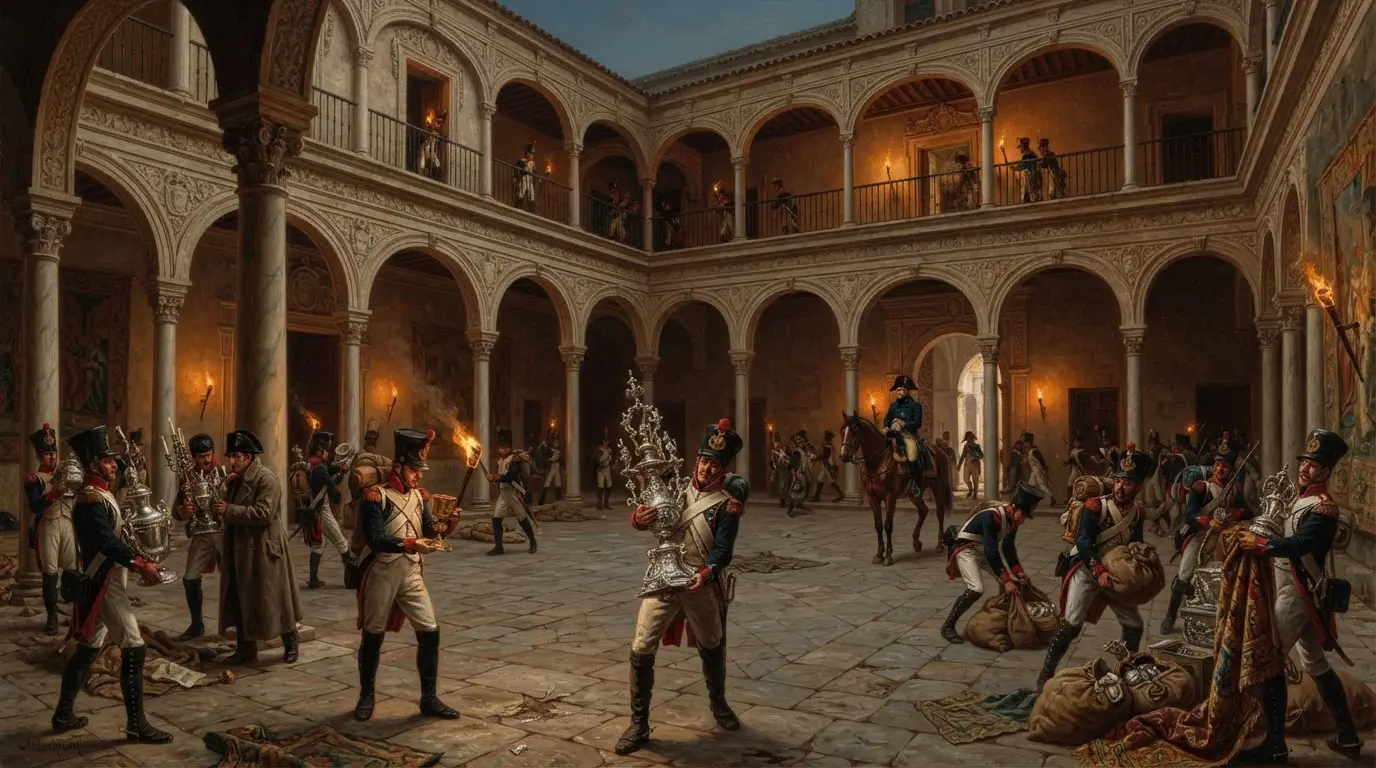
French troops had sacked Córdoba in 1808, and two years later the occupier was drawing the city's frontier.
Recommended tours
Tours are selected for quality, not commission. We earn a small fee if you book — at no extra cost to you.
The decree did more than rename districts. Its division was not to be limited to administration: military, judicial and Hacienda boundaries were all to be redrawn along the new lines[39]. The courts show the scale of the change. The Real Chancillería of Granada had jurisdiction across Andalusia, Murcia, Extremadura, La Mancha and the Canaries, and in 1834 a new Audiencia territorial at Seville was created for Seville, Huelva, Cádiz and Córdoba[40][41]. A kingdom that had been, among other things, a unit for courts, soldiers and taxes lost all three functions at once. What remained was a name.
The northern edge today: which towns changed province
The new province was not simply the old kingdom renamed. Along the northern frontier Chillón went to Ciudad Real[42], while Belalcázar, Fuente la Lancha, Hinojosa del Duque and Villanueva del Duque, until then in Extremadura, joined Córdoba[43].
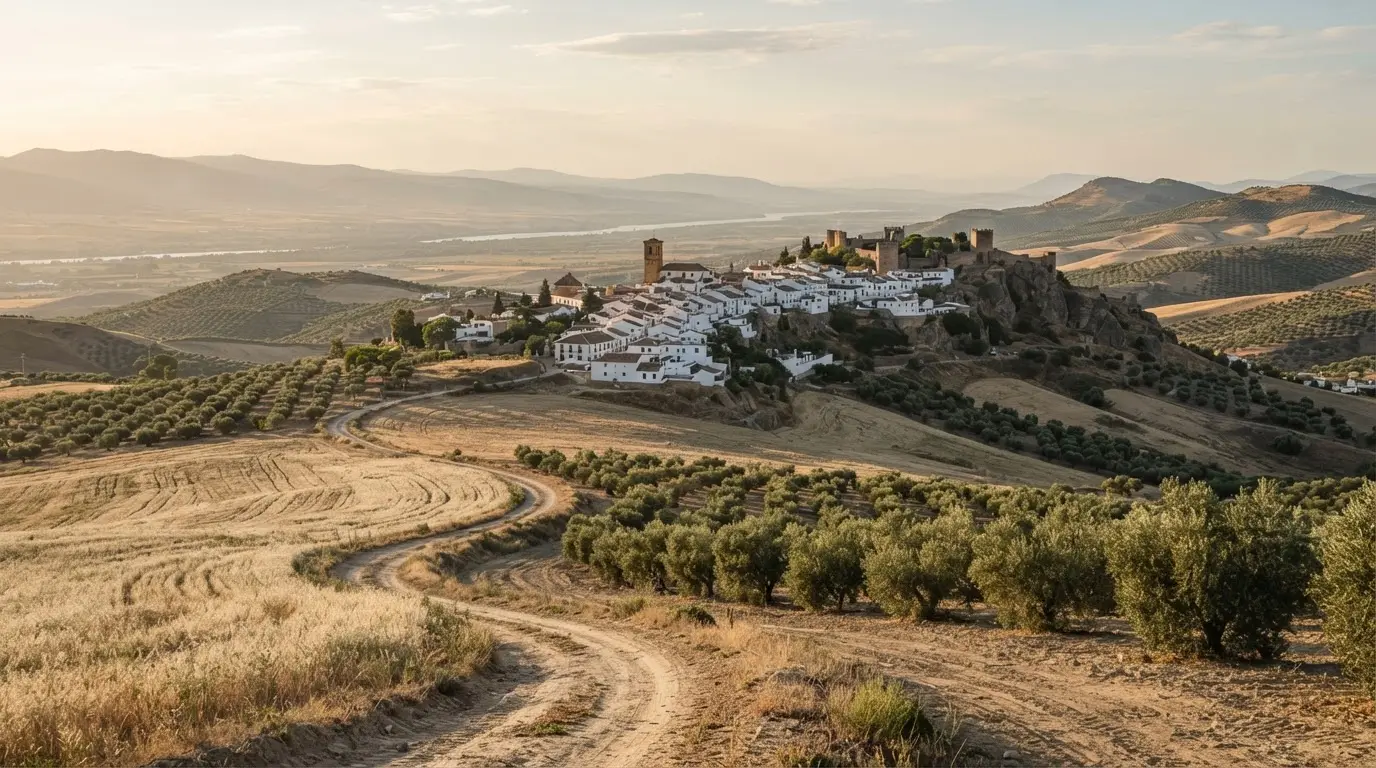
A visitor who reaches Belalcázar or Hinojosa del Duque in the Pedroches is standing in towns that belonged to Extremadura until 1833. It is as close as the landscape comes to showing where the new line was drawn.
Frequently asked questions
Was the Kingdom of Córdoba a separate state or part of Castile?
It was part of Castile. The kingdom was a territorial jurisdiction of the Crown of Castile, with a capital, boundaries and royal officials, but no monarch of its own. The same was true of the other three Andalusian kingdoms.
What were the four kingdoms of Andalusia?
Córdoba, Granada, Jaén and Seville. Castile took Córdoba in 1236, Jaén in 1246 and Seville in 1248, and Granada followed in 1492. The 1833 decree still names all four as the components of Andalusia before dividing it into eight provinces.
When did the Kingdom of Córdoba end?
It ended with the royal decree of 30 November 1833, which set up the provincial division drafted by Javier de Burgos. Córdoba became one of eight Andalusian provinces, and the military, judicial and tax districts were reorganised to match.
What is the difference between realengo and señorío?
In realengo the king held jurisdiction in full, directly or through a town council. In señorío a noble, the Church or a military order held it. Within the Kingdom of Córdoba, Córdoba and Bujalance were royal cities, while Lucena and Montilla belonged to the Duke of Medinaceli's estates.
Did the Kingdom of Córdoba have a vote in the Cortes of Castile?
Indirectly. The city of Córdoba was among the cities with a vote in the Cortes of Castile, and it spoke as one of the cabezas de reino. Its two procuradores were chosen by the city's oligarchy, so the vote is best read as the city's voice rather than the whole kingdom's.
What was a corregidor, and what did he do in Córdoba?
A corregidor was the royal official who presided over a city's council. In Córdoba he clashed with the veinticuatros in the early eighteenth century. In 1749 an Instruction re-established the provincial intendancies, and Córdoba's corregidor, Fernando Valdés y Quirós, held the post joined to that of intendant.
What was the Catastro de Ensenada?
A survey launched by the Marquis of Ensenada under Ferdinand VI to support a single tax on all revenues. Its records are among the best sources for the kingdom's households, jurisdictions and abandoned settlements around the middle of the eighteenth century.
“The Kingdom of Córdoba (also Kingdom of Cordova; Spanish: Reino de Córdoba) was a territorial jurisdiction of the Crown of Castile since 1236 until Javier de Burgos' provincial division of Spain in 1833.”
“La Andalucía, que comprende los reinos de Córdoba, Granada, Jaén y Sevilla, se divide en las ocho provincias siguientes: Córdoba, Jaén, Granada, Almería, Málaga, Sevilla, Cádiz y Huelva.”
“se hallan los señoríos, donde el ejercicio de casi todo el gobierno y la administra-ción se ha subrogado en manos de la no-bleza e instituciones como la Iglesia y las órdenes militares”
“al norte y al sur de la capital existían extensos señoríos territoriales de la casa de Aguilar-Priego, la casa de Cabra y del condado de Santa Eufemia, así como otros señoríos menores”
“al suroeste, el estado de Aguilar, compuesto por ésta y otras villas y lugares cercanos en la campiña, como Montilla, Monturque, Puente de Don Gonzalo y Castillo Anzur.”
“no hemos encontrado ninguna actuación del cabil-do catedralicio, que era, sin duda, el mayor poseedor y, consiguientemente, arrendador de casas en la ciudad de Córdoba”
“Durante los cinco años que van de 1717 a 1722 tuvo lugar en Córdoba un enconado enfrentamiento entre el Corregidor y la ma-yor parte de los caballeros veinticuatros del Municipio”
“Estas eran Burgos, León, Ávila, Segovia, Zamora, Salamanca, Soria, Murcia, Cuenca, Toledo, Sevilla, Córdoba, Jaén, Valladolid, Madrid, Guadalajara, y, quien nos ocupa, Toro.”
“Cortes de Toledo de 1480, para que se sancione de modo especial el privilegio en virtud del cual sólo 17 ciudades castellanas tuviesen «voz y voto en Cortes»”
“Documento elaborado por iniciativa del marqués de la Ensenada durante el reinado de Fernando VI, que introducía datos territoriales a los efectos de gravar con una única contribución todas las rentas provinciales.”
“con su población evaluada en unos 10.000 vecinos aproximadamente, muy apiñada en una ciudad con un casco antiguo muy grande, rodeada por diecinueve despoblados de gran tamaño”
“La extensión del antiguo reino de Córdoba se cifra en 12.638,21 km2, prácticamente idéntica a los 12.968 km2 aportados por Peñín Rodríguez (1991: 115)”
“a mediados del XVIII comprenden el 54% de las ciudades, villas y lugares de los cuatro reinos, con una presencia particularmente notable en los de Sevilla y Córdoba.”
“Esta figura se había creado, junto alos diputados del común, por auto acordado de 5de mayo de 1766, “para pedir yproponer todo lo que convenga al público general”.”
“El 30 de noviembre de 1833, un real decreto aprueba la división provincial para la que De Burgos había tenido muy en cuenta los proyectos de 1813 y 1822.”
“Esta división de provincias no se entenderá limitada al orden administrativo, sino que se arreglarán a ella las demarcaciones militares, judiciales y de Hacienda.”
“El Tribunal tenía jurisdicción y privilegios extraordinarios no sólo en Andalucía, sino también en los reinos de Granada y Murcia, provincias de Extremadura y de la Mancha y en las Islas Canarias.”
“Se crea también la Audiencia territorial de Sevilla, con jurisdicción sobre las cuatro provincias occidentales de Andalucía: Sevilla, Huelva, Cádiz y Córdoba.”