
The fall of Córdoba, June 1808
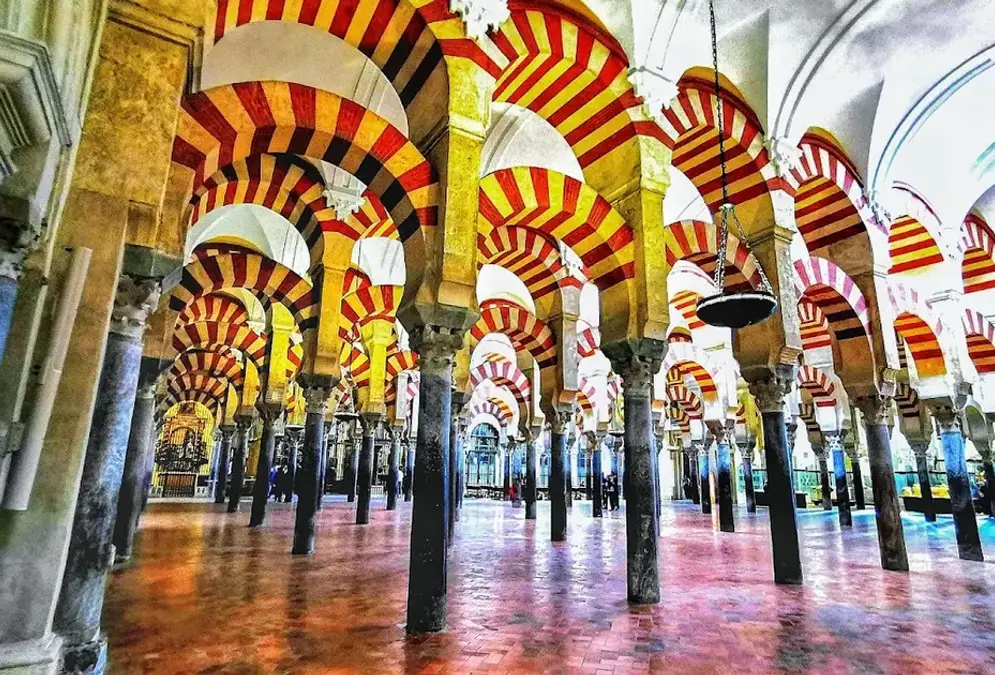
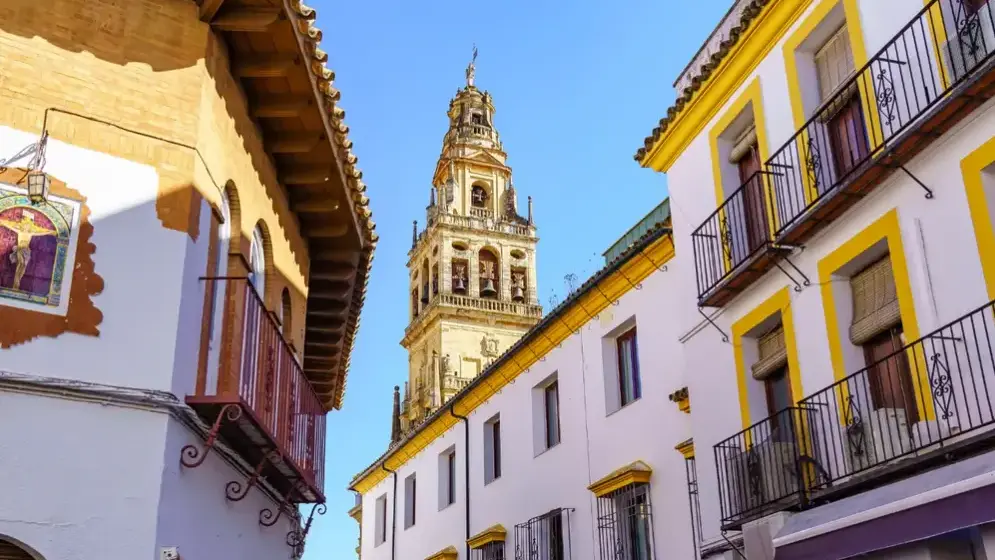
Napoleon's occupation of Spain had already provoked open revolt: Madrid's Dos de Mayo Uprising in May 1808 made clear that French rule would be resisted, and within weeks the conflict later known as the Guerra de la Independencia Española, the Peninsular War, had reached Andalusia. General Pierre Dupont de l'Étang marched his II Corps south toward Córdoba, then one of the region's richest cities, its skyline still dominated by the Mezquita-Cathedral, the great Umayyad mosque converted centuries earlier into a cathedral.
In early-to-mid June, a scratch Spanish force under Pedro Agustín de Echávarri tried to hold the river crossing at Alcolea, a village 10 km outside the city.[4] The Battle of Alcolea Bridge was over quickly, and Dupont's veterans marched into Córdoba within days, meeting no further resistance.[4] What followed over the next four days was not an occupation. It was a sack.[1]
A shot, a pretext, and four days of plunder
According to tradition, the excuse for what followed was a single shot. Pedro Moreno, a local judge of the Santa Hermandad, is said to have fired at Dupont's men from a house on what is now Calle Alfonso XII.[5] Whether the shot was fired at all, or by him, cannot be verified from where the sources sit today, but the episode was used at the time to argue that Córdoba had resisted, and resistance was the pretext that licensed a sack.[5]
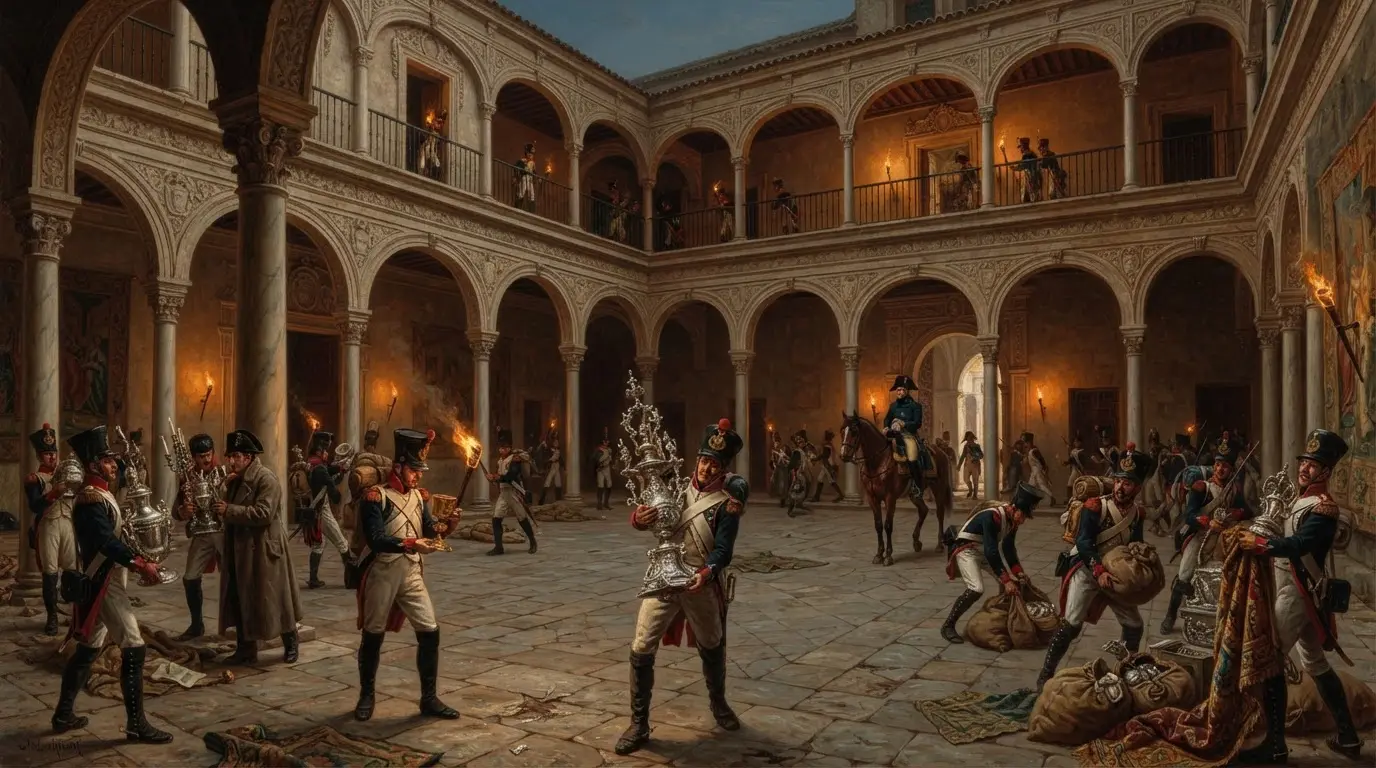
What the French actually took is better documented than why. The convents of El Carmen, San Juan de Dios, and Los Terceros were hit especially hard,[6] along with private houses across the city; the Episcopal Palace alone lost 100,000 reales[7] in cash, and the Palacio de Viana another 80,000.[7] By the time French troops withdrew, the total taken from Córdoba was put at more than 10 million reales.[8]
Some popular retellings place the plunder specifically inside the Mezquita-Cathedral itself: silver, gold crowns, sacred vessels carried out by the cartload. That version traces to a single, uncited local retelling and appears in none of the documented accounts of the sack. What the record does support is a treasury dispute after the fact: when Córdoba later petitioned for its property back, General Castaños agreed to return only liturgical vessels and sacred ornaments, evidence that church property was seized somewhere in the city, without the cathedral needing to be the named building.[9]
Córdoba becomes a staging ground
The French did not stay long. On 16 June, word reached Córdoba that the French fleet at Cádiz had surrendered and that a new Spanish army was forming nearby; Dupont's troops withdrew from the city that same day.[10]
A week later, on 23 June, General Francisco Javier Castaños entered Córdoba with what remained of Spain's regular forces.[11] In the shadow of the Alcázar de los Reyes Cristianos, the fortress that had anchored royal and military authority in the city for centuries, Castaños turned Córdoba into the assembly point for the new Army of Andalusia before marching north to meet Dupont again.
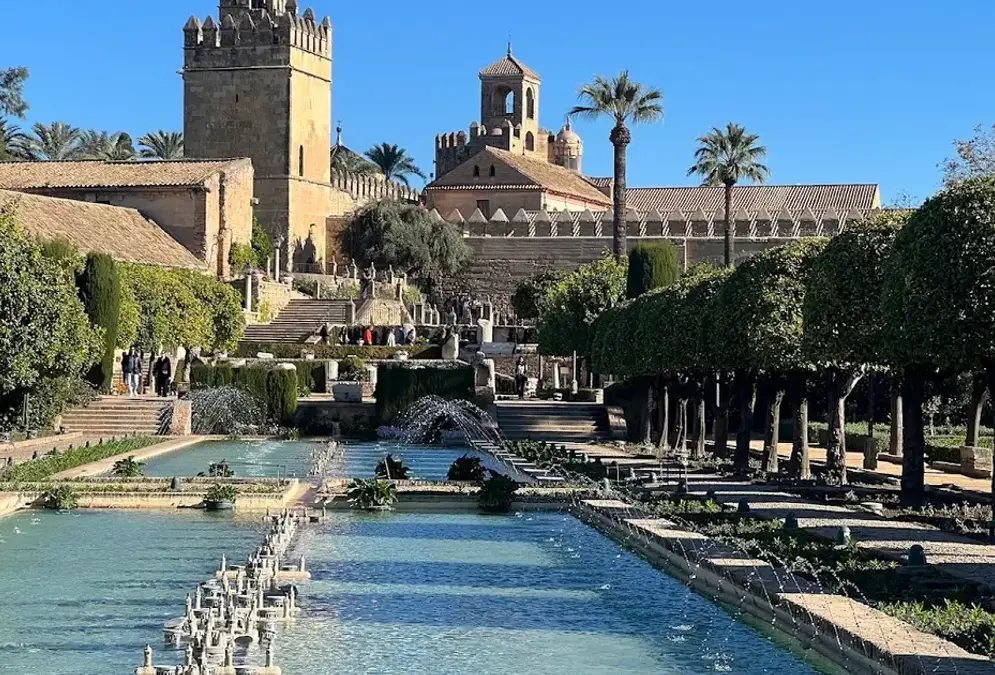
Explore nearby · Monument
Alcázar de los Reyes Cristianos
Alcázar de los Reyes Cristianos, Córdoba: free entry on Tuesdays. A 14th-century fortress-palace with terraced Moorish-inspired gardens and Roman mosaics.
The wagons that slowed an army
Dupont's corps that marched back north in July was not the army that had taken Córdoba unopposed. It was burdened, in the sweltering heat, with some 500 wagons of loot and 1,200 ill.[2]
The two forces met at Bailén between 16 and 19 July; the decisive fighting opened on the morning of the 19th.[20] General Théodor von Reding's division outflanked the overloaded French column, and Dupont surrendered. A total of 17,000 French troops were taken prisoner: the worst single defeat suffered by the French in the entire Peninsular War, and what historians describe as the first open-field defeat of a Napoleonic army.[3][12]
“We owed our defeat to the greed of our generals.[13]”
Reckoning
At the surrender, Dupont is recorded telling Castaños: "You may well, General, be proud of this day; it is remarkable because I have never lost a pitched battle until now—I who have been in more than twenty."[14] Castaños's reply, as later chroniclers recorded it, was drier: "It is the more remarkable because I was never in one before in my life."[15]
Napoleon's fury on hearing the news was immediate. "Has there ever, since the world began, been such stupid, cowardly, idiotic business as this?" he is said to have demanded.[16] Dupont and his subordinate General Dominique Vedel returned to France in disgrace, were court-martialed, stripped of rank and title, and imprisoned at Fort de Joux.[17]
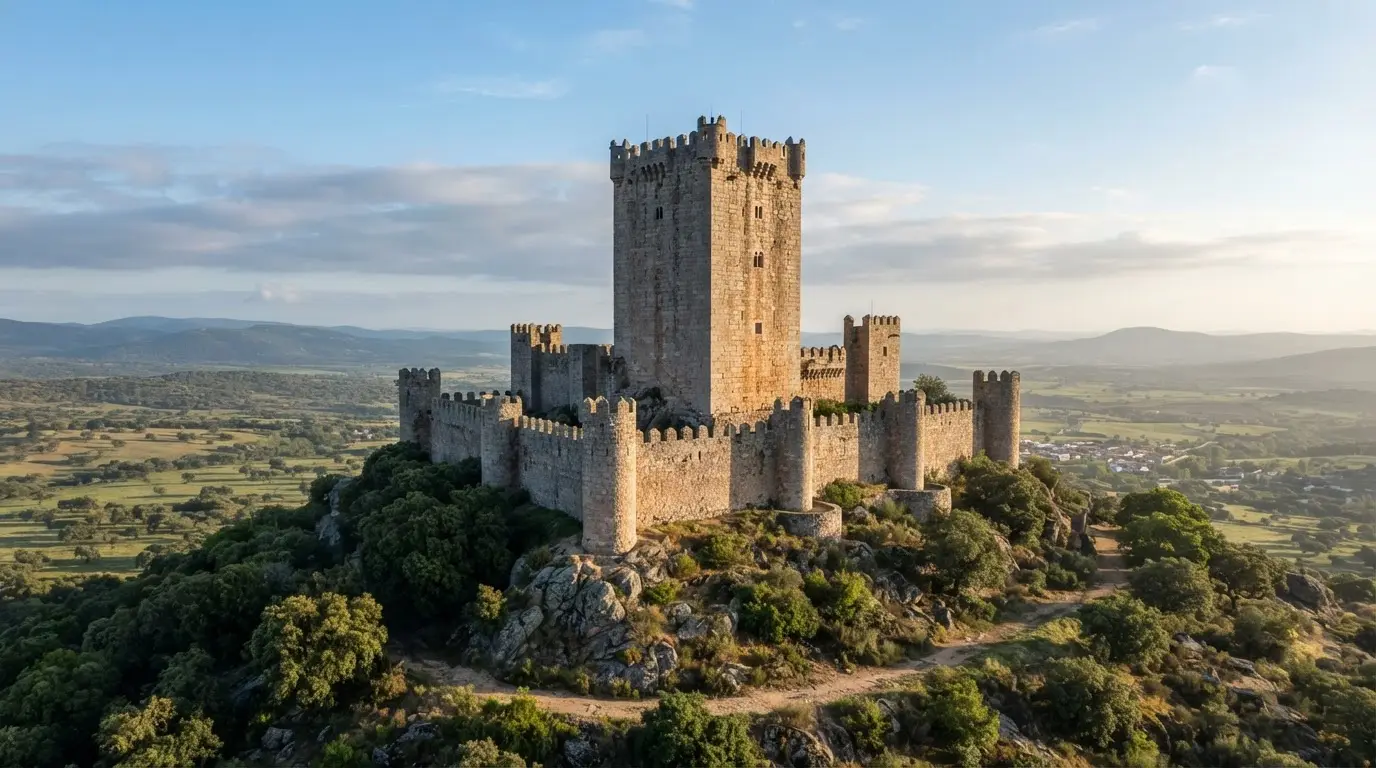
Deep dive · Article
47 Metres Tall and Almost Unknown: Spain's Tallest Keep
Belalcázar Castle's 47 m keep is listed by the Junta de Andalucía as Spain's tallest. How it grew, what to see inside and how to book the free guided visit.
In Córdoba, news of the victory arrived in the early hours of 20 July, and the city's bells rang out to announce it.[18] Ten days later, on 29 July, Castaños made a triumphal entry through the Puerta Nueva, the same city his own army had needed weeks to rebuild after the plunder his own victory had just avenged.[19]
Recommended tours
Tours are selected for quality, not commission. We earn a small fee if you book — at no extra cost to you.