
The Glorious Revolution reaches Andalusia
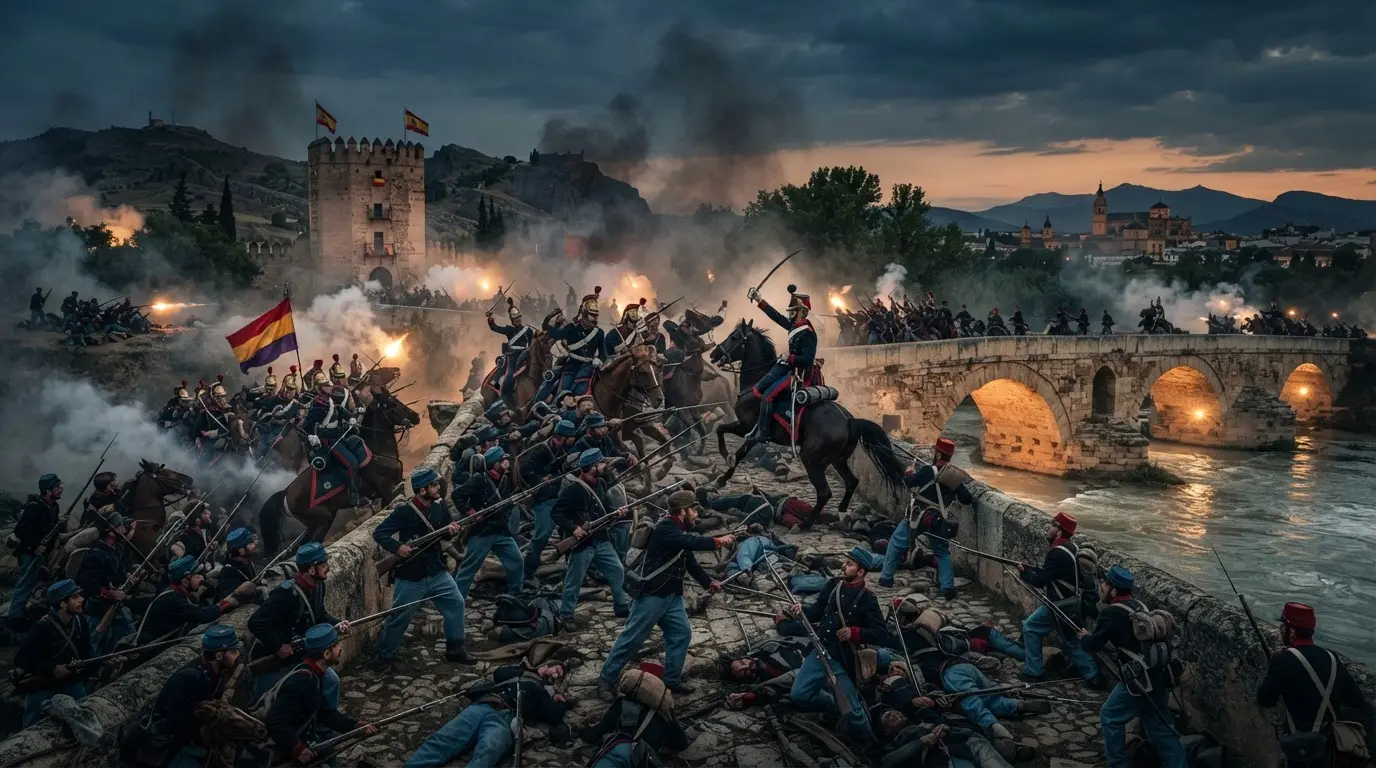
Ten kilometres outside central Córdoba, on the old road to Madrid, the Puente de Alcolea has carried travellers over the Guadalquivir since it was built between 1785 and 1792 under Carlos III[4], a younger, quieter crossing than the Roman Bridge in the historic centre. Sixty years after French troops first crossed it in anger, it was about to decide who ruled Spain a second time.
On 19 September 1868, Admiral Juan Bautista Topete raised the fleet anchored at Cádiz against Isabella II's government, joined within days by General Juan Prim. The rebels published a manifesto titled España con honra — Spain with honour — demanding political reform and, in effect, the queen's departure.[5]
Isabella II's government answered by sending royalist troops south under Manuel Pavía y Lacy, Marqués de Novaliches, to intercept the revolutionary column before it reached Madrid. Prim and Topete's forces met the royalist army near the bridge outside Córdoba.[6] Each column numbered close to 10,000 men, though the royalists held the edge in artillery — the one real advantage on their side of the river.[7]
- 19 Sept 1868
Uprising at Cádiz
Admiral Topete raises the fleet against Isabella II
- 28 Sept 1868
Battle of Alcolea
Revolutionary and royalist armies clash at the bridge
- Late Sept 1868
Isabella II exiled
The government resigns and the queen crosses into France
Two armies at the Puente de Alcolea
The two columns met at the bridge on 28 September, and fighting lasted until nightfall. Novaliches rode into the thick of the action to steady his own vanguard and was struck in the jaw by shrapnel; command passed to General Jiménez de Sandoval, who judged the crossing could not be taken and ordered a full withdrawal.[8] The wound became instant folklore: a popular song mocked his failed attempt to enter Córdoba — «El general Novaliches / en Córdoba quiso entrar / y en el puente de Alcolea / le volaron las quijás...»[9]
By nightfall, negotiations had opened and what remained of the royal army withdrew north. More than a thousand men had been killed or wounded in a single day's fighting, and a monument to the fallen still stands at the site.[10]
Explore nearby · Monument
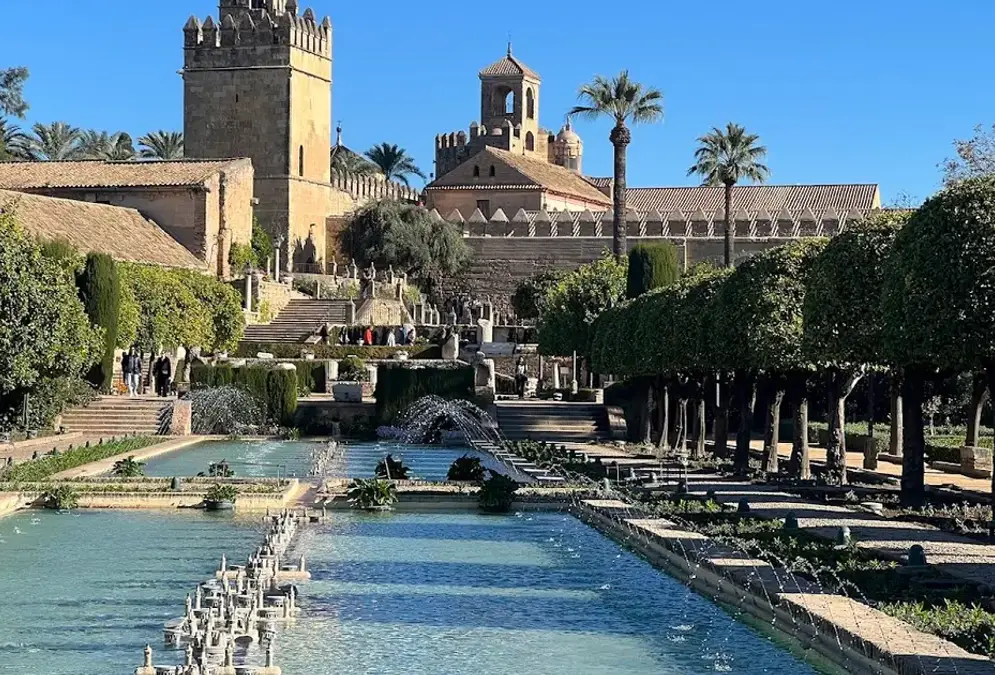
Alcázar de los Reyes Cristianos
Alcázar de los Reyes Cristianos, Córdoba: free entry on Tuesdays. A 14th-century fortress-palace with terraced Moorish-inspired gardens and Roman mosaics.
A queen who never came back
News of the defeat reached Madrid within days. Isabella II, who was summering in San Sebastián on the Cantabrian coast, saw her government resign; she crossed into exile in France and never returned to the throne.[11]
Recommended tours
Tours are selected for quality, not commission. We earn a small fee if you book — at no extra cost to you.
The revolutionary victory at Alcolea marked what Spaniards still call La Gloriosa, the Glorious Revolution, and opened the Sexenio Democrático (1868–1874), six years in which Spain tried to build a political order beyond the Bourbon monarchy.[12] The bridge sits at the far end of the same road that runs past the Alcázar de los Reyes Cristianos in the city centre.
Not the first battle this bridge had seen
This was not the first time the Puente de Alcolea decided Córdoba's fate. Sixty years earlier, on 7 June 1808, a Spanish militia broke at the same crossing during the Peninsular War,[13] and French troops marched into Córdoba within hours — the opening act of a four-day sack that later cost Napoleon an army at Bailén. No source that documents both battles at this bridge explains why the same span decided Spain's fate twice[14] — that connection is this site's own reading of the geography, not a claim made by any one source.
The Puente de Alcolea carries the old road to Madrid across the Guadalquivir, the last major river crossing before the road climbs out of Andalusia toward the capital. Any army moving between Madrid and the south, a French corps marching on Córdoba in 1808, a revolutionary column marching on Madrid in 1868, had to cross the Guadalquivir somewhere near here. The bridge did not choose to host two battles; its position on the map did.
Deep dive · Article
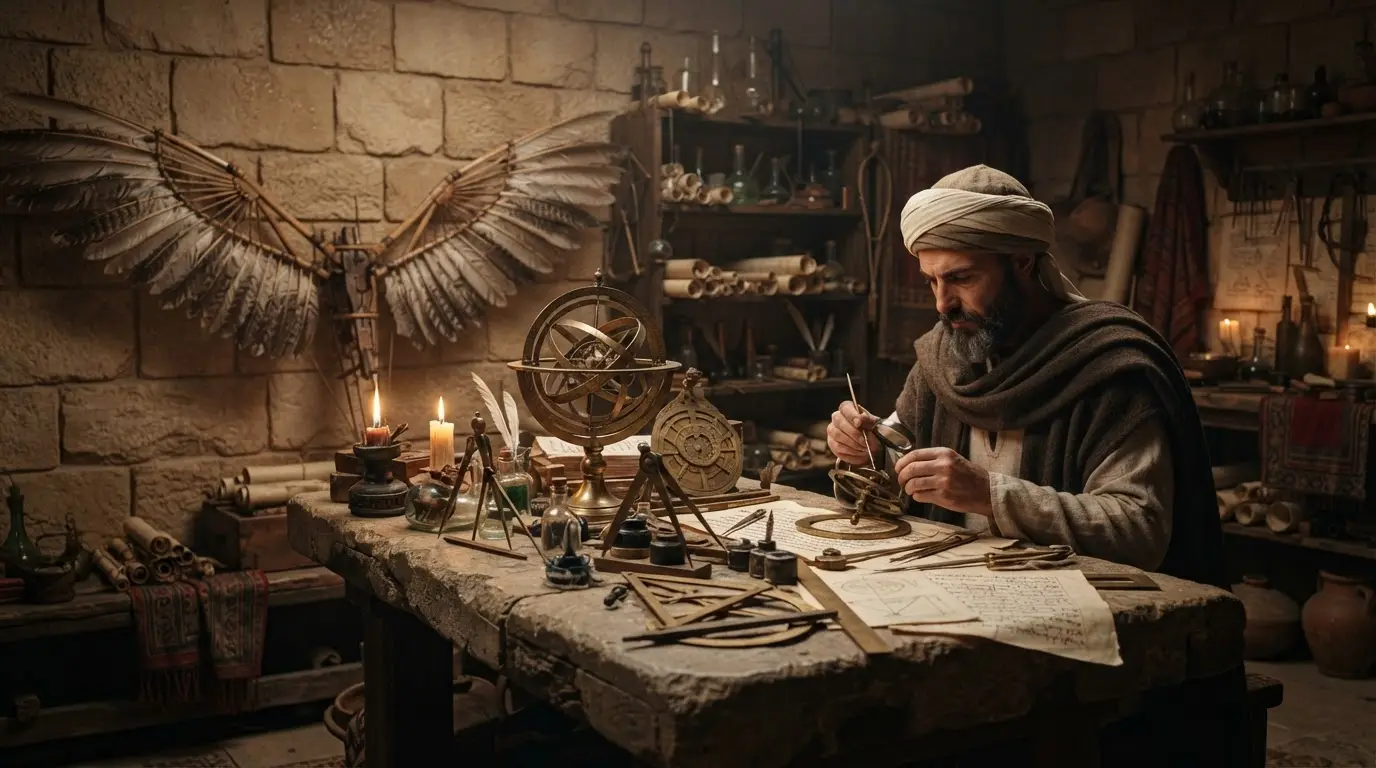
Abbas Ibn Firnas: Córdoba's Polymath Who Dreamed of Flight
Abbas Ibn Firnás built lenses, glass, and astronomical tools in 9th-century Córdoba. His famed flight rests on a single account, written 750 years later.