
The 15-year queue belonged to the father
Start with the arithmetic. A flamenco-guitar museum site says waits of 15 years and longer were "not seldom"[1]; at about 20 guitars a year[2], a list that deep holds something like 300 names. Nobody publishes that figure, and it is a multiplication rather than a sourced count, but it explains why the order book stopped moving.
The same site adds that the book dated back to the 1990s and that Reyes had stopped taking orders altogether[5]. Guitar Salon International, a dealer, says demand was high enough that he could not accept new orders for years[6], and its listing for a 2009 guitar calls the wait-list closed because of its enormous size[7]. Two trade sources, one picture.
Names attach to the queue. The museum site lists Vicente Amigo, Tomatito and Manolo Franco among his players[8]; Guitar Salon names Amigo and Paco Serrano[9]; Siccas Guitars says Tomatito trusted Reyes instruments on stage and in the studio[10]. All three are trade pages, not press or the players' own words, so read the roster as the trade's version of events. For the music those players inherited, see our history of flamenco in Córdoba.
From arrival in Córdoba to a workshop of his own
Where Reyes came from is already disputed. The flamenco-guitar museum site calls Córdoba his native city, while the Madera Guitarras profile says his parents, Manuel and Evangelina, moved the family there looking for work when he was 10[11]. Either way, the guitars were made in a city whose flamenco grew out of the Gitano patios of Santa Marina.
Guitar Salon International dates his first and only workshop in Córdoba to 1949[12]. From 1949 to 2014 is 65 years, though the sources disagree on how long he kept working at the bench, which is one reason to avoid a tidy "six decades at the same table" line.
Explore nearby · Museum
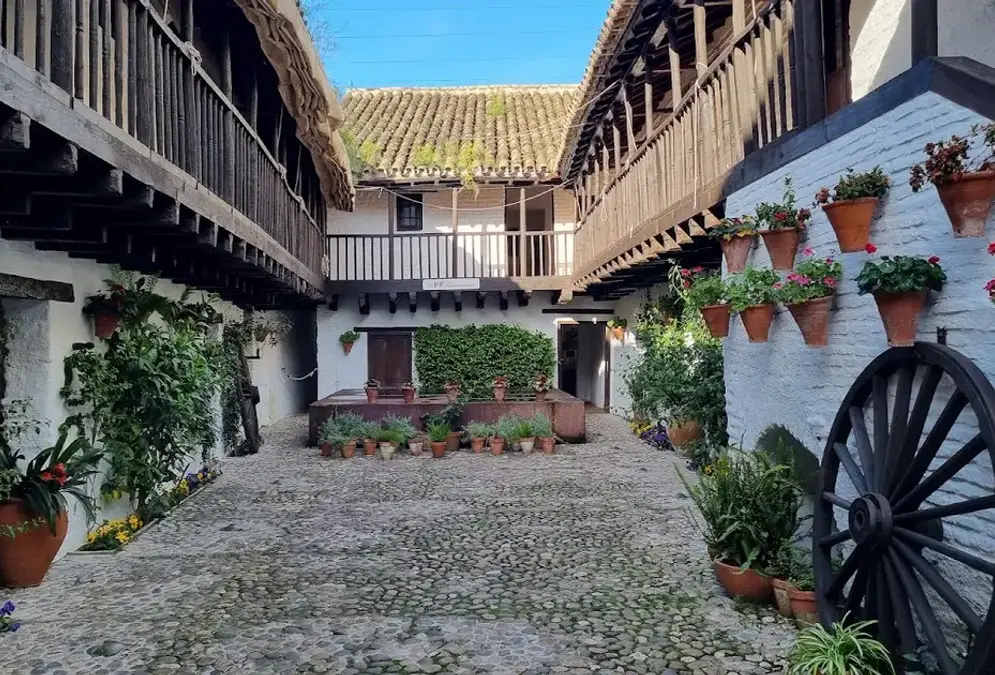
Centro Flamenco Fosforito
Córdoba's premier flamenco museum in the historic Posada del Potro. Interactive exhibits, seasonal Sunday recitals and bilingual displays for all ages.
How he learned is contested too. Madera Guitarras says he always described his own way of learning as self-taught[13], while other trade profiles credit an early teacher. The self-description is his; the teacher story belongs to the people writing it down. The accounts do converge on scale: Siccas Guitars says he worked without a large workshop, without apprentices in the conventional sense, and without compromise[14].
Outside the trade pages there is one lead worth following. Guitar Salon cites Luis F. Leal Pinar's chapter on Reyes in the compilation Guitarreros de Andalucía (2004)[15], which is where to look for an account written by someone who is not selling guitars.
What goes into a Reyes guitar
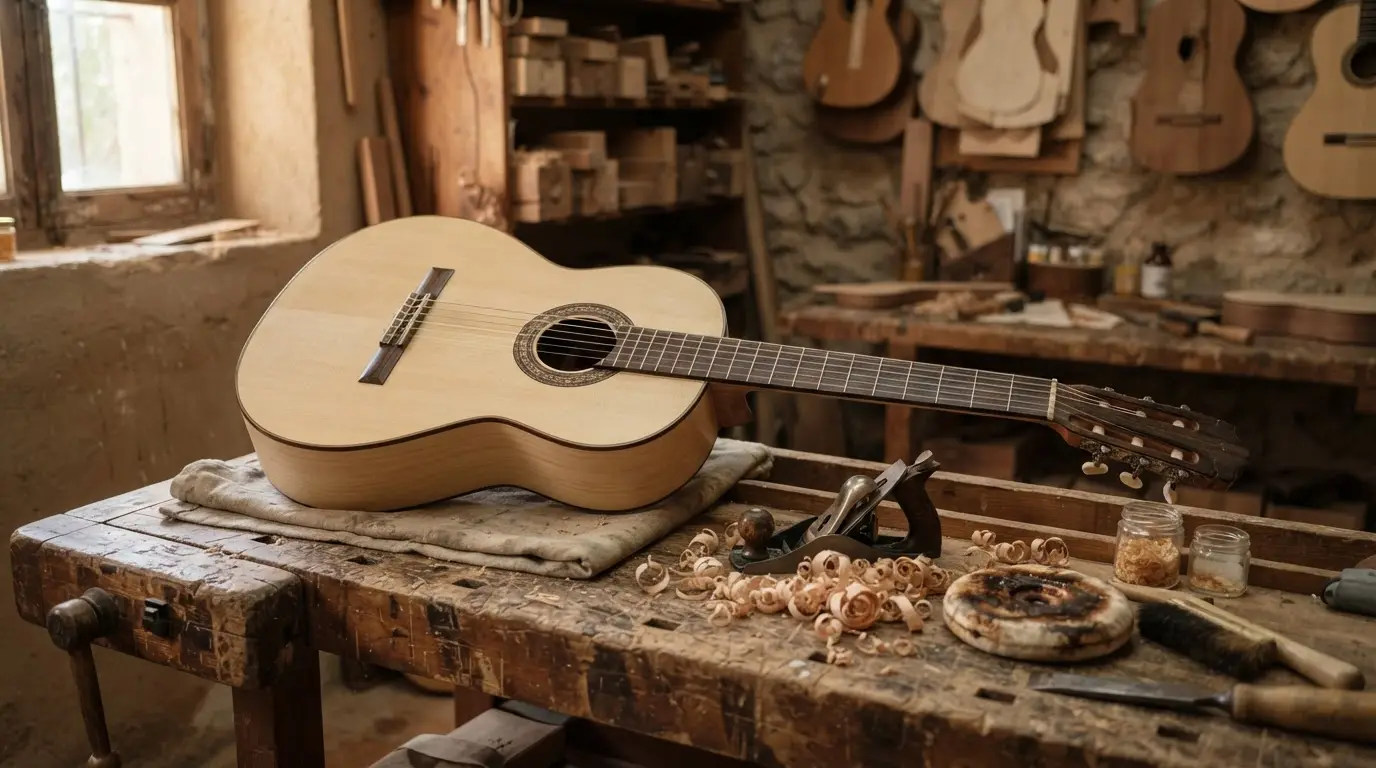
Siccas Guitars, which sells luthier-made instruments, describes a build that sounds almost austere. Three choices stand out:
- Spruce for the soundboard and cypress for the sides and back[16]. Cypress is the classic flamenco body wood, and part of why a flamenco guitar sounds drier and quicker than a classical one.
- A hand-applied French polish of shellac[17].
- Traditional hide glue on every internal joint[18]. It can be reheated and reopened, which is why repairers like it.
Siccas credits the guitars with "extreme clarity and amplitude, a very fast response, and a characteristic warmth"[19]. That is a dealer's description, but the combination is what a flamenco player pays for: notes that start instantly and stop cleanly, so the rhythm of the right hand stays legible.
Nothing on the list is exotic, and that is the point. Any competent luthier can follow it. What the trade pages cannot show is the discipline of repeating it by hand, about 20 times a year, for decades.
The son, and what the sources leave open
Guitar Salon International says Manuel Reyes Jr., born in 1969, worked side by side with his father at the bench from 1994 until 2014[20]. That is twenty years working alongside his father, longer than most careers take to find a style.
He builds flamenco guitars only[21]. According to the flamenco-guitar museum site his sound is close to his father's[22], and Guitar Salon says that apart from the label the guitars look the same[23]. The museum site also says he already has a waiting list and a rising market value[4]; the line is undated.
What none of the trade pages say is just as useful to know:
Deep dive · Article
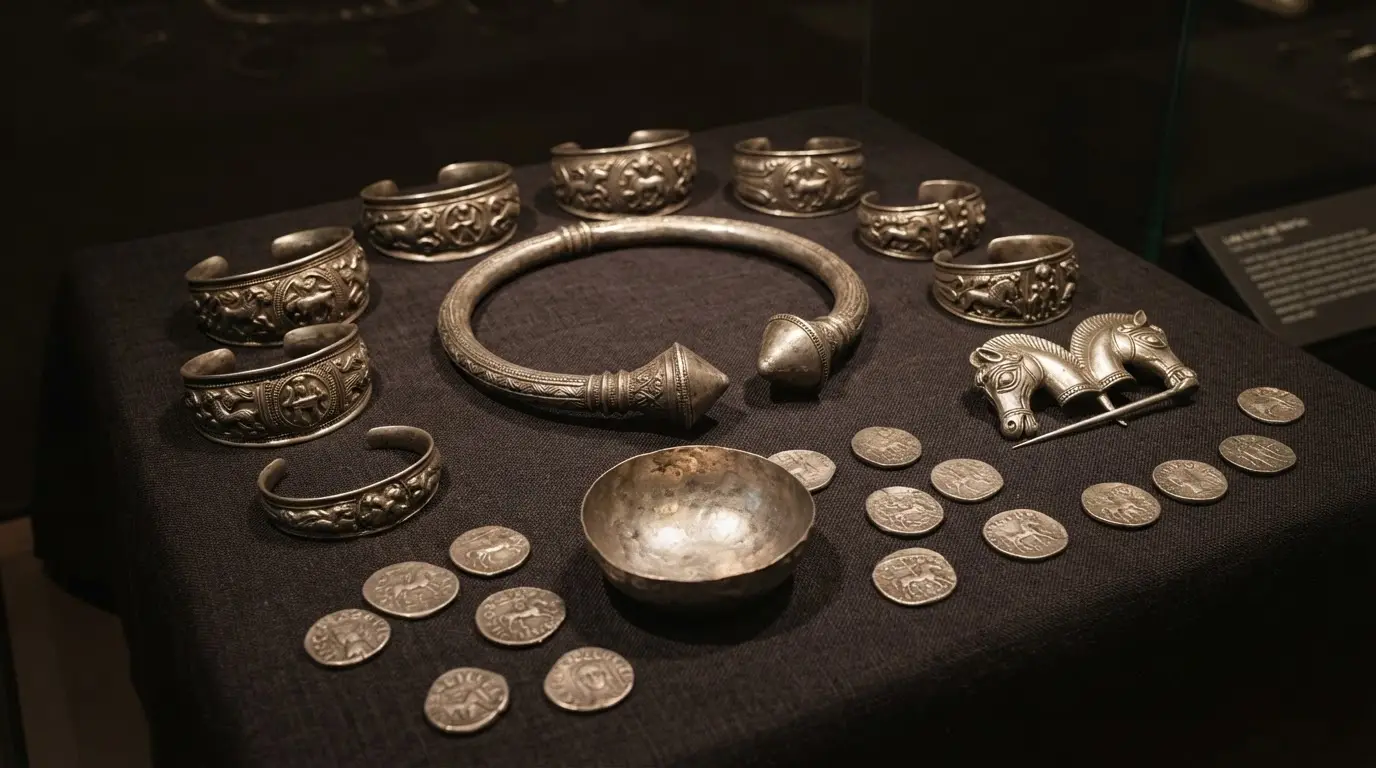
An Andalusian Treasure Has Sat in the British Museum Since 1932
A silver hoard dug up in Córdoba in 1915 left Spain against the law and has been in the British Museum since 1932. Here is how, and what a 2026 study found.
- Where the workshop is
- Whether Jr. is taking orders, or how long his list runs
- What a guitar costs
- Whether visitors can come in
Until a source says otherwise, the honest position is that the workshop is a name known to players and dealers, not a stop on a visitor's route. Treat any site that offers firm answers on those four points with suspicion unless it names where it learned them.
Hearing Córdoba's guitar tradition without a waiting list
No source describes a way into the Reyes workshop, so the practical plan is to hear flamenco guitar played live. Three routes, in rising order of commitment:
- The Centro Flamenco Fosforito, the city's flamenco museum, for context
- A tablao evening, such as the flamenco show, for the full performance
- The Festival de la Guitarra de Córdoba, when the guitar itself is the headline
Do not plan a trip around the workshop
None of the sources consulted give an address, opening hours or a visiting procedure for the Reyes workshop. Treat any listing that does as unverified, and book the venues above instead.
For a ranked comparison, the best flamenco in Córdoba guide sorts the options by what you want from an evening.
Recommended tours
Tours are selected for quality, not commission. We earn a small fee if you book — at no extra cost to you.

Whichever you choose, sit close enough to hear the attack. The fast response Siccas credits to Reyes is audible in a rasgueado, the strummed flourish where the right hand fans across the strings: the sound starts the instant the nails land and is gone when the hand closes.