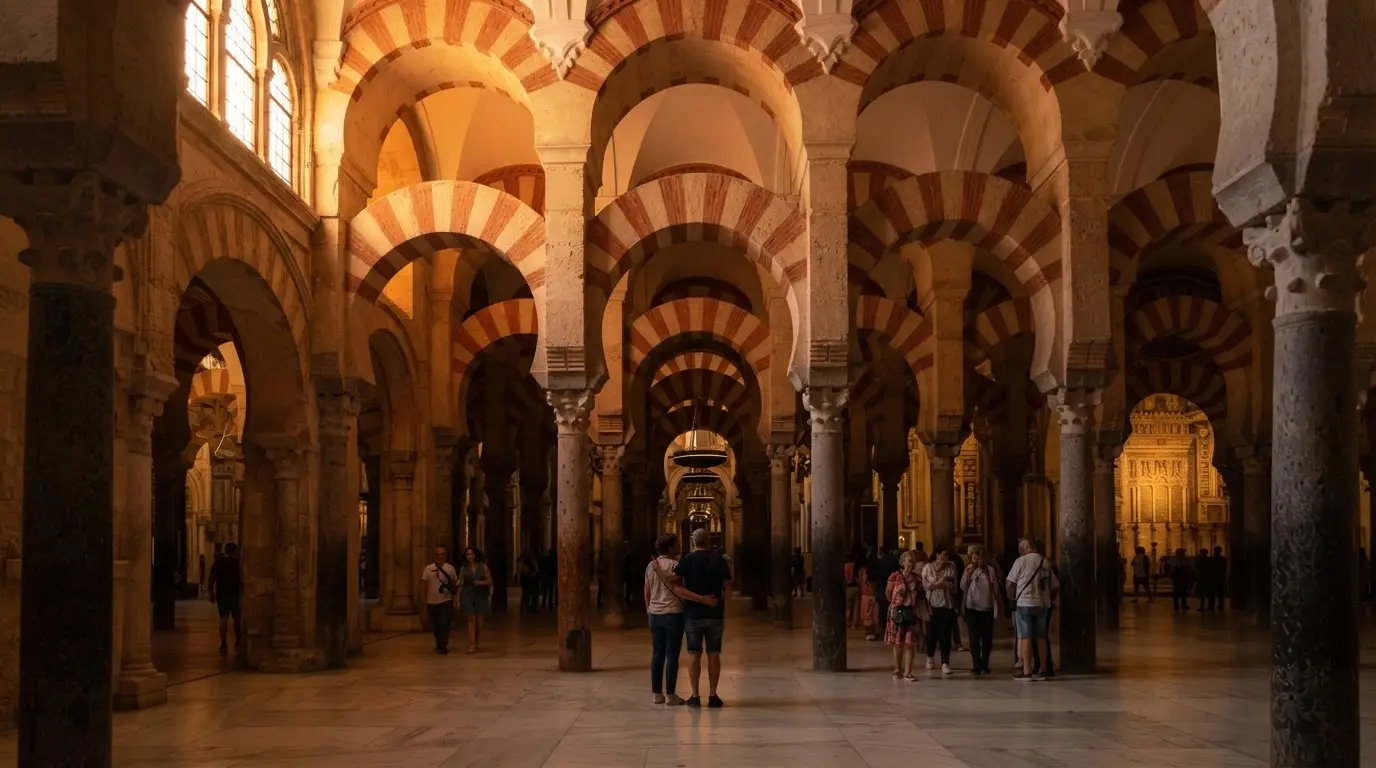

What the Mediterranean Capital of Culture and Dialogue actually is
The Mediterranean Capitals of Culture & Dialogue title is a joint project of the Union for the Mediterranean and the Anna Lindh Foundation, built to strengthen regional ties through culture rather than trade or security, an act of cultural diplomacy as much as art.[5] Each year it pairs a city from the Mediterranean's northern shore with one from the southern shore, and the two are expected to work together on their programming.[6] Córdoba and Saida make up the initiative's third edition, following Tirana and Alexandria in 2025 and Matera and Tétouan in 2026.[7]
The call for applications names regional relevance, artists from the region and international partnerships among the key components of a successful bid.[8] Eligibility is also a one-shot deal; a city that has already held the title cannot apply again.[9] The two cities in a given year must collaborate, though they file separate applications.[10] Each programme is also expected to build toward a large celebration on the Day of the Mediterranean, a formal requirement of the format rather than a confirmed date on Córdoba's own calendar.[11]
It is easy to confuse this prize with the European Union's older, better known European Capital of Culture programme. They are not the same thing. None of that procedural detail explains why the UfM picked Córdoba, though. That answer reaches back more than a thousand years, and it complicates the story Córdoba likes to tell about itself.
The historical case: a Caliphal court built on translation
The 2027 title leans on a specific stretch of Córdoba's past: the Caliphate of Córdoba, declared in 929 under Abd al-Rahman III, which turned the city into a centre of translation, with Greek texts rendered into Arabic, Latin and Hebrew.[15] That habit predates the caliphate itself. Decades earlier, the emir Abd al-Rahman II had sent envoys to the courts of Baghdad and Constantinople with instructions to acquire texts on religion, grammar, poetry, astrology and medicine.[16]
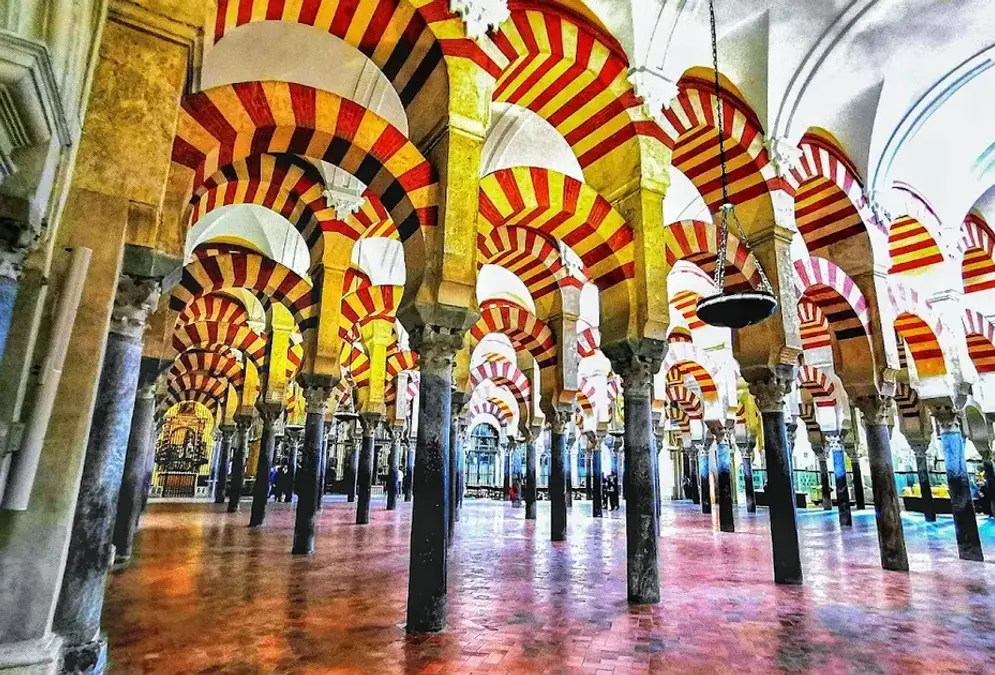
Explore nearby · Monument
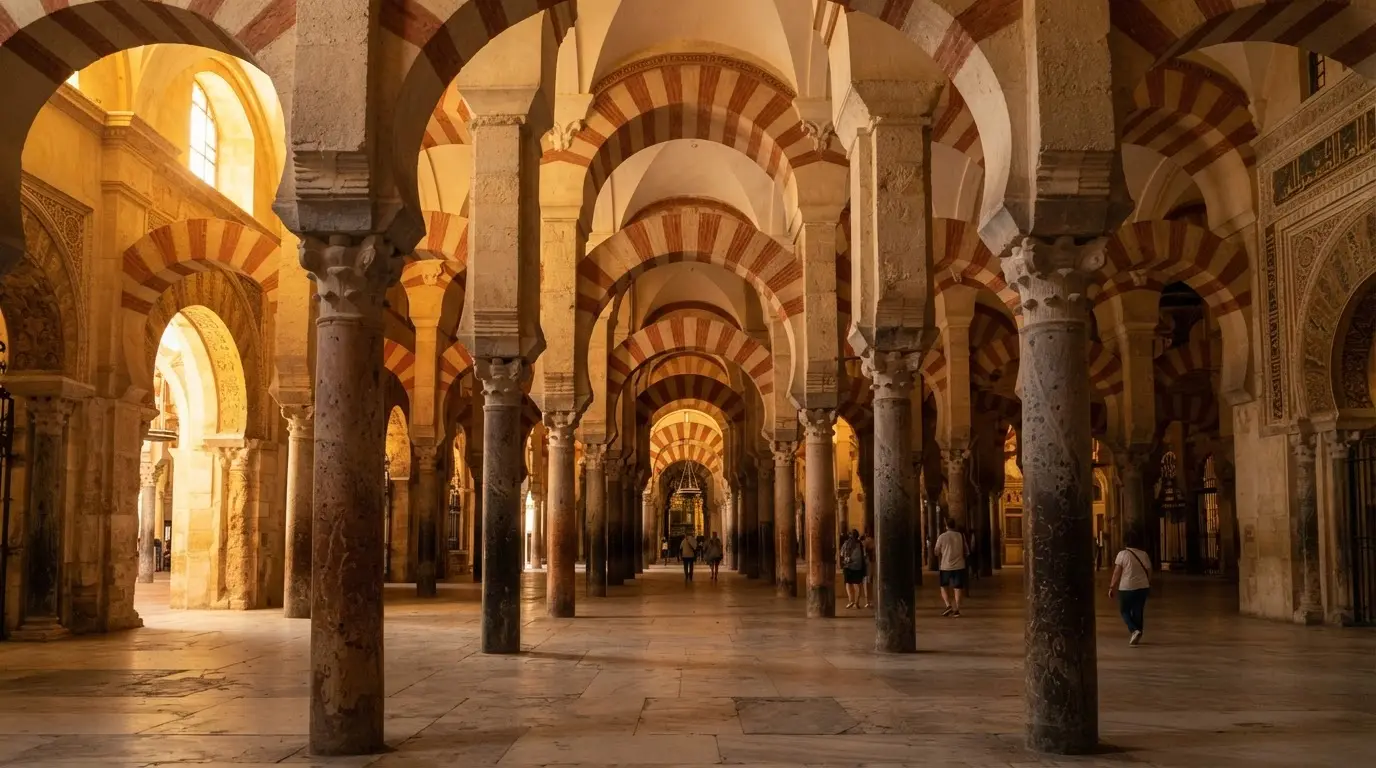
Mezquita-Catedral de Córdoba
856 columns, 1,300 years of Islamic and Christian history. UNESCO monument in Córdoba, Andalusia. Red-and-white arches, Byzantine mosaics, a Renaissance nave.
That appetite for imported knowledge reached its peak under al-Hakam II, whose reign the record treats as the caliphate's intellectual high point.[17] His library, covered in full in Al-Hakam II's library, is the concrete institution behind the claim that Caliphal Córdoba "once rivaled Baghdad and Byzantium."[2]
Jewish scholars were not spectators to this exchange. Hasdai ibn Shaprut served in the caliph's court and used his position to patronise Hebrew scholarship,[18] eventually helping the Jewish community of al-Andalus break its dependence on the older academies of Baghdad.[19] None of that made the arrangement equal. Christians and Jews contributed across the intellectual and cultural life of the caliphate, but doing so required publicly deferring to Arabic and to Islam's higher formal status, a condition the next section takes seriously rather than glossing over.[20]
The convivencia problem behind the title
Córdoba's own civic language leans into the maximal version of the story. Mayor José María Bellido called the 2027 recognition proof the city has reclaimed "a place we should never have lost" (in translation), and said it "consolidates us as a heritage, cultural city and cradle of dialogue between civilisations" (in translation).[21][22] It is the kind of line a tourism board writes for a reason.
This site has already examined the convivencia myth in detail: the word itself was coined by a Spanish historian in 1948, decades after the golden-age idea it names had already taken shape, and the whole framing is hard to square with the documented violence against Jewish communities across medieval Iberia in later centuries. None of that erases the exchange of manuscripts and scholars described above. It does mean "cradle of dialogue between civilisations" and "a working hub of Caliphal-era scholarship" are not quite the same sentence, even when officials use the two interchangeably.
That distinction, a real scholarly hub embedded in a hierarchy rather than a fictional utopia, is the version of Córdoba's history that can actually support a year-long celebration without embarrassing itself once the year is over.
How many UNESCO World Heritage sites does Córdoba actually have
Even Córdoba's own official tourism promotion overstates its UNESCO status. The city's tourist board lists four UNESCO World Heritage inscriptions for Córdoba,[25] naming the Mosque-Cathedral, the Historic Centre, Madinat al-Zahra and the Patios Festival. UNESCO's own records show two, and the fourth item on that list isn't even on the same register as the other three. That distinction matters for exactly the reason this initiative exists: a title about culture and dialogue should be precise about what heritage it's actually pointing to.
The Mezquita-Catedral and the Historic Centre are not two separate listings. UNESCO inscribed the Great Mosque in 1984 and extended that single property in 1994 to cover part of the Historic Centre, the Alcázar, the Roman Bridge and the Calahorra Tower.[26] That single property now covers 80.28 hectares.[4] Medina Azahara, the ruined Caliphal palace-city west of the centre, is Córdoba's second and only other World Heritage List property, inscribed separately in 2018.[27]
Recommended tours
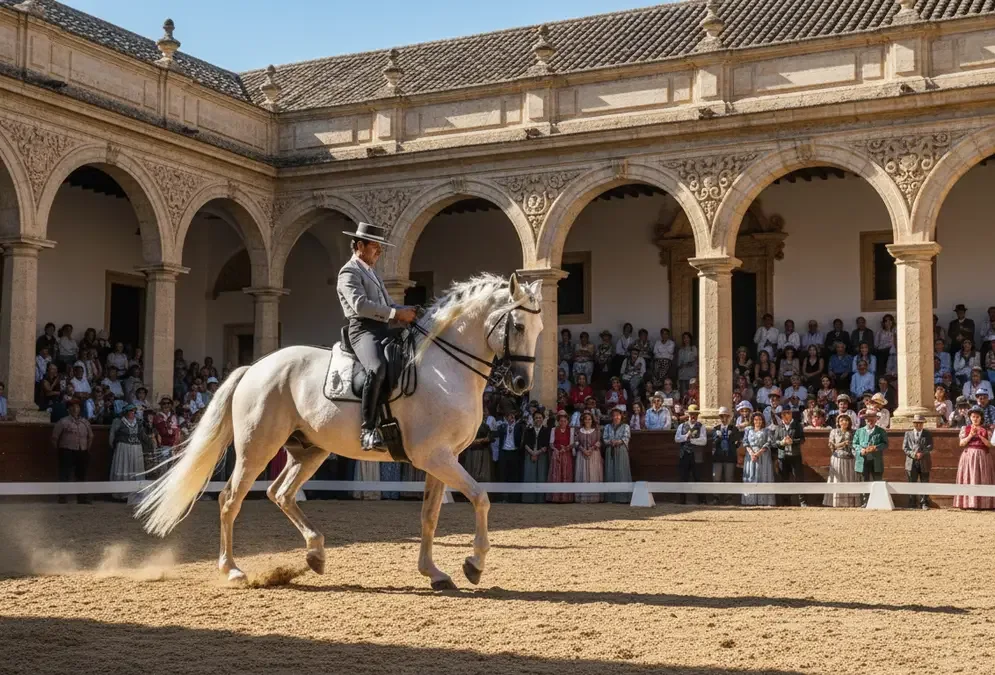
Tours are selected for quality, not commission. We earn a small fee if you book — at no extra cost to you.
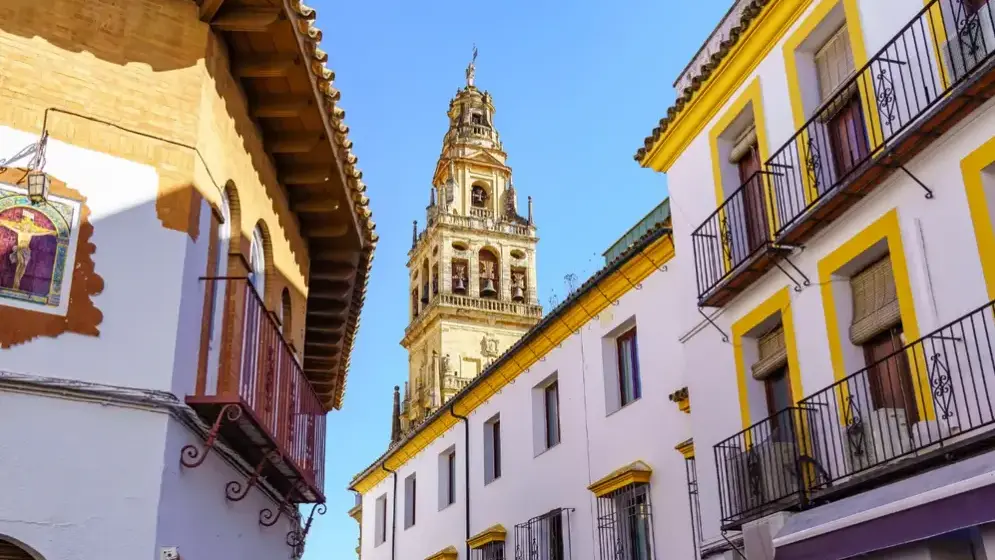
The Patios Festival is real UNESCO recognition, but a different kind. It has been inscribed since 2012 on the Representative List of the Intangible Cultural Heritage of Humanity, a register for living traditions rather than places, and entirely separate from the World Heritage List.[28] Conflating the two is common enough in local and even official coverage that it barely registers as an error. It still is one.
What changes for visitors between now and 2027
The practical picture is still forming. Córdoba has named Juan Miguel Moreno Calderón, who led the original bid, as commissioner for the 2027 programme,[29] and the Junta de Andalucía has joined a formal coordination commission alongside other administrations to help run it.[30] The stated theme is "Mediterraneity Extended," pairing mirror events and cross-border projects with Saida.[31]
The initiative's own material frames Córdoba's monuments as venues rather than backdrops: the Mezquita-Catedral, patios and archaeological sites hosting Mediterranean-themed performance and dialogue programming across the year.[32] Beyond that, it points to joint exhibitions and cross-disciplinary residencies developed with partner cities.[33] The UfM describes the shared calendar as running from artistic residencies and heritage festivals to policy dialogues and community exchanges.[34] As of this writing, a detailed, dated programme is not yet public. Treat 2027 as a framework still being filled in rather than a finished season of events.
Deep dive · Article
Abd al-Rahman III: The Morning Córdoba Became a Caliphate
Abd al-Rahman III was the first Caliph of Córdoba, declared on January 16, 929, ruling a city of up to 500,000 people and building Medina Azahara in 936.
Córdoba already runs cultural fixtures a 2027 programme built on this theme will likely lean on: the Guitar Festival, Noche Blanca del Flamenco, Cosmopoética and the Biennial of Photography all get a mention in the initiative's profile of Córdoba.[35] 2027 also carries a literary coincidence: it is the 400th anniversary of the death of Córdoba-born poet Luis de Góngora, who died in May 1627[36] and is buried in a side chapel inside the Mezquita section of the cathedral.[37] Coverage of the designation has already noted the coincidence as reinforcing the year's cultural weight.[38] Until a firm calendar exists, the safest plan for a 2027 visit is the one that already works for any year: book the Mezquita and Medina Azahara ahead of time, and treat the anniversary as a bonus layered on a city that doesn't need one to be worth the trip.