
The Gran Teatro de Córdoba is the city's nineteenth-century opera house, an Italian-style theatre on the Avenida del Gran Capitán that opened in 1873, nearly closed for good in the 1970s and now stages theatre, dance, classical music and opera. You do not visit it like the Mezquita. You go for an evening, and the seat is the ticket. Come if you want to see Córdoba from the stalls instead of the street.
What the Gran Teatro is
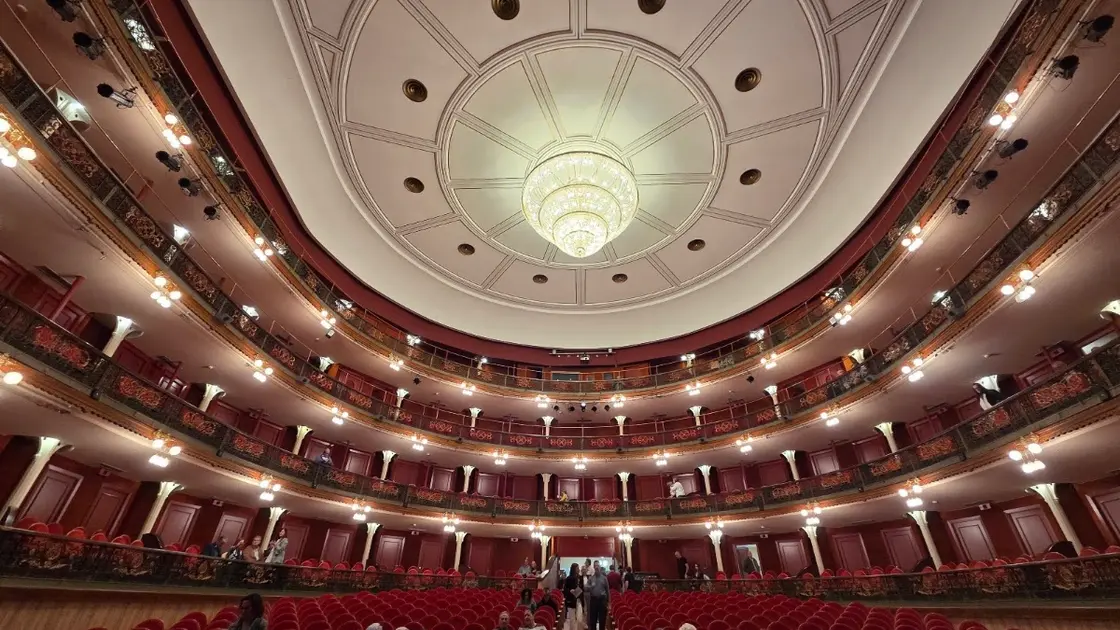
The house is a teatro a la italiana: a horseshoe-shaped hall with stalls, boxes, an amphitheatre and the high gallery the Spanish call the paraíso. Spanish Wikipedia gives it 946 seats after the last restoration, fewer than the original layout offered.
The programme is the draw: theatre, dance, classical music and opera. The theatre is run today through the municipal performing-arts institute, the Instituto Municipal de Artes Escénicas, whose site is the place to check what is on.
Check the programme first, then plan the day
No standing hours or visit price are published; tickets are sold per performance. Look up the programme on teatrocordoba.es before choosing a date, rather than turning up hoping to look inside.
From 1871 to the opening night
Construction began in 1871 and the architect was Amadeo Rodríguez. The theatre opened on 13 April 1873 with the zarzuela Marta, staged by the Compañía Marimón.
The original house was built for a stratified public. The municipal institute's count lists 28 principal boxes, 403 stalls seats, 600 gallery entries and 200 amphitheatre entries. Everyone saw the same stage; what you paid decided how high up you saw it from.
Closure and the municipal rescue
The theatre closed in 1970 after a run of remodellings that did not essentially alter its original layout. In 1976 the owners asked Córdoba city council for permission to demolish it. The council instead took the building over in 1982, declared it of historic-artistic interest and commissioned the architect José A. Gómez Luengo to remodel it.
It reopened in 1986 with the XI Concurso Nacional de Arte Flamenco, a fitting first bill for a city so tied to the art. The exact day is reported inconsistently, so 1986 is the date to quote.