Pedro Ximénez Grape: Rhine Soldier Legend or Moorish DNA?

Seven years covering Córdoba's gastronomy, taberna culture, and the Montilla-Moriles DO.
- Matched in Corinto bianco
- 25 loci
- Identical microsatellite profiles in Pedro Ximénez and its seedless mutation[5]
- Córdoba PX vineyards
- 5,000 ha
- Spain's largest Pedro Ximénez area, ahead of Málaga and Cádiz (MAPA 2019)[6]
- Minimum sugar in asoleo must
- 450 g/L
- Montilla-Moriles specification for sun-dried Pedro Ximénez, reducing sugars[7]
In this article
Jump to a section
The Rhine soldier story and its competing versions
- The soldier: Pedro Ximén, home from Charles V's wars in Flanders with cuttings in his baggage.
- Merula, 1636: Cosmografía, printed in Amsterdam, credits the vine to a certain Pedro, son of Simón[10].
- Sachs, 1661: the German ampelographer Philip Jacob Sachs von Lewenheim claimed the grape began in Madeira or the Canary Islands and reached the Rhine later[11].
What the DNA says about the plant
The paper trail from 1483 to 1618 and what it leaves out
- 1483: the Jerez harvest ordinances do not mention Pedro Ximénez[23].
- 3 April 1574: a Montilla notarial deed covers 25 loads of grapes marked PºXz, possibly the oldest document to use the current Castilian name[24].
- 11 September 1577: another Montilla deed sells 100 arrobas of must made separately from Pedro Ximénez and Baladí grapes to the Augustinian convent in Córdoba[25].
- 1609: an Amsterdam wine price list found by the historian Mariella Beukers is read as already naming a wine Pieter Cemeynes, a Dutch trail that rivals the Rhine one[26].
- 1618: Vicente Espinel's Marcos de Obregón has a squire hand beggars a skin of Pedro Jimenez de Málaga[27][28].
Taste of Córdoba · Dish
Montilla-Moriles
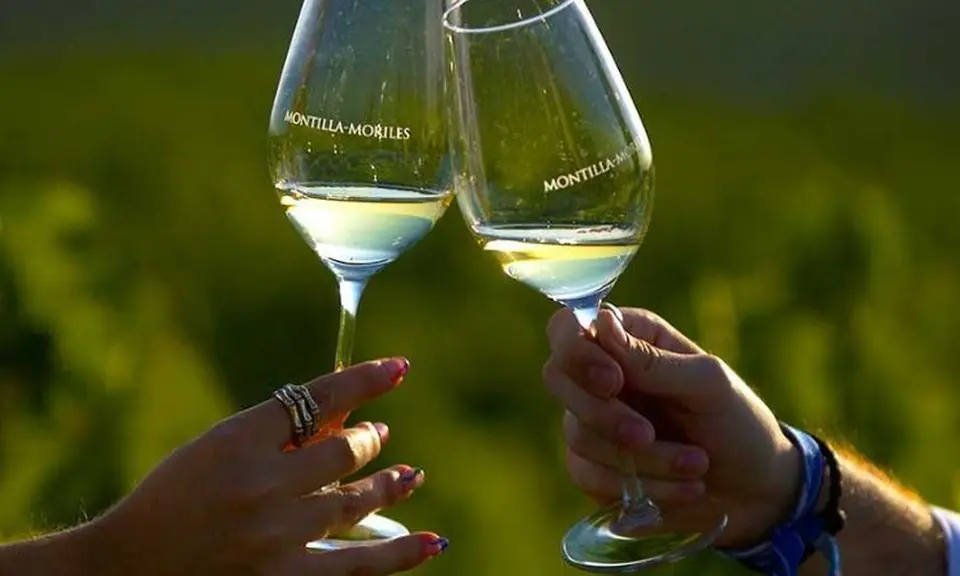
Córdoba's own wine: Pedro Ximénez grapes on white limestone, producing finos, amontillados and rich sweet wines without fortification. Taste them here.
Pedro Ximénez in Montilla-Moriles today
Deep dive · Article
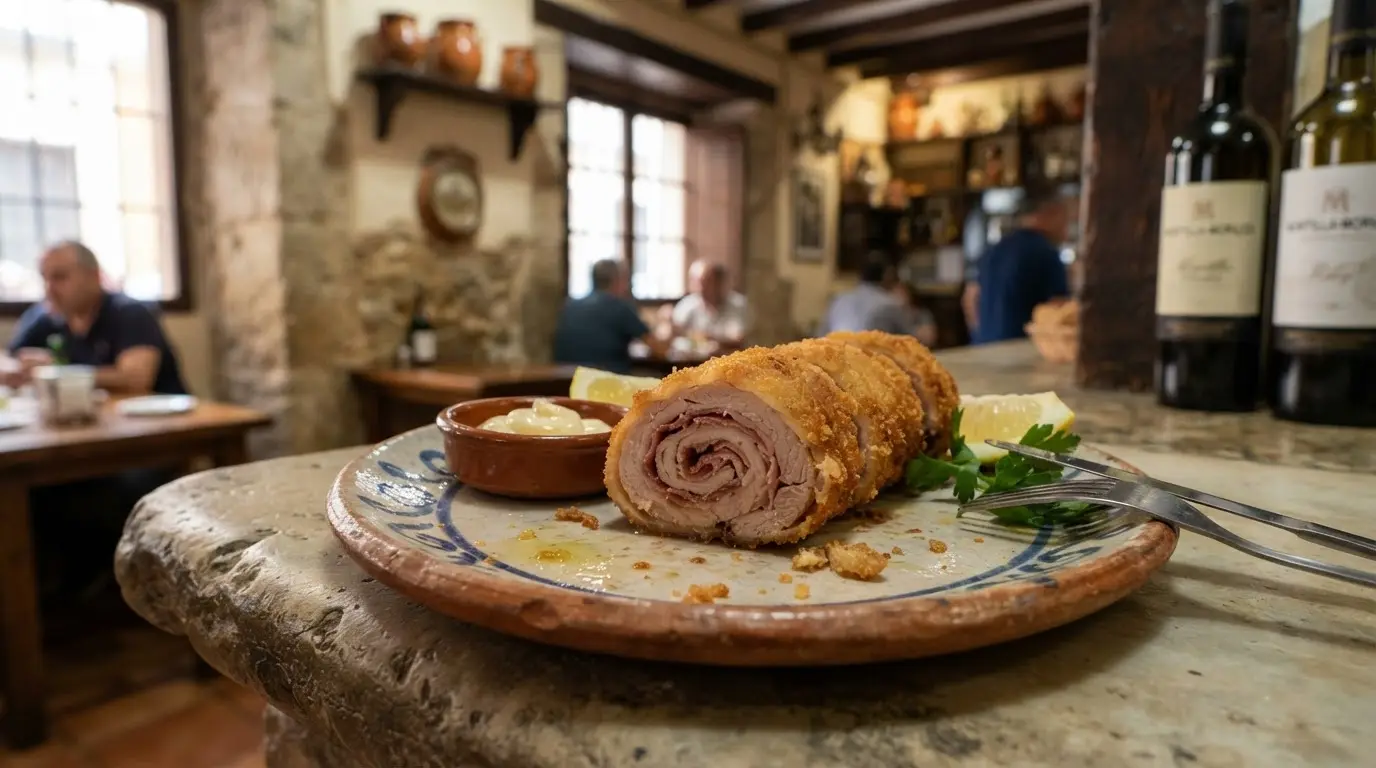
A 1908 Córdoba Ad Offered Flamenquín. Is It the Dish We Eat Now?
The word flamenquín appears in a Córdoba newspaper in 1908; the only dated recipe story is Andújar 1939. What the record proves, and why both towns claim it.
- Grape content: a wine sold as Pedro Ximénez must come from at least 95% Pedro Ximénez grapes[31].
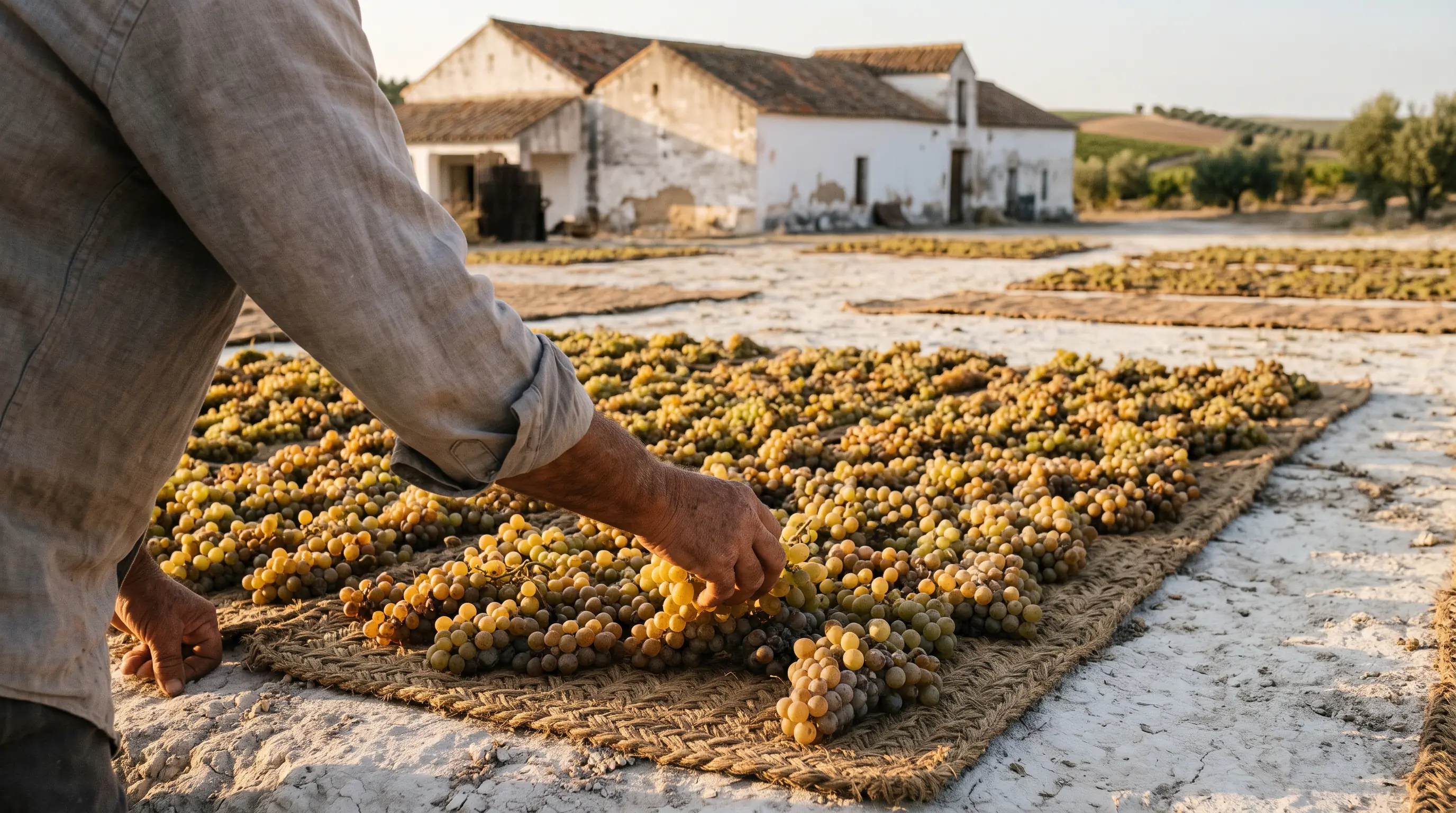
- Sun-drying (asoleo): the cut grapes are exposed to the sun until the must holds at least 450 g/L of reducing sugars[7].
- Yield: an asoleo wine may not exceed 40 litres of wine per 100 kg of harvested grapes[32].
Recommended tours
Tours are selected for quality, not commission. We earn a small fee if you book — at no extra cost to you.

Frequently asked questions
Is Pedro Ximénez a grape?
Is Pedro Ximénez a white grape?
What is Pedro Ximénez?
What is the Pedro Ximénez grape origin: the Rhine or southern Spain?
Who was Pedro Ximén, the soldier in the legend?
Does Jerez use Pedro Ximénez from Montilla-Moriles?
Sources
36 references Show Hide
- Wikipedia — Pedro Ximénez (opens in a new tab)
“Pedro Ximénez (also known as PX and many other variations; Andalusian pronunciation [ˌpeðrohiˈmene]) is a white Spanish wine grape variety”
- ajevonline.org (opens in a new tab)
“Parentage analysis revealed the cultivar Gibi as a probable parent of Pedro Ximenes.”
- welovemontillamoriles.es (opens in a new tab)
“El trabajo lo realizaron dos equipos en paralelo: uno encabezado por Alba María Vargas et al. (investigadores del IMIDRA) en la finca El Encín (Madrid)”
- welovemontillamoriles.es (opens in a new tab)
“y el otro por Valérie Laucou et al. (investigadores de UMR DiaPC) del Equipo Vigne INRA Montpellier.”
- ajevonline.org (opens in a new tab)
“identical DNA profiles were observed in both varieties for 25 microsatellite loci.”
- welovemontillamoriles.es (opens in a new tab)
“La provincia de Córdoba era la de mayor extensión con 5 000 hectáreas de viña plantada con la cepa Pº Xz, seguida de Málaga y Cádiz.”
- montillamoriles.es (opens in a new tab)
“Esta deshidratación parcial de las bayas da lugar a un mosto con una mayor concentración de azúcares reductores en conjunto, como mínimo de 450 gramos por litro.”
- welovemontillamoriles.es (opens in a new tab)
“Pudiera ser que Pedro Ximénez fuera un soldado del rey Carlos I enrolado en los Tercios de Flandes que, de regreso a su patria, hubiese traído sarmientos”
- sherrynotes.com (opens in a new tab)
“It is there that they were picked up by a Spanish soldier Pedro Ximén (Peter Siemens in German) after serving Charles V in The Netherlands.”
- welovemontillamoriles.es (opens in a new tab)
“Merula, en su Cosmografía editada en Ámsterdam en 1636, escribió “que trajo a España este vidueño un tal Pedro hijo de Simón”.”
- sherrynotes.com (opens in a new tab)
“In 1661 a German ampelographer Philip Jacob Sachs von Lewenheim claimed the grape originated in Madeira or the Canary Islands.”
- welovemontillamoriles.es (opens in a new tab)
“Estas son las tres teorías que fundamentan el origen alemán de la cepa Pedro Ximénez, las cuales fueron reflejadas en muchos trabajos de ampelografía del siglo XIX”
- welovemontillamoriles.es (opens in a new tab)
“Esta información no proviene directamente de las fuentes, sino de escritores de los siglos XVIII y XIX que citaban a otros autores anteriores.”
- welovemontillamoriles.es (opens in a new tab)
“Del análisis de los resultados se llegó a la conclusión del posible parentesco de la variedad Gibi como progenitor (madre) de la cepa Pedro Ximénez, aunque se desconoce el padre.”
- Wikipedia — Pierre Galet (opens in a new tab)
“was a French ampelographer and author who was an influential figure within ampelography in the 20th century”
- Wikipedia — Pierre Galet (opens in a new tab)
“In 2000, Galet released Dictionnaire encyclopédique des cépages, a comprehensive catalog of grape varieties from across the globe including their international synonyms.”
- welovemontillamoriles.es (opens in a new tab)
“la Gibi es una antigua uva de mesa blanca meridional que habría venido a España, según Magnol, traída por los árabes”
- noticiasdelvino.com (opens in a new tab)
“Análisis genéticos recientes la identifican como descendiente de una antigua uva de mesa conocida como Gibi, introducida probablemente durante el periodo de Al-Ándalus.”
- Wikipedia — Pedro Ximénez (opens in a new tab)
“Gibi was also discovered to be one of the parent varieties of the Extremadura wine grape Alarije, making the later variety a half-sibling to Pedro Ximénez.”
- welovemontillamoriles.es (opens in a new tab)
“debemos comparar la descripción hecha por Rojas Clemente sobre la Pedro Ximénez con la que hizo J. L. Stoltz en su Ampélographie Rhénane”
- welovemontillamoriles.es (opens in a new tab)
“comparte solo el 38% con la variedad Pedro Giménez de Argentina”
- welovemontillamoriles.es (opens in a new tab)
“Las investigaciones realizadas han encauzado la procedencia de la planta. Queda por concretar el origen del nombre, que aún permanece sujeto a diferentes leyendas.”
- sherrynotes.com (opens in a new tab)
“In any case the famous Ordenanzas del vino, an early regulation of the grape harvest in Jerez (1483), doesn’t mention the Pedro Ximénez grape.”
- welovemontillamoriles.es (opens in a new tab)
“Podrían ser los documentos más antiguos y los primeros en los que se hacía referencia a este vidueño con el nombre actual en castellano.”
- welovemontillamoriles.es (opens in a new tab)
“Una fechada el 11 de septiembre de 1577, en la que se acordaba una venta de 100 arrobas de vino elaborado por separado con uva Pedro Ximénez y Baladí.”
- sherrynotes.com (opens in a new tab)
“Just a few years ago Mariella Beukers (in her book Wijnkronieken) discovered a pricelist used in the Amsterdam wine market in 1609.”
- sherrynotes.com (opens in a new tab)
“The oldest Spanish mention of the grape dates back to 1618.”
- gutenberg.org (opens in a new tab)
“alarguéles una bota de Pedro Jimenez de Málaga”
- upo.es (opens in a new tab)
“Esta variedad cubre el 95% de los terrenos”
- montillamoriles.es (opens in a new tab)
“Las horas de sol efectivo se sitúan en torno a las 3000 por año.”
- montillamoriles.es (opens in a new tab)
“En su elaboración se exige que el 95% de la uva sea de la variedad “Pedro Ximénez”.”
- montillamoriles.es (opens in a new tab)
“el rendimiento no podrá superar en ningún caso los 40 litros de vino por cada 100 kilogramos de uva vendimiada”
- noticiasdelvino.com (opens in a new tab)
“Los racimos seleccionados se depositan en parcelas de secado donde se extienden sobre esparto o material similar.”
- upo.es (opens in a new tab)
“Los problemas burocráticos durante la Guerra Civil provocaron que la fundación del Consejo Regulador se pospusiera y no se hiciera oficial hasta 1944.”
- montillamoriles.es (opens in a new tab)
“adquirió fuerza de Ley, el que otorgó el reconocimiento oficial a sus vinos”
- sherrynotes.com (opens in a new tab)
“allowing PX grapes and even PX base wines to be imported from nearby denominations like Montilla-Moriles.”