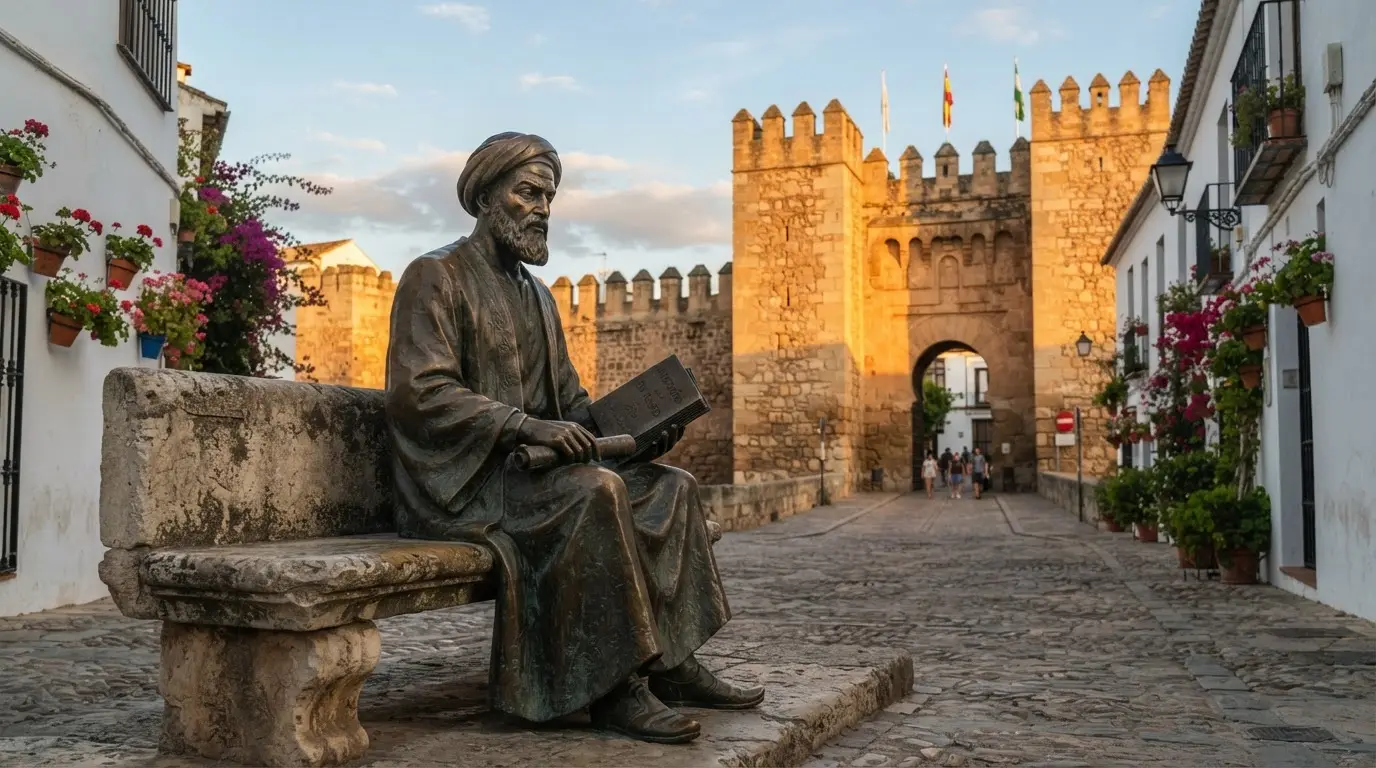
Averroes: Córdoba's Philosopher Who Saved Aristotle
Born in Córdoba in 1126, Averroes wrote the commentaries that returned Aristotle to Christian Europe. Thomas Aquinas read him. Paris called him the Commentator.
Read the full story
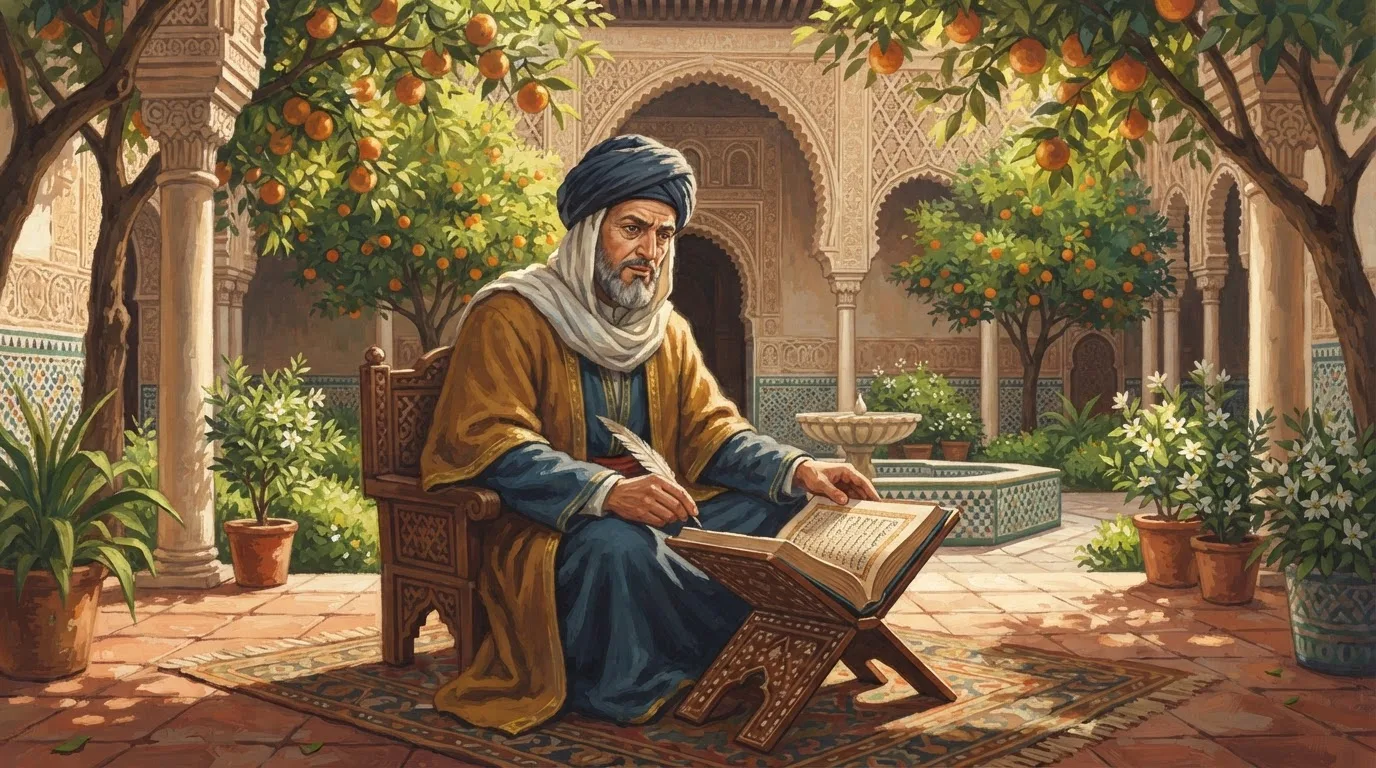
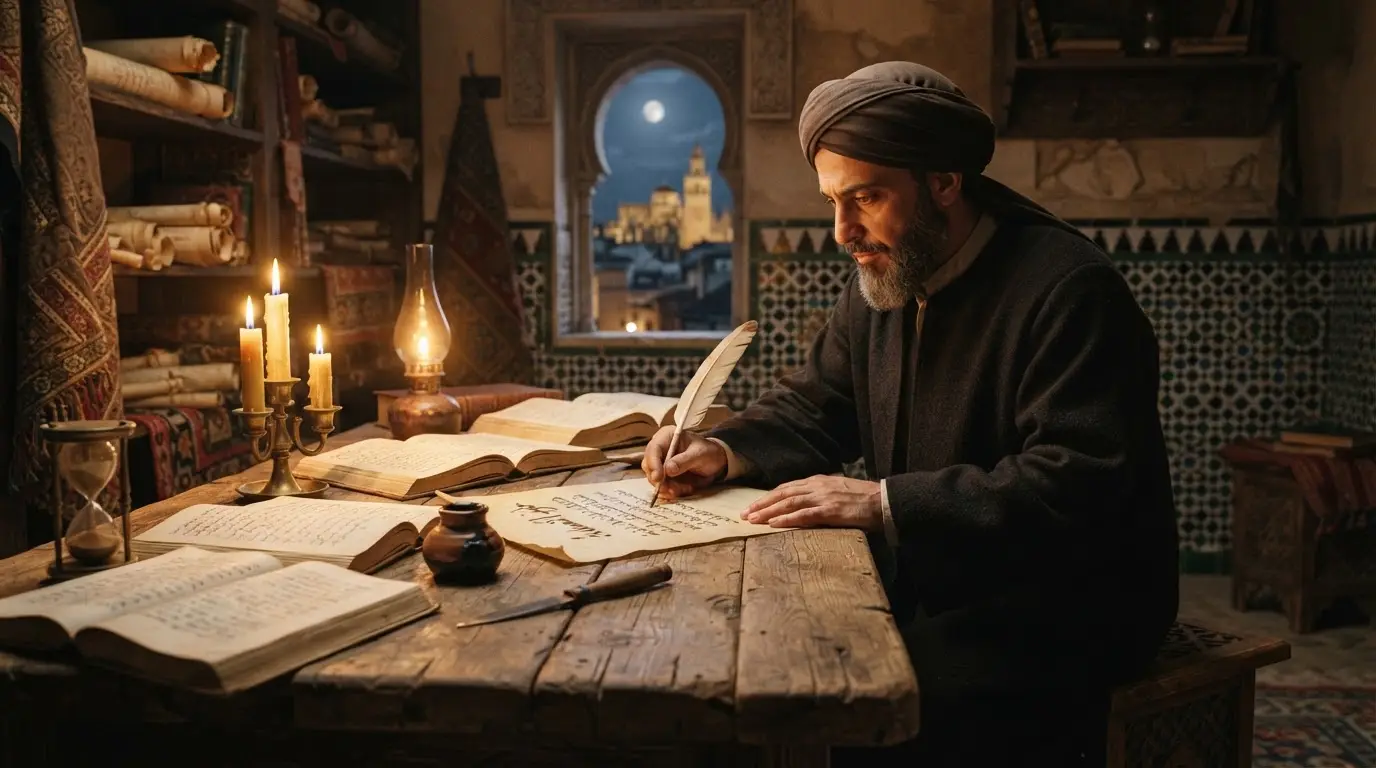
Averroes (Ibn Rushd) was born in Córdoba on 14 April 1126 into a family of jurists. He grew up to be the city's judge and one of the medieval world's most thorough readers of Aristotle. He became qadi of his hometown in 1171, served as royal physician at the Almohad court, and between 1169 and 1195 wrote commentaries on most of Aristotle's works.
His last years were harsher. In 1195 a tribunal condemned his teachings, ordered his works burned and banished him to Lucena. He died in Marrakech in 1198, and his body was later brought back to Córdoba for a second funeral.
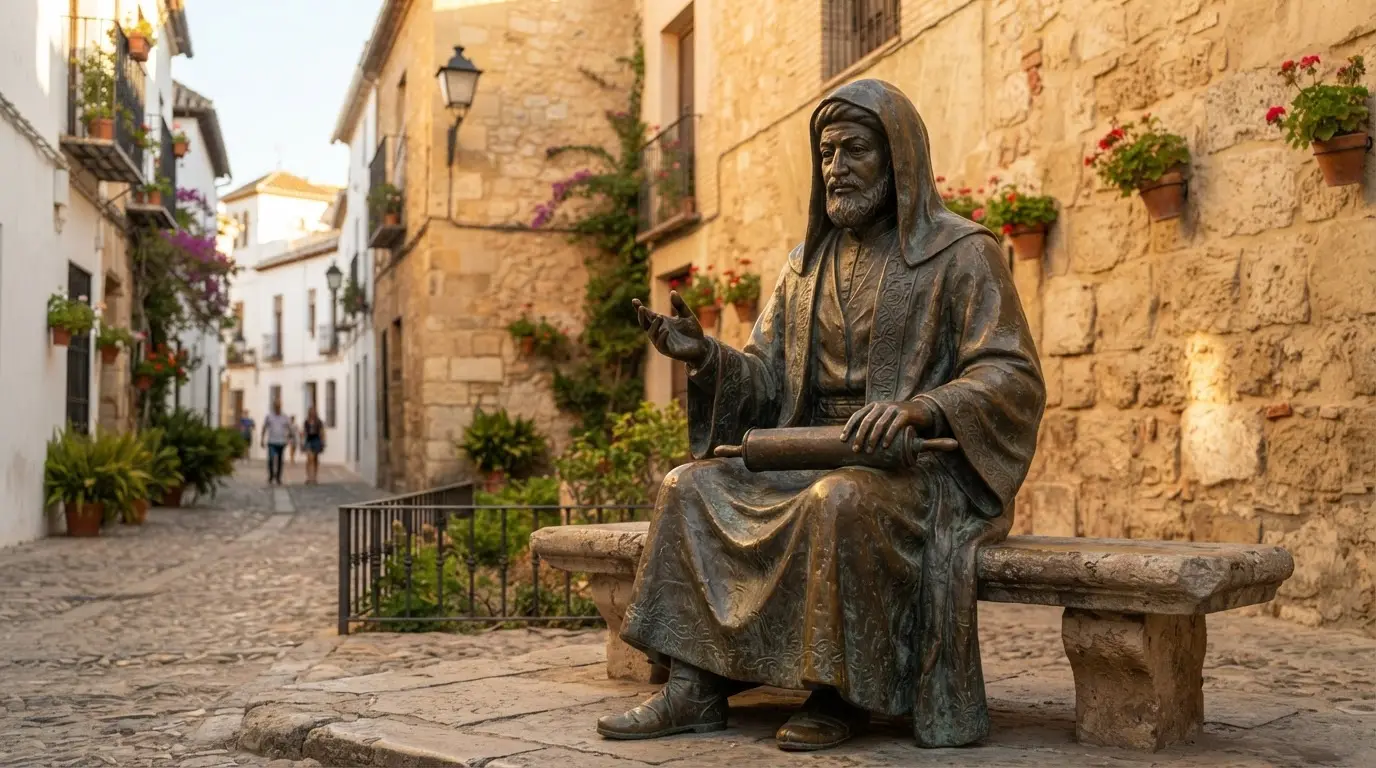
What remains of him in the city is small and easy to walk past: a sculpture of Averroes stands on Calle Cairuán, the street that runs along the wall from the Almodóvar Gate. Start with Calle Cairuán and the Almodóvar Gate, then read about Maimonides, another philosopher the city produced in the same century. For the full account of his life and ideas, read the full story.
1031–1236
The caliphate broke into taifa kingdoms in 1031, and Córdoba later passed between local rulers and the Almoravid and Almohad dynasties. Averroes and Maimonides were born here, though Maimonides' family fled Almohad rule around 1148.
1003–1071 Historical figure
Ibn Zaydun (1003–1071), Córdoba-born poet of al-Andalus, and the Monument to the Lovers where his romance with Wallada is remembered. Read the full story.
c. 1138–1204 Historical figure
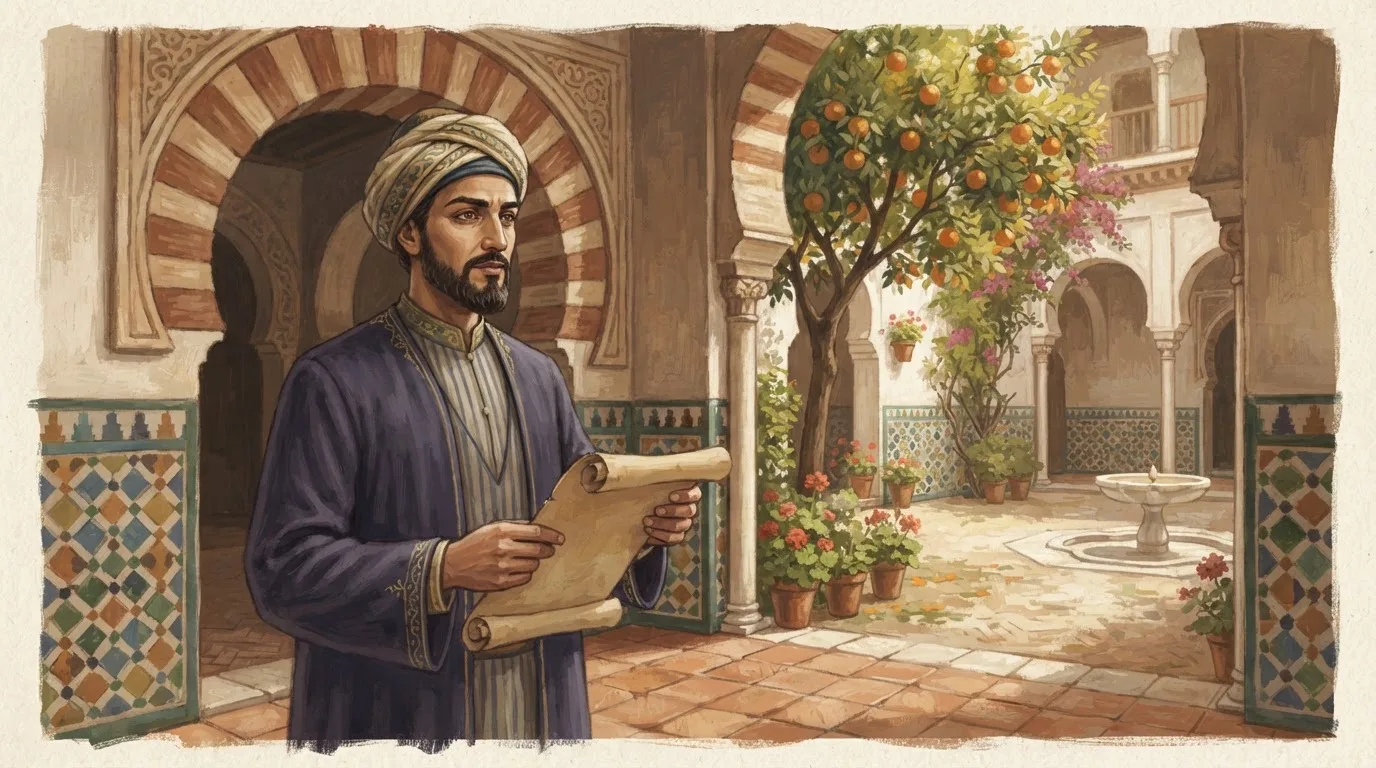
Maimonides (Moses ben Maimon) was born in Córdoba c. 1138 and died in Cairo in 1204. Find his statue in the Judería and the best place to read his full story.
Undated
Monument
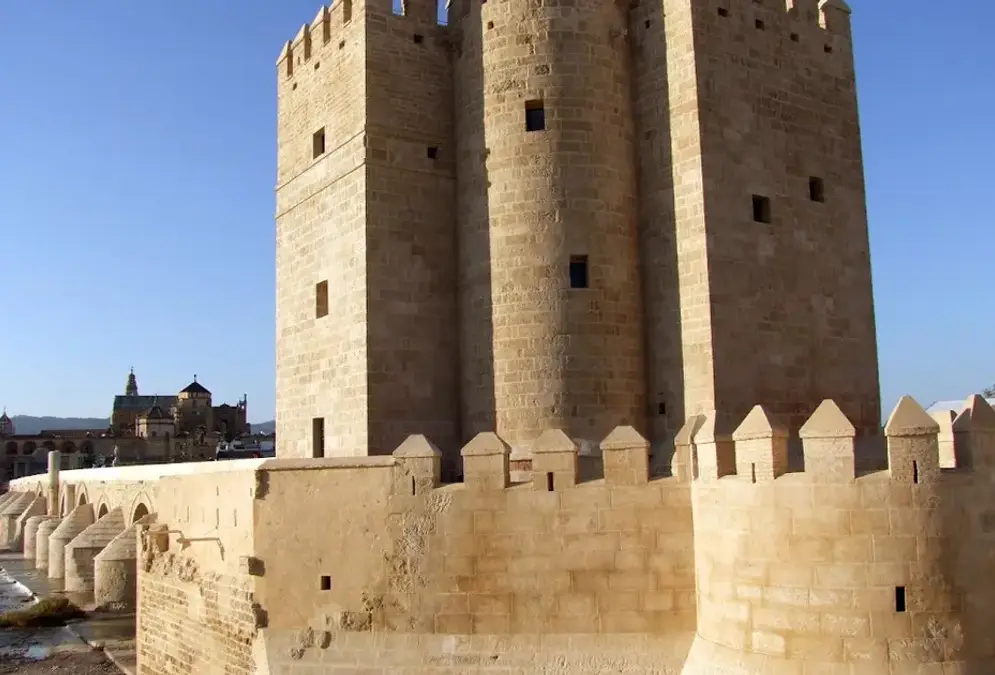
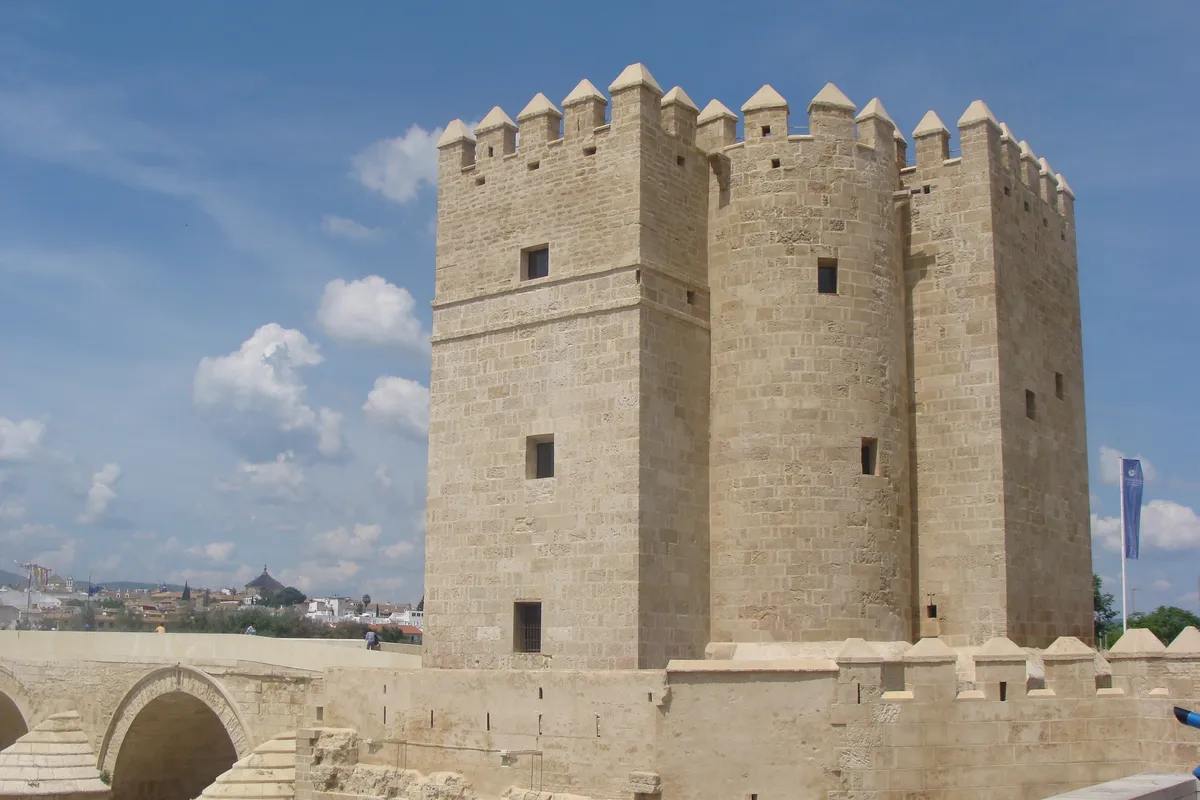
12th-century Islamic tower at the end of the Roman Bridge. Museum of Al-Andalus with rooftop views of the Mezquita and Guadalquivir. €4.50 adult entry.